Loading Admission Guardian content
Loading Admission Guardian content
Provisional score based on available data. It may change as more information is verified.
Find a program, read its fee details and explore the admission requirements.
Summary of the programs shown below. First-year fee. Check the note beside each amount for inclusions and exclusions.
| Course | Stream | Fees |
|---|---|---|
| Bachelor of Technology [B.Tech] | Engineering | 72000 |
Specializations
All accepted exams
Eligibility: 10+2
1 exam with cutoff data available
 24/7 Software
 ADP Private Limited
 Amazon
 Avaya
Avaya CGI
CGI Dell
Dell Face
Face FMC Technologies
 Genpact
 HCL
HCL Hyundai Motors
 IBM
IBM Infosys
 KANTAR
 Microsoft
 Millennium Networks
 Mphasis - An HP Company
 NTT DATA
 saffron global corp
 Schneider Electric
 Siemens
 Sitel
Sitel Sutherland
 Syntel
 TCS
TCS Tech Mahindra
 ValueLabs
 Wipro
WiproIf you're looking at engineering colleges in Hyderabad with a JNTUH affiliation and a decent reputation for CSE, Aurora's Technological and Research Institute (ATRI) is a name that consistently pops up. Established back in 1999, it's a private institute that's carved out a space for itself in the crowded Telangana education scene. It's not a flashy, top-tier name, but for students with mid-range EAMCET ranks, it represents a pragmatic choice—especially if you're aiming for computer science. The college has its strengths, like a well-regarded annual fest and accessible faculty, but it also comes with the classic trade-offs of a strict, non-autonomous institution. You'll hear alumni describe it as "decent" more often than "amazing," and that's probably the most honest review you can get.
ATRI is a medium-sized institute with a total B.Tech intake hovering between 1,080 and 1,260 students. Unsurprisingly, the lion's share of seats—and attention—goes to computer science and its offshoots. The CSE department alone takes in 255-292 students, with newer specializations like Artificial Intelligence & Machine Learning, Data Science, and Cyber Security adding another 180-240 seats. Information Technology (IT) and Electronics and Communication Engineering (ECE) are the other popular streams with healthy intakes. Core branches like Civil, Mechanical, and Electrical see smaller batches, typically 60-120 seats each.
Academically, you're signing up for the standard JNTUH experience. The college follows the university's Choice Based Credit System (CBCS) to the letter, with a 10-point CGPA scale. The academic calendar is rigid, dictated entirely by JNTUH schedules. That's the trade-off for a non-autonomous college; you get a widely recognized degree, but little curricular flexibility.
Where ATRI tries to add value is through industry linkages. They have MoUs with Microsoft for their IT Academy program and with CISCO for a Networking Academy, which can provide access to certifications and workshops. The faculty pool is around 160-170 strong, with several PhD holders, particularly in the CSE department. Student feedback often highlights that professors in the CSE and ECE departments are approachable and knowledgeable, which isn't a given everywhere.
This is where you need to read between the lines. The college's official placement claims and the numbers that circulate among students can tell different stories.
Let's start with the official data. The NIRF 2022 report lists a median package of ₹8.01 LPA for B.Tech graduates. That's a solid, believable figure for a college of this tier. You'll also see a "highest package" of 32 LPA floated around on student portals for 2023-24, but treat that with caution—it's often an outlier from an off-campus offer or a specific niche role. The working average package that most students can realistically expect falls in the ₹3.5 to ₹5 LPA range.
The bigger gap is in placement percentage. The institute claims 80-90% placement. Dig into reviews on Shiksha or CollegeDunia, and the consensus among alumni is more conservative. For CSE and IT branches, a 60-70% on-campus placement rate seems to be the experienced norm. For core branches like Civil or Mechanical, that number drops significantly, with many students relying on off-campus efforts or further studies.
The recruiter list is standard for Hyderabad's IT corridor. You'll see the usual mass recruiters: TCS, Wipro, Infosys, Capgemini, Cognizant, and Accenture. A few higher-tier names like Amazon, IBM, Deloitte, and Virtusa also visit, typically for CSE/IT roles. Core sector recruitment is sparse, with names like Hyundai and Texas Instruments appearing occasionally. The placement scene is overwhelmingly IT-focused.
The fee structure is straightforward and relatively affordable for a private institute, especially if you secure a seat through the convenor quota. The annual tuition fee for B.Tech under this quota is ₹72,000. Over four years, that's roughly ₹2.88 lakhs in tuition—a figure that makes ATRI a budget-friendly option compared to many autonomous colleges.
Management quota (Category-B) seats are pricier, ranging from ₹1 lakh to ₹1.5 lakhs per year depending on the branch's demand. On top of tuition, budget for university fees (around ₹5,500), library and exam fees (₹3,000–5,000), and the crucial cost of transport or hostel.
Speaking of hostels, there's a catch. ATRI does not have major on-campus hostel facilities. The official hostel is at the Aurora PG College campus in Moosarambagh, about 10 km away. Annual fees there range from ₹48,000 to ₹85,000. Consequently, most students opt for private PGs in nearby areas like Uppal or Boduppal, where costs can vary widely.
For financial aid, the primary avenue is the Telangana state government's Reimbursement of Tuition Fee (RTF) scheme for SC, ST, BC, and EBC students, managed through the epass portal.
For B.Tech, your ticket in is almost exclusively the TS EAMCET exam. A handful of seats might be filled via JEE Main scores, but EAMCET is the main game. The selection follows the standard 70:30 split: 70% of seats (Category-A) are filled through the state counseling process based on your EAMCET rank, and 30% (Category-B) are management/NRI quota seats.
The cutoffs give you a clear picture of the institute's standing. For the 2023 TS EAMCET counseling (General Category), the ranks for CSE ranged between 15,000 and 25,000. The newer CSE (AI&ML) specialization saw ranks between 20,000 and 30,000. For ECE, you were looking at ranks from 35,000 to 50,000. Core branches like Civil and Mechanical had closing ranks well above 70,000. These numbers are your best benchmark for gauging your chances.
For postgraduate courses, M.Tech admissions require a TS PGECET or GATE score, while MBA and MCA admissions are based on the TS ICET.
The campus is spread over 12-15 acres in Uppal. It's not a sprawling, isolated campus, but its location within city limits is a major plus. You're close to the Uppal metro station (6-7 km) and the bus depot, which makes commuting and accessing the city far easier than colleges stuck in remote suburbs.
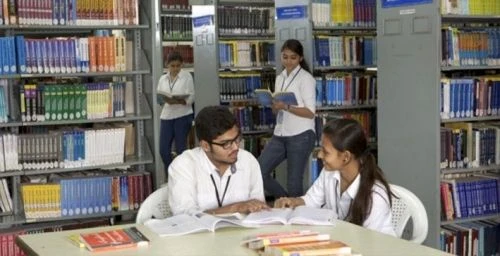
Infrastructure is a mixed bag. The academic blocks house well-equipped labs for each department—the CP Lab, DBMS Lab, and others for CSE are frequently cited as good. The central library has a solid collection of over 33,000 books and provides access to digital resources like IEEE and ASME journals. The campus is Wi-Fi enabled, with a claimed 1 GBPS connectivity.
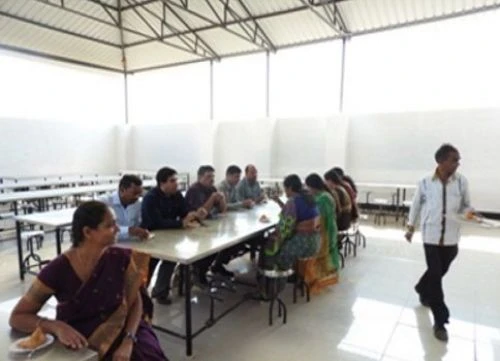
But there are consistent complaints. Maintenance, especially of washrooms, is a recurring issue in student reviews. Sports facilities are limited; there's no large playground, just spaces for volleyball, throwball, and some indoor games. The canteen food is routinely described as average and a bit overpriced.
The lack of on-campus hostels fundamentally shapes student life. Most students live in scattered PGs, which can fragment the community. To counter this, the college runs an extensive bus fleet covering many parts of Hyderabad, with annual transport fees around ₹25,000–35,000. Many students, however, still rely on public RTC buses due to the college's decent connectivity.
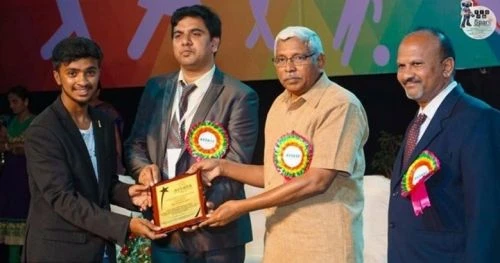
Synthesizing the chatter from review sites and forums, a clear consensus emerges. The positives are specific and heartfelt. The annual cultural fest "Avayaya" and the traditional day "Anubhuti" are universally praised as well-organized highlights of the year. Students also consistently appreciate the accessibility and dedication of faculty in the CSE and ECE departments. The location, again, is a big win.
The negatives are just as consistent and impactful. The strict enforcement of the 75% attendance rule is the single biggest grievance. The college is often described as having a "school-like" atmosphere, with mandatory uniforms and penalties—including being barred from exams or facing fines—for attendance shortfalls. This rigidity grates on many students.
There's also a palpable sense of disparity. CSE and IT students feel they get a fair deal with decent placement opportunities. Students from Civil, Mechanical, and EEE, however, often feel like second-class citizens, with fewer resources and negligible placement support. Administrative red tape and slow processes for certificates or fee-related issues are another common frustration.
As one paraphrased review puts it: "For CSE, it's a decent tier-3 college. But don't expect high-end placements if you are in a core branch."
ATRI is a classic example of a college where your experience is heavily branch-dependent. If you have a TS EAMCET rank between 15,000 and 30,000 and are dead-set on a computer science-related field (CSE, IT, AI&ML), ATRI is a sensible, value-for-money choice. You'll get a recognized JNTUH degree, decent lab access, a shot at standard IT placements, and the huge advantage of a Hyderabad city location without the premium price tag of a top-tier institute. The strict rules are a hassle you'll have to tolerate.
However, if you're passionate about core engineering disciplines like Civil, Mechanical, or even EEE, you should probably look elsewhere. The placement support for these fields is minimal, and you might feel sidelined. Similarly, if you crave a vibrant, residential campus life with great sports facilities and autonomy, ATRI's commuter-heavy, rule-strict environment will disappoint. It's a practical launchpad for a certain kind of IT career, not a holistic college experience. Choose accordingly.

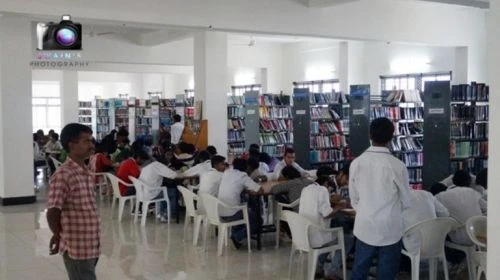
In this preview: 5 photos · 0 videos
No, Aurora's Technological and Research Institute (ATRI) is a non-autonomous college. It is affiliated with Jawaharlal Nehru Technological University, Hyderabad (JNTUH) and follows the university's prescribed curriculum, academic calendar, and examination system.
No, ATRI does not have major on-campus hostel facilities. The official hostel provided by the Aurora Group is located off-campus at their PG College in Moosarambagh, approximately 10 kilometers away. Most students opt for private paying guest (PG) accommodations in nearby areas like Uppal or Boduppal.
Yes, ATRI is generally considered a solid Tier-3 choice for Computer Science and Engineering (CSE) and related specializations. It attracts decent IT recruiters, has well-equipped labs, and receives positive feedback about its CSE faculty. For students with mid-range EAMCET ranks, it offers a good balance of location, cost, and placement opportunities specifically for the IT sector.
Aurora's Technological and Research Institute has a mandatory uniform policy for all undergraduate B.Tech students. Adherence to the dress code is strictly enforced as part of the college's overall disciplinary rules.
The college operates an extensive fleet of buses covering many parts of Hyderabad, with an annual fee typically ranging from ₹25,000 to ₹35,000. However, due to the institute's location in Uppal—which is well-connected to the city's public transport network—many students also rely on Telangana State RTC buses, as the college is close to the Uppal bus depot.
Share what future students should know about ATRI.
Student voices are not rewritten by colleges. We remove spam and abuse.
Wider admission question? Community PulseWhat should future students know?
Tell us which course you're considering. We'll help you work out the next step.
Get instant Partner access after mobile verification. Your public edits are reviewed before they go live.
Claim this college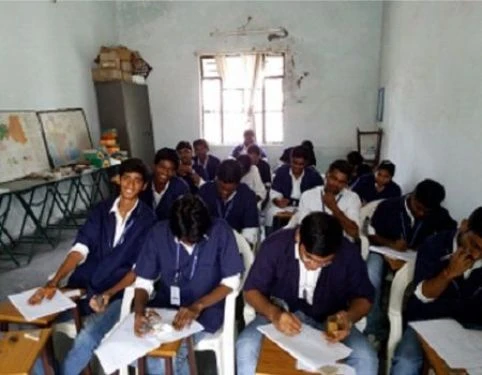
 Auditorium
 Cafeteria
 Computer Labs
 Gym
Gym Hostel
 Medical
 Science Labs
 Sports Complex
 Study Library