Loading Admission Guardian content
Loading Admission Guardian content
Provisional score based on available data. It may change as more information is verified.
Selected ranking categories, with the recorded year beside each result. Open all records for the complete history.
1 published record · Lower numeric ranks are stronger
Find a program, read its fee details and explore the admission requirements.
Summary of the programs shown below. First-year fee. Check the note beside each amount for inclusions and exclusions.
| Course | Stream | Fees |
|---|---|---|
| Diploma in Engineering (Polytechnic) | Engineering | 40000 |
| Bachelor of Education [B.Ed] | Education | 51250 |
| Bachelor of Technology [B.Tech] | Engineering | 80000 |
| Master of Business Administration [MBA] | Management | 80000 |
| Bachelor of Pharmacy [B.Pharma] | Pharmacy | 120000 |
Specializations
Eligibility: 10th
Specializations
Eligibility: Graduation
Specializations
All accepted exams
Eligibility: 10+2+UPTAC
Specializations
All accepted exams
Eligibility: Graduation
All accepted exams
Eligibility: 10+2
3 exams with cutoff data available
 Accenture
 Amazon
 Artech Infosystems
 Augusta Hitech Soft Solutions
 Byju's
 Capgemini
 Effectual Knowledge Services
 HCL
HCL Hindustan Copper Limited (HCL)
 ICICI Prudential
 Infosys
 Ingersoll-Rand
 Jaro Education
 Josh Tech
 L&T Infotech
 MobiVisits
 Newgen Software Technologies Ltd.
 NTT DATA
 Samsung India
 Syntel
 TATA Communications
 Tata Consultancy Services
 TCS
TCS Wipro
Wipro Zensar
If you're scanning through AKTU-affiliated colleges in the NCR with a JEE Main rank that isn't opening the doors to the top-tier institutes, Babu Banarasi Das Institute of Technology (BBDIT) in Ghaziabad is a name that'll keep popping up. It presents itself as a pragmatic, budget-conscious choice. The 15-acre campus on the Delhi-Meerut highway offers a standard AKTU engineering curriculum, but the real story here is the trade-off: you get a degree at a relatively low cost, but you'll likely graduate into the vast pool of mass IT recruitment. It's a classic Tier-3 engineering college experience, with all the structure, limitations, and occasional opportunities that come with it.
BBDIT runs a fairly standard menu of programs you'd expect from a large private institute in Uttar Pradesh. Their primary identity is as an AKTU engineering college. The B.Tech program is the main draw, with Computer Science & Engineering having the largest intake (120 seats). They've also introduced specialized tracks in AI/ML and Data Science, though student reviews on the depth of these specializations are sparse. Other core branches—Mechanical, Civil, ECE, Electrical—have smaller intakes of 30 each, which often translates to quieter placement cycles for those departments.
Beyond engineering, they offer a B.Pharma program (approved by PCI), an MBA, and even a B.Ed. The BBA and BCA degrees are affiliated with CCS University, Meerut. Academically, it's the standard AKTU rigmarole. The grading follows the university's 10-point CGPA system, and the syllabus is what it is across hundreds of affiliated colleges. Faculty quality is a mixed bag, as it is in most institutes of this tier. You'll find some dedicated, approachable professors, especially around exam time, and a few PhD holders like Dr. P.K. Bharti in CSE. But don't expect cutting-edge pedagogy. One unique academic highlight is a collaboration with Gannon University in Pennsylvania, USA, offering a potential pathway to a 1-year MS for CSE, ME, and ECE graduates. It's a notable option, though likely relevant for only a handful of students each year.
This is where you need to read between the lines. The college's official literature talks about an 80-90% placement rate. Talking to alumni and scanning reviews on platforms like Shiksha and CollegeDunia paints a more nuanced picture. The working number for on-campus placements, especially for core branches, seems closer to 60-70%. For CSE, it's better, maybe hitting that 80% mark, but the quality of roles is the real differentiator.
The highest package bandied about for recent years is between 13.6 and 14.75 LPA. That's a real number, but it's an extreme outlier—likely one or two students landing a role at Amazon or a similar tech firm, often through off-campus efforts. The mass of the student body lands in the 3-5 LPA range. The median package is probably around 3.5 LPA. The recruiter list is familiar: TCS, Infosys, Wipro, HCL, Cognizant, Capgemini. You'll also see EdTech names like Byju's and sales/marketing roles from companies like Paytm and Ola. For Mechanical or Civil students, getting a core engineering job from campus is rare. Most pivot during the program to prepare for the same IT mass recruiters or for government exams like GATE and IES. The placement cell functions, but its success is in volume, not in curating high-quality, role-specific opportunities.
The affordability is BBDIT's strongest card. For a private institute in the NCR region, the fees are notably modest. A B.Tech degree will cost you between ₹80,000 and ₹1,10,000 per year in tuition, depending on the branch and whether you came through counseling or management quota. Add in hostel and mess charges (₹65,000 – ₹75,000 per annum for a double/triple sharing room), and the total four-year cost lands somewhere between ₹4.8 and ₹6.5 lakhs. That's a decent outcome for a state-run institution.
There's no extensive in-house scholarship program. The primary financial aid route is the UP State Government's Saksham Scholarship for SC/ST/OBC and EWS category students. The college administration assists with the application process, but the onus is on the student to meet the state's eligibility criteria and follow up. Other one-time fees, like library and development charges (around ₹5,000) and annual exam fees (approx. ₹7,500), are par for the course in the AKTU system.
For B.Tech, the gateway is JEE Main. Admission is centralized through the Uttar Pradesh Technical Admission Counselling (UPTAC) for 85% of the seats. The cutoffs are what you'd expect for a college in this segment. For the 2024 cycle, the closing overall rank for General category in CSE was between 554,786 and 957,701. For the newer AI/ML specialization, the rank drifted further out, around 1,280,977. For other B.Tech branches, ranks can go even higher. If you miss the counseling cutoffs, there's a 15% management quota. Admission here is supposedly merit-based on your 12th-grade marks, but availability is limited and the process isn't always transparent.
For the MBA program, they accept scores from CUET-PG, CAT, or MAT. BBA, BCA, and B.Ed admissions typically rely on CUET-UG scores or direct merit-based assessment. The polytechnic (diploma) admissions are handled through the state's JEECUP exam. The official source for all admission details and counseling updates is the BBDIT website.
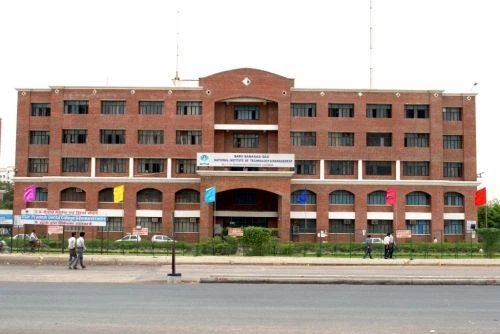
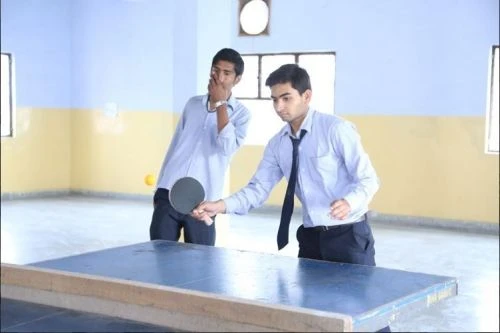
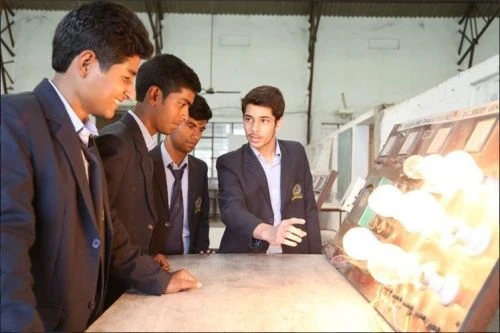
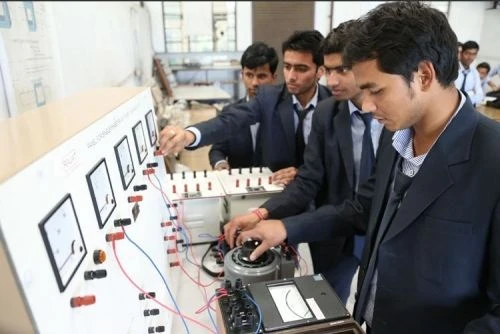
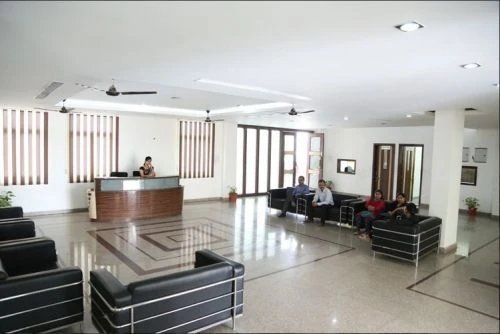
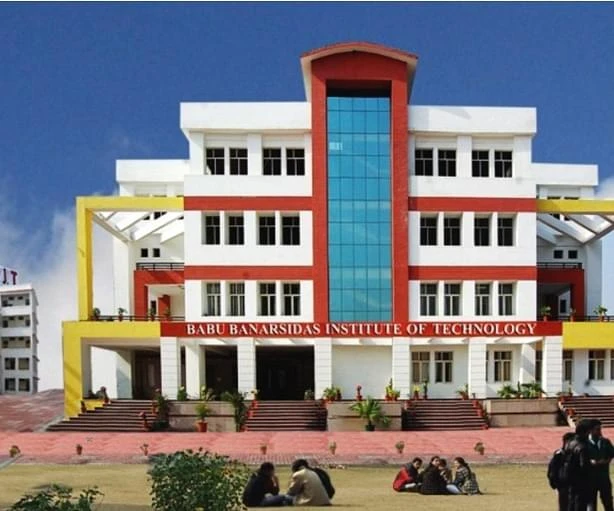
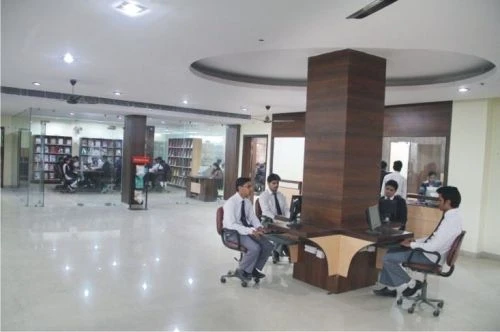
The 15-acre campus is green and the academic blocks (named A, B, C, D) are maintained. Infrastructure is adequate. Labs for engineering streams are equipped, the computer labs have a functional LAN, and the library is sizable with over 44,000 books. Sports facilities include a cricket ground, basketball court, and a football field. Wi-Fi is there, but students often complain it's spotty, especially in hostel areas.
Ah, the hostels. This is a point of contention. The boys' hostel is on-campus with about 400 beds. The girls' hostel situation is less clear—some reports indicate an off-campus facility with provided transport. Security is tight, which parents appreciate. But the environment is often described as overly strict. The 75% mandatory attendance rule is enforced rigidly, with gates monitored during lecture hours. One recurring complaint across reviews is the canteen food, criticized for its limited menu and occasional hygiene issues. Social life is what you make of it, but don't expect a vibrant, liberal arts college atmosphere. It's structured, some say stifling.
Synthesizing the chatter from CollegeDunia, Shiksha, Quora, and Reddit gives you a clear, if bipolar, consensus.
The positives always highlight value. "For my rank and budget, it was the best option," is a common refrain. Many students are genuinely thankful for approachable faculty who go the extra mile during exam preparations. The campus aesthetics and the fact that it's a functioning, recognized institute also get nods.
But the negatives are consistent and pointed. The "school-like" environment tops the list. The strict attendance policing and lack of freedom grate on many. Placement quality is the other major sore point. As one review on Shiksha put it: "The college looks amazing from the outside, but the placement cell needs to work harder on bringing tech giants rather than just sales companies." Administrative hiccups—slow document processing, fee receipt delays—are frequently mentioned. And the canteen complaints are almost universal.
BBDIT is a very specific solution for a very specific problem. It's worth it if you have a modest JEE Main rank (think 500k to 1 million+) and a tight budget, and your primary goal is to secure an affordable AKTU B.Tech degree with a reasonable shot at a 3-5 LPA IT job to start your career. It's a disciplined, no-frills launchpad. However, if you're looking for a vibrant campus life, high-quality research opportunities, or a direct path to premium engineering roles, you'll likely be disappointed. Students from core branches (Mechanical, Civil) should be especially cautious and prepared to drive their own career planning, as the institute's placement support for them is minimal. In essence, BBDIT delivers exactly what its fee structure promises: a basic, functional engineering education. Not less, but certainly not much more.
In this preview: 5 photos · 0 videos
BBDIT Ghaziabad is considered a decent Tier-3 option for students seeking a disciplined environment and AKTU affiliation at a moderate fee structure.
BBDIT Ghaziabad is an affiliated college of Dr. A.P.J. Abdul Kalam Technical University (AKTU), while BBDU Lucknow is a private university. They belong to the same group but operate independently.
Yes, BBDIT offers direct admission through its 15% management quota, which is based on 12th-grade merit, provided the candidate meets the basic eligibility criteria.
The girls' hostels at BBDIT are safe and have 24/7 security. However, some students prefer private paying guest (PG) accommodations in nearby areas like Duhai or Raj Nagar for more freedom.
Placements in core branches like Mechanical and Civil are lower than for CSE. Many students from these branches pivot to IT mass recruiters or prepare for competitive exams like GATE or IES.
Share what future students should know about BBDIT.
Student voices are not rewritten by colleges. We remove spam and abuse.
Wider admission question? Community PulseWhat should future students know?
Tell us which course you're considering. We'll help you work out the next step.
Get instant Partner access after mobile verification. Your public edits are reviewed before they go live.
Claim this college
 Auditorium
 Cafeteria
 Computer Labs
 Gym
Gym Hostel
 Medical
 Science Labs
 Sports Complex
 Study Library