Loading Admission Guardian content
Loading Admission Guardian content

Based on incomplete college records.
Find a program, read its fee details and explore the admission requirements.
Summary of the programs shown below. First-year fee
| Course | Stream | Fees |
|---|---|---|
| Bachelor of Pharmacy [B.Pharma] | Pharmacy | 123600 |
| Bachelor of Pharmacy [B.Pharma] {Lateral} | Pharmacy | 123600 |
| Master of Pharmacy [M.Pharm] | Pharmacy | 158600 |
| Diploma in Pharmacy [D.Pharm] | Pharmacy |
All accepted exams
Eligibility: 10+2 with 50% + WBJEE
All accepted exams
Eligibility: D.Pharm with 60%
Specializations
All accepted exams
Eligibility: B.Pharm. with 60%
Specializations
Eligibility: 10+2
2 exams with cutoff data available
 Cadila Pharmaceuticals Ltd
 Cipla Limited
 CMC Limited
 Fresenius Kabi
 Lupin
Lupin Torrent Pharmaceuticals
 Wockhardt Ltd
If you're looking at pharmacy colleges in West Bengal and want something more serious than a glorified degree mill, Bengal School of Technology (BST) in Hooghly is a name that keeps coming up. It's not Jadavpur University, but it doesn't try to be. What you get here is a disciplined, NBA-accredited program that's built a reputation for turning out graduates who actually know how to work a tablet punching machine or an HPLC. The campus is quiet, the rules are strict, and the focus is squarely on getting you through the syllabus and into a job. That's the trade-off. For students who want a head-down, no-nonsense path into the pharmaceutical industry, BST is a solid, if unglamorous, contender.
BST is a pharmacy-only institution. Its sibling, BSTM, handles management and IT courses on the same campus, but the pharmacy side operates with a clear, singular focus. The B.Pharm program is the main draw, with an annual intake of 100 students. It's backed by that NBA accreditation, which isn't a given for private colleges and does add a layer of credibility. They also offer D.Pharm, a lateral entry B.Pharm for diploma holders, and M.Pharm specializations in Pharmaceutics and Pharmacology.
The faculty strength hovers around 32-35, with about a third holding PhDs. The teaching style, from what students describe, is traditional and lecture-heavy. Don't expect flipped classrooms here. But the feedback on faculty helpfulness is consistently positive—if you attend class and put in the work, they’ll support you. The curriculum gets a specific nod for integrating Pharmacovigilance and Regulatory Affairs, which are hot areas in the industry right now. It's a practical touch that shows the syllabus isn't completely static.
This is where you need to read between the lines. The college's official literature might tout placement percentages near 80-100%. The NIRF 2023 report tells a more nuanced story: a 47% placement rate for UG and 67% for PG. That gap is notable. It reflects two things: many B.Pharm grads immediately pursue higher studies (M.Pharm, MBA), and the "placement" definition likely includes a wide range of offers.
The money? The highest package bandied about can reach ₹7.5 LPA, but that's an outlier. The official median from NIRF is a more grounded ₹2.64 LPA for B.Pharm and ₹2.74 LPA for M.Pharm. The average typically sits between ₹3 to ₹3.5 LPA. Recruiters are legit—Sun Pharma, Cipla, Lupin, Alkem, and Dr. Reddy's show up for production and QA roles. A significant chunk (40%) of placements are in marketing and sales. For core R&D roles, you really need to be at the top of your class. The placement cell is active, but the outcome is decent, not spectacular. It's a stepping stone.
For a private institution, BST's fee structure is relatively moderate for the region. The total tuition for the four-year B.Pharm program is around ₹4.84 lakhs, with the complete degree costing roughly ₹5.97 lakhs when you factor in development, library, and exam fees. M.Pharm for two years is about ₹3.69 lakhs. Hostel lodging is approximately ₹30,000 per year, with mess charges adding another ₹2,500–₹3,000 monthly. All-in, a hostel resident is looking at about ₹5,000 per month for board.
Financial aid is available through state schemes. The big one is the SVMCM (Swami Vivekananda Merit-cum-Means) scholarship, which can provide ₹60,000 per year. There's also the Tuition Fee Waiver (TFW) scheme for WBJEE-ranked students from lower-income families, and the WBMDFC scholarship for minority students. These can significantly offset the cost if you qualify.
For B.Pharm, you're primarily dealing with the WBJEE. JEE Main scores are also accepted. The cutoff ranks for the General category have a wide band, reflecting the counseling rounds. In the early rounds, ranks between 15,000 and 35,000 might secure a seat. By the final closing round, that rank can drift out to 55,000 – 80,000. That's a key data point—if your WBJEE rank is within that broader window, BST becomes a realistic target.
Lateral entry into B.Pharm requires a D.Pharm and a score in JELET. For M.Pharm, a GPAT score is preferred, though MAKAUT's own PGET exam is also an option. A portion of seats are also available under management quota, which considers 10+2 merit for B.Pharm. The entire process for the WBJEE seats is centralized and handled by the WBJEEB counseling authority.
Let's be clear: no one comes to BST for the thrilling social scene. The 3.94-acre campus is described as clean, disciplined, and quiet. The annual "BST Fest" is the major cultural event, and there are some sports meets, but that's about it. The atmosphere leans more towards a professional school than a typical university. That's a pro for some, a con for others.
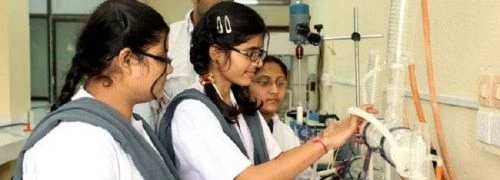
Infrastructure is where the college shines for its category. There are over 18 specialized labs, and students consistently praise access to equipment like HPLC machines and tablet punches. The Prof. M.L. Schroff Memorial Library has a solid collection of over 13,000 volumes. There's a medicinal garden with 100+ species and a CPCSEA-approved animal house for research—features not every pharmacy college can claim. Hostels are separate for boys and girls, with basic, non-AC rooms typically shared between 2-3 students. The food is standard Bengali fare—rice, dal, and a protein rotation of fish, chicken, or egg. It's functional. The campus is Wi-Fi enabled, though students note speeds are often restricted in hostel areas.
The consensus across forums is remarkably consistent. BST is for the academically inclined. The top praises are for lab facilities ("we actually get to use the machines"), faculty support ("teachers are very helpful"), and a ragging-free, disciplined environment. The strict 75% attendance policy is a double-edged sword—it ensures discipline but is frequently cited as a major pain point, with exam barring and fines for those who fall short.
The location is a mild inconvenience; it's about 1.5 km from Chinsurah station, requiring an auto-ride. The most common piece of advice from alumni is to manage expectations on placements. The official numbers paint a rosier picture than the ground reality for the average student. If you want a core role, you need to be a top performer.
Bengal School of Technology is a straightforward proposition. It's best for a student who wants a rigorous, no-frills pharmacy education in West Bengal without the extreme competition of a top government college. The NBA accreditation and strong lab facilities are its biggest assets. If your WBJEE rank is between 30,000 and 70,000, and you're focused on building a career in production, QA, or sales within the pharma industry, BST represents good value for money. Just don't expect a vibrant campus life or guaranteed high-paying R&D jobs. You'll have to earn those through your own rank and hustle. For that specific, career-oriented student, BST is a worthwhile choice. For someone seeking a holistic "college experience," you might find it lacking.




In this preview: 5 photos · 0 videos
Yes, Bengal School of Technology is considered a top choice for B.Pharm among private pharmacy colleges in West Bengal. It is one of the few NBA-accredited private pharmacy institutions in the state, often ranked after premier government colleges like Jadavpur University and GNIPST.
BST (Bengal School of Technology) focuses on Pharmacy education, offering courses like B.Pharm, D.Pharm, and M.Pharm. BSTM (Bengal School of Technology and Management) offers programs in management and technology, such as BBA, BCA, and Hospitality courses. Both institutions are located on the same campus.
Yes, direct admission is possible through the Management Quota, which reserves a percentage of seats. To be eligible, candidates must have a valid WBJEE or JEE Main rank or have achieved high marks in their 10+2 examinations with PCB or PCM subjects.
Placements for M.Pharm students are generally better than for undergraduate programs, particularly in roles related to Quality Control, Quality Assurance, and Formulation R&D. The median placement package for M.Pharm graduates is approximately ₹2.74 LPA.
The college maintains a strict anti-ragging policy and has an active anti-ragging cell. Recent reviews from 2023-2024 indicate that the campus is safe and that senior-junior interactions are professional, with no significant reports of ragging.
Share what future students should know about BST.
Student voices are not rewritten by colleges. We remove spam and abuse.
Wider admission question? Community PulseWhat should future students know?
Tell us which course you're considering. We'll help you work out the next step.
Get instant Partner access after mobile verification. Your public edits are reviewed before they go live.
Claim this college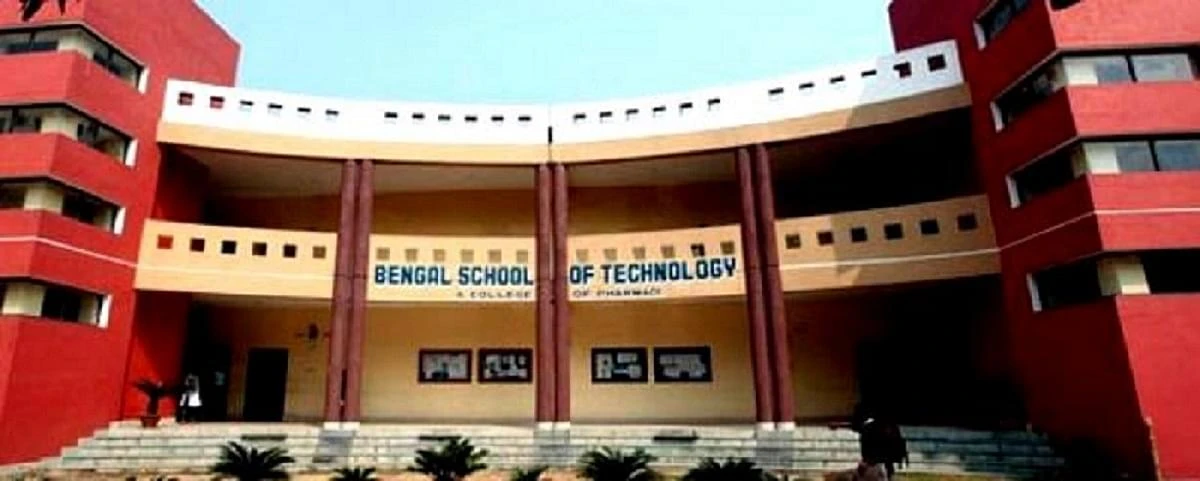

 Auditorium
 Cafeteria
 Campus Security
 Computer Labs
 Hostel
 Medical
 Science Labs
 Sports Complex
 Study Library