Loading Admission Guardian content
Loading Admission Guardian content
Provisional score based on available data. It may change as more information is verified.
Find a program, read its fee details and explore the admission requirements.
Summary of the programs shown below. First-year fee. Check the note beside each amount for inclusions and exclusions.
| Course | Stream | Fees |
|---|---|---|
| Bachelor of Technology [B.Tech] | Engineering | 80750 |
| Master of Business Administration [MBA] | Management | 80750 |
Specializations
All accepted exams
Eligibility: 10+2 with 75% + JEE Main
Specializations
Eligibility: Graduation
 FCS Software Solutions
 ICICI Prudential
Bhutta College of Engineering and Technology (BCET) in Ludhiana is a study in contrasts. It's a budget-friendly private college on a sprawling 32-acre campus, affiliated with the state's I.K. Gujral Punjab Technical University (IKGPTU). For students looking for an affordable engineering or management degree in Punjab, it's a name that comes up often. But the story here is about managing expectations. The college's official placement claims and the reality echoed by students on forums like CollegeDunia and Shiksha don't always align. You get a peaceful, green campus and a surprisingly diverse student body with peers from over 35 countries. What you might not get, according to alumni, is a straightforward ticket to a high-paying tech job. It’s a college that serves a specific need, and understanding that gap between promise and practice is key.
BCET’s academic offerings are standard for a PTU-affiliated private college. The B.Tech program is the main draw, with an annual intake hovering around 276 to 420 students. Computer Science and Engineering is, unsurprisingly, the most sought-after branch. Mechanical, Electrical, Electronics & Communication, and Information Technology round out the engineering options. Beyond that, you’ll find the usual suite of UG programs like BBA, BCA, and B.Com, plus an MBA and M.Sc (IT) at the postgraduate level.
Academically, it follows the IKGPTU Choice Based Credit System. The college website mentions modern pedagogical methods like blended teaching and flipped classrooms. In practice, the academic culture is described as fairly traditional, with a heavy emphasis on maintaining the university-mandated 75% attendance—a rule they enforce strictly. Faculty-wise, each department typically has a handful of PhD holders, and students generally find them accessible and supportive, especially in the CSE and management departments. It’s a decent setup for covering the PTU syllabus, but don’t expect groundbreaking research facilities. The labs, particularly for core branches like Mechanical and EE, are often described as having standard, sometimes dated, equipment.
This is the section where you need to read between the lines. The official narrative and student-reported outcomes tell different stories.
The college and some education portals claim a placement percentage around 85%, with a highest package ranging from ₹12.5 LPA to an eye-catching ₹36 LPA (the latter is almost certainly an off-campus outlier). The verified numbers from recent graduating batches are more modest. The median package sits around ₹5.25 LPA, with the average typically between ₹3.5 and ₹4.8 LPA.
Recruiters are a mix of IT service giants and local industry. HCL, Tech Mahindra, TCS, Wipro, and Infosys are names that appear. But students note these are often for mass-recruitment customer service or support roles, not core development positions. Amazon, for instance, is cited for customer service jobs. For core engineering branches, placement is tougher, with alumni suggesting the actual on-campus placement rate might be closer to 30-40%. CSE and IT students fare better. The college’s Corporate Resource Center (CRC) organizes drives, but there’s a persistent sentiment among reviewers that some "top MNC" placements are actually pool campus drives held elsewhere or off-campus opportunities students secured themselves.
The mandatory 6-month industrial training in the final semester is a plus. Most students end up finding these internships on their own, though the college does provide some assistance. The gap between the official claim and the alumni consensus is notable. It’s wise to view the 85% figure with healthy skepticism.
Affordability is BCET’s strongest card. For a private engineering college, the fees are on the lower end. The B.Tech tuition is about ₹92,200 per year, making the total degree cost roughly ₹3.7 lakhs. The MBA program totals around ₹1.89 lakhs for two years.
Where costs can add up is the hostel. A non-AC room runs between ₹80,000 to ₹96,000 annually, while AC rooms are ₹1.07 to ₹1.23 lakhs. Add a one-time refundable security deposit of around ₹10,000 and semester-wise university exam fees.
Financial aid is available primarily through government schemes. SC/ST students from Punjab can apply for the state's Post-Matric Scholarship. The college also offers some merit-based discounts for students with high scores in JEE Main or their 12th board exams. It’s not a scholarship-heavy institution, but the base fee structure itself is the main financial relief.
Getting into BCET’s B.Tech program follows the standard Punjab engineering admission route. You need a minimum of 45% in your 10+2 with Physics, Maths, and a relevant science subject. The primary entrance exam is JEE Main.
The selection is conducted through the online counseling by IKGPTU. Here’s the breakdown: 85% of seats are reserved for Punjab residents through this counseling, 15% are for candidates from other states, and a significant chunk—one-third of the total seats—are filled under the Management Quota. That management quota is your route for direct admission, based largely on your 12th-grade marks if you’ve missed the counseling rounds or want to bypass them.
Cutoffs aren’t fiercely competitive. For B.Tech CSE, the closing rank in recent IKGPTU counseling has been in the higher ranges, often beyond 150,000 for JEE Main. For other branches, it’s even more accessible. For MBA, they accept scores from CMAT, MAT, or even straight graduation merit.
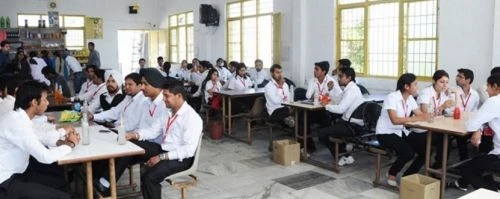
The 32-acre campus is consistently praised. It’s green, spacious, and feels removed from the hustle of Ludhiana city—which is both a pro and a con. The peace is great for academics, but the city’s social and industrial life is a 30-40 minute bus ride away. The college runs its own transport fleet for commuters.
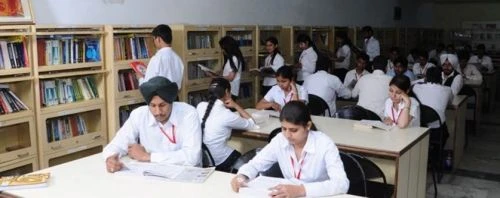
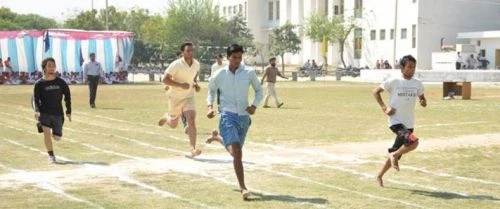
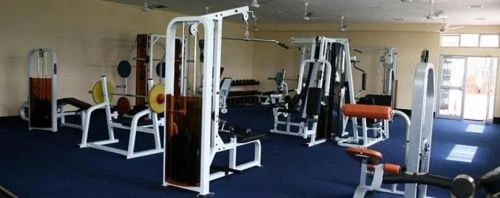
Hostels get a middling rating, around 3.3/5 in reviews. They’re separate for boys and girls, with amenities like Wi-Fi and geysers. The food is considered passable, better than many colleges, but gets monotonous. Infrastructure includes large sports grounds for cricket and football, and indoor facilities for badminton and table tennis. The library has a digital catalog and access to e-journals. Campus Wi-Fi exists, but students report it can be spotty, especially in hostel rooms.
A unique social feature is the international student community. Under the broader Bhutta Group umbrella, the campus hosts students from over 35 countries, primarily from Africa and South Asia. That does create a more diverse atmosphere than you’d find at a typical local private college.
Synthesizing feedback from CollegeDunia, Shiksha, and other forums paints a clear, balanced picture.
The positives are clear: value for money and a pleasant campus. Reviews often say, “Good if you just want a degree at a low cost.” The faculty’s approachability and the peaceful environment are big pluses. The international student presence is also seen as a positive, broadening perspectives.
But the criticisms are just as consistent. The placement reality is the biggest gripe, with many feeling the college overpromises. Administrative processes, like getting security deposits back, can be slow. The 75% attendance rule is enforced rigidly—no exceptions, even at 74%. And the rural location means you’re dependent on college buses or your own vehicle for anything beyond campus gates. As one student put it, “The infrastructure is great, but the labs need more modern equipment for actual research.”
BCET is a pragmatic choice, not a dream destination. It’s worth it for a specific type of student: someone from the region looking for an affordable, AICTE-approved B.Tech or MBA degree from a PTU-affiliated college, who values a quiet campus and isn’t solely banking on stellar on-campus placements. If you’re in CSE and are proactive about building your own skills and seeking off-campus opportunities, it can be a cost-effective launchpad.
However, you should probably look elsewhere if your primary goal is top-tier campus recruitment into core engineering roles, or if you crave a vibrant, urban college life. The college’s strengths are its low fees and peaceful environment. Its weaknesses are the average placement outcomes and remote location. Manage your expectations accordingly, focus on self-study, and it can serve its purpose. Go in expecting the moon, and you might be disappointed.
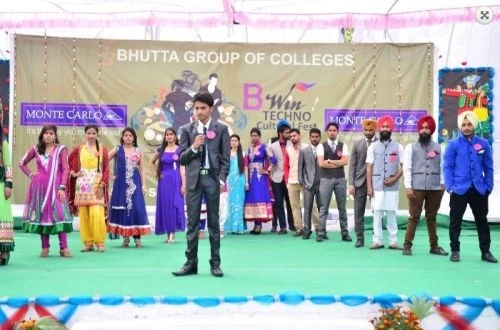
In this preview: 5 photos · 0 videos
Yes, BCET is considered good for CSE. It is regarded as the best branch at the college, offering better lab facilities and higher placement chances compared to its core engineering branches.
The annual fee for the B.Tech program at BCET is approximately ₹92,000 to ₹1,00,000. The total estimated cost for the complete four-year degree is roughly ₹3.7 Lakhs.
Yes, Bhutta College of Engineering and Technology provides direct admission through its Management Quota, which accounts for one-third of the total seats. Admissions under this quota are based on the candidate's 12th-grade marks.
No, staying in the hostel is not mandatory at BCET. Many students who are from Ludhiana and the surrounding areas commute to the college daily, with college buses available for transportation.
Yes, BCET is officially affiliated with I.K. Gujral Punjab Technical University (IKGPTU), which is a state-run government university in Punjab responsible for technical education.
Share what future students should know about BCET.
Student voices are not rewritten by colleges. We remove spam and abuse.
Wider admission question? Community PulseWhat should future students know?
Tell us which course you're considering. We'll help you work out the next step.
Get instant Partner access after mobile verification. Your public edits are reviewed before they go live.
Claim this college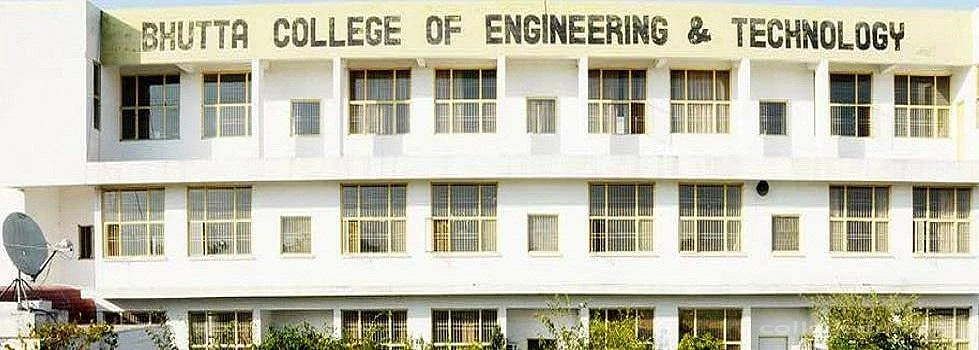

 Auditorium
 Cafeteria
 Campus Shuttle
 Computer Labs
 Gym
Gym Hostel
 Medical
 Science Labs
 Sports Complex
 Study Library