Loading Admission Guardian content
Loading Admission Guardian content
Provisional score based on available data. It may change as more information is verified.
Selected ranking categories, with the recorded year beside each result. Open all records for the complete history.
17 published records · Lower numeric ranks are stronger
India Today
Engineering · private
#342021
Indiatoday
B.Tech · private
#342021
Find a program, read its fee details and explore the admission requirements.
Summary of the programs shown below. First-year fee. Check the note beside each amount for inclusions and exclusions.
| Course | Stream | Fees |
|---|---|---|
| Bachelor of Computer Applications [BCA] | Computer Applications | 46850 |
| Master of Technology [M.Tech] | Engineering | 90574 |
| Master of Computer Applications [M.C.A] | Computer Applications | 98689 |
| Bachelor of Technology [B.Tech] | Engineering | 98689 |
| Bachelor of Technology [B.Tech] {Lateral} | Engineering | 98689 |
Specializations
Eligibility: 10+2
Specializations
All accepted exams
Eligibility: Pass in Graduation + GATE
Eligibility: Graduation
Specializations
Eligibility: 10+2 + JEE Main
Specializations
Eligibility: 10+3 + JEE Main
 Accenture
 Arora Iron & Steel Rolling Mills
 Artech Infosystems
 Capgemini
 Cell Propulsion
 Cognizant
 Cybage Software
 Federal bank
 Indian Acrylics
 Infosys
 Investosure
 Jaro Education
 Jivo Wellness
 Larsen & Toubro Ltd.
 Lovely Professional University
 Luminoguru
 Mahindra & Mahindra
 Malwa Industries Ltd
 Maruti Suzuki
 Nestle India
 Net2Source
 Shapoorji Pallonji & Co. Ltd.
 SML Isuzu
 Tata Consultancy Services
 Tata International
 Thermax
 Trident Group
 Vardhman Fabric
 Walmart
 Wipro
WiproGuru Nanak Dev Engineering College in Ludhiana is a study in contrasts. It’s a 1956 institution where the brickwork shows its age, but the alumni network—affectionately called "Geneco"—packs a modern, powerful punch. For a student with a mid-tier JEE Main rank and a tight budget, especially one aiming for core engineering in Punjab, GNDEC represents perhaps the most pragmatic value proposition in the region. You’re not paying for marble lobbies. You’re paying for a degree that, in certain circles, still commands respect and opens doors through a fiercely loyal graduate community. The college’s autonomous, government-aided status under the Nankana Sahib Education Trust means it walks a line between institutional rigidity and academic flexibility, a balance that defines the entire student experience.
The academic structure here is broad and traditional, heavily weighted towards engineering. The B.Tech programs are the main draw, with Computer Science and Engineering leading the pack with an intake of about 300 students. Information Technology follows at 180. The college's historical strength, however, lies in its core branches: Civil, Mechanical, and Electrical Engineering, each with intakes between 90 and 120. Smaller programs like Production Engineering (45-60 seats) and B.Arch (40 seats) round out the technical offerings. There are also BBA, BCA, and B.Com programs, but they operate in the long shadow of the engineering focus.
Academically, it’s a mixed bag. The college boasts a faculty of around 150, with a significant chunk holding PhDs and decades of experience. That expertise, however, often translates into a teaching style students frequently describe as "traditional book-cramming." The 10-point CGPA system is standard. Where GNDEC tries to modernize is through industry linkages—it has an active MoU with Iowa University in the USA for student exchange and is an accredited campus for TCS recruitment. Past funding from schemes like TEQIP-II (Rs. 10 crores) has injected capital into labs and research, though the on-ground feel of the infrastructure remains decidedly functional over flashy.
This is where the official brochure and student forums tell two different stories, and you need to listen to both. The college's official placement percentage floats around 70-85%. Dig into reviews on platforms like CollegeDunia and Shiksha, and a clearer, branch-dependent picture emerges. For CSE and IT, placement is robust, with maybe 90% of students landing on-campus roles, primarily from IT mass recruiters. The average package for these branches sits in the INR 4.5 to 6 LPA range, with on-campus highs touching INR 10-11 LPA.
For core branches—Mechanical, Civil, Electrical—the story shifts. Placement rates can dip to 40-50% on campus. The average package is lower, around INR 3.5-4.5 LPA. This is where the legendary "Geneco" alumni network becomes your most valuable asset. Countless reviews mention seniors helping with referrals for off-campus opportunities. The eye-popping INR 51 LPA Microsoft offer cited for 2024-25 is celebrated as an off-campus achievement fueled by this network. Top on-campus recruiters include TCS, Infosys, Wipro, Accenture, and for core roles, L&T and Shapoorji Pallonji. The NIRF 2024 report lists a median UG package of INR 4.00 LPA, which feels like an honest, all-branch average.
Affordability is GNDEC's undisputed trump card. The total tuition for a four-year B.Tech degree is roughly INR 4.5 to 5.5 lakhs. Break that down: the first year is about INR 1.24 lakhs, and subsequent years are around INR 1 lakh each. When you add hostel (INR 11,000-19,000 per semester) and mess charges (approx. INR 15,000 per semester), the total annual cost for a hosteller lands between INR 1.6 and 1.8 lakhs. That's a fraction of the cost of a private engineering college.
Financial aid is a strong point, especially for in-state students. The Post Matric Scholarship (PMS) for SC/ST/OBC candidates can reduce semester fees to as low as INR 5,000-10,000. As a minority institution under the Nankana Sahib Education Trust, it offers a specific Sikh Minority Quota with associated aid. There's also a Tuition Fee Waiver (TFW) scheme for merit-cum-means students. If budget is a primary constraint, GNDEC is very hard to beat on this metric alone.
Admission is centralized and transparent, with no management quota—a significant plus for fairness. For B.Tech, you need a valid JEE Main rank. Selection happens through the IKGPTU counseling process, which reserves 85% of seats for Punjab domicile holders and 15% for students from other states. This heavily influences the cutoffs.
For the 2024-25 cycle, the General category cutoff for CSE for All India candidates hovered between 60,000 and 90,000 ranks. For the Punjab home state quota, that rank could stretch to 1.5 lakh. IT saw cutoffs around 90,000 to 1.2 lakh. For core branches like Civil or Mechanical, seats in the Punjab quota are often available to candidates with ranks as high as 3-5 lakhs. For B.Arch, you need a NATA score. M.Tech admissions require a GATE score, and MBA admissions consider CMAT or MAT. All details are available on the university's official website.
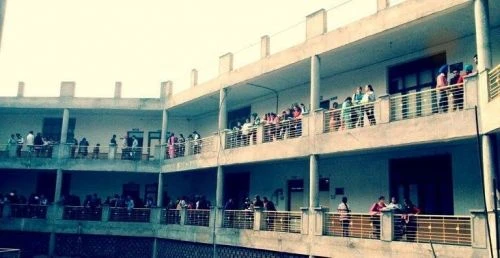
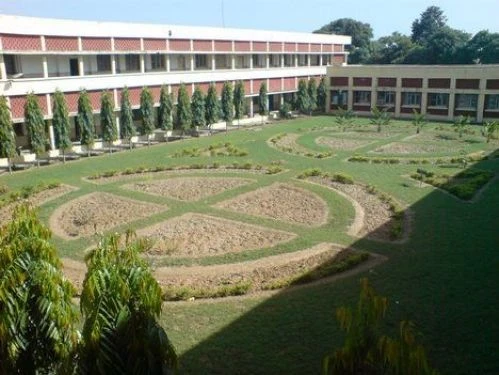
The 88-acre campus is universally praised for its greenery and peaceful, spacious feel. The infrastructure, however, is the most common gripe. Many buildings are original, from the 1950s, and maintenance is an ongoing challenge. Students mention functional but dated labs and hostel washrooms that are a particular pain point. There are four boys' hostels and one girls' hostel, with a total capacity of about 1200. Rooms are typically triple or four-sharing. The Wi-Fi is campus-wide but reported as inconsistent in hostels.
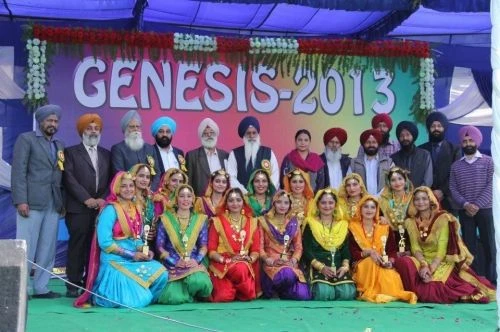
Life is structured. The campus has essential amenities: a Gurudwara Sahib, a bank, a post office, and an open-air theatre. Sports facilities are decent, including a swimming pool (with separate timings for women), a gym, and fields. The social scene is heavily influenced by the predominantly Punjabi student body, with a strong rural bent and a love for local music. It's a specific culture that can be a warm community for some and a culture shock for others, especially urban students.
A major point of contention, repeatedly highlighted in reviews, is the strict rules for women students. The girls' hostel has early curfews, often cited as 6 or 7 PM, which many describe as excessively restrictive. On a positive note, the college maintains a strict anti-ragging stance, and most students confirm the campus is effectively ragging-free.
Synthesizing the chatter from Quora, Reddit, and review sites, a consensus forms. The positives are the strong alumni network, exceptional value for money, respected core engineering programs, and a ragging-free, green campus. The "Geneco" connection isn't marketing fluff; it's a real career lifeline, especially for core branch students navigating a tough job market.
The negatives are just as consistent. The aging infrastructure tops the list. The pedagogical approach is often seen as outdated. The restrictive hostel rules for women are a significant deterrent for many. And the cultural environment, while vibrant, isn't for everyone. One paraphrased Quora review sums up the pragmatic view: "If you want to do B.Tech in Core branches and have a tight budget, GNE is the best choice in Punjab." Another on Reddit cautions, "Placements for CSE/IT are decent (mass recruiters), but for others, you have to fight for it."
GNDEC is a specific solution for a specific set of problems. It is absolutely worth it if you are a cost-conscious student from Punjab (or eligible for the minority quota) with a JEE Main rank in the 1-3 lakh range, aiming for a solid core engineering degree or a budget-friendly CSE/IT path where you're willing to leverage the alumni network for top opportunities. The return on investment, given the low fees, can be excellent.
Look elsewhere if you prioritize modern campus infrastructure, a cosmopolitan student life, or a highly innovative, hands-on teaching pedagogy. The strict regulations for women students are a serious consideration for female applicants. Ultimately, GNDEC doesn't pretend to be a top-100 NIRF institute. It’s a workhorse college with deep roots, a powerful community, and a clear understanding of its role: providing affordable, respectable engineering education to the region. For the right student, that’s more than enough.
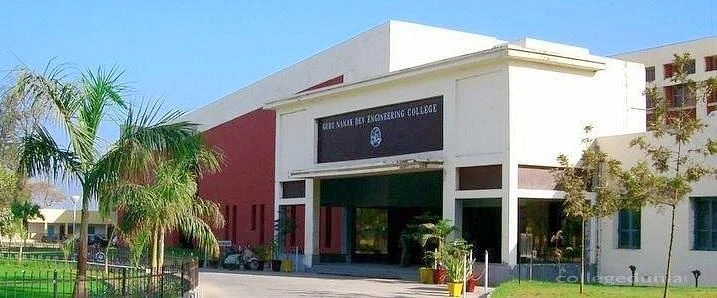
In this preview: 4 photos · 0 videos
Guru Nanak Dev Engineering College (GNDEC) is a Government-Aided Autonomous institution, which is often described as a semi-government college.
Yes, GNDEC is considered very good for Computer Science Engineering. CSE is the most popular branch at the college, with high placement rates of approximately 90% and some of the best average salary packages, typically ranging from 5 to 6 LPA.
GNDEC reserves 50% of its seats for students belonging to the Sikh minority. To be eligible under this quota, candidates must also pass a specific religious eligibility test.
No, reviews consistently describe the GNDEC campus as "ragging-free." This is attributed to the college's strict anti-ragging cells and its autonomous status, which enforces strong disciplinary policies.
No, direct admission or management quota seats are not available at GNDEC. Admission is strictly conducted through PTU counseling based entirely on the candidate's JEE Main rank.
Share what future students should know about GNDEC.
Student voices are not rewritten by colleges. We remove spam and abuse.
Wider admission question? Community PulseWhat should future students know?
Tell us which course you're considering. We'll help you work out the next step.
Get instant Partner access after mobile verification. Your public edits are reviewed before they go live.
Claim this college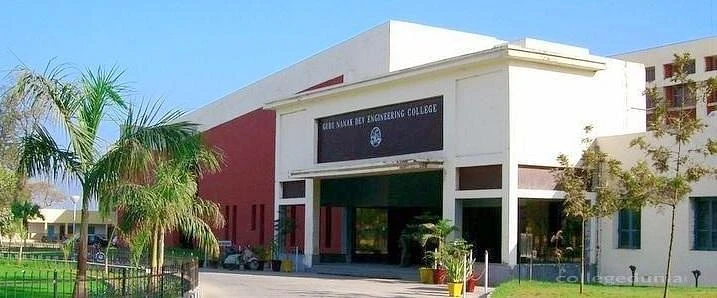
 Auditorium
 Cafeteria
 Computer Labs
 Gym
Gym Hostel
 Medical
 Science Labs
 Sports Complex
 Study Library