
BIMTECH Admission 2027-29: eligibility, tests and selection
BIMTECH’s official site currently shows applications open for the 2027-29 batch across four two-year, full-time residential PGDM programmes: Core, International Business (IB), Insurance Business Management (IBM) and Retail Management (RM). The admission page lists 300 seats for Core, 60 each for IB, IBM and RM, plus 45 supernumerary places for the Core programme only. These are the institute’s stated intakes for the current cycle, not a promise that every seat will be offered in each category.
The standard academic threshold across the four programmes is a bachelor’s degree in a 10+2+3 pattern with at least 50% aggregate marks. The admissions page says students appearing in the first attempt of their final-year graduation examination in Summer 2027 may apply provisionally. They must submit a final result with at least 50% aggregate by 31 October 2027; the institute states that provisional admission will be cancelled if the condition is not met. Candidates should check the online application and their offer for document and deadline instructions before relying on provisional eligibility.
BIMTECH says it has no management quota and does not offer direct admission or authorise agents to fill seats. Applications are made through the institute’s official admissions portal. A claim that a broker can secure a seat outside the published selection process is inconsistent with the institute’s own notice.
The institute describes three seat categories. Its page says 95% of seats in all courses are filled through the general merit category, while 5% are reserved for Economically and Socially Challenged Students (ESCS), including SC, ST, OBC, EWS and listed minority communities. If ESCS places remain unfilled, BIMTECH says they are opened to the general category. The 45 supernumerary seats apply only to Core PGDM and are reserved for eligible PIO, OCI, foreign-national or international, SAARC and Gulf-quota applicants, subject to proof of status. This is a separate merit pool, not an extra category across all four programmes.
The official 2027-29 admission page lists full-course tuition of ₹14,00,000 under the merit category for each of the four programmes and also shows ₹14,00,000 for Core PGDM supernumerary seats. The page says refundable security, hostel and mess charges are additional. Use the separate BIMTECH Courses & Fees guide for the detailed schedule and components; do not treat the tuition figure as the total residential cost.
Entrance tests accepted for the 2027-29 batch
BIMTECH’s current admissions page ties entrance-test eligibility to each programme. The listed exam editions are CAT 2026, XAT 2027, GMAT 2025 or 2026-27, CMAT 2027 and, for two programmes, MAT 2026-27. The table retains those programme differences.
The page does not list MAT for Core or International Business in its programme eligibility lines, so applicants should not assume that a MAT score can replace one of the listed tests for those two courses. It also states that no CAT, XAT, GMAT, MAT or CMAT score is required for the Core supernumerary route. Confirm any later change against the programme-specific application before paying the application fee.
Shortlisting uses the score applicable to the chosen programme and past academic record. Shortlisted applicants are called for an Extempore and Personal Interview (PI). The institute asks applicants to enter their test percentiles in the portal after results are declared. Its FAQ says candidates may submit more than one eligible test score and BIMTECH will use the best score based on eligibility when preparing the final offer. That does not mean every exam is accepted for every programme; the programme table above controls the list.
BIMTECH says the application is submitted online and the processing fee is ₹2,250, which is non-refundable. The current page links to the portal and allows payment by card or bank transfer through its designated payment gateway. Check the live form for the closing date and available test-score fields. The official page currently advertises the 2027-29 batch but does not state a closing date in the material reviewed for this guide.
How selection weightages differ by category
The institute publishes separate final-selection weights for general and supernumerary applicants. For general-category applicants, Extempore carries 5% and PI 20%, so the combined selection exercise accounts for 25%. The applicable entrance-test percentile carries 35%; past academic performance across Class 10, Class 12 and graduation 10%; an engineering degree 10%; work experience 10%; regional status outside Uttar Pradesh and the National Capital Region 5%; and female-candidate weightage 5%. These components total 100% under the page’s stated scheme.
For supernumerary applicants to Core PGDM, BIMTECH assigns 15% to Extempore and 35% to PI, for a combined 50%. Past academics carry 14%, an engineering degree 13%, work experience 13%, regional status outside UP and NCR 5%, and female-candidate weightage 5%. The exam-percentile row is marked not applicable. Do not compare the two sets of weights as if they were one common merit list: the supernumerary pool has its own eligibility, documentation and selection basis.
The page says additional academic weight may apply to graduates of colleges or universities in the top 100 of the preceding year’s NIRF rankings. Work-experience weight is ideally for applicants who, by 31 January 2027, have at least one year in an executive or supervisory role at a registered company with turnover of at least ₹10 crore in financial year 2025-26. BIMTECH reserves discretion to relax that work-experience norm in cases such as a start-up or entrepreneurial venture. For regional weight, a valid proof of residence is required; the page names a domicile certificate or passport/Aadhaar copy as examples. Because these conditions affect a part of the score rather than basic eligibility, applicants should upload evidence early and confirm that it meets the current category rules.
The admissions page lists ESCS documentation separately, including an EWS family-income ceiling of ₹8,00,000 per year and specified supporting documents. It says category documents must be provided when the first fee instalment is submitted; otherwise the applicant is considered under the general merit category. Applicants seeking any reserved or supernumerary route should read the institute’s full document instructions rather than rely only on the summary above.
Application timeline and what to confirm
The official page says the final selection list is expected in March 2027 and the academic session is likely to begin in June or July 2027. These are the institute’s stated expectations, not a substitute for a dated offer letter or a later portal update. It says selected applicants must pay the first tuition instalment by the deadline in their offer; BIMTECH does not entertain extension requests. If you receive a provisional final-year offer, track the 31 October 2027 graduation-result deadline separately.
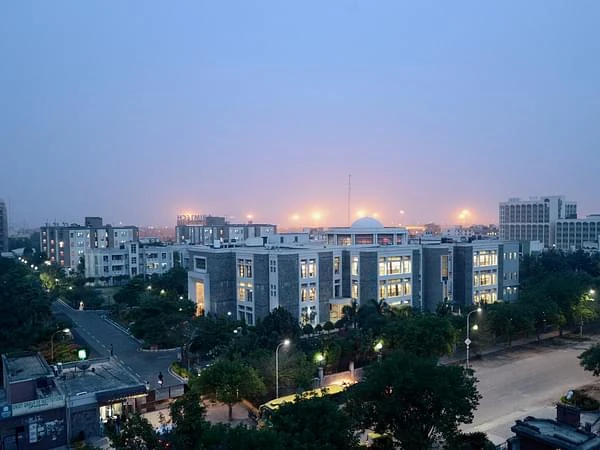
The selection process may be online or held at BIMTECH Greater Noida, Bengaluru, Kochi, Hyderabad, Indore, Kolkata or Pune. The institute reserves the right to change interview arrangements. Check the portal and email for the venue or meeting link, the score-upload instructions and any document verification request. BIMTECH says certificates, marksheets and degrees are sent to the issuing authorities for verification. Its page also says a candidate who fails to secure the required 50% graduation aggregate after admission must withdraw, with only the general security deposit refundable under the stated rule.
Before applying, match your exam edition and programme in the table, calculate Class 10 and 12 percentages using BIMTECH’s instruction to include all subjects, and check the institute’s CGPA-conversion method if your university has no rule. Submit the form online, retain the payment record, and update test percentiles once results are available. The current page says incomplete forms may be rejected, and the application fee cannot be refunded.
BIMTECH’s FAQ says Class 10 and 12 percentages must include every subject, including optional subjects, even if a board uses a different calculation for its own purposes. For graduation CGPA, follow the university’s published conversion rule. If the university has no conversion scheme, BIMTECH’s FAQ says to divide the candidate’s CGPA by the maximum possible CGPA and multiply by 100. This calculation can change whether an applicant meets the 50% minimum, so use the method the institute specifies and retain the underlying marksheets. The institute also says certificates, marksheets and degrees are sent to the issuing authorities for verification.
For a final check, use BIMTECH’s official admissions page and apply page, then confirm the current application window, programme-specific score acceptance, category documents, selection-process venue and fee deadlines in your portal account. The published date of March 2027 for the final list and likely June/July 2027 start are the latest timing statements reviewed here; no closing date was stated on the captured page.