Loading Admission Guardian content
Loading Admission Guardian content
Provisional score based on available data. It may change as more information is verified.
Find a program, read its fee details and explore the admission requirements.
Summary of the programs shown below. First-year fee. Check the note beside each amount for inclusions and exclusions.
| Course | Stream | Fees |
|---|---|---|
| Diploma in Engineering (Polytechnic) | Engineering | 25000 |
| Bachelor of Technology [B.Tech] | Engineering | 53000 |
| Master of Technology [M.Tech] (Structural Engineering) | Engineering | 57000 |
Specializations
All accepted exams
Eligibility: 10th
Specializations
All accepted exams
Eligibility: 10+2
Specializations
All accepted exams
Eligibility: Graduation
2 exams with cutoff data available - showing recent entries
 Capgemini
 Cognizant
 CSC
CSC Dell
Dell Google
 GRM Resources
 Infosys
 NTT DATA
 Red Hat India Pvt Ltd
 Siemens
 Syntel
 TCS
TCS ValueLabs
Brindavan Institute of Technology and Science in Kurnool is a name you’ll hear a lot if you’re looking at private engineering colleges in Andhra Pradesh’s Rayalaseema region. Established in 2008 and affiliated with the well-regarded Jawaharlal Nehru Technological University Anantapur (JNTUA), it’s built a reputation as a disciplined, no-frills institution that delivers a solid, affordable technical education. Don’t confuse it with BITS Pilani—this is a different entity. But for students scoring in the mid-range of the AP EAPCET and, crucially, those eligible for the state’s generous fee reimbursement schemes, BITS Kurnool often represents a pragmatic choice. The campus is green, the faculty is supportive, and the placement cell works to get students into jobs. Just don’t expect Silicon Valley salaries or the autonomy of a top-tier university. It’s a workmanlike college that does what it says on the tin.
The academic portfolio is straightforward, mirroring the demand in the region. All programs follow the JNTUA academic calendar and the Choice Based Credit System (CBCS). The B.Tech program is the main draw, with an annual intake of about 540 students split across five branches: Computer Science and Engineering (CSE), Electronics & Communication Engineering (ECE), Civil Engineering (CE), Mechanical Engineering (ME), and Electrical & Electronics Engineering (EEE). A new program in Artificial Intelligence & Machine Learning (AI&ML) has been introduced, though its intake numbers aren’t yet verified. For postgraduates, M.Tech is offered in Structural Engineering and Machine Design, with around 18 seats each. There’s also a three-year Diploma (Polytechnic) in core engineering branches.
The faculty strength is around 112, with about 15-20% of senior staff holding PhDs. Student reviews consistently highlight that professors are approachable and helpful with projects and exam prep—a significant plus. The college has some industry linkages, including an MoU with the Andhra Pradesh State Skill Development Corporation (APSSDC) and collaborations with TASK in Telangana. It also acts as a nodal center for the Smart India Hackathon. The academic culture is described as disciplined, even strict, with a strong emphasis on maintaining 75%+ attendance. It’s a structured environment that keeps students on track, for better or worse.
This is where you need to read between the lines. The official placement claim hovers around 85%, but the consensus from student reviews on platforms like CollegeDunia and Shiksha suggests a more grounded figure. For core branches like Civil and Mechanical, placement rates are closer to 60%, while for CSE and ECE, they might reach 75%. The vast majority of roles—about 70%—are in the IT/software services sector. That means even Civil and Mechanical graduates often end up in coding or support jobs at companies like TCS, Wipro, Infosys, Tech Mahindra, and Cognizant.
The package numbers tell a clear story. The average sits between ₹3.5 and ₹4.2 LPA, with a median around ₹3.2 LPA. You’ll hear student claims of a highest package touching 13-15 LPA, but the college’s own records indicate a peak closer to ₹8 LPA. For core engineering roles, opportunities are fewer and usually require proactive off-campus searching. So, the placement cell provides a baseline gateway, primarily to mass recruiters. It’s a decent safety net for the fee you pay, but it’s not a launchpad for high-flying careers. You’ll need to build your own skills for that.
The fee structure is a major selling point, thanks to regulation by the Andhra Pradesh Admission and Fee Regulatory Committee (AFRC). For the 2024-25 academic year, the annual tuition for B.Tech is a very affordable ₹43,000. M.Tech fees are similar, ranging from ₹43,000 to ₹50,000, while Diploma programs cost between ₹24,000 and ₹25,000 per year.
Other costs add up, of course. Hostel and mess fees are a significant component, ranging from ₹70,000 to ₹90,000 annually depending on room type. Add in exam fees (≈₹5,000/year), library charges, and the one-time application fee, and the total cost for a four-year B.Tech degree, including hostel, lands between ₹5.5 and ₹6 lakhs.
Where this becomes truly compelling is with state scholarships. Eligible students from Andhra Pradesh can avail of the Jagananna Vidya Deevena (JVD) and Vasathi Deevena schemes, which provide full tuition fee reimbursement and hostel fee assistance, respectively. For qualifying students, this effectively makes the education nearly free—a massive factor in the college’s value proposition.
Admissions are centrally controlled through state entrance exams. For B.Tech, you must appear for and secure a rank in the AP EAPCET (Andhra Pradesh Engineering, Agriculture and Pharmacy Common Entrance Test). Seats are filled through state counseling, with 70% under the Convener Quota and 30% under Management Quota. For M.Tech, you need a rank in AP PGECET or a valid GATE score. Diploma admissions require an AP POLYCET rank.
The cutoffs give you a sense of the competition. For the 2024 B.Tech admissions cycle (Round 1, General Category), the closing ranks were:
These ranks are squarely in the mid-to-lower tier of the AP EAPCET spectrum. It means BITS Kurnool is accessible to a large pool of students who may not have scored high enough for government colleges or top private institutions in cities like Tirupati or Anantapur. The application window typically opens after the entrance exam results, around April to June.
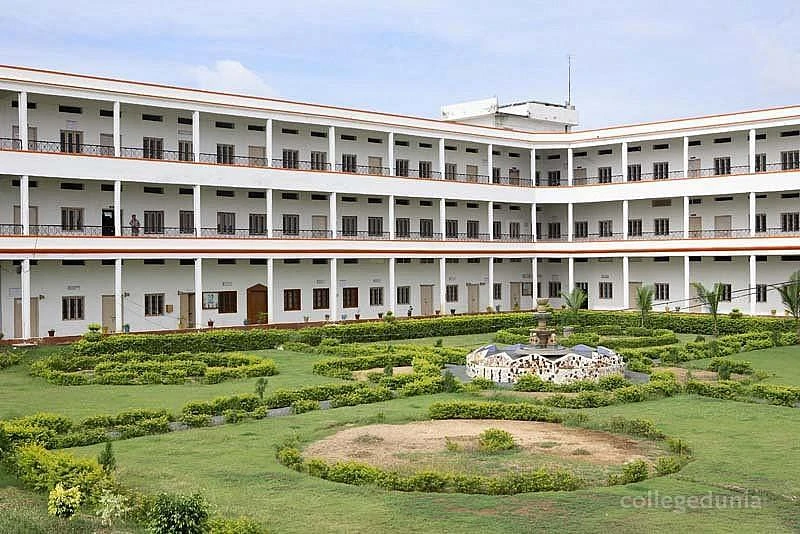
The campus spans 10-15 acres right off National Highway 44, about 12 km from Kurnool city. It’s described as green and well-maintained. Infrastructure is functional. The central library has over 27,000 volumes and provides access to DELNET for e-journals. Labs are adequately equipped, with a 48 Mbps leased line powering the computer labs. There are specific labs for Civil and Mechanical specializations.
Hostels are a key feature. There are separate facilities: a boys' hostel near the campus and a girls' hostel securely located within the campus grounds. Capacity is about 400 and 200, respectively. Reviews rate them around 3.5/5—rooms are ventilated, RO water is provided, and the food is considered passable. “Better than many other private colleges in Kurnool, but don’t expect a 5-star menu,” as one student put it. The college runs a fleet of over 15 buses to ferry day scholars from across the district, which is essential given the somewhat remote location.
Sports facilities exist for cricket, football, volleyball, and indoor games. The social and cultural scene, however, is reported to be limited. This isn’t a campus known for huge fests or a vibrant nightlife. The atmosphere is disciplined and focused, which some find restrictive but others appreciate for keeping distractions at bay.
Synthesizing feedback from student review platforms reveals a consistent picture. The positives are clear: value for money (especially with fee reimbursement), a supportive faculty, a clean, disciplined campus, and adequate infrastructure. Parents tend to like the strict attendance and rules.
The negatives are equally consistent. Placement packages are modest, often clustering at the lower end of the spectrum. Core branch students feel left out of the placement process, which is dominated by IT services. The strict discipline feels excessive to some, and the location is inconvenient if you don’t use college transport. There’s also a sense that you have to supplement your learning on your own for high-end tech roles.
One paraphrased comment sums it up well: “If you are an average student looking for a degree with decent support, join here. If you want high-end tech exposure, you’ll have to work on your own.”
Brindavan Institute of Technology and Science occupies a specific, important niche in the Andhra Pradesh engineering landscape. It’s not a research powerhouse or a brand-name recruiter magnet. Its NIRF ranking position isn’t in the top tiers. But that’s not its purpose.
This college is a solid, pragmatic choice for a particular student profile: mid-range AP EAPCET rank holders, especially those eligible for full state fee reimbursement, who want a structured, affordable path to an engineering degree and a likely job in the IT services sector. For them, the ROI is excellent. The discipline ensures you graduate, the faculty will help you pass, and the placement cell will likely connect you with a company offering a 3-4 LPA starting salary.
Who should look elsewhere? Students with very high ranks aiming for premier institutes, those seeking a vibrant campus life with big fests, or anyone in a core branch (Civil, Mechanical) who is adamant about working in their core industry and not in IT. For them, the opportunities here will feel limited. But for its target audience, BITS Kurnool delivers exactly what it promises—a straightforward, cost-effective engineering education with a job at the end.
In this preview: 1 photo · 0 videos
No, Brindavan Institute of Technology and Science (BITS) Kurnool is not the same as BITS Pilani. BITS Kurnool is a private institute affiliated with JNTU Anantapur. BITS Pilani is a separate, nationally renowned Deemed University with campuses in Pilani, Goa, and Hyderabad.
The tuition fee for the B.Tech program at BITS Kurnool is approximately ₹43,000 per year. This figure typically covers academic costs and does not include additional expenses like hostel accommodation or transport.
Yes, the college provides placement assistance for Civil and Mechanical Engineering students. However, most campus recruitment is driven by IT companies. Core engineering placements are fewer in comparison, and students in these branches often need to pursue off-campus opportunities to secure roles in their specific fields.
Yes, Brindavan Institute of Technology and Science provides a dedicated girls' hostel facility located inside the campus. The hostel is equipped with 24/7 security for the safety and convenience of its residents.
For the 2024 admission cycle, the closing rank for the Computer Science and Engineering (CSE) program under the general category at BITS Kurnool was approximately 88,000 in the AP EAPCET (Andhra Pradesh Engineering, Agriculture and Pharmacy Common Entrance Test).
Share what future students should know about BITS.
Student voices are not rewritten by colleges. We remove spam and abuse.
Wider admission question? Community PulseWhat should future students know?
Tell us which course you're considering. We'll help you work out the next step.
Get instant Partner access after mobile verification. Your public edits are reviewed before they go live.
Claim this college
 Auditorium
 Cafeteria
 Computer Labs
 Gym
Gym Hostel
 Medical
 Science Labs
 Sports Complex
 Study Library