Loading Admission Guardian content
Loading Admission Guardian content
Provisional score based on available data. It may change as more information is verified.
Selected ranking categories, with the recorded year beside each result. Open all records for the complete history.
10 published records · Lower numeric ranks are stronger
Indiatoday
Medical
#452022
Outlook
Medical · private
#152022
The Week
Medical
#352020
The Week
Medical · private
#182020
Find a program, read its fee details and explore the admission requirements.
Summary of the programs shown below. First-year fee. Check the note beside each amount for inclusions and exclusions.
| Course | Stream | Fees |
|---|---|---|
| Doctorate of Medicine [MD] | Medical | 530000 |
| Diploma | Paramedical | 530000 |
| M.B.B.S. | Medical | 1370000 |
| Master of Surgery [MS] | Medical | 2400000 |
| Master of Chirurgiae [M.Ch] (Urology) | Medical |
Specializations
All accepted exams
Eligibility: Post Graduation
Specializations
Eligibility: Graduation
All accepted exams
Eligibility: 10+2
Specializations
Eligibility: Graduation
Specializations
All accepted exams
Eligibility: Post Graduation
2 exams with cutoff data available
Chalmeda Anand Rao Institute of Medical Sciences (CAIMS) in Karimnagar is a study in stark contrasts. It’s a place where you can see more pathology in a week than some city colleges see in a month, thanks to a massive 1,350-patient daily OPD. But that exceptional clinical exposure comes wrapped in a package of serious administrative controversy, most notably a 2025 student protest over intern stipends that turned into a major flashpoint. Established in 2003, this 35-acre private college affiliated with Kaloji Narayana Rao University of Health Sciences (KNRUHS) is recognized by the National Medical Commission. It’s a solid academic choice on paper, but your experience here will depend heavily on your tolerance for institutional politics versus your hunger for raw, hands-on medical training.
CAIMS offers a full spectrum from undergraduate to super-specialty programs, all under the annual exam system of KNRUHS. There’s no CGPA here—your final percentage in university exams is what counts. The MBBS program, with an intake of 200 students, is the core offering. They also run a 100-seat B.Sc Nursing program recognized by the Indian Nursing Council.
Where the college expands significantly is in post-graduation. They offer MD/MS seats across 19-20 departments, totaling between 121 to 174 seats. The clinical specializations are robust: General Medicine, Pediatrics, Psychiatry, General Surgery, Orthopaedics, OBG, Anaesthesiology, and Radio-Diagnosis are all available. For super-specialization, they have M.Ch in Urology (2 seats) and DM in Neurology (1 seat). A PhD program in Pharmacology rounds out the doctoral options.
The faculty, numbering over 250, is frequently cited as a strength. Students on forums note that professors, especially in clinical departments, are deeply knowledgeable. The leadership includes Principal Dr. Syed Ali Aasim (Anaesthesiology) and Medical Superintendent Dr. V. Suryanarayana Reddy (General Surgery). The academic culture, however, is described as rigid. Attendance is strictly enforced, and the distribution of internal assessment marks is a recurring point of student grievance, often cited as a tool for control.
In a medical college, "placements" means something different. It’s about the compulsory rotatory internship, success in NEET PG for specialization, and subsequent career paths. This is where CAIMS’s reputation faces its most severe test.
Let’s talk about the internship first. By Telangana government order, the mandated stipend for 2024-2024 is between ₹25,906 to ₹29,792 per month. The reality, as reported in student protests and news articles in July 2024, is starkly different. Multiple student accounts allege they are paid only ₹2,000 per month, forced to sign for the full amount, and face suspension or academic harassment if they protest. This gap between official policy and on-ground practice is the single biggest red flag for prospective students. You must verify this situation directly with current interns before committing.
Post-MBBS, most graduates (90%+) focus on cracking NEET PG. The college’s high clinical volume is a genuine advantage for this exam. Those who don’t pursue PG immediately can work as Medical Officers in government or private sectors, with starting salaries typically ranging from ₹8 to ₹12 LPA. Top recruiters for such roles or for post-PG positions include major corporate hospital chains like Apollo, Yashoda, and Continental, along with the Telangana State Medical Service.
The fee structure at CAIMS is a classic three-tier system governed by the Telangana Fee Regulatory Committee (TFRC). The disparity is massive, defining the student experience.
For MBBS (2024-2024), Category A (Convener/Government quota) students pay about ₹60,000 per year in tuition. Category B (Management quota) jumps to approximately ₹11,55,000 annually. The NRI (Category C) fee can go up to ₹23,10,000 per year. Postgraduate clinical seats see even steeper numbers: ~₹7.75 lakhs for Convener quota and a staggering ~₹24 lakhs for Management quota.
On top of tuition, you have to budget for hostel and mess, which adds another ₹1,00,000 to ₹1,65,000 yearly depending on room sharing and AC preference. Then there are additional university fees (₹10k-20k), library charges, and a particularly burdensome requirement for Management/NRI students: a mandatory bank guarantee for the next year's full tuition fee.
Do the math. A full 5.5-year MBBS course for a Management quota student can easily cost ₹65 to 75 lakhs all-in. There’s no mention of substantial institutional scholarships or financial aid in available student materials—your funding needs to be secured upfront.
Admission is strictly through national entrance exams. For MBBS, it’s NEET UG. For MD/MS, it’s NEET PG. For super-specialties like DM/MCh, it’s NEET SS. There are no separate college-level tests.
The selection is entirely via centralized state counseling conducted by KNRUHS. The application window typically opens after NEET results are declared, around June-July.
Cutoffs vary wildly by quota. For the 2024 admission cycle (Round 1), the All India Rank for the General category in the Management quota (B-Category) was around 1,65,150. For the more affordable Home State (Convener) quota, the closing rank ranged from approximately 1,16,378 to 1,61,141. These numbers shift each year based on exam difficulty and applicant pool, but they give you a ballpark. A rank near or above 1.6 lakhs is your ticket to a Management seat here.
The 35-acre campus is often described as "serene" and unpolluted—a quiet place to study, located about a 10-minute drive from Karimnagar town. The infrastructure is built around the 1000-bed teaching hospital, which is undeniably the heart of the institute. It’s equipped with 13 operation theatres, full-fledged ICUs (Medical, Surgical, Cardiac, Neonatal), CT, MRI, and a licensed blood bank.
The hostel blocks are separate for boys, girls, and postgraduates. Reviews on quality are middling, around a 3.5/5. Rooms are typically available for 2 or 3 sharing. The bigger complaint is the mess food, consistently rated 2.5/5 or lower. Students gripe about a repetitive vegetarian menu and questionable hygiene, with non-veg served only twice a week. Sports facilities for cricket, football, volleyball, and kabaddi exist but aren’t a major highlight in student narratives.
Social life is subdued. The location isn’t remote, but it’s not a bustling city campus either. The nearest major railway station is Odela (30 km away), and the closest airport is in Hyderabad, a 3.5-hour drive. Your world will largely revolve around the hospital, hostels, and the library—a 2,400 sq. meter facility with over 12,000 books and journal subscriptions.
Synthesizing opinions from Reddit, Quora, and education portals reveals a clear, divided consensus. The official CollegeDunia rating is a glossy 4.2/5, but the student-led review score sits at a more believable 2.8/5. That tells you most of the story.
The positives are powerful and consistent. The clinical exposure is phenomenal. “You will see everything from snake bites to complex neurosurgeries,” one Quora user noted. The high patient load is the college’s undeniable, number-one asset. Faculty knowledge in clinical subjects is also widely praised.
But the negatives are severe and administrative. The word "toxic" appears repeatedly. A Reddit user in June 2024 stated, "CAIMS is not a medical college; it's a machine that rewards silence and breaks those who dare to question." Allegations of caste-based favoritism and nepotism in administration are frequent. Students describe an authoritarian environment where the "Vice Principal's rule" is absolute, and hostel staff can be unprofessional.
The stipend issue is the explosive center of this. Beyond the financial loss, it’s seen as a symbol of exploitative management. Another disturbing claim from interns is being used for political "health camps" in the Chairman’s constituency for photo-ops rather than education. While physical ragging is reportedly low, students speak of "academic and emotional ragging" by some faculty and seniors.
This isn’t an easy yes or no. CAIMS is a college for a specific type of student. If your sole, overwhelming priority is to get the most intense, hands-on clinical training possible and you are willing to endure a rigid, potentially exploitative administrative system to get it, then CAIMS delivers on its core academic promise. The patient load is a genuine goldmine for learning.
However, if student welfare, transparent administration, and a supportive learning environment are important to you, look elsewhere. The management issues and the stipend scandal are not minor quirks; they indicate a fundamental disconnect between the institution's stated goals and its treatment of students. The financial cost for management quota seats is also extraordinarily high for a college with these persistent governance problems.
Your decision hinges on a trade-off: world-class clinical material versus a reportedly sub-par human experience. For a student with a high NEET rank, there are likely other private colleges in Telangana with less baggage. For a student determined to become a clinically excellent doctor and who can navigate—or ignore—institutional politics, CAIMS’s hospital might just be worth the hassle. Do not enroll without speaking directly to current interns about the real stipend and living conditions.
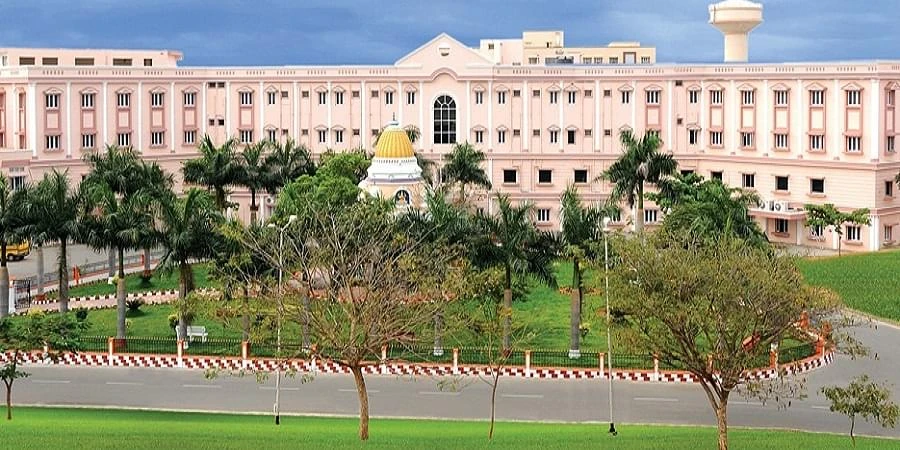
In this preview: 1 photo · 0 videos
CAIMS offers a mixed experience for MBBS students. It is considered good for clinical learning due to the high patient load at its associated hospital. However, prospective students prioritizing a supportive administrative environment and strong student welfare may have concerns, as these areas are frequently cited as shortcomings.
There is a significant discrepancy between the official stipend and what interns report receiving. While the government-mandated stipend is approximately ₹29,000, current students (as of 2025) report receiving only around ₹2,000, with allegations that the management withholds the remaining amount.
The quality of the hostel mess food at CAIMS is generally reported to be below average. Students frequently raise complaints regarding both the taste and the hygiene standards of the food provided.
Overt physical ragging is reported to be rare due to active anti-ragging cells. However, students frequently report experiencing "academic and emotional ragging," which is said to come from both seniors and certain faculty members.
For the 2024 admission cycle, the approximate NEET UG All India Rank (AIR) for securing a Category B seat at Chalmeda Anand Rao Institute of Medical Sciences was around 1.65 lakh.
Share what future students should know about CAIMS.
Student voices are not rewritten by colleges. We remove spam and abuse.
Wider admission question? Community PulseWhat should future students know?
Tell us which course you're considering. We'll help you work out the next step.
Get instant Partner access after mobile verification. Your public edits are reviewed before they go live.
Claim this college
 Auditorium
 Cafeteria
 Computer Labs
 Gym
Gym Hostel
 Medical
 Science Labs
 Sports Complex
 Study Library