Loading Admission Guardian content
Loading Admission Guardian content

Provisional score based on available data. It may change as more information is verified.
Selected ranking categories, with the recorded year beside each result. Open all records for the complete history.
36 published records · Lower numeric ranks are stronger
Indiatoday
B.Tech · private
#412023
Indiatoday
BCA
#402023
Indiatoday
Overall
#462021
Outlook
B.Tech · private
#282023
Find a program, read its fee details and explore the admission requirements.
Summary of the programs shown below. Programs record different fee periods. Compare the individual amounts and their notes below.
| Course | Stream | Fees |
|---|---|---|
| Diploma in Engineering (Polytechnic) | Engineering | 70000 |
| Bachelor of Computer Applications [BCA] + Master of Computer Applications [MCA] | Computer Applications | 112000 |
| Master of Computer Applications [M.C.A] {Lateral} | Computer Applications | 162000 |
| Bachelor of Engineering [BE] | Engineering | 174000 |
| Ph.D | Engineering | 420000 |
Specializations
Eligibility: 10+2
Eligibility: Graduation
Specializations
Eligibility: 10+2 with 75% + JEE Main
Specializations
Eligibility: Post Graduation
 Accenture
 Adobe
Adobe Amazon
 Apple
Apple ARM Embedded
 Bank of America
 Birlasoft
 Byju's
 CA Technologies
 Cadence Design Systems
 Capgemini
 Cisco
Cisco Cognizant
 Cumi Murugappa Group
 Dell
Dell Deloitte
 Ericsson India Pvt Ltd
 Escorts
 Evalueserve
 EXL Service
 Flipkart
 GODREJ Pvt. Ltd
 Google
 HCL
HCL Hero Motocorp
 Hindustan Coca-Cola Beverages Pvt. Ltd
 Hindustan Copper Limited (HCL)
 HP India Pvt. Ltd.
 IBM
IBM IGATE
IGATE Infosys
 JSW Steel Ltd
 L&T ECC
 L&T Ltd.
 Larsen & Toubro Limited
 LG Electronics
 MakeMyTrip India Pvt. Ltd.
 Microsoft
 Microsoft(IT)
 MindTree
 NCCBM
NCCBM NIIT
NIIT Nvidia
 Oracle
 Punj Lloyd
 Samsung
 SAP
SAP Siemens
 Tech Mahindra
 Toshiba
 Virtusa
 VMware
 Vodafone
 Wipro
Wipro Zomato
Chitkara Institute of Engineering and Technology (CIET) is a place of stark contrasts. It’s a sprawling, modern campus that feels more like a corporate tech park than a traditional college, and it’s run with a discipline that many students describe as ‘school-like.’ But here’s the hook: if your primary goal is a job in the IT sector straight out of college, CIET delivers with a consistency that’s hard to match among private universities in North India. The official average package hovers around INR 8.5-10.5 LPA for CSE, and the campus sees a steady parade of tech giants. You just have to be willing to trade a certain idea of ‘college freedom’ for that outcome. It’s a transactional, high-stakes environment that works for a specific kind of student.
CIET’s academic portfolio is heavily tilted towards computing and IT, reflecting market demand. The B.E. in Computer Science & Engineering is the undisputed king, with an estimated intake of over 1,200 students. It’s not just a generic degree; the university offers specializations built in collaboration with industry partners—AI & Machine Learning with Microsoft, Cloud Computing with AWS, Cyber Security, Data Science, and more. That’s a smart move, giving students a slightly differentiated profile in a crowded field.
Other programs include Electronics & Communication, Mechanical, Mechatronics, Civil, Electrical, and Automobile Engineering (with ARAI). The academic structure is rigidly semester-based, and the grading, especially in high-intake branches like CSE, often uses a relative system. That means you’re competing directly with your large cohort. Faculty credentials are solid on paper, with a high percentage of PhD holders in senior roles, including notable professors like Dr. Rajeev Kamal Sharma and Dr. Rakesh Goyal. The tie-ups with Microsoft, AWS, Google, and Oracle aren’t just for show—they feed directly into curriculum and lab infrastructure, like the Nvidia AI Learning Center.
This is the centerpiece of CIET’s pitch, and the data is compelling, if you parse it carefully. The headline-grabbing number is the INR 1.11 Crore package, but it’s crucial to note this is cited as an international/off-campus offer for a B.Tech CSE student. It’s an outlier. The highest domestic packages typically range from INR 40-50 LPA, with companies like Amazon and Adobe offering those roles.
The official average package claim for CSE is INR 8.5 – 10.5 LPA. The NIRF 2025 report lists a median package of INR 9.72 LPA for B.Tech, which adds credibility. However, the student consensus across forums like Quora and Reddit paints a more grounded picture: the realistic median for an average student is closer to INR 6–7 LPA. That’s still a decent starting point.
Placement percentage is officially claimed at 100%. Students suggest 85–90% for CSE/ECE, with lower figures for core branches like Mechanical or Civil. The top recruiter list is a who’s who of IT and consulting: Amazon, Microsoft, Google, Adobe, Deloitte, EY, KPMG, TCS, Infosys, Wipro, and Cognizant are all regulars. The Career Advancement Services (CAS) wing is highly proactive, ensuring even academically average students get a shot at mass recruiters. The gap between the official ‘average’ and the student-reported ‘median’ is notable, but the sheer volume of opportunities is undeniable.
CIET is a premium private institution, and the fees reflect that. For the flagship B.E. CSE program, the semester fee ranges from INR 1,30,000 to 1,65,000, leading to a total 4-year tuition cost of INR 11.5 to 13 lakhs. The specialized CSE (AI/ML) track is more expensive, at about INR 14-15 lakhs for the degree. Core branches like Mechanical or Civil are relatively lower, around INR 8.5-9.5 lakhs.
But tuition is just part of the story. Hostel fees add significantly: INR 65,000 to 1,30,000 per semester, depending on AC/non-AC and room occupancy (1 to 4 seater). There are also additional one-time or semester charges like Educational Technology Services (ETS, ~INR 20,000) and the CAS fee (~INR 20,000). A realistic total 4-year cost of attendance, including hostel and mess, lands between INR 16 and 22 lakhs. The university offers some merit-based scholarships, but details are typically shared during the admission counseling process and are highly competitive.
Admission to the B.E./B.Tech programs is primarily through JEE Main. The university does not publish official cutoff ranks in the way a central institute like an NIT would. Instead, admission is based on JEE Main All India Rank (AIR) through their own counseling. For the competitive CSE branch, a JEE Main percentile of 85+ is generally considered a safe benchmark. Some online portals cite a rank of 6556, but this is likely unverified and may refer to a different program or category.
A limited number of seats may be filled based on Class 12 marks (typically requiring 70%+ aggregate) if seats remain after the JEE Main-based rounds. The university also accepts SAT scores for admission. There’s a 15% seat reservation for candidates with Punjab domicile. The application fee is INR 1,100. The process is streamlined but competitive, especially for the high-demand CSE specializations.
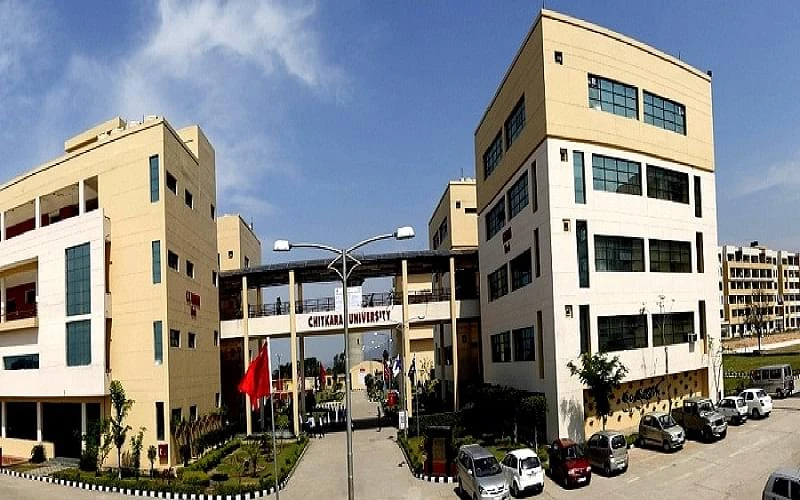
The 70-acre campus is CIET’s physical selling point. It’s modern, clean, and well-maintained—students often use terms like ‘world-class’ and ‘resort-like’ to describe the infrastructure. The ‘Exploretorium’ innovation center, digital library with premium journal access, and specialized labs are impressive. Sports facilities are comprehensive, with a cricket ground, football field, indoor courts, and a gym. The ‘Square One’ student center is a popular hangout.
Hostels are high-capacity and gender-segregated. They’re clean and offer modern amenities, but come with strict rules. The food in the hostels is reported as hygienic but monotonous, leading most students to prefer the paid cafeterias for variety. The biggest point of contention in student life is the discipline. Mandatory uniform, strict 9:00 AM to 4:20 PM schedule, a 75% attendance rule that’s enforced, a digital gate-pass system for hostellers to leave campus, and a fine system for infractions create an environment many find overly restrictive. The high student intake, especially in CSE, can also make the campus feel crowded.
The student sentiment is a study in pragmatism. The overwhelming positive is the placement support. Alumni consistently praise the CAS team for their relentless drive in bringing companies and preparing students. Even an average performer has a strong chance of landing a job with a service-based IT giant. The infrastructure is the second major plus.
The negatives are just as consistent and revolve around control. The ‘school-like’ discipline is the most frequent complaint. The uniform, attendance policing, and gate-pass system are cited as major drawbacks for those seeking a traditional, autonomous college experience. There’s also a note of caution about the crowd—the large batches mean you have to be proactive to stand out. As one Reddit user succinctly put it: “If you want a job and are okay with school-level discipline, Chitkara is the best in the region. If you want ‘college freedom,’ look elsewhere.” Another on Quora advised: “The placement numbers are real, but the 1.1 Cr package is usually one student off-campus. Most people land between 4.5 and 7 LPA.”
CIET is a highly effective, no-nonsense launchpad for an IT career, but it demands a specific trade-off. It’s best for career-focused students who prioritize a high probability of placement over collegiate autonomy. If your family is investing INR 18-20 lakhs with the primary expectation of a return in the form of a job offer, CIET’s system is engineered to deliver that. The placement record, especially for CSE, is robust and real.
However, if you value a liberal campus atmosphere, self-directed exploration, or are pursuing a core engineering branch like Mechanical or Civil, you might find the environment stifling and the return on investment less compelling. The discipline is not an minor side note; it’s a defining feature. Ultimately, CIET is worth it for the pragmatic student who views engineering education as a direct pathway to employment and is willing to adhere to a strict framework to get there. For others, the constraints may outweigh the benefits. Always check the official website for the very latest fee and admission details before deciding.
In this preview: 3 photos · 0 videos
Yes, Chitkara Institute of Engineering and Technology is considered a top private option in the Punjab and Chandigarh region for Computer Science, particularly noted for its strong placement record. The institute maintains a strict academic environment.
The main campus is located in Rajpura, Punjab. It is larger and has more developed placement infrastructure. The Himachal Pradesh campus is smaller and known for its scenic location, but the primary academic and placement hub is the Punjab campus.
Yes, a formal uniform is mandatory for all engineering students at Chitkara Institute of Engineering and Technology.
While a JEE Main score is preferred for admission, some seats may be filled based on 12th-grade marks if seats remain vacant. Typically, this requires a high aggregate score of 70% or more in the qualifying examination.
The hostel food is maintained to be hygienic, though its taste is generally considered average by students. Many students prefer the variety offered by the on-campus cafeterias, such as Square One.
Share what future students should know about CIET.
Student voices are not rewritten by colleges. We remove spam and abuse.
Wider admission question? Community PulseWhat should future students know?
Tell us which course you're considering. We'll help you work out the next step.
Get instant Partner access after mobile verification. Your public edits are reviewed before they go live.
Claim this college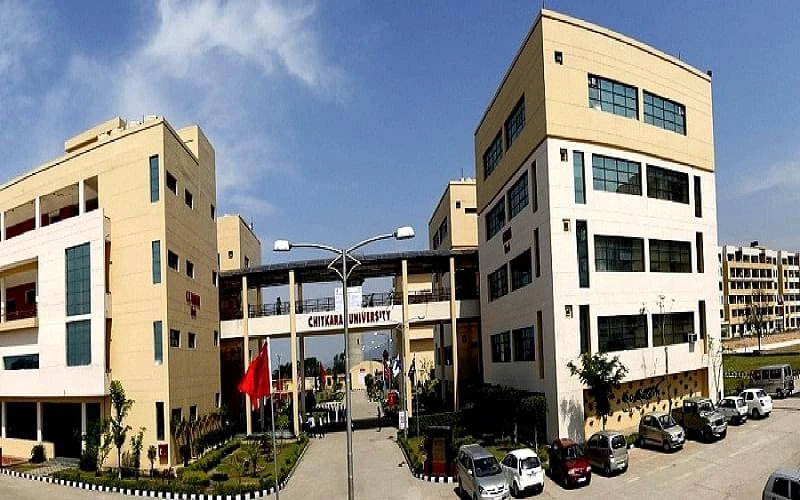
 Auditorium
 Cafeteria
 Campus Shuttle
 Computer Labs
 Medical
 Science Labs
 Sports Complex
 Study Library