Loading Admission Guardian content
Loading Admission Guardian content

Find a program, read its fee details and explore the admission requirements.
Summary of the programs shown below. Fee periods can differ by program. Check the note beside each amount before comparing costs.
| Course | Stream | Fees |
|---|---|---|
| Diploma in Engineering (Polytechnic) | Engineering | 33400 |
| Post Graduate Diploma in Plastics Processing and Testing | Engineering | 40000 |
Specializations
Eligibility: 10th
Specializations
Eligibility: Graduation
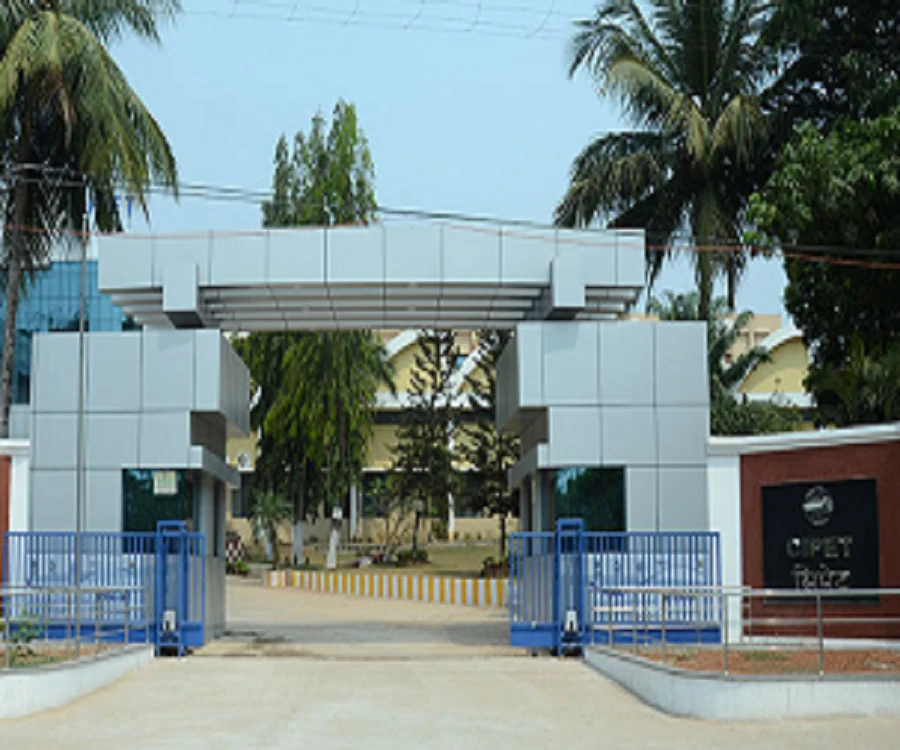
If you're looking for a direct, no-frills path into the core plastics and polymer industry, CIPET: Centre for Skilling and Technical Support (CSTS) in Hajipur is a name that comes up. It's not a traditional engineering college. Think of it more as a specialized trade school with government backing, where the workshop floor is your primary classroom. The promise here isn't glamorous campus life or high-flying corporate packages. It's a near-guarantee of a job on the factory floor for those who complete the rigorous, practical-heavy curriculum. For students in Bihar and the surrounding region, it represents a solid, affordable entry point into a specific technical sector where hands-on skill trumps theoretical pedigree.
Don't come here looking for a B.Tech. That's the first thing to understand. As a CSTS (Centre for Skilling and Technical Support), Hajipur's mandate is focused on diploma-level and skill development training. The academic calendar follows a semester system, and the teaching style is brutally practical. Students report spending 60-70% of their time in labs and workshops, which is the institute's biggest strength.
The main academic offerings are the three-year Diploma in Plastics Technology (DPT) and Diploma in Plastics Mould Technology (DPMT), each with an intake of about 120 students. The difference is key: DPT teaches you how to process plastics into products, while DPMT focuses on designing and building the moulds and tools that shape those products. For graduates, there's a two-year Post-Graduate Diploma in Plastics Processing & Testing (PGD-PPT).
Beyond these, the center runs numerous short-term Skill Development Training Programs (SDTP) for machine operators and offers advanced CAD/CAM and CNC machining courses, often in partnership with state bodies. Faculty is a mix of regular and contractual staff, and while student reviews note a sometimes poor faculty-to-student ratio, they universally praise the practical instructors for their industry expertise. You can find the official program details on the CIPET Hajipur website.
This is where the rubber meets the road—or rather, where the polymer meets the mould. The placement story here is one of high volume but modest starting salaries. The institute officially claims a placement rate above 90%, and student reviews largely back that up for students who graduate without active backlogs. But there's a crucial caveat.
The jobs are almost exclusively in core manufacturing. We're talking roles like machine operator, production technician, or quality checker in plastics processing plants. The average package for the 2024-2025 cycle hovered around ₹1.5 to ₹1.8 lakhs per annum (roughly ₹12,000-₹15,000 per month). The highest packages reported by students were in the ₹2.5 to ₹3 LPA range.
Recruiters are a solid list of automotive and packaging industry names: Motherson Sumi, Tata AutoComp, Supreme Industries, Nilkamal, and Prince Pipes are regulars. About 85% of roles are in core plastics processing. The gap between the official "90%+ placement" headline and the student experience isn't in the percentage, but in the nature of the job. It's a near-guaranteed start on the shop floor, not a ticket to a design office. A mandatory 6-month internship in the final semester helps bridge the gap to these roles.
Affordability is a major draw. For the three-year diploma programs, the tuition fee is approximately ₹16,700 per semester. Add in hostel rent (₹10,000/sem) and approximate mess charges (₹10,000/sem), and the total cost for the entire diploma comes to around ₹2.2 to ₹2.5 lakhs. PG Diploma fees are slightly higher at ₹20,000 per semester for tuition.
Financial aid is available, primarily through government schemes. SC/ST/OBC students can apply for the Post-Matric Scholarship via the Bihar State Portal. Bihar residents are also eligible for the Bihar Student Credit Card scheme. The institute itself offers merit scholarships for semester toppers, which helps offset costs for high achievers.
Admission to the diploma and PG diploma programs is centralized across all CIPET centers through the CIPET CAT (Computer Based Test), which was formerly known as the CIPET JEE. The application window typically opens in February and runs through May. The process is straightforward: online registration at the centralized portal eadmission.cipet.gov.in, followed by the entrance exam and then centralized counseling based on your All India Rank and center preference.
Eligibility is simple: a pass in 10th standard for the diploma programs, and a 3-year B.Sc. with Chemistry for the PG Diploma. The 2024 cutoff trends suggest that a rank under 2000 in the CIPET CAT is generally safe for securing a seat at the Hajipur center. The qualifying marks are usually set around 50-60% for General category candidates and 45-50% for reserved categories. The exam itself tests basic 10th-level Science, Mathematics, and General Knowledge—it's not considered excessively difficult.
Set on a 5.65-acre campus in the Hajipur Industrial Area, the infrastructure is functional and industry-focused. The hostels (separate for boys and girls) are basic but clean, with students rating them a 3.5 out of 5. The food in the mess is standard fare—roti, dal, rice, sabzi—earning a consistent 3/5 in reviews. Discipline is strict: uniforms are mandatory, attendance is closely tracked, and wardens enforce rules firmly. The upside? Students report ragging is virtually non-existent.
The crown jewels of the campus are the labs. The processing lab is stocked with injection moulding, blow moulding, and extrusion machines. The testing lab is NABL accredited, a rare feature for a diploma institute. The CAD/CAM lab, with over 150 workstations running software like NX and CATIA, is particularly impressive. Social life is minimal. There are no large cultural festivals. The vibe is that of a focused training center, not a typical college campus.
Scouring forums like Reddit's r/Bihar and r/Indian_Academia, alongside Quora and education review sites, paints a consistent, no-nonsense picture. The consensus is clear: manage your expectations.
The Good: The practical training is exceptional. "The machines in the Hajipur lab are better than most private engineering colleges in Bihar," is a common refrain. Students feel they graduate with real, marketable skills. The placement guarantee for those who pass is repeatedly mentioned. The strict environment is seen as a positive by many, keeping the focus on work and minimizing distractions.
The Not-So-Good: The jobs, while guaranteed, are tough. Shifts are long, the work is physically demanding, and the starting pay is low. There's a noted shortage of permanent faculty, with many lecturers on short-term contracts, leading to a high student-teacher ratio in theory classes. Social and extracurricular life is almost non-existent.
One paraphrased review sums it up perfectly: "Don't come here if you want a high-paying AC office job. Come here if you want a guaranteed core industry job and are ready to work in a factory."
CIPET Hajipur is a highly specific tool for a specific job. It is absolutely worth it for a student from a modest economic background in Bihar or the region who wants a clear, affordable, and almost guaranteed pathway into the plastics manufacturing industry. If you're hands-on, don't mind factory work, and value a secure skill over campus prestige, this institute delivers exactly what it promises: solid training and a job.
However, it's probably not the right fit if you're dreaming of a white-collar engineering career, a vibrant campus life, or high starting salaries. You won't find those here. The value proposition is pure skill-for-employment in a niche sector. For the right candidate—one who views education as vocational training for immediate employment—CIPET: CSTS Hajipur is a pragmatic and effective choice that stands apart from the more generalized, and often more disappointing, diploma options in the region.
No, CIPET Hajipur does not offer a B.Tech degree. It provides skill-oriented Diploma and Post Graduate Diploma courses. For a B.Tech in plastics or polymer engineering, you must apply to CIPET's Institute of Plastics Technology (IPT) centers located in cities like Bhubaneswar, Chennai, and Lucknow.
The key difference lies in their focus. DPT (Diploma in Plastics Technology) concentrates on the processing and manufacturing of plastic products. DPMT (Diploma in Plastics Mould Technology) focuses on the design, engineering, and fabrication of the moulds and tools used to create those plastic products.
Yes, major industry players like Reliance Industries are frequent recruiters at CIPET centers, including Hajipur. They typically hire top-performing students from programs like the Post Graduate Diploma in Plastics Processing and Testing (PGD-PPT) and Diploma courses.
The CIPET CAT is generally considered to be of moderate difficulty. The exam primarily tests foundational knowledge at the 10th-standard level in subjects like Science, Mathematics, and General Knowledge.
As per recent guidelines, there is no strict upper age limit for admission to CIPET's Diploma and Post Graduate Diploma programs. This policy makes these skilling courses accessible to a wider range of candidates, including those seeking career upskilling or a shift.
Share what future students should know about CIPET: CSTS Hajipur.
Student voices are not rewritten by colleges. We remove spam and abuse.
Wider admission question? Community PulseWhat should future students know?
Tell us which course you're considering. We'll help you work out the next step.
Get instant Partner access after mobile verification. Your public edits are reviewed before they go live.
Claim this college Auditorium
 Cafeteria
 Computer Labs
 Hostel
 Medical
 Science Labs
 Sports Complex
 Study Library