
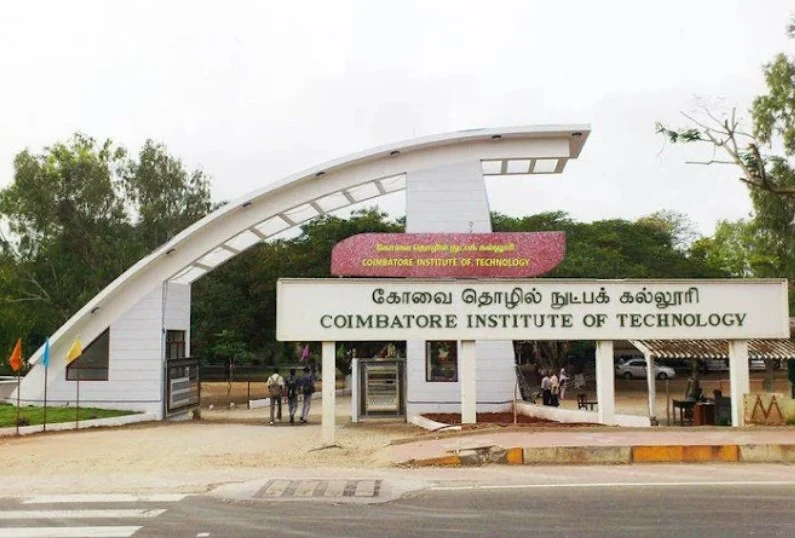

Coimbatore Institute of Technology scholarships
CIT publishes several routes for financial assistance, including state and central schemes, category-based awards, fee concessions, private support and alumni funds. The published lists are starting points for checking eligibility, not a promise that every scheme is available to every course or applicant. CIT’s pages do not publish a complete current award amount or a 2027-28 application calendar. Before budgeting, check the relevant current form and confirm that the scheme applies to your course, seat type and personal category.
The practical first step is to identify the exact scheme name and sanctioning office, then assemble the required certificates and file the prescribed application with CIT within the stated time window. An award’s amount, eligibility and renewal conditions can be different from one scheme to another.
State and category-based support
CIT’s Scholarship page lists support associated with Adi Dravidar Welfare, Backward Classes, Most Backward Classes and Denotified Communities, Tamil Nadu farmer social-security beneficiaries, minority students, children of teachers, ex-servicemen’s dependants and selected regional categories. It also names merit awards such as the Chief Minister’s Award and Gandhi Memorial or Anna awards. These names do not share one common eligibility test: the page’s table ties some awards to community and parental-income conditions, some to hostel status, some to district-level HSC performance, and others to a parent’s occupation or service history.
For example, the table states that the Tamil Nadu BC/MBC/DNC scheme and the Government of India post-matric SC/ST scheme apply to specified Tamil Nadu students whose parental annual income is below ₹2.5L. The Adi Dravidar Welfare higher-education special scholarship is listed for eligible SC/ST hostel students below that income threshold. Separate district awards are tied to highest HSC marks in the district for the stated communities. These are conditions as CIT’s page presents them; confirm current government rules, course coverage and certificate requirements before applying.
CIT also lists Tamil Pudhalvan and Pudhumai Penn with different descriptions for male and female students who studied in government or government-aided schools in Tamil medium from classes six to twelve. The wording is scheme-specific and should not be generalized to every student who attended a Tamil-medium school. Ask the institute which cohort and current government notice govern the application.
Central, special-category and private schemes
CIT’s list includes central and National Scholarship Portal schemes as well as AICTE programmes. The page gives examples with their own limits: the Central Sector Scheme is tied to marks in the previous examination and a parental-income ceiling; AICTE Pragati is described for a maximum of two girl children per family and an income ceiling; Saksham is for students with a stated disability threshold and an income ceiling; and Ishan Uday has a separate regional and income scope. It also lists support for students from Jammu and Kashmir, Arunachal Pradesh, Manipur and other named states or regions, plus defence, railway and central armed-police categories.
These entries are not interchangeable. A student should check the official scheme notification and portal for the application year, proof requirements, eligible institutions and programme, award value, renewal rules and whether a scheme can be combined with any CIT concession. CIT’s page states that only one scholarship or fee concession may be received at a time, so do not assume two awards can be stacked. CIT also names private and trust-funded support, including Tamil Nadu Educational Trust, ONGC and the Siragugal scheme, as well as a set of alumni and endowment funds. The page does not provide a single current amount or open application window for every item.
Rule 92 fee concession is limited to aided programmes
CIT’s Financial Aids page describes a full tuition-fee concession under Tamil Nadu Education Rule 92 MER for students admitted to Government-Aided programmes who belong to SC or ST communities, or are converts to Christianity from SC/ST communities. The page says this concession is irrespective of annual family income. Its programme limitation matters: it does not say that the concession applies to every self-supporting course or seat, and it should not be treated as a general tuition waiver for all CIT applicants.
Confirm the seat category and the current rule with the Institute Office before including a waiver in your budget. Ask which proof of community and conversion status is accepted, which tuition components are covered, whether the concession is credited or reimbursed, and whether other charges remain payable. The public summary does not enumerate those operational details.
Application timing, documents and continuation
CIT’s two financial-assistance pages state that prescribed applications should be submitted to the Principal’s Office within 30 days of the institute reopening or the student’s admission, whichever is later. Applicants must attach the certificates and other records required for the scheme; the policy page warns that incomplete applications may not be considered. Because the deadline is anchored to reopening or admission, it is not a single calendar date shared by every applicant. Obtain the correct form and confirm your own last date with the office.
CIT also says a student may receive only one scholarship or fee concession at a time. Continued assistance is linked to the minimum attendance set by the university and to conduct requirements; the page says serious misconduct, including ragging or participation in strikes, can result in cancellation. Check the actual award letter and current policy for attendance, renewal, grade or progression rules. A list entry alone does not establish that an applicant has been selected or that an award will continue automatically in the next year.
Current forms and the next admission cycle
CIT’s announcement page carries a Scholarship Notice and Forms dated 27 August 2026. The linked notice title specifically identifies BC/MBC and PMSS fresh application forms for 2026-27. The opened notice does not show a closing date, award amount or enough detail to establish that every other scheme is included. Treat it as evidence that CIT posted these named forms for that cycle, not as proof that an application remains open or that the same form will be used for 2027-28.
No 2027-28 scholarship amount, deadline or final scheme list was found in the reviewed CIT pages. Before accepting an offer or paying fees, check CIT’s Scholarship and Financial Aids pages, the current announcements, the responsible government portal and your department’s instructions. If a page and a current scheme notice differ, ask the Principal’s Office which version controls your application.
A short checklist before applying
- Identify the exact scheme and its current application year; do not apply a general category label to every scheme.
- Confirm that your programme and aided or self-supporting seat category are covered.
- Ask which income, community, disability, domicile, school-history, marks or service certificates are required for that scheme.
- Confirm the form, sanctioning office, submission method and your deadline based on reopening or admission.
- Ask whether any other scholarship or fee concession would make you ineligible under CIT’s one-award policy.
- Keep copies of the submitted form and receipt, and obtain the current renewal and attendance rules in writing.
CIT’s public pages describe multiple assistance routes but leave amounts, detailed forms and some operational conditions to the Institute Office or the responsible scheme authority. Treat any support as pending until the appropriate office confirms eligibility and sanction.