Loading Admission Guardian content
Loading Admission Guardian content

Provisional score based on available data. It may change as more information is verified.
Selected ranking categories, with the recorded year beside each result. Open all records for the complete history.
11 published records · Lower numeric ranks are stronger
IIRF
B.Tech · public
#1072022
IIRF
Engineering · public
#1072022
The Week
B.Tech
#82019
Find a program, read its fee details and explore the admission requirements.
Summary of the programs shown below. First-year fee. Check the note beside each amount for inclusions and exclusions.
| Course | Stream | Fees |
|---|---|---|
| Bachelor of Engineering [BE] | Engineering | 47200 |
| Bachelor of Technology [B.Tech] (Information Technology) | Engineering | 47200 |
| Master of Engineering [M.E] | Engineering | 56260 |
| Master of Technology [M.Tech] | Engineering | 56260 |
| Bachelor of Science [B.Sc] + Master of Science [M.Sc] | Science | 57620 |
Specializations
All accepted exams
Eligibility: 10+2 with 50% + TNEA
Specializations
All accepted exams
Eligibility: 10+2 with 50% + TNEA
Specializations
All accepted exams
Eligibility: Graduation with 50% + TANCET
Specializations
All accepted exams
Eligibility: Graduation with 50% + TANCET
Specializations
Eligibility: 10+2
2 exams with cutoff data available - showing recent entries
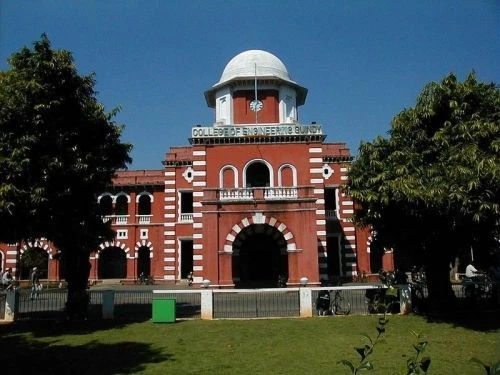
The College of Engineering, Guindy (CEG) isn't just another engineering college. It's a 231-year-old institution where you can walk past a heritage 'Red Building' on your way to a lab funded by a Silicon Valley unicorn. As the flagship campus of Anna University, it carries a brand weight in South India that few can match, especially for students who crack the brutally high TNEA cutoffs. But that legacy comes with a very specific reality: immense freedom, a fiercely competitive peer group, and infrastructure that shows its age. It's a place that demands self-reliance, rewarding those who find their own path with a degree that genuinely opens doors.
Admissions here are split into two streams: Regular (R) and Self-Supporting (SS). The degree, faculty, and curriculum are identical—the only differences are the fee (SS is higher) and the cutoff rank needed to get in (SS is slightly more accessible). The intake numbers tell the story of demand. Computer Science and Engineering has 60 Regular and 120 SS seats. Electronics and Communication Engineering mirrors that. Information Technology is offered only as an SS program with 120 seats. Core branches like Mechanical and Civil have healthy intakes, including 30 seats each in Tamil Medium.
And then there are the niche, legacy programs that give CEG its unique character: Printing & Packaging Technology (40 seats), Mining Engineering (30), and Geo-Informatics (40). You won't find those everywhere. The postgraduate offerings are vast, with 39+ M.E./M.Tech specializations. The faculty pool across Anna University is massive, with over 2,500 researchers. At CEG specifically, it's estimated over 90% of permanent staff hold PhDs. But student reviews consistently note a gap between faculty qualifications and teaching engagement. The common refrain is that professors often "read from PPTs," and that 90% of real learning is self-driven through YouTube or NPTEL. The 10-point CGPA system uses absolute grading, where an 'O' (Outstanding) requires 91–100 marks.
Industry collaborations are a strong point. There's the "AADHI" AI Center established with analytics giant Mu Sigma, an Intelligent ERP Lab with Ramco Systems, and long-standing project ties with ISRO (remember the ANUSAT satellite), Siemens, and Apollo Hospitals. It's a decent mix of old and new economy partners.
The placement story here is a tale of two realities, sharply divided by branch. For students in Computer Science, IT, Electronics, and related circuit branches, the outcomes are excellent and near-guaranteed. The official placement percentage for these streams is effectively 100%. The highest package for 2024 was a staggering ₹55 LPA from quantitative trading firm D.E. Shaw. The average for IT/circuit branches hovers around ₹12 LPA, fueled by a who's who of global recruiters: Google, Microsoft, Amazon, Goldman Sachs, Cisco, Atlassian, and Uber all visit campus. About 400-500 students secure Pre-Placement Offers (PPOs) annually from internships, with monthly stipends ranging from ₹20,000 to ₹1,00,000.
But the overall picture, which includes all engineering branches, is more modest. The NIRF 2024 report lists the median package for UG four-year programs at ₹8.0 LPA. The official average placement percentage is quoted at 85-90%. Dig into student forums on CollegeDunia and Shiksha, though, and you'll hear a different number for core branches like Civil, Printing, or Mining. In recent years, the on-campus placement rate for these fields has been closer to 50-60%. Many core students end up relying on mass recruiters like TCS and Infosys or pursuing higher studies. The gap between the official claim and the on-the-ground experience for non-circuit branches is notable. That said, even a core branch degree from CEG carries a brand that helps with off-campus opportunities and higher education applications abroad.
This is where CEG's status as a government institution shines. The cost of education is remarkably low. For the Regular stream, annual tuition is just ₹31,000 to ₹35,000. The Self-Supporting stream costs more, between ₹50,000 and ₹75,000 per year. Hostel and mess fees are extra, adding roughly ₹45,000 to ₹60,000 annually, though the quality varies significantly by block.
Do the math over four years, and the total cost is a fraction of what a private college charges. A Regular stream student staying in hostels might spend around ₹3.5 lakhs total. An SS student might spend about ₹5.5 lakhs. That's an almost unbelievable value if you land a good placement. Financial aid is available through state and central schemes, including the First Graduate Tuition Fee Waiver from the Tamil Nadu government and Post-Matric Scholarships for SC/ST/SCA students.
For a Tamil Nadu resident, getting into CEG is purely a game of Class 12 marks. There is no entrance exam. Admission is strictly through the TNEA (Tamil Nadu Engineering Admissions) counseling, which ranks students based on their normalized board exam scores (Maths, Physics, Chemistry). The cutoffs are brutally high, reflecting the college's prestige. For the 2024 Open Category (OC), to get Computer Science and Engineering, you needed a cutoff score of 199.5 or above, which typically translates to a state rank under 50. For ECE, it was around 198.5 (rank <150), and for IT, about 198 (rank <300).
If you're from Other States (OS), there are a limited number of seats filled based on JEE Main scores or Class 12 marks. There are also quotas for NRI/CIWGC/FN candidates, which involve higher fees. It's crucial to note there is no traditional "Management Quota" here. For postgraduate courses like M.E./M.Tech, admissions are through CEETA-PG, GATE, or TANCET scores.
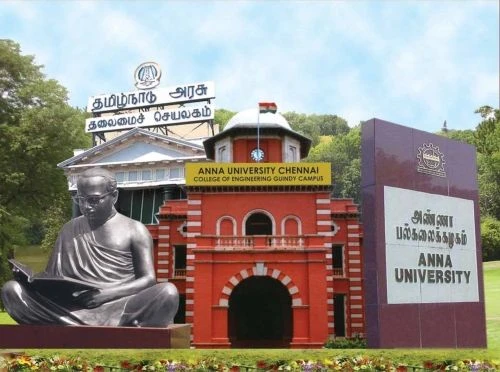
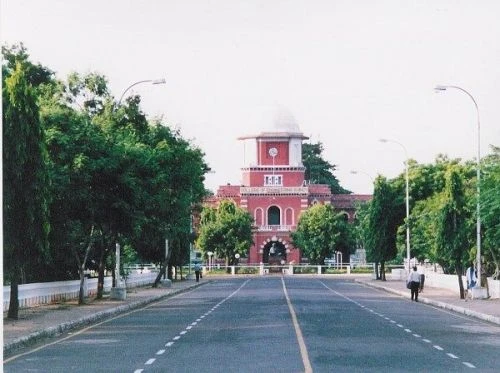
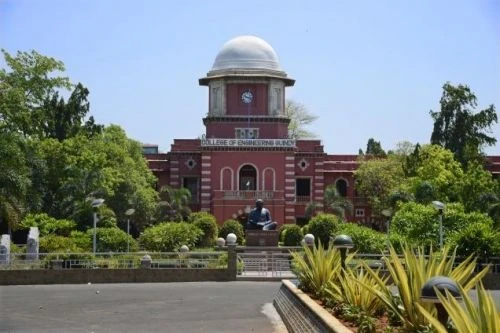
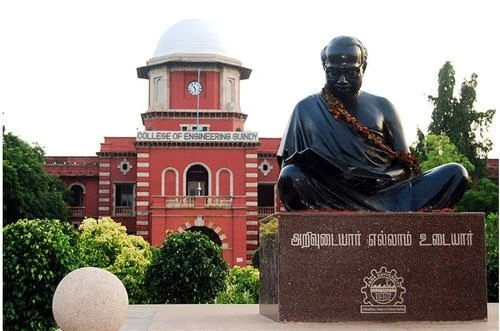
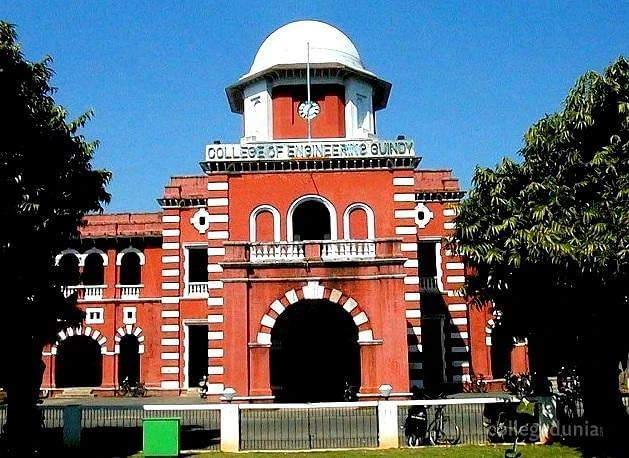
The 223-acre campus in the heart of Chennai is a mix of grandeur and grit. The iconic heritage 'Red Building' is postcard-perfect. The Sarvepalli Radhakrishnan Library is a serious academic resource with over 1.5 lakh books. Sports facilities are top-notch, featuring an Olympic-standard swimming pool, large cricket and football grounds, and tennis courts.
Then there are the hostels. With 22 blocks (14 for boys, 8 for girls), they house a large population. And they are, by consensus, the weakest link. Reviews consistently rate hostel quality a 2.5 out of 5, citing aging buildings, maintenance issues like leaking ceilings in older blocks, and basic amenities. The food in the mess gets a middling 3/5—described as standard, tolerable South Indian fare that becomes repetitive. Girls' hostels are considered safe but have stricter curfews (usually between 7:30 PM and 8:30 PM). The campus Wi-Fi ("Anna Wi-Fi") is adequate for academic work but often restricted for entertainment streaming.
Where life truly thrives is in student activities. There are over 25 active clubs covering robotics, literature, arts, and more. The cultural festival Techofes and the technical festival Kurukshetra are massive, well-funded events that define the campus social calendar. The peer group is arguably the biggest asset—you're surrounded by the top 1% of Tamil Nadu's academic performers. The administrative process, however, is famously bureaucratic, with students warning that getting transcripts or bonafide certificates can be a "nightmare."
Synthesizing opinions from Reddit, Quora, and review sites, a clear consensus emerges. The positives are powerful: "The CEG tag opens doors." Alumni emphasize the brand's value for jobs and MS/MBA applications abroad. The competitive, high-caliber peer group is both inspiring and motivating. Students cherish the "freedom"—the lack of school-like monitoring means you're treated as an adult, for better or worse.
But the negatives are just as consistent. Teaching quality is the biggest gripe, with the phrase "self-study university" appearing everywhere. The 75% attendance rule is strictly enforced, with "prevention" from exams being a real threat. Infrastructure maintenance, especially in hostels and some older labs, is a frequent complaint. One popular Reddit quote sums up the trade-off: "Hostels are basically 💩, but the friends you make there are for life." Another common piece of advice is blunt: "If you can't self-study, don't come here. Nobody will spoon-feed you."
CEG isn't for everyone. It's best suited for academically strong, self-motivated students who can thrive with minimal hand-holding. If you're a Tamil Nadu resident aiming for CSE, ECE, or IT and you have the TNEA rank to match, it's arguably the best value-for-money engineering education in the state. The brand, peer network, and low cost are an unbeatable combo for high-fliers. For students passionate about core engineering branches like Civil or Mechanical, the decision is trickier. You get the prestigious degree and alumni network, but must be prepared to proactively seek out opportunities, as on-campus placement support may be weaker. If you need a structured, supportive learning environment with pristine facilities, a private college might be less frustrating. But if you want a historic brand, incredible peer learning, and the freedom to carve your own path at a minimal cost, CEG remains a formidable choice. Just go in with your eyes open.
In this preview: 5 photos · 0 videos
CEG is generally preferred for core engineering streams like Computer Science (CSE), Electronics (ECE), Civil, and Mechanical due to its central location and long-standing legacy. MIT, also part of Anna University, is typically the preferred choice for specialized streams like Aeronautical and Automobile engineering.
Admission to CEG for Tamil Nadu (TN) residents is based solely on 12th standard board marks through the TNEA counseling process. JEE Main scores are only considered for students applying under the "Other State" quota, which has a limited number of seats.
The hostel life for girls at CEG is generally considered safe with a supportive community. However, there are strict timings, with a curfew typically between 7:30 PM and 8:30 PM. The hostel infrastructure is reported to be average.
The curriculum, faculty, and final degree awarded for Regular and Self-Supporting (SS) courses are identical. The only differences are the tuition fees, which are higher for SS courses, and the cutoff marks for admission, which are usually slightly lower for the SS category.
Yes, the 75% attendance rule is strictly enforced. Falling below this attendance percentage without valid medical documentation typically results in being "Prevented" from writing the semester-end examinations.
Share what future students should know about College of Engineering Guindy.
Student voices are not rewritten by colleges. We remove spam and abuse.
Wider admission question? Community PulseWhat should future students know?
Tell us which course you're considering. We'll help you work out the next step.
Get instant Partner access after mobile verification. Your public edits are reviewed before they go live.
Claim this college
 Auditorium
 Bank & ATM
 Cafeteria
 Campus Shuttle
 Campus Wi-Fi
 Computer Labs
 Gym
Gym Hostel
 Medical
 Science Labs
 Smart Classrooms
 Sports Complex
 Study Library