Loading Admission Guardian content
Loading Admission Guardian content

Provisional score based on available data. It may change as more information is verified.
Find a program, read its fee details and explore the admission requirements.
First-year fee. Check the note beside each amount for inclusions and exclusions.
| Course | Stream | Fees |
|---|---|---|
| Bachelor of Engineering [BE] | Engineering | 47200 |
| Bachelor of Technology [B.Tech] (Information Technology) | Engineering | 47200 |
| Master of Engineering [M.E] | Engineering | 56260 |
| Master of Technology [M.Tech] | Engineering | 56260 |
| Bachelor of Science [B.Sc] + Master of Science [M.Sc] | Science | 57620 |
Specializations
All accepted exams
Eligibility: 10+2 with 50% + TNEA
Specializations
All accepted exams
Eligibility: 10+2 with 50% + TNEA
Specializations
All accepted exams
Eligibility: Graduation with 50% + TANCET
Specializations
All accepted exams
Eligibility: Graduation with 50% + TANCET
Specializations
Eligibility: 10+2
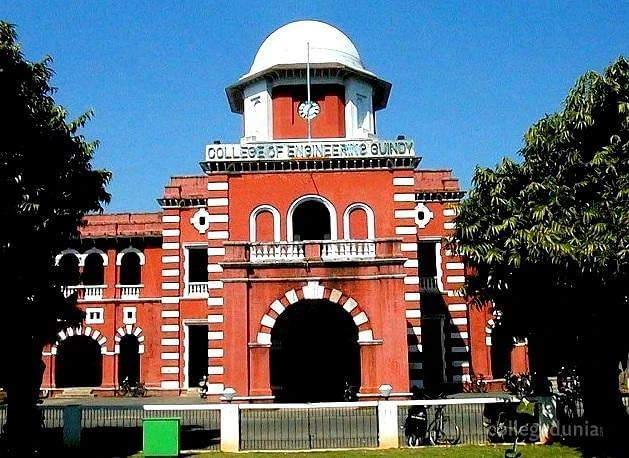
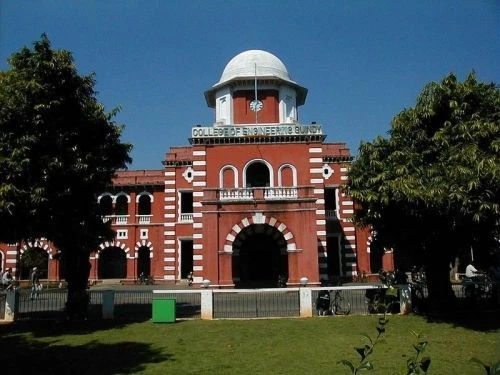
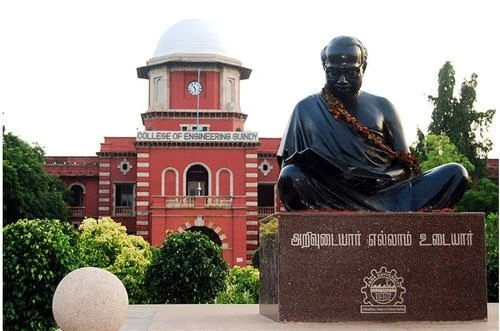
The College of Engineering, Guindy (CEG) is the oldest and largest of Anna University's four campuses in Chennai. It operates across four academic faculties, each housing multiple departments, and offers programmes from B.E./B.Tech to doctoral level. Understanding which programme suits you, how admission works, and what the actual cost looks like across categories is what this guide covers.
UG admission at CEG runs entirely through TNEA (Tamil Nadu Engineering Admissions). Selection is merit-based on normalised Class 12 marks in Mathematics, Physics, and Chemistry, calculated on a scale of 200. CEG consistently closes at the highest marks in Tamil Nadu; in the 2025 counselling cycle the Computer Science and Engineering (CSE) branch closed for the Open Category at 200.0 out of 200, and even the Civil Engineering branch closed above 196. Diploma holders can seek lateral entry to the second year through the separate TNLEA process conducted by the Directorate of Technical Education.
The campus divides its UG seats into government-aided Regular seats and Self-Supporting (SS) seats. Regular seats carry government tuition rates; SS seats have a higher fee and are filled through the same TNEA merit list but from a separate seat matrix.
Seat counts are sourced from the TNEA 2025 seat matrix published at tneaonline.org. Exact figures can shift modestly between cycles based on regulatory approvals; verify the current matrix on the TNEA portal before choice filling.
Civil, Mechanical, and EEE at CEG have only Regular seats, so competition within the government-rate fee stream is high but the field is narrower. CSE and IT exist as both Regular and SS, which is useful for applicants who narrowly miss the Regular closing mark: they can still secure a CEG seat in the SS stream, though at a higher cost.
Eligibility: Candidates must have passed Class 12 or equivalent with Physics, Chemistry, and Mathematics as core subjects from a recognised board and be Tamil Nadu domicile for state-quota TNEA counselling. There is no minimum percentage cut-off in TNEA; rank is the sole determinant. Differently-abled candidates can apply for horizontal reservation with appropriate certification.
CEG offers a wide range of two-year M.E./M.Tech. specialisations through the Common Engineering Admission Procedure (CEAP) managed by Anna University's Centre for Admissions (cfa.annauniv.edu). Admission uses GATE scores and CEETA-PG (Common Engineering Entrance Test for Postgraduate Admission), conducted by Anna University for candidates without a valid GATE score. GATE-qualified candidates generally receive priority in merit lists. Minimum eligibility is a B.E./B.Tech. degree in a relevant field with 50% aggregate (relaxed for reserved categories); degrees earned through distance or weekend modes are not eligible.
Faculty of Civil Engineering
Faculty of Mechanical Engineering
Faculty of Electrical Engineering
Faculty of Information and Communication Engineering (ICE)
The full departmental list and annual seat matrix are published in the CEAP information brochure at the start of each admission cycle. Not every specialisation runs every year; check the current brochure.
MBA and MCA: These programmes are available at Anna University's CEG and Alagappa College of Technology (ACT) campuses and admit through TANCET (Tamil Nadu Common Entrance Test) followed by TANCA counselling. TANCET is a separate exam from CEETA-PG; confusion between the two is a common application error. The MBA programme is two years (four semesters); MCA is also two years following the 2020 UGC revision that reduced the programme from three to two years. Eligibility for MBA is any bachelor's degree with 50% aggregate (45% for reserved categories); MCA requires a relevant bachelor's degree with Mathematics at 10+2 or graduate level.
Ph.D. Research: Anna University admits to doctoral programmes biannually (January and July sessions) through the Centre for Research (cfr.annauniv.edu). Candidates must hold a Master's degree in a relevant discipline with at least 55% marks or a 5.5/10 CGPA. Full-time and part-time modes are available. Research at CEG departments spans all four faculties; candidates must identify a recognised research supervisor and department before applying.
CEG is a university department, not an affiliated college, so fees are governed by Anna University regulations and Tamil Nadu government orders rather than private fee-regulation committees. The result is that government-aided (Regular) fees are substantially below those at most private engineering colleges in Tamil Nadu, while SS fees sit at a moderate level.
All fee payments are made exclusively through the official Anna University e-Governance portal at auegov.ac.in. Do not make payments through any other channel.
These are indicative figures for Tamil Nadu-domicile students based on reported 2024–25 admission circulars. The first-year payment for general-category Regular-stream students is approximately ₹32,000 including various one-time charges, giving a four-year total around ₹1,38,000. The SS stream first-year payment is approximately ₹41,800, and the total four-year cost is reported at around ₹2,16,800. Published per-programme tuition distinctions within the same stream are not uniformly available in official circulars; if you need programme-specific breakdowns, request the current year's fee schedule from the Dean's office at CEG after seat allotment.
The caution deposit of ₹7,000 (₹5,000 institutional + ₹2,000 library) is refundable on programme completion, provided no dues are outstanding.
Hostel: CEG operates its own hostels. For the 2025–26 cycle the total hostel fee is approximately ₹42,625 per year, covering room rent, electricity and water charges, residential service charges, and mess advance. Hostel accommodation is not guaranteed; students apply through the dedicated portal at ceg.annauniv.edu/ech/HostelConnect after receiving admission allotment. Hostel tenure must be renewed each academic year.
Annual fees for M.E./M.Tech. programmes in Anna University departments range broadly from approximately ₹60,000 to ₹1,20,000 per year depending on the specialisation and admission channel. Some admission circulars have noted a one-time additional charge of approximately ₹25,000 at the time of first admission. VLSI Design M.E. total two-year fees are reported in a range of approximately ₹97,000 to ₹1,17,000 for the full programme duration. The CEAP brochure for each cycle specifies fee components programme-by-programme; always use the current brochure figure, as these are not uniformly published outside the official admission process.
For MBA at CEG, the total two-year fee is reported at approximately ₹2,49,000, which encompasses tuition and other university charges. MCA fees for the two-year programme are around ₹2,11,000 total.
Several categories of students can significantly reduce their effective cost:
7.5% Government School Quota: Students admitted through this horizontal reservation — requiring continuous schooling from Class 6 to Class 12 in Tamil Nadu government schools, corporation schools, or recognised government-department schools — receive a complete waiver of tuition fees, development fees, hostel fees, and counselling fees. There is no income ceiling attached to this waiver. Private, matriculation, government-aided, and central government schools (KVs, Navodayas) do not qualify even if they receive state grants. Continuity is mandatory: shifting to a private school for even one year disqualifies the candidate. The DoTE has instructed colleges not to collect any fees from students in this category.
SC/ST/SCA — Post-Matric Scholarship: Students from Scheduled Caste, Scheduled Tribe, and Scheduled Caste (Arunthathiyar) communities with family annual income below ₹2.5 lakh are covered under the Tamil Nadu Post-Matric Scholarship, which reimburses regular tuition and development fees. In practice, these students pay primarily the refundable caution deposit at admission, reported at approximately ₹11,900 for the first year under some circulars (this figure can vary by annual notification). Income certificate and community certificate are required at admission.
First Graduate (Muthalai Paalin) Concession: Students who are the first in their family to pursue university education receive a tuition fee waiver. The first-year fee for a First Graduate student in the Regular stream is approximately ₹26,000, with an estimated four-year total around ₹1,11,400. The family must not include any member who has completed a graduate degree from a recognised university.
Differently-Abled: Students with disability certificates from designated authorities are exempted from semester tuition fees. The 3% horizontal reservation in TNEA applies to this group.
These concessions apply to government-aided (Regular) seats. Their extension to Self-Supporting seats differs by category and depends on current government orders; confirm at the time of admission with the relevant certificates in hand.
The cost gap between Regular and Self-Supporting streams — roughly ₹75,000–₹80,000 over four years for tuition alone — is narrower than the gap seen at private colleges. For a CSE or IT applicant who misses Regular closing marks by a small margin, taking an SS seat at CEG may still be better value than a Regular seat at a lower-ranked affiliated college, given that placement outcomes and industry recognition for a CEG seat tend to differ. However, this trade-off is not the same for every branch. For Civil or Mechanical Engineering, CEG has only Regular seats; the choice is CEG vs. another institution, not Regular vs. SS at the same campus.
Minority specialisations such as B.E. Mining Engineering, B.E. Geo Informatics, and B.E. Printing and Packaging Technology carry substantially lower TNEA closing marks than CSE, EEE, or ECE. These are viable entry points for candidates who want a CEG degree without top-decile Class 12 marks. Placement and industry trajectories for these branches differ from the popular CS/electronics streams, and candidates should research sector-specific outcomes before assuming equivalence.
For PG applicants, GATE qualification is the stronger admission route. Without GATE, CEETA-PG scores place candidates in a more competitive pool for fewer available seats. Candidates targeting CEG for an M.E. in CSE, VLSI, or Power Systems — the most sought-after PG specialisations here — benefit from attempting GATE even if CEETA-PG is the fallback, since GATE-qualified seats are filled first.
Fee figures cited above are drawn from reported 2024–25 admission circulars and third-party reporting consistent with official documents. Anna University has not published a single consolidated public fee schedule for all programmes and categories; exact figures for your specific programme, category, and year will be confirmed in your admission offer and at auegov.ac.in. Treat the figures here as planning benchmarks, not contractual amounts.
Compare with Engineering colleges
See fee structures at similar institutions