

 Auditorium
 Bank & ATM
 Cafeteria
 Campus Shuttle
 Campus Wi-Fi
 Computer Labs
 Gym
Gym Hostel
 Medical
 Science Labs
 Smart Classrooms
 Sports Complex
 Study Library
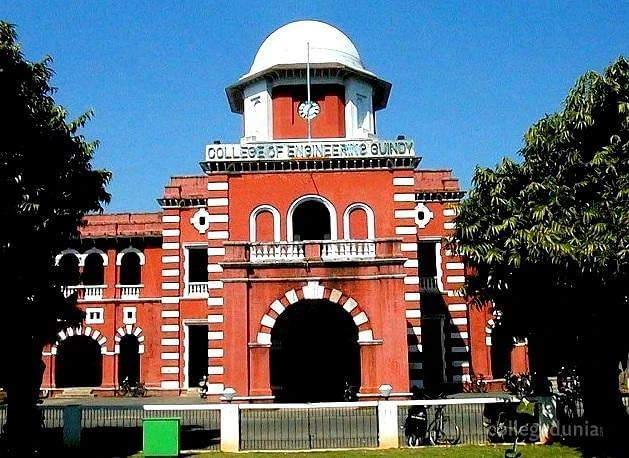
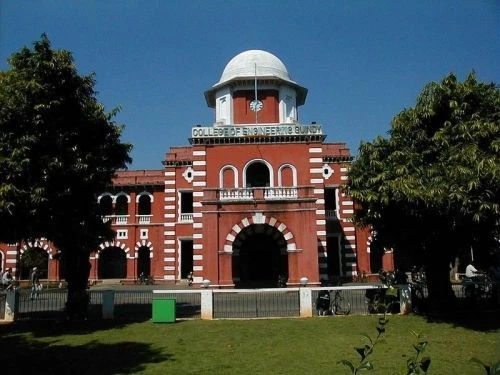
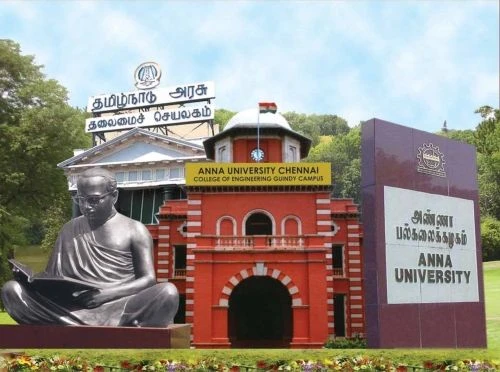
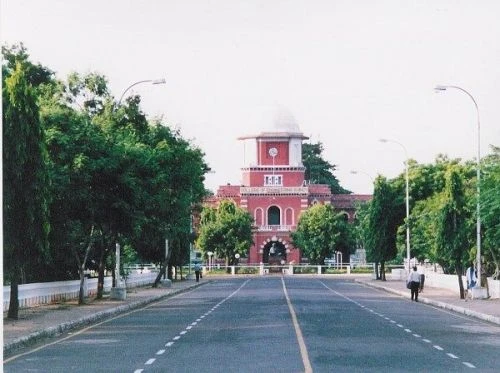
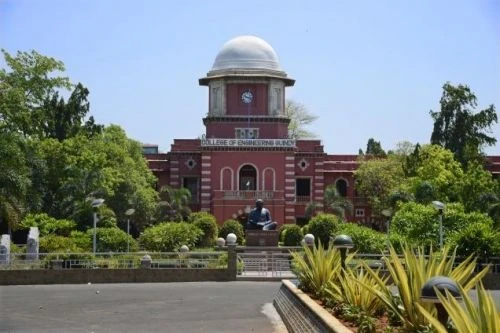
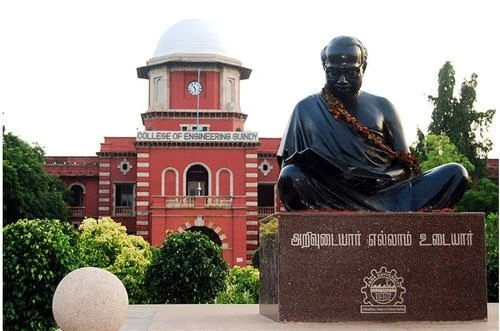
The College of Engineering, Guindy (CEG) occupies an approximately 185–189 acre campus at 12, Sardar Patel Road, Guindy, Chennai 600025. As the founding constituent of Anna University, CEG is a residential-leaning campus: a large share of enrolled students live on campus, and the quality of daily infrastructure matters as much as the academic programme.
Location and Access
The campus sits within Chennai's Guindy belt, flanked by the Guindy Industrial Estate and the Guindy National Park. The Guindy Metro Station (Blue Line) is the primary transit point; from there, MTC buses, share autos, or a short walk cover the last mile to the Sardar Patel Road main gate. Multiple MTC routes (5B, 19, 21, 23C, 47 series, 49) stop directly in front of the gate. The Southern Railway's Guindy suburban station is also nearby, connecting students commuting from Tambaram, Saidapet, and the south Chennai corridor.
The university does not operate a dedicated college bus fleet. Day scholars commuting from beyond the city's core report journey times of one to two hours each way during peak traffic, which directly informs the practical value of on-campus hostel accommodation.
Hostels
CEG maintains 22 hostel blocks on campus, all named after Tamil flowers. Fourteen blocks are allocated to male students and eight to female students. The blocks vary in size: boys' blocks such as Mahizham (120 rooms) and Vaagai (133 rooms) are among the larger ones, while Chemparuthi and Aambal each have 64 rooms; girls' blocks include Roja (156 rooms) and Malligai (80 rooms).
Room types across blocks are typically shared occupancy configurations of two to four beds. Each block is assigned a Resident Counsellor who functions in loco parentis and handles welfare, discipline, and daily concerns. The broader hostel council includes the Warden, an Executive Warden, Deputy Block Wardens, student-elected chairmen, and block secretaries. The hostel office is reachable at 044-22352257 and [email protected].
In-room amenities include campus-wide Wi-Fi access and UPS-backed power supply. Laundry facilities and a Student Amenities Centre (SAC) offering printing, photocopying, and other daily services are available within the residential zone. A Co-operative Society sells stationery and academic supplies on campus.
Five separate messes serve different student groups:
Mess management involves student-elected secretaries responsible for cleanliness and food quality monitoring. Coffee huts and smaller food kiosks are distributed across the academic and hostel zones.
One practical constraint: hostel allotment is not guaranteed for all enrolled students. Applicants who live within a certain distance of the campus (commonly cited as within 5 km) are typically ineligible. Availability depends on annual allotment processes, and demand routinely outpaces the available room count across UG, PG, and PhD cohorts.
Library
The Anna University Library serving the CEG campus holds over 1.5 lakh (150,000) volumes spanning engineering, science, and technology disciplines, supplemented by subscriptions to both Indian and foreign print journals. The central library building spans over 4,000 sq m.
A Digital Knowledge Centre (DKC) within the library provides access to licensed e-journals, e-books, and theses through a single-window interface. The university library system claims access to over 12,000 e-journals system-wide through consortium agreements. Book transactions and entry are handled through an RFID-automated system; smart-card membership governs borrowing. A video surveillance module is integrated into the security setup. Digitised thesis and question-paper archives are accessible through the OPAC at library.annauniv.edu.
Individual academic departments maintain their own departmental libraries for subject-specific and advanced reference needs. Students also benefit from membership in inter-library networks such as DELNET and MALIBNET for resource sharing beyond the campus collection.
Off-campus access to licensed e-resources is available using university login credentials, a practical benefit for students during vacations or field periods.
Computing and Connectivity
The Ramanujan Computing Centre (RCC), established in 1963, is the campus's central computing facility. It provides computer labs, internet labs, high-end workstations, and round-the-clock browsing access to registered users. The Knowledge Data Centre (KDC) serves as a centralised repository for academic data, software access, digital thesis archives, and research content.
Campus-wide Wi-Fi covers academic buildings and hostel blocks. Hostel residents can register for Wi-Fi access through the university's official process. Departmental computer labs in CSE, IT, ECE, and related departments provide additional workstation access tied to coursework and project requirements.
Science and Engineering Laboratories
CEG's departmental laboratory infrastructure spans the full range of its engineering programmes:
- Civil Engineering houses the Centre for Environmental Studies (CES) with air and noise quality monitoring labs, bioreactor facilities, and wastewater analysis equipment, alongside Soil Mechanics, Transportation, and Structural Engineering labs.
- Mechanical Engineering supports CAD/CAM, Internal Combustion Engineering, Thermal Engineering, and central workshop facilities used for both UG instruction and industrial consultancy.
- ECE and EEE maintain labs for VLSI design, communication systems, medical electronics, power systems, and high-voltage engineering.
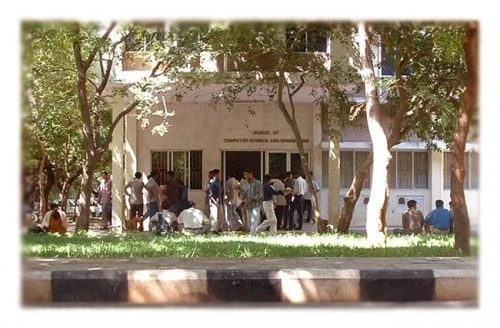
- CSE and IT primarily use the RCC and departmental computing facilities for programming, networking, and research work.
The Institute for Energy Studies (IES) and the Centre for Environmental Studies also function as research hubs in clean energy and sustainability, reflecting ongoing net-zero campus commitments including rooftop solar installations and sewage treatment plants.
Sports Complex
Sports activities are organised under the National Sports Organization (NSO) cell, which coordinates with the Anna University Sports Board. NSO participation is integrated into the undergraduate curriculum through compulsory character development programme enrolment (alongside NCC, NSS, and YRC). Coaching sessions typically run in the evening, from 5:00 p.m. to 6:15 p.m. on working days.
Verified sports facilities on the CEG campus include:
- Athletic track and open playgrounds
- Cricket ground and football ground
- Basketball courts
- Badminton courts
- Tennis courts
- Swimming pool (depth 4 to 12 feet; also accessible to the public on a paid basis)
- Gymnasium
The NSO fields inter-collegiate, zonal, and inter-zonal teams. No dedicated indoor stadium or air-conditioned sports hall is documented in current official sources; the sports infrastructure is predominantly outdoor.
Health Centre
The campus Health Centre is available to students and employees at no charge. Medical officers are available from 7:30 a.m. to 6:30 p.m., Monday through Saturday, including Sundays and government holidays. The centre includes an inpatient ward, a clinical laboratory capable of hemogram, lipid profile, and blood sugar tests, and physiotherapy facilities. A 24-hour ambulance service is reachable at +91 9445404400.
For non-emergency mental health support, dedicated student counsellors are separately available beyond the block-level Resident Counsellors.
Auditorium and Event Spaces
The Vivekananda Auditorium (commonly called Vivek Audi) is the primary campus auditorium used for academic convocations, cultural fests, and major events. Departmental seminar halls and briefing rooms are distributed across academic blocks and are used for guest lectures, symposia, and internal events. The scale and technical specifications of these venues are not published in detail on current official pages.
Banking and ATMs
Banking facilities including ATMs are available on and immediately around the campus. The Sardar Patel Road frontage and the adjacent industrial estate area host multiple bank branches and ATM counters, making cash access practical for residents and day scholars.
Campus Security
Entry and exit to the campus are managed through guarded gates on Sardar Patel Road. The hostel zone maintains block-level security as part of the Resident Counsellor and warden system. Video surveillance is documented within the library; broader CCTV or access-control arrangements across the campus are not specified in current public institutional documents.
Daily Campus Reality: Fit Assessment
For a student deciding whether CEG's campus suits their essential needs, the relevant distinctions are:
- Hostel demand exceeds supply. Twenty-two blocks accommodate a meaningful share of students, but not all admitted students can secure a room. Day scholars from beyond Chennai's core face long daily commutes with no institutional bus service.
- Library and computing access are broad but shared. Over 1.5 lakh volumes, extensive e-journal subscriptions, and the RCC computing centre cover most academic needs; peak-period access to terminals or quiet study space in a student body of thousands can be competitive.
- Sports and fitness infrastructure is functional and diverse for a government engineering campus, covering the principal outdoor sports and a gymnasium, but the absence of a documented indoor stadium is a gap for students who play court sports year-round.
- Health and mental health support are on-site with structured hours and an emergency ambulance, meaningful for students living away from home for the first time.
- The campus environment is green and relatively self-contained within Chennai, but the location near the Guindy Industrial Estate means the surrounding area is commercial and industrial rather than a typical student neighbourhood. Most student needs are met within the campus boundary.