Loading Admission Guardian content
Loading Admission Guardian content
Provisional score based on available data. It may change as more information is verified.
Find a program, read its fee details and explore the admission requirements.
Summary of the programs shown below. First-year fee. Check the note beside each amount for inclusions and exclusions.
| Course | Stream | Fees |
|---|---|---|
| Bachelor of Technology [B.Tech] | Engineering | 35000 |
| Bachelor of Technology [B.Tech] {Lateral} | Engineering | 35000 |
| Master of Technology [M.Tech] | Engineering | 66260 |
Specializations
All accepted exams
Eligibility: 10+2 with 50% + KEAM
Specializations
All accepted exams
Eligibility: 10+3 with 50% + KEAM
Specializations
All accepted exams
Eligibility: Pass in Graduation + GATE
1 exam with cutoff data available
 Patni Computers
 Reuters
 Siemens
 Subex
Subex Suntech
The College of Engineering Chengannur (CEC) is a bit of a paradox. It’s a public-aided institution with a modest campus, but it punches well above its weight in placements, especially for its Computer Science students. Established in 1993 and now affiliated with APJ Abdul Kalam Technological University (KTU), CEC has built a reputation as a workmanlike, no-frills college where the focus is squarely on academics and getting you a job. It’s not the flashiest campus in Kerala, but for students who prioritize strong faculty, a ragging-free environment, and a direct pipeline to major IT recruiters, it’s a compelling and affordable option. The alumni network is notably active, and the college’s selection for the Government of India’s TEQIP programme underscores its commitment to quality improvement.
CEC offers a focused set of programs. The undergraduate B.Tech courses are the main draw, with a total annual intake of 420 students across five branches. Computer Science and Engineering is the largest and most sought-after, with an intake of 180. Electronics and Communication Engineering follows with 120 seats. The college also runs B.Tech programs in Electrical and Electronics Engineering, Electronics and Instrumentation Engineering, and a newer specialization in Computer Science and Engineering (Artificial Intelligence & Machine Learning).
At the postgraduate level, you’ll find M.Tech programs in VLSI and Embedded Systems, and Digital Image Processing, each with 24 seats. A Master of Computer Applications (MCA) program was added more recently. Doctoral programs are offered as well.
Academically, the environment is described as serious. The semester exams are known to be tough, with a 50% pass mark required. There’s a Language Lab aimed at improving communication skills, and the curriculum is evolving to include electives in IoT and data science. Faculty quality is a consistent highlight in student reviews. Teachers, particularly in the CSE department, are frequently praised as being knowledgeable, supportive, and experienced, many holding Masters and Doctoral degrees from premier institutions. The college’s official website lists active student chapters like IEEE and an Innovation and Entrepreneurship Development Cell (IEDC) in partnership with KSUM, which add practical layers to the theoretical coursework.
This is where CEC’s value proposition becomes clearest. The placement story is a classic case of branch hierarchy. For Computer Science and Engineering students, outcomes are genuinely strong. The college claims 70-80% of CSE students get placed each year, with an average package hovering around ₹5.5 LPA. The highest packages for top performers can reach ₹15 LPA, with a few exceptional cases reportedly landing offers between ₹25-30 LPA. The recruiter list is a who’s who of Indian IT: TCS, Infosys, Wipro, Cognizant, Accenture, IBM, and UST Global are all regular visitors.
For Electronics and Communication Engineering students, the picture is decent but a step down. Placement rates are cited between 60-70%, with an average package around ₹4.2 LPA. The gap widens for other branches like Electrical and Electronics, where placement percentages can drop significantly. That’s a crucial detail for prospective students to weigh.
The college facilitates internships, with an estimated 40-50% of students securing them through a mix of college support and personal effort. The active alumni network is frequently mentioned as a tangible asset in the placement process, with former students helping to open doors. So, the reality check? If you’re in CSE or ECE and you put in the work, CEC provides a very reliable launchpad into the IT and core engineering sectors. For other branches, you’ll need to be more proactive. The overall placement environment is positive, but it’s not uniformly excellent across all departments.
One of CEC’s biggest advantages is its affordability, especially for a college with its placement record. The tuition fee structure has two merit-based categories: the lower Merit (SM) fee and the higher Merit (MG) fee.
For B.Tech, annual tuition in the SM category is ₹47,250 for CSE, CSE (AI & ML), and ECE, and ₹42,000 for EEE. In the MG category, it’s ₹78,750 and ₹73,500, respectively. Lateral entry students pay slightly less. The MCA program costs a total of ₹90,000 for two years.
Hostel costs are separate. The total annual cost for hostel stay, including mess charges, is approximately ₹60,000 for both boys and girls, though the breakdown of room rent differs. Boys pay around ₹14,650 for room and electricity, while girls pay about ₹39,750, with mess charges adding ₹40,000 to both.
Financial aid is a strong point. The college offers several scholarships, including the AICTE Scholarship for a full tuition fee waiver for meritorious students with a family income under ₹6 lakhs. There’s also an Income-cum-Merit Scholarship for those with high marks and family income below ₹1.5 lakhs. The Alumni Scholarship Programme supports 10 students annually, and there are specific scholarships for students from backward communities and those with disabilities.
Admission to the B.Tech programs is strictly through the Kerala Engineering Architecture Medical (KEAM) entrance exam. You must have passed your Higher Secondary exam with Physics, Mathematics, and one of Chemistry/Computer Science/Biotechnology/Biology, with at least 45% aggregate in these subjects. The selection is based on your KEAM rank, followed by the Central Allotment Process (CAP) counselling conducted by the state.
Seats are split: 50% are filled through the merit (KEAM) quota, 35% through a management quota (also allotted via CAP), and 15% through an NRI quota (based on HSC marks). For M.Tech, a valid GATE score is required. MCA admissions are based on the LBS entrance exam. The college doesn’t publish specific cutoff ranks publicly, as they vary each year based on applicant pool and seat allotment rounds.
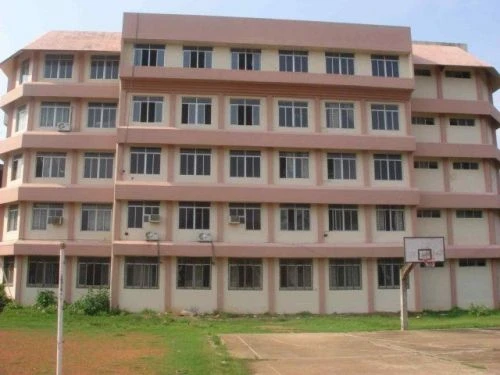
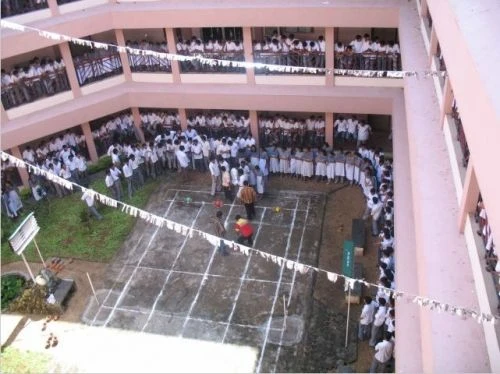
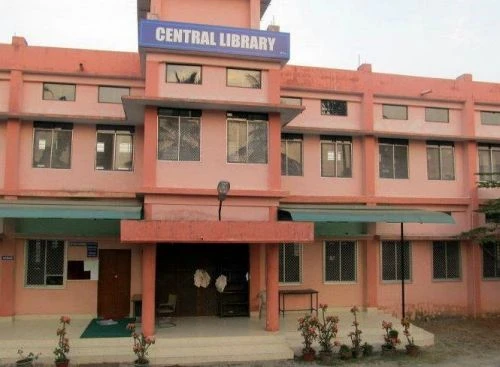
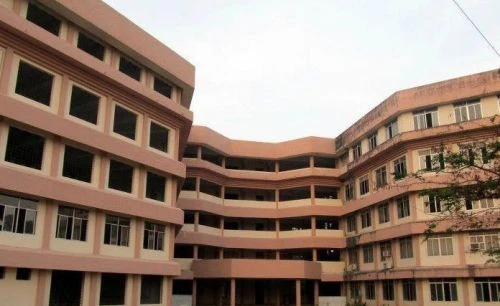
Let’s be honest: the campus is compact. It’s situated in the heart of Chengannur town, which is convenient for access but means you shouldn’t expect sprawling lawns. The infrastructure gets mixed reviews. The library is a definite plus—fully computerized with over 21,000 books, a solid collection of journals, and e-book facilities. Classrooms are well-furnished.
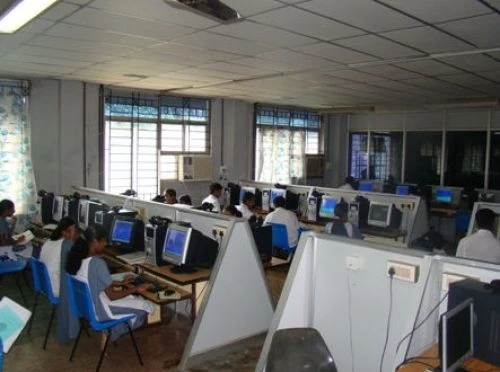
The labs, however, are a common point of criticism. While they exist and are sufficient for coursework, students often describe the equipment as outdated or poorly maintained. The CSE labs are considered decent, but others feel their age. Wi-Fi coverage is campus-wide but its speed and reliability are frequently called out as subpar.
Hostel life is a mixed bag. There’s one boys' hostel (capacity ~70) and three girls' hostels (total capacity ~350). Rooms are generally considered okay, with some having attached bathrooms. The strict anti-ragging policy is a major positive, creating a friendly atmosphere where seniors are helpful. The food in the hostels, though, is a recurring complaint—labeled as average, repetitive, and sometimes just bad.
Extracurriculars are present but not overwhelming. There’s an annual techno-cultural fest called ‘Uyilo’ and events organized by clubs like IEEE, NSS, and arts clubs. Sports facilities include a badminton court, gym, and a billiards table (reportedly a first for Kerala colleges), but student support for sports is seen as limited. The social life is what you make it, centered more on academics and club activities than a bustling party scene.
Sifting through student sentiment reveals a clear consensus. The overwhelming positives are the quality of faculty (especially in CSE), the complete absence of ragging, and the strong placement support for core branches. Students feel the teachers are genuinely invested in their success. The alumni network isn’t just a talking point; it actively contributes scholarships and placement assistance.
On the flip side, the negatives are just as consistent. Infrastructure and lab maintenance are the biggest letdowns. Words like “average,” “outdated,” and “small” come up a lot. The Wi-Fi is notoriously slow. Administrative processes for certificates or results can be frustratingly slow. And as mentioned, hostel food quality is a major grievance.
The verdict from students often boils down to this: if you’re coming for a premium campus experience with top-tier facilities, you’ll be disappointed. But if you’re coming for a supportive learning environment with excellent teachers and a high probability of a good job in IT, CEC delivers exceptional value for money. It’s a trade-off most students seem willing to make.
CEC Chengannur is a purpose-driven institution. It’s best for the pragmatic, career-focused student who defines a college’s worth by its placement record and faculty quality, not by the size of its campus or the speed of its Wi-Fi. If you can secure a seat in Computer Science or Electronics & Communication Engineering through KEAM, CEC offers one of the most cost-effective pathways into Kerala’s IT industry. The low fees, strong scholarships, and proven recruiter relationships make it a smart choice for middle-class families.
However, if you’re looking at the Electrical or Instrumentation branches, be cautious. Placement prospects are notably weaker. And if a vibrant, residential campus life with modern amenities is a non-negotiable part of your college dream, you might find CEC’s town-center, no-frills setup limiting. Ultimately, it’s a college that asks you to prioritize professional outcomes over premium comforts. For thousands of students every year, that’s a trade worth making.
In this preview: 5 photos · 0 videos
Admission to the B.Tech programs is based entirely on the KEAM (Kerala Engineering Architecture Medical) entrance exam rank. Candidates must have passed the Higher Secondary exam with Physics, Mathematics, and one of Chemistry/Computer Science/Biotechnology/Biology, securing at least 45% aggregate in these subjects. Selection is finalized through the Central Allotment Process (CAP) counselling conducted by the state. Seats are allotted under merit (50%), management (35%), and NRI (15%) quotas.
For B.Tech programs, annual tuition fees range from ₹42,000 to ₹47,250 for Merit Lower Fee (SM) seats and ₹73,500 to ₹78,750 for Merit Higher Fee (MG) seats, varying by branch. The total annual cost for hostel accommodation, including mess charges, is approximately ₹60,000 for both boys and girls. This breaks down to room rent/electricity charges of ~₹14,650 for boys and ~₹39,750 for girls, plus a common mess charge of ₹40,000 per year.
Placement rates for Computer Science and Engineering (CSE) students are typically 70-80%, with an average package of around ₹5.5 LPA and highest packages reaching ₹15 LPA for top performers. For Electronics and Communication Engineering (ECE), placement is 60-70% with an average of ₹4.2 LPA. Top recruiters are predominantly IT giants like TCS, Infosys, Wipro, IBM, Cognizant, and Accenture, along with core engineering firms such as L&T and Bosch.
Student opinions are sharply divided. Faculty quality is consistently praised, with teachers described as experienced, knowledgeable, and very supportive, especially in the CSE department. Infrastructure, however, receives mixed to negative reviews. While the library is well-regarded, labs are often cited as outdated or poorly maintained, the campus is considered small, and Wi-Fi speed is a common complaint. Hostel rooms are acceptable, but food quality is frequently criticized.
Yes, CEC offers several scholarship schemes. Key opportunities include the AICTE Scholarship, which provides a full tuition fee waiver for meritorious students with a family income below ₹6 lakhs. There is also an Income-cum-Merit Scholarship for students with excellent academic records and family income under ₹1.5 lakhs. Additionally, the Alumni Scholarship Programme (ASP) supports 10 students annually, and there are specific scholarships for students from backward communities and those with disabilities.
Share what future students should know about CEC.
Student voices are not rewritten by colleges. We remove spam and abuse.
Wider admission question? Community PulseWhat should future students know?
Tell us which course you're considering. We'll help you work out the next step.
Get instant Partner access after mobile verification. Your public edits are reviewed before they go live.
Claim this college
 Auditorium
 Cafeteria
 Campus Shuttle
 Communication Centre
 Computer Labs
 Hostel
 Medical
 Science Labs
 Sports Complex
 Study Library