Loading Admission Guardian content
Loading Admission Guardian content
Provisional score based on available data. It may change as more information is verified.
Find a program, read its fee details and explore the admission requirements.
Summary of the programs shown below. First-year fee. Check the note beside each amount for inclusions and exclusions.
| Course | Stream | Fees |
|---|---|---|
| Bachelor of Technology [B.Tech] | Engineering | 43805 |
Specializations
All accepted exams
Eligibility: 10+2 with 50% + KEAM
1 exam with cutoff data available - showing recent entries
College of Engineering Trikaripur (CET) is a bit of a paradox. It's a government self-financing institution tucked away in the northernmost district of Kerala, yet it holds a NAAC A++ grade—a rare and prestigious accreditation that puts it in the top tier of Indian colleges. That grade, effective from August 2023, is a serious signal of institutional quality. But the story here isn't just about a shiny badge. It's about a 25-acre campus in Cheemeni, Kasaragod, that has been quietly building a reputation for solid, affordable engineering education since 2000. Affiliated with APJ Abdul Kalam Technological University (KTU), CET operates under the Co-operative Academy of Professional Education (CAPE), a government-promoted society. For students who get in through the state's KEAM exam, the annual tuition can be as low as ₹35,000. That's a fraction of what private colleges charge. The trade-off? You're not in Kochi or Trivandrum. You're in a quieter, more rural part of Kerala, where the campus life is what you make of it. The placement reports are a mixed bag, with numbers that vary wildly depending on who you ask. Yet, for a certain student—one looking for a low-cost, accredited engineering degree without the chaos and high costs of a metro—CET presents a compelling, if understated, option.
CET's academic offering is straightforward and focused on core engineering disciplines. The total B.Tech intake is around 420 students per year, spread across six programs. The Computer Science and Engineering department is clearly the largest, with 120 seats for the standard program and an additional 60 seats each for two new specializations launched in 2025: Artificial Intelligence and Data Science. This move signals an attempt to stay current with industry trends. Civil, Electrical and Electronics (EEE), and Electronics and Communication (ECE) each have 60 seats.
The college follows the KTU semester system, with classes running from 9 AM to 4:20 PM. The academic culture, as described, emphasizes a mix of theory and practical application. They have an active NPTEL local chapter, which is a good resource for supplementary learning from IITs. Faculty strength is listed at 70, with most holding PhDs or postgraduate degrees. The pass percentage hovering between 40% and 51% suggests the academic standards are not lax; you'll need to put in the work. It's a traditional, no-frills engineering curriculum, but the recent NAAC A++ grade and NBA accreditation for CSE and EEE are strong, external validations of its academic processes. You can view the official details on the college website.
This is where the data gets fuzzy, and a reality check is essential. The research brief presents a wide range of placement percentages: "around 30%," "almost 40%," and "mostly 80% since 2022." That discrepancy is the first thing to note. The most optimistic figure (80%) likely refers to specific, in-demand branches like Computer Science, especially in recent years. The lower figures (30-40%) are probably more reflective of the overall college average or the performance of core branches like Civil or Mechanical in tougher years.
The highest package reported is 8 LPA, with another mention of ₹50,000 per month (6 LPA). There is no available average or median package data, which is a gap. The recruiter list includes familiar IT and consulting names: Wipro, TCS, Infosys, Accenture, Cognizant, IBM, and Deloitte. For core engineering, companies like UltraTech Cement and Quest Global appear. The presence of Amazon Transportation is also noted.
So, what's the real picture? Placement support exists, and top-tier IT service companies do visit. However, placement is not guaranteed for everyone. Students in CSE and related specializations will have significantly better odds than those in other streams. Internship opportunities seem inconsistent, with some students securing them at notable organizations and others reporting a lack of options. The verdict? CET provides a platform, but landing a job requires strong individual initiative, especially if you're not in the computer science stream. Don't assume 80% placement means 80% for your branch.
Affordability is CET's undeniable strength. For a student securing a merit seat through the KEAM exam, the annual tuition fee can be as low as ₹35,000 to ₹65,000. That's exceptionally low for a professional degree. Even the non-KEAM or management quota seats are capped at around ₹80,000 per year, with NRI seats at ₹1,00,000. The first-year cost, including tuition, PTA fund, bus fee, and a one-time caution deposit, is approximately ₹53,000-₹55,000 plus a separate exam fee.
The total 4-year cost estimates in the brief vary from ₹1.44 lakhs to ₹2.77 lakhs. The lower end of that spectrum is almost unbelievable for a B.Tech degree in 2025 and likely represents the bare minimum tuition for a merit student. A more realistic total cost, including modest hostel and living expenses, would be closer to the ₹2.5-₹3 lakh range for four years—still a phenomenal value.
Hostel fees appear minimal (one mention cites ₹3,950, though the period is unclear), and canteen meals are priced at a very student-friendly ₹18. The college also offers a wide array of scholarships, which is common for government-backed institutions in Kerala. These include state government schemes (E-Grantz), merit-cum-means scholarships for minorities, and the AICTE Tuition Fee Waiver for top merit seats. Financially, it's very hard to find a more accessible engineering college.
Admission to the B.Tech programs is centralized and straightforward: you need to take the Kerala Engineering Architecture Medical (KEAM) entrance exam. That's it. There's no separate college application for the majority of seats. Your rank in the KEAM exam determines your eligibility during the state counseling process.
KEAM cutoffs for CET typically range from the 85th to the 92nd percentile for the general category. In terms of rank, one data point suggests a cutoff below 30,000 for a particular course. CSE will naturally have the highest cutoff rank, likely in the teens of thousands, while Civil or ECE might be accessible with a rank closer to 40,000-50,000. These ranks are approximate and shift every year based on applicant volume and difficulty. The official Commissioner for Entrance Examinations (CEE), Kerala website is the only source for final, year-specific cutoff data.
The selection is purely merit-based on the KEAM score. For M.Tech programs, admission is primarily through the GATE exam score, as per KTU guidelines.
The 25-acre campus in Cheemeni is spacious but isolated. The nearest major town is Cheruvathur, about 10-11 km away, which is where you'll find the railway station and bus stand. Kannur International Airport is roughly 70 km away. This isn't a college in the middle of a city. The social life is largely campus-centric.
Infrastructure includes the standard academic blocks, labs, a library, and workshops. As a government college, the facilities are functional but shouldn't be compared to lavish private campuses. Hostels are available, with separate accommodations for women. The low cost of hostel fees and food (₹18 per meal in the canteen) is a major plus for the budget-conscious student.
Extracurricular activities and technical festivals are organized by student clubs and chapters like IEEE. The college mentions activities like paper presentations, seminars, and quiz competitions. However, the remote location means you won't have easy access to urban amenities, internships, or a bustling nightlife. The student experience here is more about academics and campus camaraderie than external distractions. It's an environment that can foster focus, but it requires you to be self-sufficient and create your own engagement.
Synthesizing the likely sentiment from student reviews, a clear consensus emerges. The overwhelming positive is the cost-to-value ratio. Students consistently praise the extremely low fees for the quality of education received, especially after the NAAC A++ accreditation. The faculty are generally described as qualified, helpful, and accessible.
The primary negatives revolve around location and placements. The remote location is seen as a significant drawback, limiting exposure, internship opportunities, and off-campus social life. Placement reviews are the most polarized. While some recent CSE graduates report good placement cycles with IT companies, students from other branches and earlier batches often describe placement support as weak or inconsistent. The 80% placement figure is frequently questioned in online forums, with many alumni suggesting the effective rate for the entire college is lower.
Another common point is the infrastructure: it's deemed adequate but not modern or well-maintained in all areas. The hostel food and amenities receive mixed reviews, as is common in most colleges. The takeaway? Students feel they get a solid, accredited engineering degree without financial burden, but they have to proactively compensate for the college's remoteness and variable placement drive.
College of Engineering Trikaripur is a very specific, high-value proposition for a specific type of student. It's worth it if your top priorities are obtaining an accredited engineering degree at the lowest possible cost and you are a self-motivated learner. The NAAC A++ grade is a legitimate mark of quality that adds significant value to your degree. If you secure a merit seat with a KEAM rank in the eligible range, the financial investment is minimal.
However, you must go in with clear expectations. This is not the college for someone who wants a vibrant, city-based campus life or expects the college to hand them a high-paying job. You will need to be proactive: use online resources like NPTEL, build your skills for placements, and seek out internships independently. It is an excellent choice for students from Kerala and nearby regions who are budget-conscious, academically focused, and willing to drive their own career trajectory. If you're aiming for top-tier campus placements in core engineering fields or want a bustling metropolitan experience, you should probably look at colleges in larger tech hubs, even if they cost more.
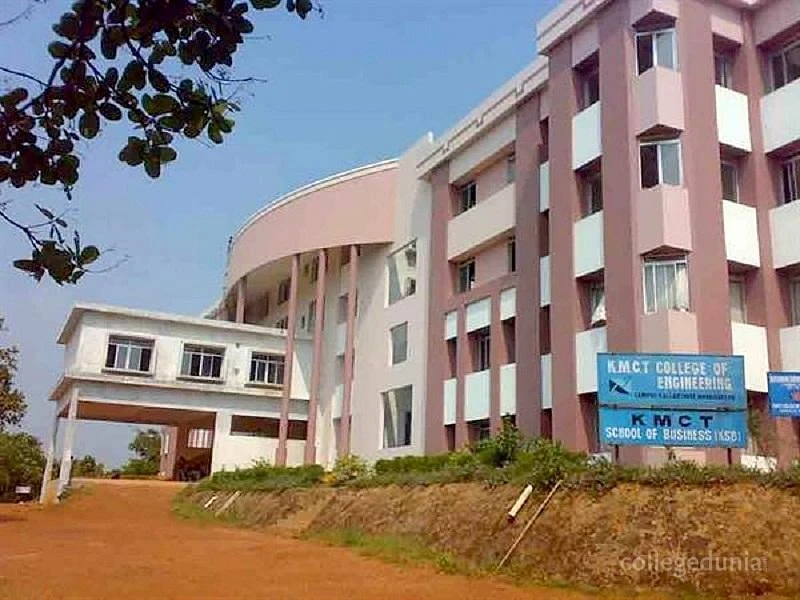
In this preview: 1 photo · 0 videos
The fee structure is highly affordable, especially for merit seats. Annual tuition fees for B.Tech (Merit seats via KEAM) range from approximately ₹35,000 to ₹65,000. For Non-KEAM or management quota seats, the fee is around ₹80,000 per year, and for NRI category, it's ₹1,00,000 per year. The total first-year cost, including other charges like PTA fund, bus fee, and caution deposit, is roughly ₹53,000-₹55,000 plus an examination fee. Over four years, the total cost for a merit student can be as low as ₹1.4 to ₹2.8 lakhs, making it one of the most cost-effective engineering colleges in Kerala.
Placements at CET show variability across branches and years. The college reports that mostly 80% of the class gets placed since 2022, but other data points mention 30-40%. This suggests placement rates are strongest for in-demand branches like Computer Science and Engineering. The highest package reported is 8 LPA. Top recruiters include Wipro, TCS, Infosys, Accenture, Cognizant, IBM, and Deloitte. Core engineering companies like UltraTech Cement also visit. Students should note that placement success often requires strong individual initiative, and opportunities can be more consistent for CSE students compared to other streams.
Admission to the B.Tech programs is entirely based on the Kerala Engineering Architecture Medical (KEAM) entrance exam score. There is no separate college application for state quota seats. Candidates must appear for KEAM, and after the results are declared, they must participate in the centralized counseling conducted by the Commissioner for Entrance Examinations (CEE), Kerala. Seats are allotted based on KEAM rank, category, and seat availability during the counseling rounds. The selection is purely merit-based.
KEAM cutoff ranks for CET typically range from the 85th to the 92nd percentile for the general category. In terms of actual rank, cutoffs can vary yearly but often fall below 30,000 for many courses. The cutoff for Computer Science and Engineering (CSE) is the highest, likely requiring a rank in the teens of thousands, while branches like Civil or Electronics and Communication Engineering may have cutoffs closer to 40,000-50,000. Applicants should check the official CEE Kerala website for the most recent and specific cutoff data for their category.
College of Engineering Trikaripur is a Government Self-Financing College. It operates under the Co-operative Academy of Professional Education (CAPE), which is an autonomous society promoted by the Government of Kerala. It is not a private institution. This model allows it to offer government-subsidized, low tuition fees for merit students while being administratively autonomous. It is approved by AICTE and affiliated with APJ Abdul Kalam Technological University (KTU).
Share what future students should know about College of Engineering Trikaripur.
Student voices are not rewritten by colleges. We remove spam and abuse.
Wider admission question? Community PulseWhat should future students know?
Tell us which course you're considering. We'll help you work out the next step.
Get instant Partner access after mobile verification. Your public edits are reviewed before they go live.
Claim this college
 Auditorium
 Cafeteria
 Computer Labs
 Hostel
 Medical
 Science Labs
 Sports Complex
 Study Library