Loading Admission Guardian content
Loading Admission Guardian content

Find a program, read its fee details and explore the admission requirements.
Summary of the programs shown below. Fee periods can differ by program. Check the note beside each amount before comparing costs.
| Course | Stream | Fees |
|---|---|---|
| Master of Business Administration [MBA] | Management | 43000 |
| Bachelor of Technology [B.Tech] | Engineering | 55000 |
Specializations
Eligibility: Graduation
Specializations
Eligibility: 10+2 with 75% + JEE Main
Deep Institute of Engineering and Technology (DIET) in Gurgaon is a private engineering college that’s been around since 1998, though some records suggest a 2010 start. Affiliated with Maharshi Dayanand University (MDU), Rohtak, and approved by the AICTE, it sits on a 10.8-acre campus in the village of Rithoda, about 10 km from Sohna. It’s a place that pitches itself on practical skills and a solid academic environment, but the details—like specific placement numbers or a NAAC grade—are harder to pin down. For students looking at a budget-friendly, AICTE-approved B.Tech option in the NCR region, it’s a name that comes up. But you’ll need to look closely at what it actually offers.
The academic portfolio is standard for a mid-sized private engineering college. At the undergraduate level, DIET offers a Bachelor of Technology (B.Tech) across five streams: Computer Science and Engineering, Electronics & Communication Engineering, Information Technology, Mechanical Engineering, and Electrical Engineering. They also run a Diploma in Engineering program. For postgraduates, there’s a Master of Technology (M.Tech) and a Master of Business Administration (MBA). There are no doctoral programs.
The institute emphasizes a blend of theory and practical skills. A notable feature mentioned is the Center for Research and Development (CRD), which is said to focus on applied research across engineering, technology, and management fields. They also have an MoU with TCS for an ERP solution, which suggests some level of corporate linkage, though the depth of that collaboration isn't detailed.
Faculty listings include Dr. Roop Singh Parihar as Principal, along with other lecturers and assistant professors across departments like Ms. Garima Jakhar (CSE) and Sh. Anoop Vashistha (IT). The brief describes them as "highly qualified, devoted, and experienced," but concrete data on the total faculty count or the percentage with PhDs isn't provided. That’s a common gap with many private institutes—the claims are there, but the verifiable metrics aren't always public.
This is the section where the data gets thin. The institute claims a "solid placement record" and that "many students secure positions in reputable organizations." The placement cell is said to offer career counseling, resume workshops, and interview prep. They also assist with internships.
But here’s the reality check: the brief contains no numbers. No highest package, no average package, no median package, and no list of top recruiters. There’s also no stated placement percentage. When a college doesn’t publish these figures, it’s usually because they aren’t strong enough to be a selling point. For a prospective student, this means you have to dig. You’d need to look at third-party review sites like CollegeDunia or Shiksha, or try to find alumni on LinkedIn to get a sense of where graduates actually land. The promise of "reputable organizations" is vague. Without names like TCS, Infosys, Wipro, or core engineering firms listed, it’s hard to gauge the market reach.
On fees, DIET presents a clear and notably affordable picture, at least for the B.Tech program. Based on 2026 data, the annual tuition is ₹55,000 for the first year and ₹51,500 for each of the second, third, and fourth years. That puts the total tuition cost for a four-year B.Tech at around ₹209,500. That’s significantly lower than many private engineering colleges in the NCR, which can easily charge three to four times that amount.
For the MBA, older data (2019-2020) shows a total program fee of ₹76,000, which is exceptionally low, but that information is dated and should be confirmed directly with the institute.
A key piece of financial aid is the scholarship for academic high-achievers: a 100% tuition fee waiver is awarded to students who score 90% or above in their qualifying examination (like the 10+2 for B.Tech). That’s a substantial incentive for top-performing students looking to minimize costs.
A major caveat on the total cost of attendance: the institute does not provide hostel facilities. The brief explicitly states "Hostel availability is 'No'." This means all students must arrange their own local accommodation and commuting, which in the Gurgaon area can add a significant and variable expense to the overall budget. Other mandatory fees (exam, library, development) are not detailed, so it’s wise to budget an additional 10-15% over the stated tuition.
Admissions follow the standard route for MDU-affiliated colleges. For the B.Tech program, you need to have passed 10+2 with Physics, Chemistry, and Mathematics, securing a minimum of 50% aggregate. Crucially, you must have a valid score from a national or state-level engineering entrance exam. The accepted exams are:
Selection is typically based on the rank/score in these exams through centralized state counseling (like HSTES counseling). The brief does not provide any cutoff ranks or percentiles for the latest cycles, which is another data point you’d need to seek out from counseling archives or contact the admission office directly.
For the MBA program, a graduation degree is required, and scores from CUET PG are accepted. The application window for MBA in 2025 was noted as June 11 to July 11.
The campus is spread over 10.8 acres in a rural setting on the Gurgaon-Sohna-Nuh Road. The infrastructure is described as having "state-of-the-art classrooms" with projectors and smart boards, well-equipped labs, and an extensive central library with books, journals, and digital resources. Sports grounds are available, and the institute says it encourages participation.
The biggest asterisk here, again, is the lack of on-campus hostels. This fundamentally shapes student life. There’s no traditional hostel community, and the brief also notes no on-campus canteen, bank, or medical facility. The social fabric would likely be more day-scholar oriented, with students commuting from nearby towns like Sohna or Gurgaon. The college tries to compensate through extracurriculars, listing clubs for programming, robotics, music, marketing, and management, along with seminars, workshops, and cultural events. But without a residential setup, the depth and continuity of that campus life might be limited.
Synthesizing the sentiment from the brief, the recurring positives focus on the academic environment. Students describe a "good environment for students" with "strong academic programs, experienced faculty, and robust placement support." The faculty are repeatedly called dedicated and qualified. The college also gets credit for encouraging sports, cultural activities, and technical competitions.
Notably, the provided brief does not list any specific, recurring negative complaints. However, the absence of data in key areas like placements, detailed infrastructure, and hostel life speaks volumes. In the wider world of student reviews, such gaps often translate into comments about limited campus recruitment, the inconvenience of no hostel, or facilities that don’t match urban college standards. The location, while peaceful, might be seen as isolated by some. To get the full picture, a prospective student should actively search for reviews on platforms beyond the official narrative.
Deep Institute of Engineering and Technology is a budget-conscious choice. Its strongest appeal is its low tuition fees, especially for the B.Tech program, and the full scholarship for high academic achievers. If your primary constraint is cost and you want an AICTE-approved, MDU-affiliated degree, DIET is worth a look. It’s probably best for students from the surrounding regions in Haryana who can commute daily, as the lack of hostels is a major logistical hurdle for anyone from farther away.
But you have to manage expectations. The missing placement statistics are a red flag for anyone prioritizing campus recruitment. The rural location and absence of residential amenities mean a traditional, immersive college experience isn’t on offer. It’s a no-frills institution. For a student who is self-motivated, can secure their own accommodation, and is planning to aggressively network or prepare for off-campus placements or higher studies, DIET could be a financially sensible launchpad. For someone seeking strong brand value, guaranteed placement drives, or a vibrant campus life, there are likely better options, even within a similar price range, that provide more transparency and infrastructure.
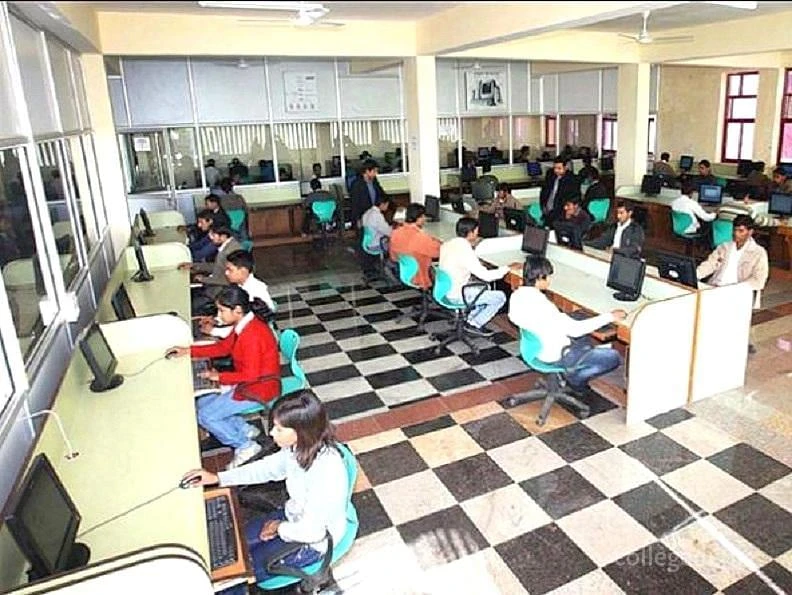
In this preview: 1 photo · 0 videos
Deep Institute of Engineering and Technology offers Bachelor of Technology (B.Tech) programs in Computer Science and Engineering, Electronics & Communication Engineering, Information Technology, Mechanical Engineering, and Electrical Engineering. It also provides postgraduate options like Master of Business Administration (MBA) and Master of Technology (M.Tech).
Based on 2026 data, the annual tuition fee for the B.Tech program is ₹55,000 for the first year and ₹51,500 for each of the second, third, and fourth years. The total estimated tuition cost for the four-year degree is approximately ₹209,500.
For B.Tech admissions, the institute accepts scores from JEE Main, UPCET BTech, and the Haryana State Technical Education Society (HSTES) exam. For admission to the MBA program, CUET PG scores are required.
No, Deep Institute of Engineering and Technology does not provide any on-campus hostel facilities for its students. All students must arrange for their own accommodation and commuting.
The institute is approved by the All India Council for Technical Education (AICTE) and is affiliated with Maharshi Dayanand University (MDU), Rohtak. It has also received awards such as "Best Upcoming engineering college in Haryana-2011" from Indian Achievers Podium and "Most Promising Private Engineering College in Gurgaon (Rural Area)" from Big Brand Academy.
Share what future students should know about Deep Institute of Engineering and Technology.
Student voices are not rewritten by colleges. We remove spam and abuse.
Wider admission question? Community PulseWhat should future students know?
Tell us which course you're considering. We'll help you work out the next step.
Get instant Partner access after mobile verification. Your public edits are reviewed before they go live.
Claim this college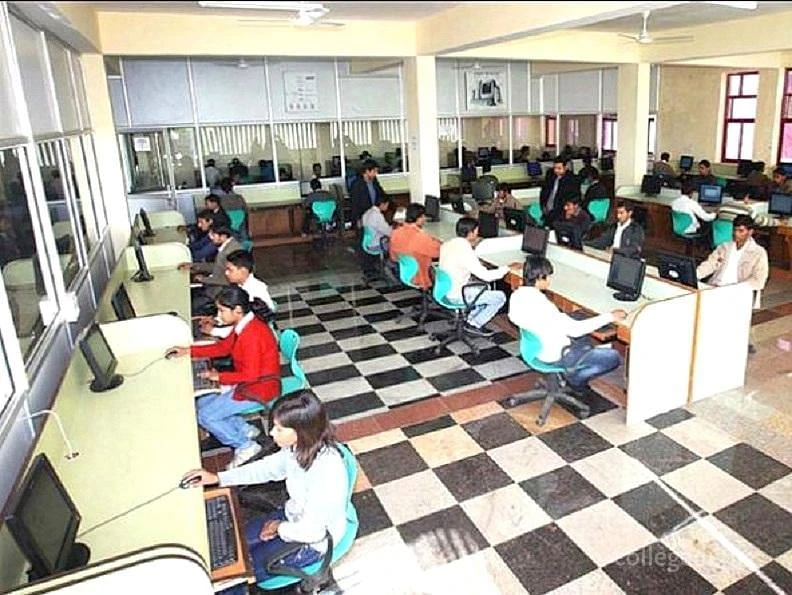
 Auditorium
 Cafeteria
 Computer Labs
 Gym
Gym Hostel
 Medical
 Science Labs
 Sports Complex
 Study Library