Loading Admission Guardian content
Loading Admission Guardian content

1 programme · 1 institution. Check the admission year and requirements.
1 programme · 1 institution. Check the admission year and requirements.
The Department of Management Studies (DoMS) is the management department of IIT Madras in Chennai. Its flagship full-time MBA is a two-year course organised across seven quarters. The current 2026-28 admissions page describes a 2026 intake that has already run; applicants planning for the next cycle should wait for the next official notice instead of treating 2026 dates, eligibility details or fees as a 2027 guarantee.
DoMS may be worth comparing if you want a management degree inside a large technical university and are comfortable with a tightly sequenced curriculum. That setting offers access to courses and academic communities beyond management, but the department’s own published placement page also describes a small MBA cohort and a structured placement process. Compare the exact programme, the current full fee schedule, and the same cohort year before deciding. The evidence does not support a universal claim that DoMS is a better-value option than every IIM or that every student receives a particular role or salary.
The MBA is a two-year, full-time programme with seven quarters, a summer industry project and elective choices in the second year. The department’s current programme description shows a sequence from foundational business and quantitative courses to functional subjects, then advanced electives and integration work. Subjects listed include accounting, statistics, economics, organisational behaviour, marketing, operations research, financial management, programming for management, business intelligence, strategy, human-resource management and business ethics. The published curriculum is useful for judging the programme’s analytical and functional mix; it should not be read as a promise that every listed course will be offered in every batch.
The department says the MBA certificate does not name a specialization. Students shape a focus through their elective choices. This distinction matters if you are comparing it with a programme that formally awards a named major: at DoMS, the elective transcript and the degree certificate are different things. The department also describes an eight-to-ten-week summer project between the first and second years. Treat that as a curricular component, not as a guaranteed internship with a particular employer.
DoMS lists additional programmes alongside the MBA, including the Executive MBA, management research programmes and the PGPEX-VLM programme. These are separate routes with different audiences and admission procedures. For example, the current Executive MBA page describes a two-year programme for working professionals, with a minimum three years of post-undergraduate work experience and alternate-weekend in-person classes. Its 2026 admission page lists a written aptitude test and interview for shortlisted applicants. Those conditions do not apply to the regular two-year MBA.
DoMS also offers M.S. and Ph.D. research programmes for applicants whose goal is sustained inquiry rather than a professional MBA. Its research page presents work across areas including information systems, organisational behaviour and human resources, and sustainability and policy. The department describes cross-disciplinary research involving data science, artificial intelligence and sustainability, and says scholars receive faculty guidance. These institutional descriptions do not guarantee a particular supervisor, research project or publication opportunity. Research applicants should read the current admission notice, identify faculty whose work matches their question, and check the entrance examination, interview and funding provisions for their specific degree. The department’s research profile and the regular MBA serve different decisions: the MBA’s seven-quarter structure is built around coursework and a summer industry project, while the M.S. and Ph.D. routes are oriented toward knowledge creation and independent research.
The department traces the MBA’s start to 2001 and its formal establishment to 2004. Its current profile places it within IIT Madras, alongside other academic departments and the IIT Madras Research Park. That relationship can widen the academic context: DoMS says MBA students may audit elective courses offered by the department and more than 300 courses across 16 other IIT Madras departments. Applicants should confirm current registration rules, capacity and any additional requirements before assuming a particular course is available to them.
The department’s MBA admissions page contains information for the 2026-28 batch. It describes a two-stage process: an initial composite-score shortlist and a final evaluation involving reflective writing, interview and achievements. The shortlist components include CAT aptitude, past academics, work experience and diversity. The page does not establish a permanent CAT percentile cutoff, so older cutoff numbers should not be used as a prediction for a future cycle.
For regular Indian applicants, the page requires a valid CAT score and a bachelor’s degree in any discipline. Its listed minimum is 60% or 6.5 CPI for General, OBC and EWS candidates and 55% or 6.0 CPI for SC, ST and PwD candidates. It says final-year students can apply provisionally. IIT graduates with a CGPA of at least 8.0 on a 10-point scale are exempt from the CAT requirement. The page has separate provisions for employer-sponsored and defence candidates, and a GMAT route for international and NRI applicants. These categories have distinct conditions; applicants should use the relevant tab and current admission report rather than apply the regular-candidate rules to every route.
The 2026 cycle opened after CAT 2025 results and closed in early 2026. The department’s page also links an MBA Admission Report for the 2026-28 batch. Since those dates have passed, a prospective 2027 applicant should verify the next application window, accepted test year, score-exemption rules and selection weights in the new notice. The official admissions page and MBA application portal are the appropriate places to check; an old page date is not a current deadline.
The latest fee document captured for this profile is the official IIT Madras fee schedule for MBA students admitted in 2025-26. It lists a one-time institute fee of ₹40,000, semester fees of ₹2,95,402 for Indian nationals, and a refundable caution deposit of ₹5,000. Its first-semester total payable is ₹3,40,402 for GE/OBC/EWS students, ₹90,402 for SC/ST/PwD students after the tuition waiver, and ₹4,40,402 for sponsored candidates. The table separately notes that sponsored candidates pay an additional ₹1 lakh tuition fee per semester. Foreign-national fees are listed separately in US dollars.
These are the 2025-26 admission figures, not a confirmed 2027-28 quote. The document says the institute may revise fees in later semesters. Hostel and mess charges are not included in the figures above; IIT Madras directs students to its fee portal for hostel charges. Before budgeting, ask DoMS for the current admission-year schedule and distinguish tuition, institute charges, deposits and residential costs. A first-semester total should not be multiplied by four without checking the later-semester fee rows and any changes.
The 2025-26 schedule says Indian SC, ST and PwD students are exempt from tuition fees. That is a tuition component waiver, not a statement that every fee or living cost is waived. The schedule alone does not establish a general merit scholarship or a current means-tested award for every student; check the applicable IIT Madras and government aid rules for the relevant category and year.
DoMS’s placement page reports outcomes for MBA Batch 2025-26: average CTC of ₹18.3 lakh per year, median CTC of ₹18 lakh per year and highest CTC of ₹40 lakh per year. It also reports 65+ recruiting partners and a domain split led by consulting at 30%, followed by analytics/IT at 17%, marketing and sales at 15%, and general management at 13%. The displayed percentages describe the department’s reported placement-domain split; they are not a guarantee that a student can select a particular role.
The same page reports summer placement statistics for Batch 2025-26: average stipend of ₹1,18,443, median stipend of ₹80,000 and highest stipend of ₹3 lakh for two months. These figures concern summer internships, not final placements. The official page does not show the placement denominator alongside the summary figures, so applicants should consult the downloadable report and ask how the batch, eligible students, placed students and students seeking placement are counted. Do not compare an average from one cohort with another school’s median or headline highest package.
The department’s description of its placement process separates summer placements for first-year students, pre-placement presentations and final placements for second-year students. It says company visit order takes account of the role profile and student preference, past interactions, compensation and company reputation. This describes a process for arranging opportunities; it does not promise that a specific employer or role will visit, that a student will receive a preferred offer, or that a particular percentage of the cohort will be placed. Ask the department for the full report, including eligible and participating counts, and how students who pursue other plans are treated in the denominator. That information is necessary before comparing placement coverage across schools or turning a headline average into a personal earnings expectation.
The reported difference between average and median is small for this cohort: ₹18.3 lakh minus ₹18 lakh equals ₹0.3 lakh per year. That arithmetic indicates the two published central summaries are close, but it does not reveal the full salary distribution, placement coverage, variable-pay composition or individual outcomes. The department’s placement reports page provides the report archive and should be checked for a like-for-like comparison.
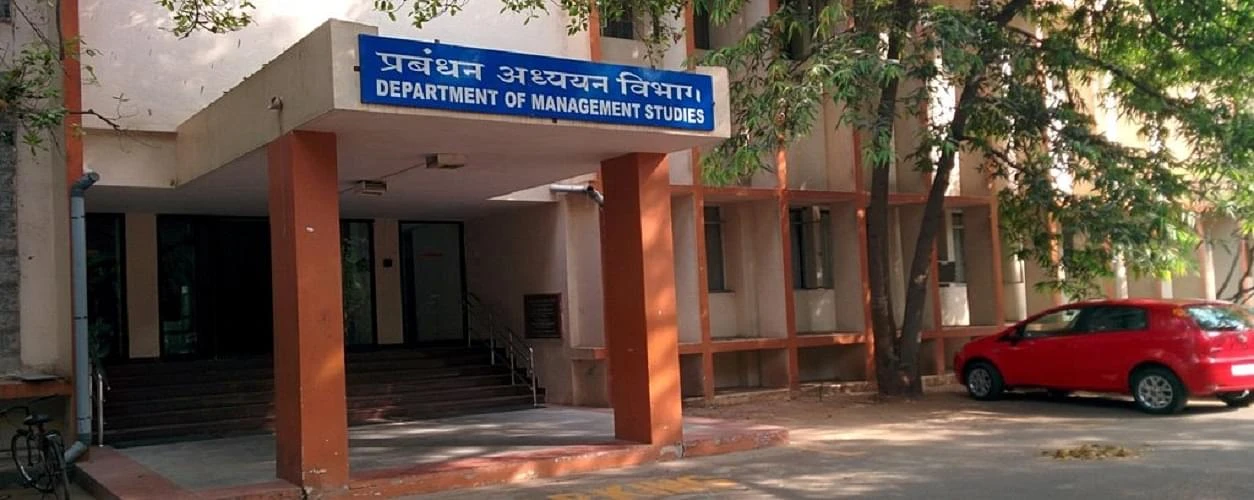
DoMS is located within the IIT Madras campus in Chennai. The department’s about page describes the wider institute campus as 630 acres and notes access to courses in other departments. Its student-life pages list clubs across analytics, operations, consulting, finance, human resources and arts, as well as sports and cultural activities. These are useful signs of the range of communities available, but student participation, facility access and accommodation depend on institute rules and current availability.
The academic pace is a practical fit question. Seven quarters compress the two-year MBA into frequent transitions between course blocks, with a summer project between years. Students who prefer shorter teaching terms and a broad elective environment may value that structure; applicants who need a slower calendar should compare the academic schedule and assessment pattern with alternatives. The department also describes its placement process as staged, with summer placements, pre-placement presentations and final placements. Its stated slotting criteria include the role profile, student preference, prior interactions, compensation and company reputation. Candidates should ask the placement office how those criteria operate for the current batch rather than assume every role is available to every student.
For a sound decision, separate three questions. First, does the seven-quarter curriculum and elective-based focus match the subjects and pace you want? Second, can you meet the current admission rules and fund the complete cost, including living expenses? Third, do the cohort-specific placement measures align with your goals once denominator and compensation definitions are clear? The available 2025-26 fee schedule and 2025-26 placement summary are useful reference points, but neither is a confirmed 2027-28 commitment.
The strongest practical reason to consider DoMS is the combination of an MBA curriculum, access to a wider technical-university course environment and published cohort-level placement information. The key checks are equally concrete: confirm the next admission cycle, obtain the fee schedule for that intake, examine the underlying placement report and ask how elective access, summer projects and residential costs work for the batch you would join.
Loading programmes and admission routes.
Selected ranking categories, with the recorded year beside each result. Open all records for the complete history.
12 published records · Lower numeric ranks are stronger
NIRF
MBA
#152019
Find a program, read its fee details and explore the admission requirements.
Summary of the programs shown below. See each program's fee period below.
Showing 5 courses
Specializations
Eligibility: Graduation
Specializations
Eligibility: Post Graduation
Specializations
Listed entrance exams
Eligibility: Graduation + CAT
Listed entrance exams
Eligibility: Graduation
Specializations
Eligibility: Graduation
1 exam with cutoff data available
 Accenture
 ACT Fibernet
 Amazon
 Avalon Consulting
 BNY Mellon
 Brillio
 Carwale
 CHAINalytics
 Cisco
 Cognizant
 Congruent
 Crisil
 Dell
 Epsilon Carbon
 Exterro (I) Pvt. Ltd.
 Federal bank
 Ford India Ltd
 GAVS Technologies
 Google
 IBM
 ICICI Bank
 Infosys
 McKinley & Rice
 Mu Sigma
 Odessa Technologies Inc.
 Photon Infotech
 Samunnati
 Schlumberger
 Siemens
 South Indian Bank
 TCS
 Tech Mahindra
 Titan
 VIP industries
 Virtusa
 Wipro
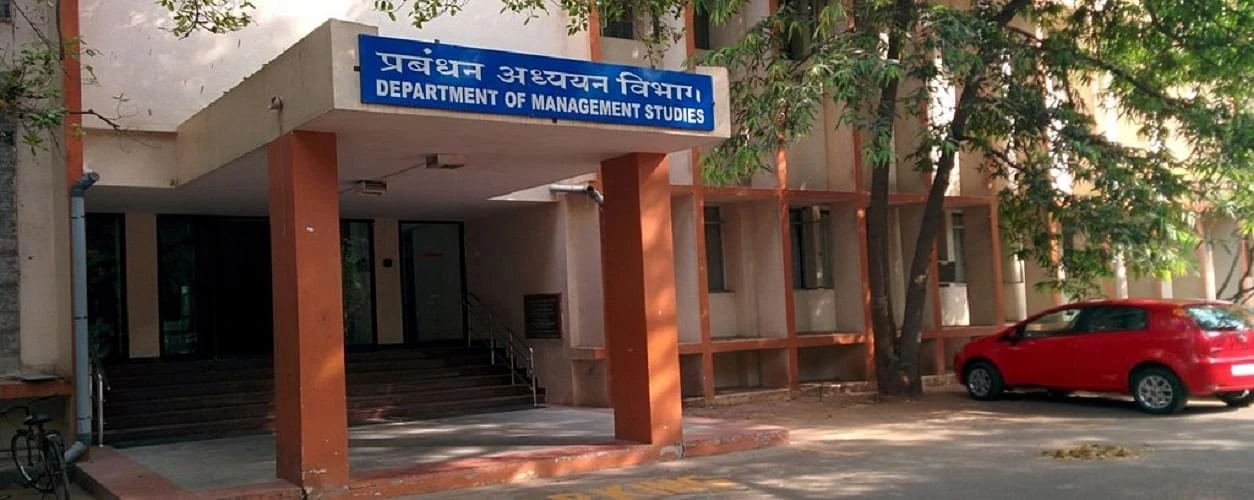

In this preview: 5 photos · 0 videos
The comparison depends on career goals. For Return on Investment (ROI) and roles in Analytics or Operations, DoMS IIT Madras is often preferred. For Marketing roles and the perceived brand value or "tag" in General Management, the new IIMs may have a slight edge.
For the posted 2026-28 MBA cycle, DoMS says the shortlist threshold is decided by the admissions committee; the page does not set a fixed CAT percentile for non-engineers. It lists CAT score, past academics, work experience and diversity among selection considerations. Check the current cycle notice for applicable criteria.
The DoMS placement page reports average CTC ₹18.3 lakh/year, median ₹18 lakh/year and highest ₹40 lakh/year for MBA Batch 2025-26. The public summary does not show the eligible or placed-student denominator and does not establish a 100% placement guarantee.
Yes, the MBA program is open to graduates from all disciplines who have a minimum of 60% marks. Despite this, the typical batch composition consists of approximately 60% engineers.
The regular MBA is a full-time program for external candidates, with admission based on the CAT exam. The Tech MBA is a dual-degree option available exclusively to current IIT Madras B.Tech students and is not open to external applicants.
About DoMS IIT Madras.
Colleges cannot rewrite published reviews. We remove spam and abuse.
Ask the communityWhat should future students know?
Tell us which course you're considering. We'll help you work out the next step.
Get instant Partner access after mobile verification. Your public edits are reviewed before they go live.
Claim this collegeProgramme information: Official source · Source as of: 2026-11-01
Each route applies only to this named programme and the stated year.
CAT: Common Admission Test · 2026-28
Admission-route evidence: Official source · Source as of: 2026-11-01
1 recorded programme · 1 institution. Admission years and conditions apply to the named programme.
 Auditorium
 Cafeteria
 Computer Labs
 Gym
 Hostel
 Medical
 Science Labs
 Sports Complex
 Study Library