Loading Admission Guardian content
Loading Admission Guardian content
Provisional score based on available data. It may change as more information is verified.
Selected ranking categories, with the recorded year beside each result. Open all records for the complete history.
1 published record · Lower numeric ranks are stronger
Find a program, read its fee details and explore the admission requirements.
Summary of the programs shown below. Programs record different fee periods. Compare the individual amounts and their notes below.
| Course | Stream | Fees |
|---|---|---|
| Diploma in Engineering (Polytechnic) | Engineering | 25000 |
| Master of Technology [M.Tech] | Engineering | 57000 |
| Bachelor of Technology [B.Tech] | Engineering | 243000 |
| Bachelor of Technology [B.Tech] {Lateral} | Engineering | 243000 |
Specializations
All accepted exams
Eligibility: 10th passed
Specializations
All accepted exams
Eligibility: Graduation + GATE/ PGCET
Specializations
All accepted exams
Eligibility: 10+2 + EAMCET
Specializations
All accepted exams
Eligibility: 10+3 + AP ECET
2 exams with cutoff data available
 Amara Raja Batteries Limited
 Amazon
 Efftronics Systems Pvt. Ltd
 Genpact
 Glenwood Systems
 Google
 HCL Technologies
 HGS
HGS Infosys
 Maintec
 Manlift India Pvt. Ltd.
 Moldtek Technologies
 Mphasis
 NCCBM
NCCBM Polaris
 Precision Gears IMA
 Sapient
 Sutherland
 Tata Consultancy Services
 Tech Mahindra
 TNS India
 Vee Technologies
 Westline Shipping Services
Dhanekula Institute of Engineering and Technology (DIET) in Vijayawada has built a reputation as a disciplined, infrastructure-focused private college where the grind is real. Established in 2009, it’s a relatively young institution, but it’s made significant strides in a short time. The big news is its recent NAAC ‘A’ grade, effective January 2025, and the autonomous status it secured from the UGC starting 2023-24. That’s a solid one-two punch for credibility. But talk to students, and you’ll hear a more nuanced story—one of excellent labs and strict rules, of strong IT placements and a tough road for core branches. It’s a college with a clear identity: efficient, structured, and demanding. Whether that’s the right fit depends entirely on what you’re looking for.
DIET offers a fairly standard set of engineering programs, but with a clear tilt towards computing. The total B.Tech intake is 884 seats, with CSE and its specializations (AI & ML, Data Science) along with ECE taking the lion’s share—540 seats combined. That tells you where the demand, and the college’s focus, lies. The B.Tech in Civil and Mechanical Engineering have 60 seats each.
The autonomous status is a big deal. It means DIET designs its own curriculum under the Choice Based Credit System (CBCS), allowing for more relevant, updated syllabi than a strictly university-controlled program might offer. They’ve introduced options for Honors and Minor degrees, which is a decent perk for high performers. Academically, the vibe is structured. The student-faculty ratio is around 1:15 to 1:20, and faculty are often described as accessible and supportive in doubt sessions. Don’t expect a sprawling research powerhouse—with about 21+ PhD holders on staff, the focus is squarely on undergraduate teaching and industry-ready skills.
Where DIET punches above its weight is in its specialized labs. The NVIDIA AI-Mediated Reality Drone R&D Lab (DRONIX) and an IoT-focused Technology Business Incubator are legitimately impressive facilities for a college of its age and scale. They signal an attempt to move beyond textbook learning, especially for CSE and ECE students.
This is where you need to separate the brochure from the bench talk. Officially, the placement percentage for 2023-24 was 80.82%, with the highest package ranging between 13 and 15.5 LPA from companies like Amazon. The average package is advertised as 4.5 to 6 LPA.
Now, the student reality check. That 80% figure is optimistic for the entire college. The consensus from alumni reviews is that for CSE and ECE, a 60-70% on-campus placement rate is more accurate. For core branches like Civil and Mechanical, it plummets to maybe 30-40%. The median package for the bulk of IT service roles (think TCS, Wipro, Infosys, Accenture) is frequently cited at 3.5 to 4 LPA. That’s a decent, if unspectacular, starting point for a private college in the region.
The recruiter list is a who’s who of Indian IT services and a few product giants. TCS, Wipro, Infosys, Cognizant, Capgemini, HCL, and Tech Mahindra are regulars. Amazon and Reliance show up for the top slots. But the sector is overwhelmingly IT. If you’re in Mechanical or Civil, you’ll need to hustle for off-campus opportunities or higher studies, as core company visits are limited. About half the students secure internships, though many are online or unpaid, coordinated through platforms like Blackbucks.
The tuition fee for B.Tech is regulated by the state’s APHERMC council, which keeps it relatively affordable for a private institution—between ₹40,000 and ₹60,800 per year depending on your category or quota. The real cost comes from living expenses.
Hostel fees, including mess charges, run from ₹50,000 to ₹72,000 annually. If you’re a day scholar, factor in transport: the college bus service costs between ₹15,000 and ₹30,000 per year. All in, the total four-year cost for a hostelite can land between ₹4.5 and ₹6.5 lakhs. That’s a manageable investment given the potential ROI from an IT placement.
For financial aid, students are eligible for Andhra Pradesh government schemes like Jagananna Vidya Deevena (fee reimbursement) and Vasathi Deevena (hostel charges). The college also mentions merit scholarships, but details are sparse on the official DIET website. Your best bet is to check directly with the administration for the latest, verified schemes.
Admission to the B.Tech program is primarily through the state engineering entrance exam, AP EAPCET. For Diploma courses, it’s the AP POLYCET, and for M.Tech, GATE or AP PGECET.
The cutoffs give you a clear picture of branch popularity. For the 2024/2025 general category counseling rounds:
Seats are split 70:30 between Convener Quota (filled via state counseling) and Management Quota. If you have a rank around 25,000, CSE is within reach. A rank near 1,00,000 could still get you into a core branch, but you have to weigh that against the placement realities discussed earlier.
The 11.5-acre campus is consistently praised. It’s green, well-maintained, and the infrastructure—from the central library with its digital resources to the 1,000+ computer systems—feels modern. The sports facilities on the 10-acre ground are a genuine plus.
Hostels are separate for genders, housing 300-500 students each. They’re functional: shared rooms (2-4 students), solar hot water, on-campus laundry. The food in the mess is termed average and repetitive, but hygienic. And then there’s the legendary "Wednesday Biryani"—a weekly highlight that achieves near-mythical status in student lore.
But here’s the catch that defines student life: discipline. DIET runs a tight ship. There’s a strict dress code (uniforms), a 75%+ attendance mandate, and phone restrictions in class. Fines for late-coming are common. For some, this "school-like" environment is stifling. For others—and for their parents—it’s a feature, not a bug, that keeps the focus on academics. Social life revolves around departmental fests and the annual day, which are said to be well-organized. Don’t expect a sprawling university-style "campus life" with endless clubs and events. It’s more contained.
A major pain point, especially for day scholars, is location. The campus is off the Vijayawada-Machilipatnam highway. If you miss the college bus, you’re looking at a 1.5 km walk from the highway to the gate. That’s a real, daily inconvenience that pops up in every conversation about drawbacks.
Synthesizing the chatter from review sites and forums, a clear consensus emerges.
The good? Infrastructure gets top marks. Faculty are seen as helpful and approachable. The placement support for IT roles is considered satisfactory for the college’s tier. The structured, disciplined environment produces results for students who might otherwise get distracted.
The not-so-good? That same discipline feels oppressive to many. The placement gap between CSE and core branches is a major source of frustration for Civil and Mechanical students. The remote location and that long walk are universal complaints. Hostel food is merely tolerable.
One recurring student quote sums up the trade-off: "If you want a big campus with clubs and a 'chill' life, this isn't it. It's for those who want to grind." Another simply states, "Management is very strict about fines for late-coming and attendance." They’re both right. Your tolerance for the first sentence determines your experience.
DIET is a solid, no-nonsense option for a specific type of student. If you’re aiming for a career in IT/software and have an AP EAPCET rank that can get you into CSE, ECE, or their specializations, DIET makes sense. The fees are reasonable, the infrastructure supports learning, and the placement pipeline to service companies is established. The autonomous status and NAAC ‘A’ grade add tangible value to your degree.
However, think twice if you’re passionate about Core engineering (Mechanical, Civil). The opportunities here are thin, and you’ll likely be fighting an uphill battle. Also, if you highly value a liberal, self-directed campus life, the strict disciplinary regime will feel constricting.
In essence, DIET is a pragmatic choice. It’s not the most prestigious name—its NIRF ranking sits in the 150-300 band—but it delivers a focused, infrastructure-backed education with a clear path to IT jobs for those who follow the rules. Just be sure you know which rules you’re signing up for, and that your academic goals align squarely with the college’s strengths.
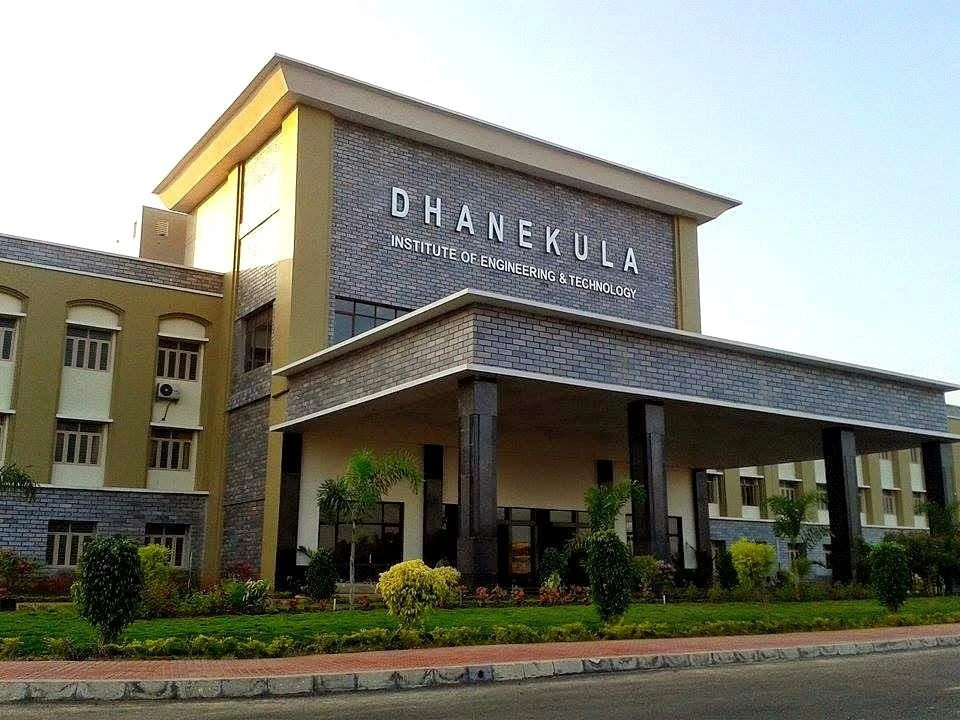
In this preview: 1 photo · 0 videos
Yes, Dhanekula Institute of Engineering and Technology (DIET) is considered good for CSE. It is the most sought-after branch at the college, known for having the best placement record. The department is also supported by dedicated AI and Drone labs.
The hostel fee at Dhanekula Institute of Engineering and Technology (DIET) in Vijayawada is approximately ₹50,000 to ₹72,000 per year. This cost varies depending on the type of room selected and includes mess charges.
Yes, Dhanekula Institute of Engineering and Technology (DIET) is an autonomous college. It was granted autonomous status by the University Grants Commission (UGC), effective from the 2023-24 academic year.
The EAPCET cutoff rank for Dhanekula Institute of Engineering and Technology varies by branch. For the popular Computer Science and Engineering (CSE) branch, admissions usually close around a rank of 25,000. For other engineering branches, the cutoff can go up to 1,00,000 rank or higher.
Yes, Dhanekula Institute of Engineering and Technology operates a fleet of college buses for student transportation. These buses cover routes from Vijayawada, Vuyyuru, and other surrounding areas.
Share what future students should know about DIET.
Student voices are not rewritten by colleges. We remove spam and abuse.
Wider admission question? Community PulseWhat should future students know?
Tell us which course you're considering. We'll help you work out the next step.
Get instant Partner access after mobile verification. Your public edits are reviewed before they go live.
Claim this college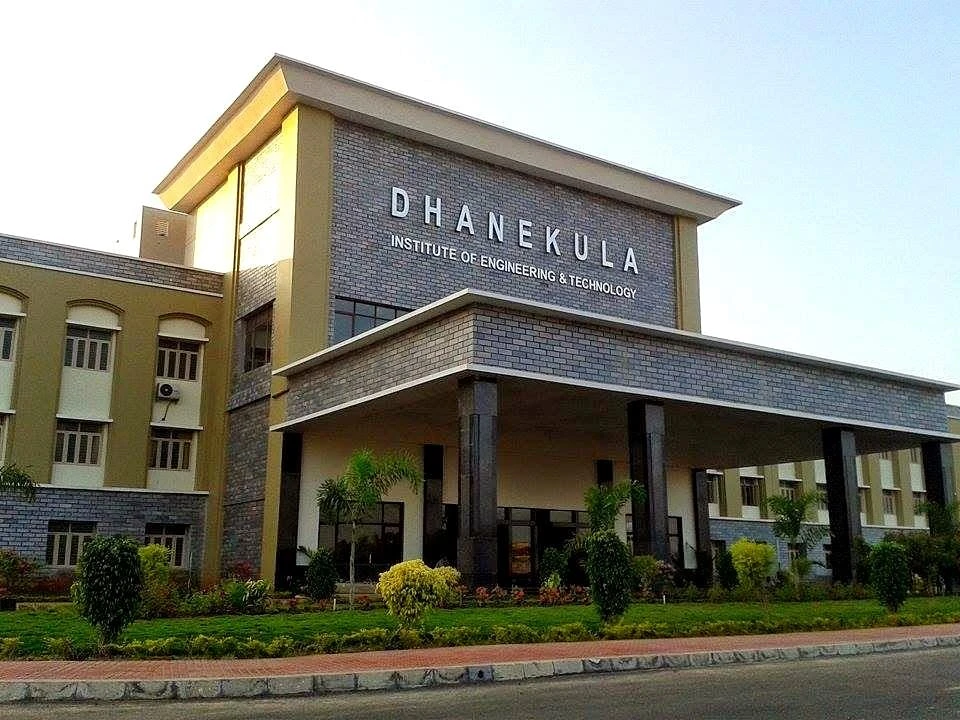
 Auditorium
 Cafeteria
 Campus Shuttle
 Computer Labs
 Hostel
 Medical
 Science Labs
 Sports Complex
 Study Library