Loading Admission Guardian content
Loading Admission Guardian content
Provisional score based on available data. It may change as more information is verified.
Find a program, read its fee details and explore the admission requirements.
Summary of the programs shown below. Fee amounts are not listed. Contact the college for its current fee schedule.
| Course | Stream | Fees |
|---|---|---|
| General Nursing and Midwifery [GNM] | Paramedical |
If you're looking at nursing colleges in Punjab and your priority is a practical, no-frills education that gets you into a hospital fast, Dr. Mohan Kaur Memorial Nursing Institute is a name that comes up. Established in 2001 and affiliated with Baba Farid University of Health Sciences (BFUHS), it’s a private diploma institute that has carved out a specific niche. It’s not a sprawling university campus with a buzzing social scene. Instead, it’s a functional, rural-set campus near Ludhiana where the focus is squarely on the General Nursing and Midwifery (GNM) program. The draw here is straightforward: INC approval, a heavy dose of clinical training in Ludhiana's hospitals, and a fee structure that’s significantly lower than the big private players. But student reviews are a study in contrasts—they praise the hands-on learning and faculty support while frequently criticizing the administrative management. It’s a college that serves a purpose, especially for students from the region looking for an affordable pathway into nursing.
Let's be clear: this institute is primarily a diploma school. Its core identity is built around the General Nursing and Midwifery (GNM) program. That's a 3.5-year course, which includes a mandatory six-month internship. The annual intake is modest, around 50-60 students. Eligibility is fairly broad—you need a 10+2 with English and a minimum of 40% aggregate. Science stream is preferred, but Arts and Commerce students are often eligible per INC guidelines, which opens doors for career changers.
Now, you might see some educational portals listing a B.Sc Nursing program here. The current BFUHS seat matrices, however, primarily associate this institute with the GNM diploma. If a B.Sc is offered, it's likely in limited capacity and would require clearing the Punjab Para Medical Entrance Test (PPMET). An Auxiliary Nursing Midwifery (ANM) program pops up occasionally based on annual INC suitability. The faculty pool is small, about 12-15 teaching staff, mostly holding M.Sc or B.Sc Nursing degrees. The academic rhythm is dictated by the PNRC and BFUHS calendar, with sessions typically starting in late summer.
The real academic selling point isn't on the campus, though. It's in the city. Students get their practical training at affiliated multi-specialty hospitals in Ludhiana, including the large Civil Hospital. That clinical exposure is the cornerstone of the experience here.
You have to reset your expectations for "placements" here. This isn't an engineering college with a placement cell bringing in tech companies for campus drives. Nursing placement is hospital-based recruitment, and it works differently.
The institute claims 100% placement. In reality, that's less about aggressive corporate recruitment and more about the sheer, persistent demand for qualified nurses in Punjab and abroad. Most graduates find work quickly, but it's often through direct applications to hospitals or government recruitment exams.
Don't expect published "highest package" figures. Starting salaries for GNM freshers in local private hospitals like Fortis, Apollo, DMC, or CMC in Ludhiana typically range from ₹1.8 LPA to ₹3.0 LPA. It's a modest start, but it's a foot in the door of a stable profession. A significant number of students use this diploma as a stepping stone. They complete the course, then immediately prepare for exams like IELTS or OET to qualify for overseas nursing roles, which is a major career draw for many.
The mandatory internship is part of the curriculum and is your first real networking opportunity. Performance there can lead to job offers. For government jobs, you'll need to clear the Punjab State Health Department exams separately. So, the "placement" story is one of high employability in a high-demand field, but with the onus on the graduate to actively seek out and secure that first role.
Affordability is a key advantage here. The fees are regulated by BFUHS and the Punjab government, keeping them in check compared to large private universities.
For the GNM program, the annual tuition fee is estimated between ₹15,000 and ₹45,000. Over the full 3.5-year course, the total academic cost (including clinical and exam fees) is likely between ₹1.5 lakh and ₹2.2 lakh. On top of that, hostel and mess fees add another ₹30,000 to ₹50,000 per year. Remember, hostel facilities are primarily for female students; male students usually arrange for PG accommodation nearby.
There are additional one-time or periodic costs: an admission/registration fee of around ₹5,000, and roughly ₹10,000 for uniforms and books. For eligible students, financial aid is available through the Post-Matric Scholarship Scheme of the Punjab Government for SC/ST/OBC categories. It's not a lavish setup, but the financial barrier to entry is deliberately low.
The path to admission depends entirely on the course.
For the flagship GNM diploma, admission is merit-based. Your marks in 10+2 are the sole academic criterion. There's no centralized entrance exam for this program at the institute level. The process usually involves submitting an application directly to the college or via the BFUHS portal during the May-July window, followed by counseling based on your merit rank. A medical fitness certificate is non-negotiable.
If a B.Sc Nursing program is being offered in a given year, the game changes. Admission for state quota seats would then require you to take and clear the Punjab Para Medical Entrance Test (PPMET), conducted by BFUHS.
It's an open secret that a portion of seats—anywhere from 15% to 33%, as is common in private institutes—are often available under a management quota. These seats are typically filled through direct admission by the institute's management, usually at a higher fee. The best source for the most current and precise admission details is the Baba Farid University of Health Sciences (BFUHS) website.
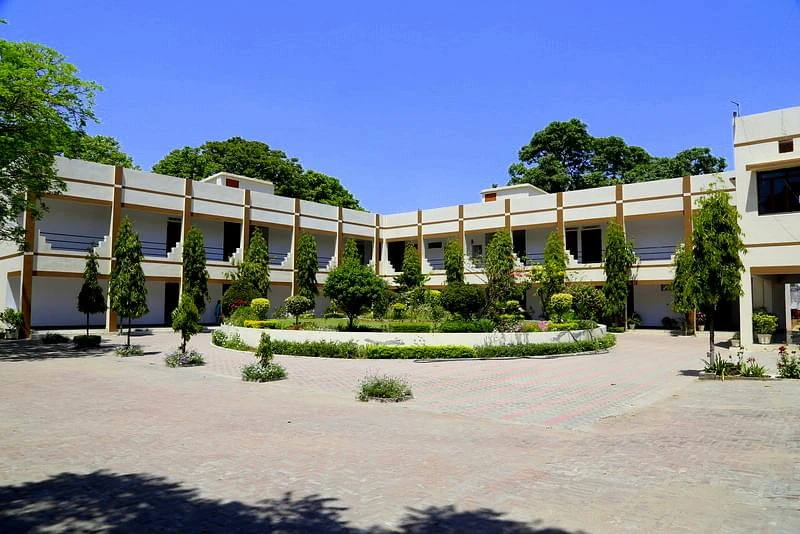
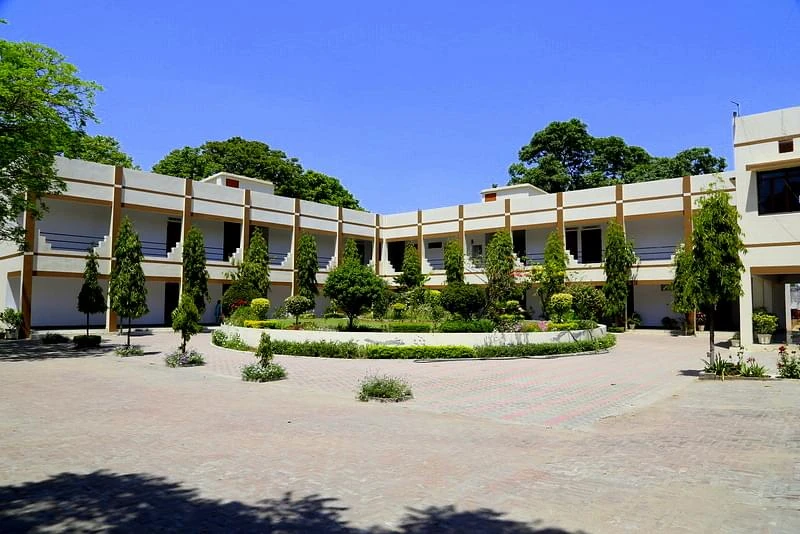
Manage your expectations. The campus on Kailpur Road in Mullanpur is described as "sprawling" but in a rural, semi-urban context. It's functional. The infrastructure supports the diploma's needs: you'll find dedicated labs for Nursing Foundations, Anatomy & Physiology, Nutrition, and Community Health. The library has a collection of around 1,600 books and a handful of national journals. Wi-Fi exists but is confined to specific zones like the office and library.
The hostel for girls is reviewed as basic but safe. The canteen serves basic vegetarian meals. There's a first-aid facility on campus, with emergency tie-ups to nearby hospitals. This isn't a place for a vibrant, university-style campus life. There are no major cultural fests or a buzzing social scene. The rhythm of life is academic study on campus and clinical rotations in the city. For some students, that focused, no-distraction environment is a plus. For others, it can feel isolating.
The student sentiment paints a clear, dual picture. On educational portals like CollegeDunia and Shiksha, a consensus emerges: this is a solid, middle-tier option for a practical nursing education, especially if you're from the region and watching your budget.
The praise is consistently directed at two things. First, the clinical exposure. Students repeatedly say the hands-on training in Ludhiana's hospitals is invaluable and the best part of the program. Second, the faculty. Many reviewers find the teaching staff to be approachable, supportive, and helpful with both academic and personal student problems.
But the criticism is just as consistent. The most frequent complaints target the institute's management. Students describe administrative processes as slow, difficult, and sometimes unreasonably strict, particularly concerning document handling and fee-related matters. The infrastructure is acknowledged as adequate for learning but lacking any modern amenities or "luxury." And the social life is nearly non-existent; it's a strictly academic and clinical environment.
One paraphrased review sums it up: The practical work is the best part because you learn a lot in the hospital, but the college management can be very difficult to deal with. That's the trade-off in a nutshell.
It depends entirely on what you're looking for. If your goal is to obtain an INC-approved GNM diploma through a heavily practical curriculum, without paying the premium of a large private university, and you're comfortable in a no-frills, academically-focused environment, then this institute is a sensible, affordable choice. It's particularly well-suited for students from Ludhiana and surrounding rural areas of Punjab who want to enter the nursing workforce quickly.
However, if you prioritize a vibrant campus life, modern infrastructure, seamless administration, or are aiming for a B.Sc Nursing degree from the outset, you should probably look elsewhere. The management issues highlighted in reviews are a recurring theme you need to factor in. Think of it as a pragmatic launchpad into a nursing career. It does that job decently for a certain segment of students, but it won't provide a broad collegiate experience. For the latest and most authoritative information, always cross-check details on the Indian Nursing Council (INC) and BFUHS websites.
In this preview: 1 photo · 0 videos
Yes, Dr. Mohan Kaur Memorial Nursing Institute is officially approved by the Indian Nursing Council (INC) and is affiliated with Baba Farid University of Health Sciences (BFUHS).
The tuition fee for the General Nursing and Midwifery (GNM) course is approximately ₹40,000 to ₹50,000 per academic year. This cost does not include additional hostel and mess charges.
The institute's hostel facilities are primarily focused on accommodating female students. Male students typically arrange for private paying guest (PG) accommodation in nearby areas like Mullanpur or Ludhiana.
Admission criteria depend on the course. For the GNM program, admission is based on 10+2 merit. For the B.Sc Nursing program, the Punjab Para-Medical Entrance Test (PPMET) is generally required for candidates applying under the state quota seats.
The institute has a strong record of job availability for graduates in local hospitals. It is important to note that the college does not host formal "campus placements" in the traditional corporate sense, but students typically secure nursing positions in the healthcare sector.
Share what future students should know about Dr Mohan Kaur Memorial Nursing Institutes.
Student voices are not rewritten by colleges. We remove spam and abuse.
Wider admission question? Community PulseWhat should future students know?
Tell us which course you're considering. We'll help you work out the next step.
Get instant Partner access after mobile verification. Your public edits are reviewed before they go live.
Claim this college