Loading Admission Guardian content
Loading Admission Guardian content
Selected ranking categories, with the recorded year beside each result. Open all records for the complete history.
21 published records · Lower numeric ranks are stronger
NIRF
Medical
#182019
IIRF
Medical
#162022
IIRF
Nursing
#32022
Indiatoday
Medical
#272019
The Week
Medical
#172022
Find a program, read its fee details and explore the admission requirements.
Summary of the programs shown below. Fee periods can differ by program. Check the note beside each amount before comparing costs.
| Course | Stream | Fees |
|---|---|---|
| General Nursing and Midwifery [GNM] | Paramedical | 79550 |
| Bachelor of Physiotherapy [BPT] | Medical | 94550 |
| Bachelor of Science [B.Sc] (Nursing) | Paramedical | 147800 |
| Master of Dental Surgery [MDS] | Dental | 585000 |
| M.B.B.S. | Medical | 660000 |
Eligibility: 10+2
Specializations
Eligibility: 10+2
Specializations
All accepted exams
Eligibility: B.D.S. with 50% + NEET MDS
All accepted exams
Eligibility: 10+2 with 50% + NEET
2 exams with cutoff data available
Christian Medical College in Ludhiana isn't just another medical school. It's an institution with a 130-year legacy that feels it. You won't find sprawling, glass-paneled buildings here. What you will find is a relentless focus on clinical training, a patient load that keeps you on your toes, and a culture that produces doctors, not just degree-holders. Ranked 47th among medical colleges in the NIRF 2025 rankings, its reputation in fields like neurology and pediatrics often punches above that number. If your priority is hands-on medicine from day one, this is a serious contender in North India.
CMC operates as a composite institution with four colleges under one roof: Medical, Dental, Nursing, and Physiotherapy. The MBBS program, with an intake of 100, is the crown jewel. But the BDS (40 seats), B.Sc Nursing (60), and BPT (20) programs are also well-regarded. Postgraduate offerings are extensive, with around 70 MD/MS seats across two dozen specializations, plus super-specialty DM/MCh courses in high-demand fields like Cardiology and Neurosurgery.
The academic culture is famously disciplined. Attendance is strict, internal assessments are rigorous, and the faculty-to-student ratio is strong. You're taught by leaders in their fields, like Principal Dr. Jeyaraj D. Pandian, a world-renowned stroke specialist. The college has actively sought external collaborations to stay current, including a management program tie-up with XLRI Jamshedpur and a pediatric trauma training link with McGill University. A recent 2025 MoU with the Punjab government aims to set up the state's first public-sector Bone Marrow Transplant unit here. The calendar starts late, in August or September, aligning with the university schedule.
Let's be clear: medical colleges don't have "placement drives" like engineering schools. Career outcomes are about residency programs, hospital recruitment, and further studies. CMC's strength is its reputation, which opens doors.
The official NIRF data gives us solid numbers. For 2024, the median package for MBBS graduates was ₹4.9 LPA. For postgraduates (MD/MS), it jumps to ₹16.0 LPA. That's a decent benchmark for a private college in this region. Top recruiters for graduating residents and doctors include major hospital chains like Apollo, Fortis, and Medanta, as well as a network of Christian mission hospitals across India.
There's a critical caveat, though: the service bond. Christian Minority quota candidates in the MBBS program have a mandatory 2-year service bond in mission hospitals. For PG students who are sponsored candidates, it's a 3-year bond. Alumni on forums are split—some see it as a valuable grounding in service medicine, others feel it's a long commitment. It's a non-negotiable part of the deal for those categories.
The cost is significant, and it's rising. The college has a policy of a ~10% annual fee increase. For the 2025-27 period, MBBS tuition is estimated between ₹6.6 and ₹8 lakhs per year. Over 5.5 years (including internship), the total cost can push past ₹42 lakhs. BDS is about ₹2.25 lakhs/year, B.Sc Nursing ₹1.3 lakhs, and BPT ₹75,000.
On top of tuition, budget for hostel fees (₹50,000/year for non-AC), a student-managed mess (₹3,000-5,000/month), and one-time charges like security deposits. There's no widespread scholarship program highlighted in official briefs, which is a gap prospective students from middle-income families should note. The financial model is squarely fee-driven. You can find the latest official fee structure on the CMC Ludhiana website.
It all starts with NEET. NEET-UG for MBBS/BDS, NEET-PG for MD/MS, and NEET-SS for super-specialties. The competition is fierce, but the matrix is complex due to the multiple quotas.
For the 2024 admission cycle, the Round 1 cutoff for the All-India Open quota was between ranks 11,890 and 17,570. For the Punjab State Open quota, it was more relaxed, around 34,136 to 46,034. The Christian Minority quota cutoffs can vary wildly and have been known to extend beyond 1.5 lakh rank, depending on the state domicile category.
Here's the unique part: Christian Minority candidates must also clear a Bible Test. It's 50 MCQs on biblical facts, and you need 40% to qualify for the minority quota consideration. Consensus from students is that it's straightforward for anyone with a basic church or Sunday school background. The application window is usually April-May, with a fee of ₹2,500.
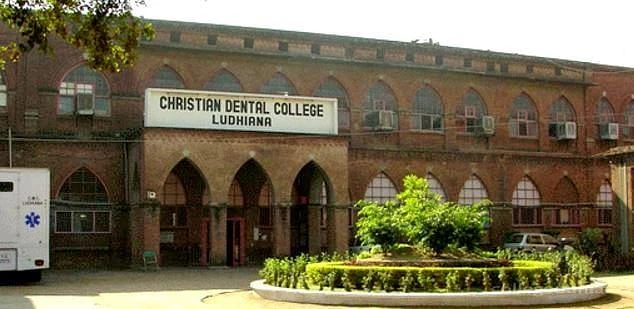
This is where student reviews give you the real picture. The infrastructure is functional, not flashy. The 44-acre urban campus is compact. The hostels, while clean and well-maintained, are in older buildings. Rooms are basic. The food in the student-run mess gets an "average to good" rating. And yes, there are strict curfews.
But you come here for the hospital, not the hostel. The attached multi-specialty hospital has 775-900+ beds and a massive patient inflow. This clinical exposure is consistently rated as top-tier in North India. The library is extensive, and facilities include sports grounds and a swimming pool. A notable tech feature is the telemedicine consultation service run in collaboration with the Cleveland Clinic.
Social life is quieter than in metro colleges. There are festivals like Muqaam, but the overall atmosphere leans academic and service-oriented. It's not a "happening" campus, and that's by design.
Sifting through forums like Quora and Reddit, a clear, nuanced consensus emerges. The praise is focused and consistent: the teaching and clinical training are excellent. "The professors actually care and track your performance," as one Quora user put it. They prepare you to be a competent clinician.
The criticisms are just as consistent. The infrastructure is dated. "The buildings are old and need renovation," is a repeated refrain. Some note that patient load, while still high, faces competition from newer hospitals like DMC Ludhiana.
The most telling review might be this Reddit paraphrase: "If you want to be a great doctor, come here. If you want a luxury resort life, stay away." It captures the trade-off perfectly. Ragging is reported to be minimal due to strict policies. The bond for minority students is accepted as part of the package, albeit with some grumbling about the duration.
CMC Ludhiana is a specialist's choice. It's not the right fit for everyone. If your primary goal is to receive a deep, rigorous, and ethics-driven medical education with exceptional early clinical exposure, and you're willing to forego campus luxury for that, this college is absolutely worth it. It's particularly strong for students aiming for fields like neurology, pediatrics, or surgery, and who value a close-knit, disciplined environment. The Christian Minority quota can be a strategic backdoor for eligible candidates with slightly lower NEET ranks.
However, if modern infrastructure, a vibrant campus social scene, or a bond-free education are high priorities, you might feel constrained here. The fees are steep for the physical infrastructure you get. And non-minority students need a very competitive NEET rank to secure one of the few Open seats. In the end, CMC Ludhiana knows what it is: a workhorse institution that produces capable, compassionate doctors. Your decision depends on whether that's exactly what you're looking for.
In this preview: 1 photo · 0 videos
The comparison depends on priorities. DMC is noted for better infrastructure and more intense open merit competition. CMC Ludhiana holds a stronger clinical reputation in specific fields like Neurology and Pediatrics and typically attracts a more diverse, national student body.
The Bible Test is a factual exam. For candidates with a basic Sunday School or similar religious education background, it is generally considered easy to achieve the required 40% qualifying mark.
The service bond requirement varies by candidate category. Christian Minority candidates are required to serve for 2 years after graduation. There is no such bond for students admitted under the Open General category, unless a separate state-mandated bond applies.
CMC Ludhiana enforces very strict anti-ragging policies. While traditional introductory "intro" sessions for new students exist, they are widely reported to be non-abusive and conducted within the institution's firm guidelines.
Yes, non-Christian students can be admitted. The college reserves a limited number of "Open" seats for both Punjab residents and All-India candidates, though the total number of these seats is small, typically around 12 to 15.
Share what future students should know about CMC Ludhiana.
Student voices are not rewritten by colleges. We remove spam and abuse.
Wider admission question? Community PulseWhat should future students know?
Tell us which course you're considering. We'll help you work out the next step.
Get instant Partner access after mobile verification. Your public edits are reviewed before they go live.
Claim this college
 Auditorium
 Cafeteria
 Hostel
 Medical
 Science Labs
 Study Library