Loading Admission Guardian content
Loading Admission Guardian content

Provisional score based on available data. It may change as more information is verified.
Find a program, read its fee details and explore the admission requirements.
Summary of the programs shown below. First-year fee. Check the note beside each amount for inclusions and exclusions.
| Course | Stream | Fees |
|---|---|---|
| Bachelor of Technology [B.Tech] | Engineering | 51428 |
| Bachelor of Technology [B.Tech] {Lateral} | Engineering | 59500 |
| Master of Technology [M.Tech] (Electronics and Communication Engineering) | Engineering | 81500 |
Specializations
All accepted exams
Eligibility: 10+2
Specializations
All accepted exams
Eligibility: Diploma
Specializations
All accepted exams
Eligibility: Graduation
3 exams with cutoff data available - showing recent entries
 Accenture
 CSS Corp
 IBM
IBM MBT (MAHINDRA BRITISH TELECOM)-Tech Mahindra
 Reliance communication Pvt Ltd
 Syntel
 TCS
TCS Wipro Technologies
Dumkal Institute of Engineering & Technology (DIET) is a study in contrasts. It’s a sprawling, 26-acre green campus tucked away in rural Murshidabad, offering one of the most affordable B.Tech degrees in West Bengal. You won’t find it on any national ranking list, and the placement packages are modest. But for a certain student—one prioritizing cost, a distraction-free environment, and a supportive faculty over urban glamour—it represents a pragmatic, no-frills path to an engineering degree. The college’s identity is built on this value proposition: decent education without the crippling debt. Its affiliation with Maulana Abul Kalam Azad University of Technology (MAKAUT) and AICTE approval provide the necessary legitimacy, while its accreditation by Tata Consultancy Services (TCS) for campus recruitment hints at a functional, if not stellar, connection to the job market.
DIET runs a standard set of undergraduate engineering programs, all following the MAKAUT semester system. The B.Tech intake is uniform across five branches—Computer Science, Electronics & Communication, Electrical, Mechanical, and Civil Engineering—with 60 seats each. There’s also a single M.Tech program in Electronics & Communication. Academically, it’s a straightforward affair. You get the MAKAUT syllabus, a 10-point CGPA system, and exams that are consistent with what’s happening at hundreds of other colleges under the same university.
The faculty, numbering around 65-75, is frequently cited as a strength in student reviews. The phrase “treat students like family” pops up often, likely a byproduct of the isolated, residential campus where professors and students interact beyond classroom hours. While only an estimated 15-20% of the core faculty hold PhDs, the accessibility and willingness to guide seem to compensate for some. The college has MoUs with local industries for vocational training, and the TCS accreditation is a tangible academic feature, suggesting a curriculum vetted for entry-level IT employability. It’s not a research hub, but for delivering a prescribed undergraduate curriculum, the setup gets the job done.
This is where you need to calibrate expectations carefully. The official placement claim hovers around 80%, but a consensus from student reviews across platforms like CollegeDunia and Shiksha paints a more conservative picture: a realistic placement rate is probably between 50-60% for core branches like Mechanical or Civil, and somewhat higher for CSE and ECE.
The packages are modest. The average starting salary for a DIET graduate typically falls in the ₹3.2 to ₹4.2 LPA band. You’ll see a higher figure of 7.9 LPA mentioned on some portals, but the official college consensus for the highest package is around 5 LPA. That’s a crucial detail. Recruiters are predominantly IT service giants: TCS, Wipro, Accenture, Cognizant, and Infosys. These companies account for about 70% of the offers. Core engineering roles are less frequent, with companies like the Indian Army (UES) and Reliance Communication appearing occasionally.
So, what’s the reality check? The placement cell facilitates opportunities, but the roles are overwhelmingly entry-level IT support or sales positions. Older reviews (pre-2020) sometimes warned of “fake companies,” but recent reports indicate a stabilization with known recruiters. The takeaway is blunt, as one alumnus put it: “Don’t expect 10 LPA; prepare for 3.5 LPA and work your way up.” Your degree gets you an interview ticket with mass recruiters; your performance and self-study determine what happens after that.
The affordability is DIET’s most compelling argument. For the 2024-2025 session, the total tuition fee for a four-year B.Tech is approximately ₹1,40,000 for CSE/ECE and ₹1,70,000 for CE/EE/ME. That breaks down to roughly ₹35,000-₹42,500 per year—a fraction of the cost of private colleges in Kolkata or other metros.
Hostel fees are equally low, at about ₹5,400 per semester for seat rent and electricity. Mess charges are extra, running ₹1,500 to ₹2,000 per month. All in, a student can complete a four-year B.Tech with hostel accommodation for a total cost in the ballpark of ₹3.5 to ₹4.5 lakhs. That’s a complete degree for less than a single year’s tuition at many institutions.
To support this, the college facilitates several state government scholarships. The West Bengal Free-ship Scheme (WBFS) offers tuition fee waivers for meritorious students. The Swami Vivekananda Merit-cum-Means Scholarship (SVMCM) provides up to ₹60,000 per year for B.Tech students. Female students can also benefit from the Kanyashree scheme. These schemes make an already low-cost education accessible to even more students.
Admission to the B.Tech programs is primarily through the West Bengal Joint Entrance Examination (WBJEE). JEE Main scores are also accepted but are secondary. For lateral entry into the second year, the Joint Entrance for Lateral Entry (JELET) is the gateway.
The cutoffs are accessible, reflecting the college’s tier and location. For the 2024 general category in Round 1, the closing ranks were: CSE at 91,183, ECE at 84,760, Electrical Engineering at 56,328, and Civil Engineering at 70,817. These ranks give you a clear idea of the academic cohort you’d be joining.
The selection is centralized through the WBJEEB counseling process. There is, however, a management quota for about 10% of seats. Securing a seat through this channel requires direct contact with the college administration and, naturally, involves a higher fee structure. The basic eligibility remains passing 10+2 with Physics, Mathematics, and Chemistry/Biology/Computer Science with at least 45% marks.
Life at DIET is defined by its rural setting. The 26-acre campus is consistently described as lush, green, and peaceful—a major positive for students who appreciate a quiet place to study. The flip side is a pronounced lack of “city life.” There are no malls, multiplexes, or trendy cafes within easy reach. Entertainment revolves around the campus itself, local Dumkal town, and occasional trips to Berhampore (about 30 km away).
The hostel system is robust in capacity. There are four boys’ halls (Azad, Tagore, Simanta, Vidyasagar) with about 850 seats and one girls’ hall (Rokeya) with 300 seats. Students rate the hostels highly (4.4/5) for space and greenery, but lower (3/5) on maintenance, noting that some wings are aging. The food in the mess is rated as average—typical canteen fare that’s edible but repetitive.
Infrastructure includes over 42 specialized labs, a central library with 25,000+ books, and digital access. Sports facilities include a large playground and indoor options. The college maintains a strict zero-tolerance ragging policy, and recent reviews suggest the campus is largely ragging-free, with welcome “intro sessions” being the extent of it. It’s a self-contained, residential bubble.
Synthesizing feedback from years of reviews on CollegeDunia, Shiksha, and other forums reveals a clear, consistent narrative.
The praise is reserved for three things: extreme affordability, a helpful and accessible faculty, and a calm, green campus environment. The phrase “value for money” is a constant. Students feel the professors genuinely care, often providing guidance after hours. The attendance policy is also noted as being more reasonable than at some stricter private colleges.
The criticisms are equally consistent. The remote location is the biggest drawback for many, leading to a sense of isolation. The placement quality, while existent, is seen as mediocre, with packages that haven’t grown much over the years. Some students from outside West Bengal mention a language and cultural barrier, finding the environment very Bengali-centric. There are also grumbles about aging infrastructure in parts of the hostels and labs needing updates.
The most telling reviews are the balanced ones. “If you want to learn and save money, come here. If you want a high-profile social life, stay in Kolkata.” That sums up the DIET choice perfectly.
DIET is a highly specific, pragmatic choice. It is absolutely worth it for a student with a limited budget who is self-motivated, doesn’t mind a rustic setting, and views the engineering degree as a foundational step rather than a guaranteed ticket to a high-paying job. If your WBJEE rank is in the 50,000-90,000 range and you need the most economical route to an AICTE-approved B.Tech degree, DIET is a logical contender. The supportive faculty and peaceful campus are genuine bonuses in this scenario.
However, you should probably look elsewhere if you thrive in an urban environment, expect a vibrant campus social scene, or are banking on college brand value to land you premium placements. The placement outcomes are what they are—a launchpad into the IT services sector at entry-level salaries. Your career trajectory will depend almost entirely on your own skills and initiative post-graduation. DIET provides a low-cost platform; you have to build on it yourself.
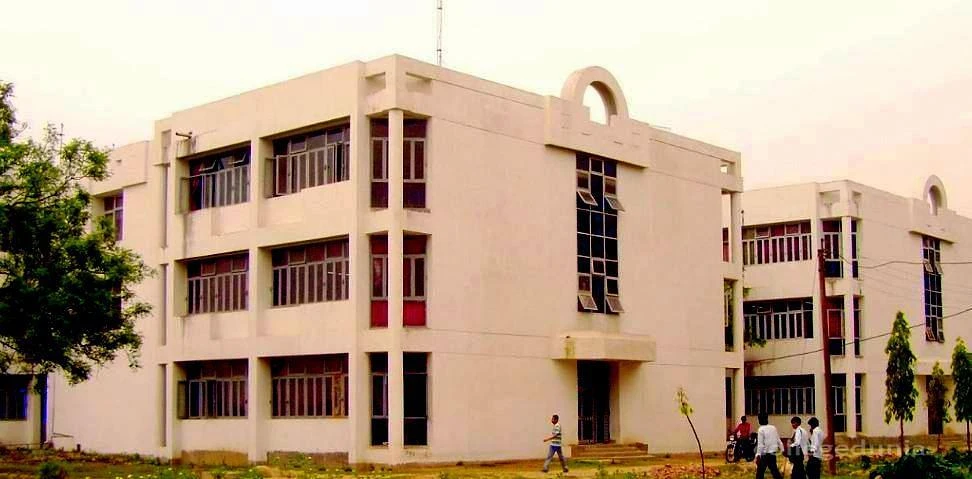
In this preview: 1 photo · 0 videos
Yes, DIET is considered a good option for CSE, particularly for its value. The Computer Science department reportedly has the highest placement rate at the college and features the most active faculty.
The key differences are location and campus. DIET (Dumkal Institute of Engineering & Technology) is a private institute located in Dumkal, while MCET (Murshidabad College of Engineering & Technology) is a private institute in Berhampore. DIET is noted for having a larger residential campus.
Yes, direct admission is possible through the Management Quota. Eligibility requires a valid WBJEE or JEE Main rank and having secured at least 45% marks in Physics, Chemistry, and Mathematics (PCM) in your qualifying exams.
The hostel food is generally rated as average. It is described as typical "canteen food" that is edible but can become repetitive. As a result, many students choose to eat at local eateries in Dumkal town.
The college officially enforces a "Zero Tolerance" policy against ragging. Recent student reviews indicate the campus is largely ragging-free, with activities typically limited to formal "intro sessions" for newcomers.
Share what future students should know about DIET.
Student voices are not rewritten by colleges. We remove spam and abuse.
Wider admission question? Community PulseWhat should future students know?
Tell us which course you're considering. We'll help you work out the next step.
Get instant Partner access after mobile verification. Your public edits are reviewed before they go live.
Claim this college
 Auditorium
 Cafeteria
 Computer Labs
 Gym
Gym Hostel
 Science Labs
 Sports Complex
 Study Library