Loading Admission Guardian content
Loading Admission Guardian content
Provisional score based on available data. It may change as more information is verified.
Selected ranking categories, with the recorded year beside each result. Open all records for the complete history.
11 published records · Lower numeric ranks are stronger
India Today
Engineering · private
#842021
Indiatoday
B.Tech · private
#882021
Find a program, read its fee details and explore the admission requirements.
Summary of the programs shown below. First-year fee. Check the note beside each amount for inclusions and exclusions.
| Course | Stream | Fees |
|---|---|---|
| Master of Engineering [ME] | Engineering | 119175 |
| Ph.D | Engineering | 119175 |
| Bachelor of Engineering [BE] | Engineering | 140000 |
| Bachelor of Engineering [BE] {Lateral} | Engineering | 140000 |
Specializations
All accepted exams
Eligibility: Pass in Graduation
Specializations
Eligibility: Post Graduation
Specializations
All accepted exams
Eligibility: 10+2 with 50%
Specializations
All accepted exams
Eligibility: 10+3
3 exams with cutoff data available - showing recent entries
 Burns & Mcdonnell
 Citiustech
 Cognizant
 Endurance
 Godrej & Boyce
 Ingram
 Larsen & Toubro Limited
 NetApp
 NSEIT
NSEIT Reliance Jio
 Sankey Solutions
 Selec
Selec Shell
Shell Tata Power
 TCS
TCS Technip India
 Torrent Power
 Xoriant Solutions
 Zeus technology
Fr. C. Rodrigues Institute of Technology (FCRIT) in Vashi, Navi Mumbai, is a private engineering college that’s been around since 1994. It’s a place where the data tells a clear, if somewhat contradictory, story. On paper, it’s a solid, NBA-accredited institution with a recent autonomous status and a Careers360 AAA+ rating. The placement brochure will show you a highest package of 21 LPA and an average of 6 LPA. But talk to the students, and you’ll hear about a place that’s academically intense—some call the first year a “jail”—with a placement reality that heavily favors the Computer and IT crowd. It’s a Christian minority institution, which shapes its admissions, and its location in the heart of Navi Mumbai is a major practical advantage. This isn’t a flashy top-tier college, but for a certain student, particularly one from the local Christian community aiming for a stable IT job, it can be a very pragmatic choice. You just have to go in with your eyes wide open.
FCRIT runs a standard set of engineering programs under the University of Mumbai umbrella, though its recent autonomous status means it now has more control over its curriculum. The undergraduate B.E. offerings are the main draw: Computer Engineering, Information Technology, Electronics & Telecommunication (EXTC), Mechanical, Electrical, and Civil. Intakes are decent, with 120 seats each for Computer and Mechanical.
The postgraduate M.E. programs are more niche—Machine Design in Mechanical and Power Electronics & Drives in Electrical. They also offer Ph.D. programs in Mechanical, Electrical, and EXTC, which is a plus for an institute of its size and indicates some research activity, often in collaboration with the University of Mumbai.
Academically, the consensus from students is that the faculty is a mixed bag. You’ll find genuinely good, qualified teachers who are experts and put in the effort. And then you’ll find others who are, in the blunt words of a reviewer, “useless.” The culture is described as intensely focused on academics. Smart classrooms and interactive whiteboards are there, but the workload is heavy, with assignments and deadlines that feel relentless to some. It’s an outcome-based education model that doesn’t leave much room for slacking. The labs are generally well-equipped on paper—computing labs with decent specs, mechanical labs with ANSYS and AutoCAD, EXTC labs for communications and VLSI. But a recurring student gripe is that equipment often doesn’t work. That’s a classic disconnect between the facility list and the day-to-day reality.
This is where you need to read between the lines. The official NIRF data and college claims point to a functional placement cell. For the 2024 batch, they reported a highest package of ₹21 LPA and an average of ₹6 LPA. The median salary for undergraduates was ₹5 LPA, which is a more telling number than the average. They claim placement percentages between 80-90%, or even “100% for eligible candidates.”
Now, the student reality check. That 100% claim is technically true but misleading. The real working placement rate, when you account for all students, seems closer to 70-75% according to most reviews. And it’s wildly branch-dependent.
If you’re in Computer Engineering or IT, you’re in the driver’s seat. The average package for these branches is cited at ₹10 LPA, with the highest touching ₹14.5 LPA to ₹20 LPA. Recruiters like TCS, Infosys, Wipro, Accenture, Cognizant, and occasionally Microsoft or Deloitte come for these roles. The placement cell is reasonably active here.
For core branches like Mechanical, Electrical, and EXTC, the picture is starkly different. Student reviews peg the average for Mechanical at ₹3-4.5 LPA, for EXTC at ₹4.4 LPA, and for Electrical at ₹4.4 LPA. One review flatly stated mechanical placements are “less favorable.” The companies visiting for these roles include L&T, Godrej, Tata Power, Torrent Power, and various PSUs, but the volume and packages are lower. A student estimate put placement rates for non-CS/IT branches sometimes around 50% or less.
The placement cell gets credit for bringing in a long list of recruiters, but criticism that it’s less effective at attracting new, high-tier companies is common. Many students in core branches take matters into their own hands, securing internships independently in their 3rd or 4th year to boost their profiles. The message is clear: for IT, FCRIT is a reliable launchpad. For core engineering, you’ll need to hustle.
Pinpointing an exact fee is tricky because the numbers from various sources—the college, aggregators like Careers360, and student reviews—don’t always align. For the B.E. program, annual tuition seems to float between ₹1.4 Lakhs and ₹1.9 Lakhs. A reasonable estimate for total 4-year tuition is ₹7-8 Lakhs. Hostel fees add another ₹60,000 to ₹90,000 per year, depending on the source. Don’t forget compulsory additional fees: a ₹5,000 caution deposit, exam fees, and various university charges that add a few thousand more.
Where FCRIT stands out is in scholarship support, a function of its minority status. There’s a robust system:
There’s even an unverified student claim about a 100% fee waiver for girl students. The point is, if you have the academic merit or fall into a supported category, the net cost can drop significantly.
Admissions for the B.E. programs are primarily governed by the Maharashtra state Centralised Admission Process (CAP). You need a valid score in either MHT-CET or JEE Main. The college also has a 20% institute-level quota and, crucially, a 51% reservation for Christian minority students, which dramatically lowers the cutoff for eligible candidates.
Looking at the MHT-CET 2025 cutoffs (Round 3 closing ranks) gives a sense of the competition:
As expected, Computer-related branches are the most competitive. A student review suggested the general cutoff hovers around the 94 percentile in MHT-CET. For M.E., a GATE or MHT-CET (PG) score is needed. Ph.D. admissions are based on GATE/PET scores followed by an interview.
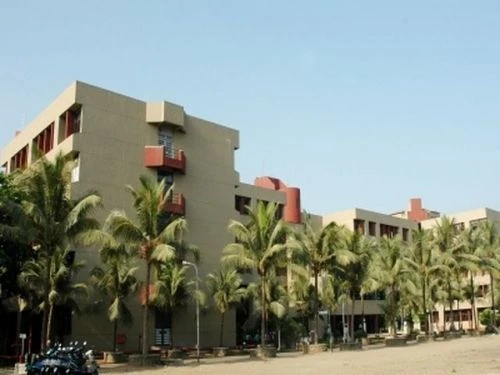
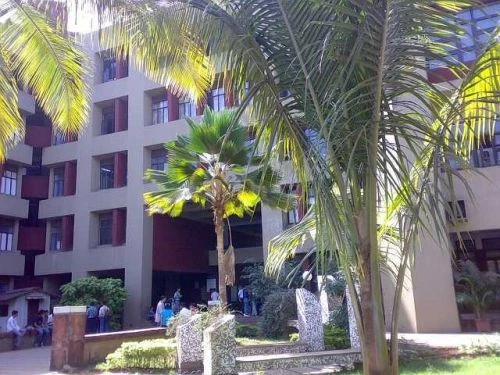
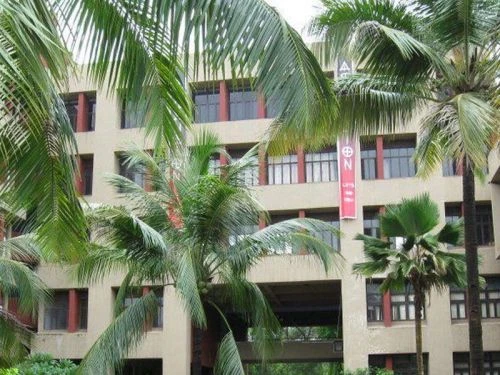
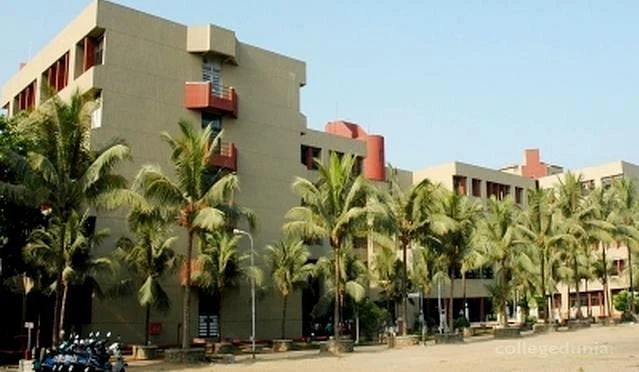
The campus in Vashi is compact, clean, and green. The infrastructure is a tale of two cities. On one hand, the library is a genuine asset—24,000+ books, digital access to over 31,000 IEEE and ASME journals, memberships with IIT Bombay and NDLI, and it stays open until 11 PM during exams. The sports facilities are surprisingly good: an Olympic-size swimming pool, a high-tech gym, tennis and badminton courts, and a large playground.
The hostels (separate for boys and girls) get positive reviews for being well-furnished and having good food. The canteen is noted as spacious and hygienic.
On the other hand, the Wi-Fi is a notorious pain point. Students consistently report it’s either not working or not available to them in classrooms, only in specific labs or the library. That’s a significant drawback in 2025.
Social life is the biggest casualty of the academic focus. Multiple reviews call it “minimum,” with one saying “even school has more campus life.” Events like the “Fases” cultural fest and “ETAMtech” tech fest exist, but for many, especially in non-IT branches, life is “lecture and lectures.” There’s “barely any student life after college hours.” It’s not a ‘vibrant campus’ in the typical sense. The location in central Vashi, however, is a massive plus for access to Mumbai’s amenities, internships, and public transport.
Synthesizing the sentiment is straightforward. The positives are consistent: good teachers (though not all), a great library, solid sports facilities, and decent placements for IT/CS students. The college is seen as making you a competent engineer if you endure the process.
The negatives are just as consistent and perhaps more visceral. The academic pressure is intense—“jail” in the first year, strict attendance, faculty described as overly rigid (yelling for sleeping, denying washroom breaks). The placement disparity between CS and core branches is a major point of contention. The Wi-Fi is poor, and social life is almost non-existent for many. The management is viewed as prioritizing academic compliance over holistic development.
It’s a trade-off. You get a rigorous, no-nonsense education in a good location, but you sacrifice the typical collegiate experience. For some, that’s a fair deal. For others, it’s a draining four years.
FCRIT is a specific solution for a specific problem. It’s absolutely worth considering if: you are a Christian minority student eligible for the reserved seats (as the cutoff advantage is huge), you are targeting a Computer Science or IT degree and want a placement-focused college in Mumbai, or you are a local student who values the Navi Mumbai location and the lower fees compared to some city colleges. The scholarship framework is also a major draw for eligible candidates.
You should probably look elsewhere if: you are in a core engineering branch like Mechanical or Civil and have aspirations for high-paying core jobs right out of campus, you prioritize a vibrant campus life with lots of events and societies, or you cannot tolerate a strict, academically pressurized environment. The college’s strengths are narrow but deep—it does a few things reliably well, primarily in the IT domain, within a structured and somewhat rigid framework. It’s a pragmatic choice, not an inspirational one. Go in knowing exactly what you’re signing up for: hard work, decent IT opportunities, and not much else.
In this preview: 5 photos · 0 videos
Admission to the B.E. programs at Fr. C. Rodrigues Institute of Technology is primarily through the Maharashtra state CAP process. You need a valid score in either the Maharashtra Common Entrance Test (MHT-CET) or the national JEE Main. These scores are used for the centralised seat allotment.
For the 2024 batch, the highest package reported was INR 21 LPA. The average package stood at INR 6 LPA, with a median salary of INR 5 LPA for undergraduates. It's important to note that these figures are branch-skewed; Computer and IT students report averages around INR 10 LPA, while core branches like Mechanical and Electrical see averages closer to INR 4-4.5 LPA.
FCRIT offers a wide range of scholarships due to its minority status. Key schemes include the EBC (Economically Backward Class) scholarship offering a 50% fee refund for family income under INR 8 LPA, specific Minority scholarships for Christian and other communities, and standard SC/ST/OBC scholarships. The Tuition Fee Waiver Scheme (TFWS) is also available for top academic performers meeting income criteria.
Student reviews consistently highlight a strong, sometimes overwhelming, focus on academics. The workload is heavy with strict attendance rules, leading some to describe the environment as intense. While teaching quality is praised by many, campus social life and extracurricular events are frequently described as minimal, particularly for students in non-IT branches.
Yes, FCRIT has separate hostels for boys and girls on campus. Student reviews generally rate them as good, with well-furnished rooms and common recreation areas. The attached mess/canteen receives positive remarks for food quality and hygiene. Hostel fees typically range between INR 60,000 to 90,000 per academic year.
Share what future students should know about FCRIT.
Student voices are not rewritten by colleges. We remove spam and abuse.
Wider admission question? Community PulseWhat should future students know?
Tell us which course you're considering. We'll help you work out the next step.
Get instant Partner access after mobile verification. Your public edits are reviewed before they go live.
Claim this college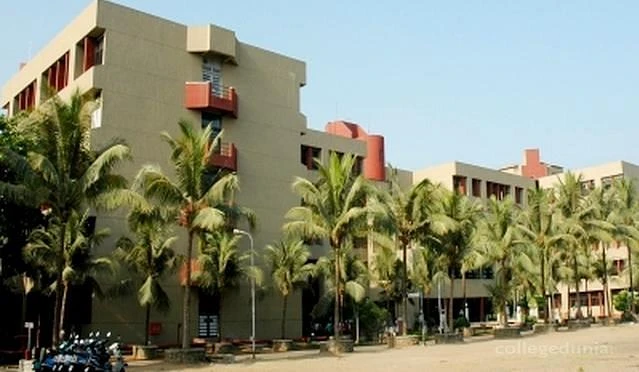
 Auditorium
 Cafeteria
 Computer Labs
 Gym
Gym Hostel
 Medical
 Science Labs
 Sports Complex
 Study Library