Loading Admission Guardian content
Loading Admission Guardian content

Provisional score based on available data. It may change as more information is verified.
Selected ranking categories, with the recorded year beside each result. Open all records for the complete history.
6 published records · Lower numeric ranks are stronger
IIRF
Engineering · private
#1402022
IIRF
B.Tech · private
#1432022
Find a program, read its fee details and explore the admission requirements.
Summary of the programs shown below. First-year fee. Check the note beside each amount for inclusions and exclusions.
| Course | Stream | Fees |
|---|---|---|
| Master of Technology [M.Tech] | Engineering | 100000 |
| Bachelor of Technology [B.Tech] | Engineering | 122000 |
| Bachelor of Technology [B.Tech] {Lateral} | Engineering | 122000 |
Specializations
All accepted exams
Eligibility: Graduation
Specializations
All accepted exams
Eligibility: 10+2
Specializations
All accepted exams
Eligibility: Diploma
2 exams with cutoff data available - showing recent entries
 Accenture
 Adobe
Adobe Amazon
 Bank of America
 CGI
CGI Ctrls
Ctrls Darwin Labs
 Deloitte
 Epam
Epam Expedia
 Factset
 Ford Motors
 GEP
GEP Goldman Sachs
 Hexagon Consulting
 Hexaware Technologies
 HSBC Bank
 IHS Markit
 Infosys
 JP Morgan Chase & Co.
 Larsen & Toubro Limited
 Legato
 Micronesium
 Microsoft
 MindTree
 NTT DATA
 PAYPAL
 Salesforce
 ServiceNow
 State Street
 TCS
TCS TEK Systems
 ThoughtWorks Technologies
 Unisys
 VISA
VISA Wipro
Wipro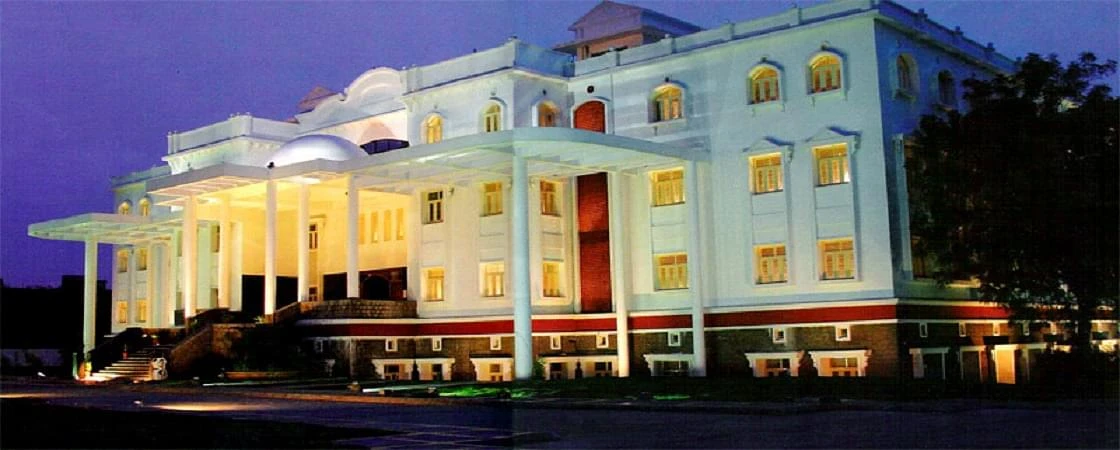
In this preview: 5 photos · 0 videos
The average placement package at G Narayanamma Institute of Technology and Science has shown consistent growth. For the 2024 placement cycle, the average package was INR 8.64 LPA. More recent student reviews for the 2026 cycle cite an average of around INR 9.5 LPA. The median package is reported at INR 7.6 LPA, which is often a more reliable indicator for a typical graduate.
The fees depend entirely on the admission quota. For students admitted through the convener quota (via TS EAMCET), the annual tuition fee is approximately INR 1,00,000 to INR 1,22,000. The total program cost for tuition over four years is roughly INR 4,00,000 to INR 4,88,000. Hostel and mess fees are extra, ranging from INR 80,000 to INR 1,30,000 per year. In contrast, management quota (B-Category) fees are significantly higher, with reports indicating a total cost of around INR 16,00,000 for the four-year B.Tech program.
The closing rank for B.Tech in Computer Science and Engineering at GNITS has varied in recent years. The TS EAMCET cutoff ranks were 4,687 in 2022, 6,879 in 2023, and 49,598 in 2024. The significant jump in 2024 is likely an anomaly due to counseling dynamics. For the 2025 admissions cycle, the expected cutoff for the general category is projected to be between 2500 and 5000.
Yes, G Narayanamma Institute of Technology and Science is exclusively a women's engineering college. All undergraduate and postgraduate programs, as well as the hostel facilities, are designed for and accessible only to female students. The institute emphasizes creating an empowering environment for women in technology.
Yes, GNITS has a notable collaboration with Apple Inc. The institute has established a MAC Centre of Excellence on campus, which provides specialized training for students in iOS application development. This includes working with technologies like Apple Maps and other iOS frameworks, offering a practical skill set that enhances placement opportunities in the mobile development sector.
Share what future students should know about GNITS.
Student voices are not rewritten by colleges. We remove spam and abuse.
Wider admission question? Community PulseWhat should future students know?
Tell us which course you're considering. We'll help you work out the next step.
Get instant Partner access after mobile verification. Your public edits are reviewed before they go live.
Claim this collegeG Narayanamma Institute of Technology and Science (GNITS) in Hyderabad has carved out a specific, and increasingly compelling, niche. It’s a private, autonomous women’s engineering college that consistently punches above its weight in placements, especially for its computer science streams. With an NAAC ‘A+’ grade and NBA accreditation for its core programs, the institute has moved beyond its 1997 founding to become a serious contender in the Telangana engineering landscape. The numbers tell part of the story—placement packages have been climbing, and the campus buzzes with activity from its MAC Centre of Excellence with Apple to a surprisingly robust sports program. But the real story is in the consistency. It’s not the most famous name in Hyderabad, but for students who get in through the convener quota, it represents a solid return on investment in a supportive, women-only environment.
GNITS offers a focused set of programs that heavily tilt towards computing and electronics, reflecting market demand. At the undergraduate level, the B.Tech portfolio is almost entirely dominated by computer science and its variants: Computer Science Engineering, Information Technology, CSE in Artificial Intelligence & Machine Learning, CSE in Data Science, and Computer Science and Technology. The core engineering offerings are Electronics and Communication Engineering, Electrical and Electronics Engineering, and Electronics and Telematics Engineering. It’s a pragmatic lineup.
The M.Tech programs follow suit, with specializations in Computer Science and Engineering, Computer Networks and Information Security, Digital Electronics and Communication Engineering, Power Electronics & Electrical Drives, Wireless and Mobile Communication, and VLSI Design.
Academically, the institute leverages its autonomous status. The collaboration with Apple Inc. for the MAC Centre of Excellence is a tangible differentiator, offering specialized training in iOS development. There’s also a stated focus on extended learning through student chapters, NPTEL, and the establishment of a School of Innovation and Management (SOIM). Faculty strength is reported with some variance (between 150-267 members), but a significant portion hold Ph.D.s. The academic schedule follows JNTUH patterns, as seen in recent exam notifications for first-year students.
This is where GNITS gets a lot of its attention. The official placement data shows a clear, upward trajectory over recent years, which is a good sign for any institution.
The top recruiters are the usual suspects for a college with strong CS placement: Microsoft, Google, Amazon, Infosys, TCS, Wipro, and Deloitte. That’s a credible list.
Now, the reality check. The placement percentage is where official claims and ground reports diverge. The college states 100% placement for eligible students. Broader reports and student reviews suggest a working figure between 70-80%, with some data points like 69.58% floating around. An “average of 90%” is also mentioned. The truth likely sits in the high 70s to low 80s for on-campus offers, which is still a decent outcome. The key takeaway? If you’re in CSE or IT, your chances are strong. For other branches, you’ll need to be more proactive. The median package of INR 7.6 LPA is probably the most reliable number for a typical graduate.
The cost structure at GNITS is heavily bifurcated by the quota you enter through, which is standard for Telangana private colleges.
For the B.Tech program (Convener Quota via EAMCET), the annual tuition fee for 2024-25 is INR 1,22,000. For 2026, it’s listed as INR 1,00,000. Over four years, that’s roughly INR 4,00,000 to INR 4,88,000 just for tuition. Add mandatory fees like NBA accreditation (INR 3,000), exam fees (INR 4,000), and others, and the total academic cost is clear.
Hostel and mess fees are a separate and significant expense. They range from INR 80,000 to INR 1,30,000 per year, depending on whether you choose a Non-AC, Semi-AC, or AC room. The mess is strictly vegetarian but is consistently reviewed as hygienic and good.
Put it all together, and a realistic total 4-year cost for a convener quota student with hostel is in the ballpark of INR 8-10 lakhs. For the Management Quota (B-Category), the numbers jump dramatically—one review cites INR 16,00,000 for four years. NRI/NRI Sponsored fees are USD $5000 or equivalent INR per year.
Financial aid is primarily through Telangana state government schemes. Students with an EAMCET rank under 10,000 are eligible for full fee reimbursement. SC/ST categories get a full fee waiver, and BC category students may get a partial reimbursement of around INR 35,000. The college assists with these applications, and some limited merit-based scholarships exist.
Admissions are centralized and entrance-exam driven, governed by Telangana state authorities.
For B.Tech, you need a valid rank in TS EAMCET. For lateral entry into the second year, TS ECET is the gateway. For M.Tech, it’s TS PGECET or GATE.
The cutoffs are the real metric. For the flagship B.Tech in Computer Science and Engineering, the TS EAMCET closing ranks have fluctuated:
That 2024 number is a significant jump, likely reflecting increased seats or other counseling dynamics. The expected range for 2025 is between 2500-5000 for the general category, which seems to aim for a correction. Overall B.Tech cutoffs in 2024 ranged from 5,507 to 150,804 in Round 1. For M.Tech via PGECET, the 2024 range was 145 to 3,411.
The selection is transparent—you participate in the state’s centralized counseling (TSCHE). The college allocates 70% of seats (Category-A) through this convener quota. The remaining 30% (Category-B) are management quota seats filled by the institute as per guidelines. The application window follows the TS EAPCET schedule; for the 2026 cycle, for instance, the standard application deadline is April 15, 2026.
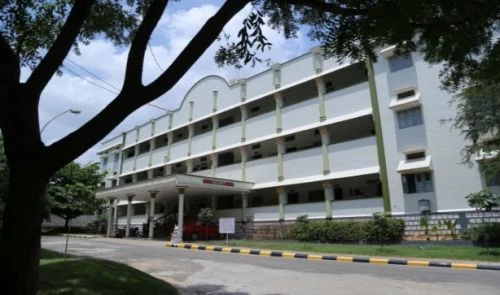
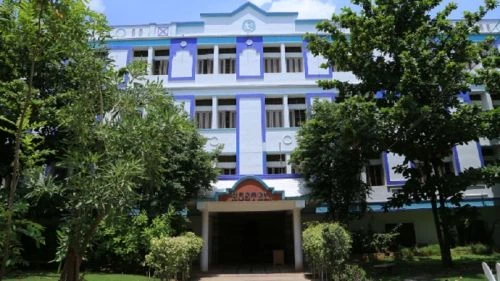
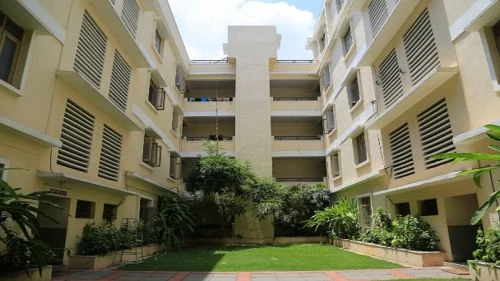
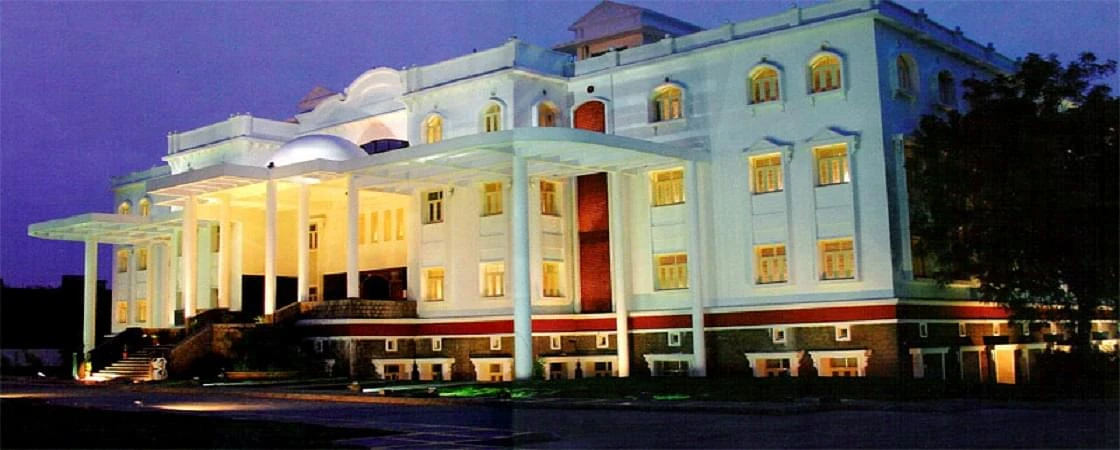
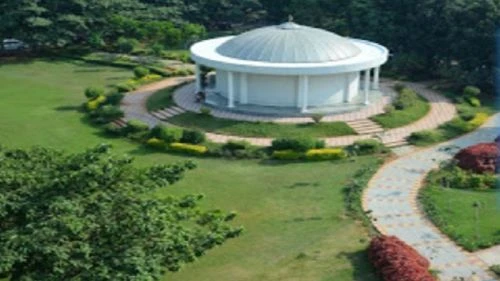
Spread over about 12.5 acres in Shaikpet, the campus is described as self-contained and vibrant. The infrastructure is consistently rated as a plus. Classrooms are modern and ventilated. The labs are a highlight—over 50 of them, including specialized facilities for IoT, AI, VLSI, and the Apple MAC lab. The ECE department alone reportedly invested about 4 Crores in its lab equipment.
The library is a spacious, duplex facility with over 70,000 volumes, 1,000+ e-journals, and seating for 250. Wi-Fi covers the campus, though it’s noted to be primarily for laptops.
For a women’s college, the sports facilities are unusually comprehensive and frequently praised. There’s an indoor badminton stadium, a multipurpose playfield for cricket, basketball, and volleyball, an outdoor gym, a jogging track, and indoor game rooms. It’s a genuine focus area.
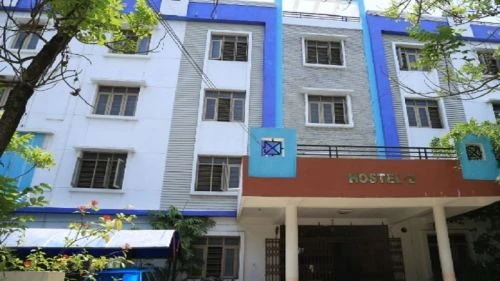
The hostels (H1, H2, H3) have a total capacity of 794 beds. Rooms are typically for 4 or 6 students. Reviews call them “good but not excellent,” noting a need for some upkeep. However, the most consistent and notable negative feedback across student reviews pertains to strict and sometimes problematic hostel warden behavior. This is a recurring pain point mentioned by attendees. Beyond the hostel, the campus has a canteen, bank, post office, health center, and provides transport services for a fee.
Synthesizing the sentiment, the consensus on GNITS is generally positive, with specific, acknowledged drawbacks.
Students love the infrastructure—the labs, libraries, and particularly the sports facilities. The mess food gets a thumbs up for being hygienic and tasty (though strictly veg). The faculty is largely described as supportive and qualified. The placement record, especially for CS/IT students, is a major source of satisfaction and is seen as validating the college choice. The women-only environment is viewed as empowering and focused.
But they’re also candid about the downsides. The hostel wardens are, by far, the most common complaint, cited as overly strict and occasionally unreasonable. Some feel the hostel amenities could be better maintained. While placements are good, there’s an understanding that the 100% claim is aspirational, and students in non-CS branches need to hustle more. The college’s location means you rely on college transport or your own arrangements.
It’s not a perfect picture, but it’s a realistic one. The positives are tangible and academic; the negatives are largely administrative and related to hostel life.
For the right student, GNITS is absolutely worth serious consideration. If you are a female engineering aspirant with a good TS EAMCET rank (ideally within 10,000 for a fee reimbursement, and within a few thousand for CSE), GNITS presents a strong value proposition. You get NBA-accredited programs, an ‘A+’ NAAC grade, a clear path to good placements with major tech companies, and a campus with excellent infrastructure—all at a convener-quota tuition that is relatively affordable for a private institution.
It’s less compelling if you’re looking at management quota admission at full price, unless the women-centric environment is a non-negotiable priority for you. You should also be prepared for a disciplined, somewhat restrictive hostel environment if you plan to stay on campus.
In short, GNITS has evolved from a simple women’s college into a professionally run engineering institute with notable strengths. It’s a pragmatic choice for students aiming for the IT sector, offering a supportive environment and a proven track record without the brand-name premium of Hyderabad’s top-tier colleges. Check the latest EAMCET cutoffs, visit the campus if you can, and weigh the cost against the very real placement outcomes. For many, the math will work out.
 Auditorium
 Cafeteria
 Campus Security
 Computer Labs
 Hostel
 Medical
 Science Labs
 Sports Complex
 Study Library