Loading Admission Guardian content
Loading Admission Guardian content

Provisional score based on available data. It may change as more information is verified.
Find a program, read its fee details and explore the admission requirements.
Summary of the programs shown below. First-year fee. Check the note beside each amount for inclusions and exclusions.
| Course | Stream | Fees |
|---|---|---|
| Bachelor of Technology [B.Tech] | Engineering | 73400 |
Specializations
All accepted exams
Eligibility: 10+2 with 75% + JEE Main
3 exams with cutoff data available - showing recent entries
 Accenture
 Accord tools
 Bhavya tools
 CADD Centre
 Choksey chemicals
 CMS IT Services
 Design Links
 E-Clerx
 E-Emphasys
 Educadd
 HCL Technologies
 IGT Telematics
 INDSAC Softech
 IT source
 Knewron Ltd
 L&T Infotech
 Linosys solutions
 Marathon Reality
 Maveric
 MicroLand
 Mphasis
 Parametrix
 PRDXN
PRDXN Profound
 RMC
RMC Sanmar Tech
 SEED infotech.
 SNB Infrastructure Tech
 Syntech
 TCS
TCS Tristar
 XL Dynamics
If you're scrolling through MHT-CET options with a score that isn't exactly stellar, G.V. Acharya Institute of Engineering and Technology (GVAIET) in Shelu will almost certainly pop up. Its single biggest selling point isn't a fancy lab or a sky-high placement package—it's the railway station. The campus is a literal five-minute walk from Shelu station on the Central Line, a logistical godsend for Mumbai and Thane students who dread the long bus rides typical of other Karjat-area colleges. Established in 2006 and affiliated with the University of Mumbai, GVAIET is a private, non-autonomous institute that offers a straightforward path to a Mumbai University degree in a quiet, green setting. It's a pragmatic choice, not a glamorous one. The placement numbers are modest, the infrastructure is functional, and the rules can feel strict. But for a certain student profile—those with mid-to-low CET percentiles who prioritize commute time and a focused environment over a bustling city campus—it fills a very specific niche.
GVAIET runs a tight ship with a total sanctioned intake of 210 students across five undergraduate B.E. programs. The curriculum is the standard University of Mumbai CBCS pattern, so you know exactly what you're getting syllabus-wise. Where the college shows some initiative is in its specializations. Its Computer Engineering program splits into two tracks: one focused on AI & Machine Learning, and another on IoT, Cyber Security, and Blockchain. That's a clear nod to market trends. The Computer Science & Information Technology, Civil, and Mechanical programs have smaller intakes of 30 each.
The faculty strength sits around 45-50. You won't find a department packed with PhDs—estimates suggest about 10-15% hold doctorates, with the rest being M.E./M.Tech holders. But student reviews consistently highlight this as a positive: professors are described as approachable and willing to give personal attention, something easier to do with smaller batch sizes. The college has MoUs with skill providers like the Edunet Foundation for industry-relevant training. It's a decent academic setup for a Tier-3 private college. You're not getting groundbreaking research, but you are getting direct access to teachers who will likely know your name.
This is where you need to read between the lines. The official placement cell claims an 85%+ placement rate for eligible students. Talking to students and scanning alumni reviews on portals like Shiksha and CollegeDunia paints a more nuanced picture. The working figure they cite is closer to 60-70%, with Computer and IT branches faring better than Civil or Mechanical.
The packages are modest. The official highest package for 2024-25 is ₹6 LPA, though some student claims mention ₹8 LPA. The average sits firmly in the ₹3-4 LPA range, with a median around ₹3.2 LPA. The recruiter list tells the story: TCS, Wipro, Capgemini, Infosys, Tech Mahindra. These are the classic mass recruiters. You'll also see names like Cloudstrats, Aivariant, and various IT services firms.
What does that mean in practice? If you're in Computer Engineering, you have a very good chance of landing an offer from a service-based IT giant. The role might be in software development, testing, or support. For core branch students, the path is tougher; many secure internships through college ties to local industries in the Ambernath-Kalyan belt but often need to hustle off-campus for final placements. The gap between the official 85% claim and the student-reported 60-70% is notable. It suggests the "eligible students" metric might be doing some heavy lifting. The verdict? You'll likely get a job, but it's probably a starting role at a large IT firm with a standard starting salary.
Fees at GVAIET are regulated by the Maharashtra government's Fees Regulating Authority (FRA), which brings some transparency and predictability. For the open category, annual tuition hovers between ₹73,000 and ₹75,000. There are significant concessions for reserved categories: OBC/EBC students pay around ₹45,000-50,000, while SC/ST students pay only exam and development fees of roughly ₹3,000-5,000. Students under the Tuition Fee Waiver Scheme (TFWS) pay about ₹12,000-15,000.
The hostel is an additional cost. Accommodation is about ₹10,000 per month, and the mess adds another ₹3,500. That totals roughly ₹1.2-1.4 lakhs annually if you stay year-round. So, a four-year engineering degree, tuition-only, will cost about ₹3-3.5 lakhs. With hostel, you're looking at ₹7.5-8.5 lakhs total.
Financial aid is primarily through government schemes. The college facilitates applications for Maharashtra's MahaDBT scholarships, including the EBC scholarship, Panjabrao Deshmukh Hostel Allowance, and caste-based scholarships. It's a straightforward, no-frills fee structure that aligns with the college's overall pragmatic approach.
Admission is through the centralized MHT-CET, with JEE Main scores also considered. The cutoffs reflect the college's positioning. For the 2024 academic year, the Computer Engineering specializations (AI/ML and general) had General Home State percentile ranges between 15 and 50. That's accessible. For Civil and Mechanical Engineering, cutoffs can drop significantly, often into the 1-10 percentile range, with seats sometimes remaining in spot rounds.
The process is the standard DTE Maharashtra CAP rounds. You apply through the central portal, and your allotment is based on your CET score and preferences. Alongside this, 20% of seats are reserved for Institute Level (management quota) admissions. The low cutoffs are a double-edged sword. They make the college a viable safety net for many, but they also shape the peer group you'll be studying with.
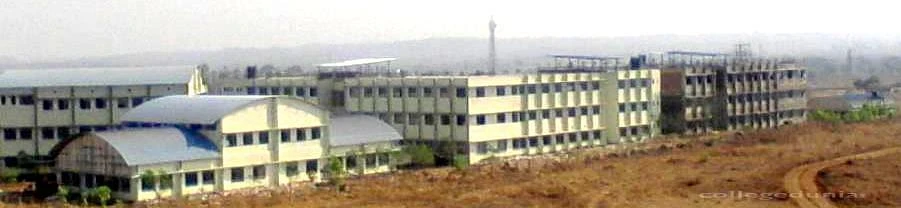
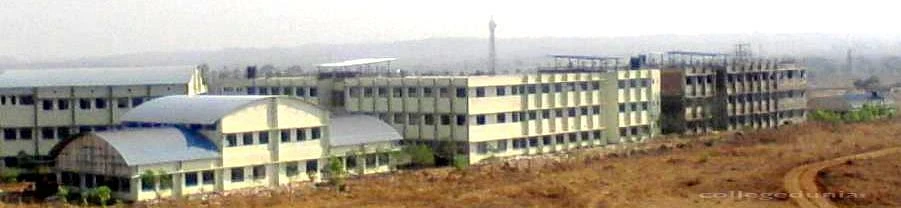
Don't expect a sprawling, urban campus. GVAIET is compact and defined by its natural setting. The "resort-like" greenery and pollution-free air at the foothills of Matheran are genuine perks that students appreciate for a focused study environment. The infrastructure is functional. Labs for Civil and Mechanical have necessary heavy equipment like UTM and CNC machines. Computer labs have i5/i7 systems. The library has a digital section and a collection of around 8,000 books. Wi-Fi is available, but mainly in administrative and library areas—don't expect seamless coverage everywhere.
The hostel gets mixed reviews, often rated a 3 out of 5. Rooms are basic, and while food is considered hygienic, monotony is a common complaint. The canteen is affordable and serves its purpose. A recurring gripe in older reviews was washroom maintenance, though there are indications of recent renovations. Another practical headache students mention is patchy mobile network coverage (Jio in particular) in some campus spots.
Life here is quiet. The college is known for being strict—the 75% attendance rule is enforced, and there are restrictions on leaving campus during college hours, which some describe as "school-like." There's no reported ragging, thanks to an active anti-ragging cell. Social life revolves around campus events and the train line to Mumbai. It's a place for students who are okay with a slower pace.
Synthesizing feedback from CollegeDunia, Shiksha, and forum discussions reveals a clear consensus. The positives are laser-focused on practical benefits. The proximity to Shelu station is the undisputed champion. Students save hours each week compared to peers at other colleges deeper in Karjat. The approachable faculty and peaceful environment are repeatedly praised.
The negatives are equally practical. The strict discipline rubs some the wrong way. Placement quality, while providing a job, often leads to roles in sales-driven or support functions rather than core development, even for CS students. Infrastructure, while improving, is seen as just adequate.
The most telling summary comes from online forums: "If you have a low CET score and want a Mumbai University degree without a 2-hour bus ride from the station, this is the best option in the Karjat belt." That's the GVAIET experience in a nutshell. It's a trade-off.
GVAIET is a college of clear compromises, and its value depends entirely on your priorities. It is worth serious consideration if you have a moderate-to-low MHT-CET percentile (say, 15-50 for CS), are based in Mumbai or Thane, and want to avoid a brutal daily commute. The station access is a legitimate game-changer for quality of life. You'll get a recognized University of Mumbai degree, decently supportive teachers, and a solid shot at an entry-level IT job.
You should probably look elsewhere if you're aiming for high-tier campus placements, a vibrant collegiate social scene, or cutting-edge research facilities. The packages are average, the campus life is subdued, and the rules are strict. It's also not the best bet for core engineering branches like Mechanical or Civil unless you're exceptionally self-motivated to seek off-campus opportunities. Think of GVAIET as a functional, no-surprises launchpad. It gets the job done for a specific student, with its greatest strength literally being steps away from the railway tracks.
In this preview: 1 photo · 0 videos
GVAIET is considered a decent "Tier-3" option for Computer Engineering. It is often viewed as a better choice than other colleges in the Karjat area, particularly due to its proximity to Shelu railway station. However, prospective students should note that placement packages for this branch are typically average, ranging from 3 to 5 LPA.
To reach GVAIET from Mumbai, take a Central Line local train heading towards Karjat or Khopoli. Alight at Shelu Station. The college campus is conveniently located just a 5-minute walk from the station on the east side, making it easily accessible for daily commuters.
The placement reality at GVAIET involves most students securing positions in major service-based IT companies like TCS and Wipro. While the college reports high placement percentages, students from core engineering branches often need to pursue off-campus opportunities to find suitable roles.
GVAIET maintains a strict anti-ragging policy and has an active anti-ragging cell. According to available reports, there have been no major ragging incidents at the college in the last five years.
No, hostel accommodation is not mandatory at GVAIET. Many students opt to commute daily from various parts of Mumbai, including areas like Dadar and Ghatkopar, thanks to the college's excellent connectivity via the local train network near Shelu Station.
Share what future students should know about GVAIET.
Student voices are not rewritten by colleges. We remove spam and abuse.
Wider admission question? Community PulseWhat should future students know?
Tell us which course you're considering. We'll help you work out the next step.
Get instant Partner access after mobile verification. Your public edits are reviewed before they go live.
Claim this college
 Campus Security
 Campus Shuttle
 Campus Wi-Fi
 Computer Labs
 Hostel
 Science Labs
 Sports Complex
 Study Library