Loading Admission Guardian content
Loading Admission Guardian content
Selected ranking categories, with the recorded year beside each result. Open all records for the complete history.
2 published records · Lower numeric ranks are stronger
IIRF
Physiotherapy
#562022
Find a program, read its fee details and explore the admission requirements.
Summary of the programs shown below. Fee periods can differ by program. Check the note beside each amount before comparing costs.
| Course | Stream | Fees |
|---|---|---|
| Doctorate of Medicine [MD] | Medical | 61344 |
| M.B.B.S. | Medical | 562000 |
| Bachelor of Occupational Therapy | Medical | |
| Bachelor of Physiotherapy [BPT] | Medical | |
| Bachelor of Science [B.Sc] | Medical |
Specializations
All accepted exams
Eligibility: MBBS
All accepted exams
Eligibility: 10+2 with 50% + NEET
Eligibility: 10+2
Eligibility: 10+2
Specializations
Eligibility: 10+2
1 exam with cutoff data available - showing recent entries
Goa Medical College and Hospital isn't just a medical school; it's a living piece of history that happens to be one of the oldest in Asia. Founded in 1842 and re-established in its current form in 1963, GMC has grown into a massive tertiary care hub where the sheer volume of patients provides an education you can't get from textbooks alone. It’s a government-run institution, which means fees are relatively low but infrastructure can be a mixed bag. The real draw here is the clinical exposure—you’re thrown into the deep end from day one, learning in a 1,160-bed hospital that serves the entire state. And yes, it’s in Goa. That fact alone shapes the entire student experience, for better and sometimes for more complicated.
GMC’s academic structure is classic and comprehensive. The MBBS program, with an intake of 200 students, is the heart of the institution. The 5.5-year course is rigorous, and they enforce a strict 75% attendance policy—bunking isn’t an option. The academic calendar for 2024-25 shows a staggered start, with first and second years commencing in October. Beyond MBBS, the college offers a full spectrum of postgraduate (MD/MS) and super-specialty (DM/MCh) programs. Recent seat matrices show increases in key departments like General Surgery (up to 15 seats) and Pediatrics (10 seats), which is a positive sign of institutional growth.
The faculty is large, with over 200 teaching members, many holding super-specialty degrees or PhDs. What sets the academic culture apart are the high-profile collaborations. There’s an MoU with the University of Miami for stroke treatment training, a 20-year longitudinal study with Tata Memorial Centre and Oxford University on non-communicable diseases, and a Pfizer-backed project on antimicrobial resistance. This isn’t just a local college; it’s plugged into global medical research conversations.
In a government medical college, ‘placements’ means something different. There’s no corporate recruitment drive. Instead, career progression is built into the system. Every MBBS graduate is guaranteed a one-year internship at GMC itself, with a stipend that was recently hiked to a very respectable ₹30,000 per month. That’s a significant income for a trainee. For postgraduates (Junior Residents), the monthly stipend ranges from ₹60,000 to ₹75,000. The NIRF 2024 report cites a median package of ₹10.50 LPA for its 3-year PG programs, which aligns with these stipend figures.
After internship, most paths diverge. A significant number join the Goa Health Services as Medical Officers, a stable government job. The most driven prepare for and crack NEET-PG to secure a seat in GMC’s own or another college’s specialty program. Top recruiters for finished specialists include major hospital chains like Apollo and Manipal, but the primary employer remains the Government of Goa. The placement reality is 100% for the mandatory internship, but post-graduation employment is self-driven through competitive exams and applications. It’s a system that rewards initiative.
As a government college, GMC is affordable, but fees have been creeping up. The annual tuition for the MBBS program is approximately ₹1,56,000, bringing the total 5.5-year course cost to around ₹15.6 lakhs. Postgraduate MD/MS fees are about ₹1,21,000 per year. These figures don’t tell the whole story, though. You must add a one-time admission fee (₹1,800), an institutional fee (₹3,200), and a development fee of ₹15,000 per semester. Then come living costs.
Hostel fees are around ₹21,956 per year, but the condition of some hostels, as per student reviews, can be subpar. Mess food is extra, costing ₹3,000–₹4,500 monthly, though many students opt out for better options. The college doesn’t offer its own scholarships. Instead, students rely on state schemes from the Directorate of Technical Education (DTE) Goa or national schemes via the National Scholarship Portal. The total cost is still a fraction of a private medical college, but the ancillary fees add up.
Admission is 100% NEET-centric. For MBBS, you need a qualifying score in NEET-UG. For MD/MS, it’s NEET-PG, and for super-specialties, NEET-SS. The selection process splits the seats: 15% are filled through the All India Quota (AIQ) counseling conducted by the Medical Counseling Committee (MCC), and the remaining 85% are for the State Quota, managed by DTE Goa, which requires a domicile certificate.
The cutoffs are competitive but not in the stratosphere of top-tier AIIMS. For the 2024 AIQ Round 1, the closing rank for MBBS General category was 16,029. That means a rank under 15,000 (roughly a score of 650+) gives you a solid shot. For the State Quota, the cutoff is significantly lower, often in the 580-610 mark range, making it an excellent option for Goan residents. There is no NRI or management quota—this is a transparent, merit-based system. One critical point: accepting a seat here comes with a mandatory one-year service bond to work for the Government of Goa after graduation, with a hefty penalty (reportedly up to ₹50 lakhs) for defaulting.
The campus is sprawling, over 1.1 million square meters, and sits right on the NH-66 highway. The infrastructure is a tale of two cities. The new Super-Specialty Block (SSB) is, by all accounts, world-class with advanced labs and modular operation theatres. Then you have the old MBBS lecture halls that, as one student put it, “still feel like the 90s.” The library is a major asset—a six-floor building with 30,000+ books and 24/7 access.
Hostel life is where most complaints converge. There are three hostels each for boys and girls. The girls' hostels are generally reported to be better maintained. Reviews of the boys' hostels frequently mention maintenance issues: fungus on walls, broken fixtures, and poor plumbing. Rooms are typically shared (2-3 students) in the early years, with single rooms possible for interns. The mess food is consistently rated poorly (around 2/5), leading most to eat at the hospital’s Sodexo outlet or local eateries. On the plus side, sports facilities are decent with a large playground, and a new gym is reportedly in the works. And of course, you’re in Goa. The beach is never far away, which contributes to a campus culture described as “relatively chill” and less toxic than the high-pressure environments of metros like Mumbai or Delhi.
Synthesizing feedback from platforms like Quora, Reddit (r/indianmedschool), and Shiksha reveals a clear consensus. The overwhelming positive is clinical exposure. The hospital’s huge patient load means students see a vast array of cases, building diagnostic confidence early. “If you want clinical skills, GMC is gold,” sums it up. The location in Goa is universally loved for its quality of life and scenic campus.
But the negatives are persistent. Hostel maintenance, especially for boys, is a constant gripe. Some online threads hint at a subtle cultural friction, with non-Goan students (sometimes derogatorily called ‘ghatis’) reporting occasional bias from local nursing staff or peers—though many say they adapt well. Administrative processes in the Dean’s office are famously slow and frustrating. The takeaway from reviews is pragmatic: come for the unparalleled medical training and the Goan lifestyle, but manage your expectations regarding accommodation and bureaucracy.
Goa Medical College is a solid, historically significant institution that offers tremendous value for money. Its greatest strength is the raw, hands-on clinical training you receive in a busy public hospital—an experience that trumps many newer, shinier private colleges. The recent stipend hikes and seat increases in PG programs show positive momentum. It’s best for students who are self-driven, who want to become skilled clinicians first and foremost, and who can navigate a system where luxury isn’t guaranteed. If your priority is pristine hostels, seamless administration, and metropolitan networking, you might find it frustrating. But if you want to graduate as a competent doctor without a crushing financial debt, and you don’t mind a bit of rustic charm (and occasional dysfunction) along the way, GMC is an excellent choice. Just be prepared for that one-year service bond and embrace the fact that you’re getting a real-world medical education in one of India’s most beautiful states.
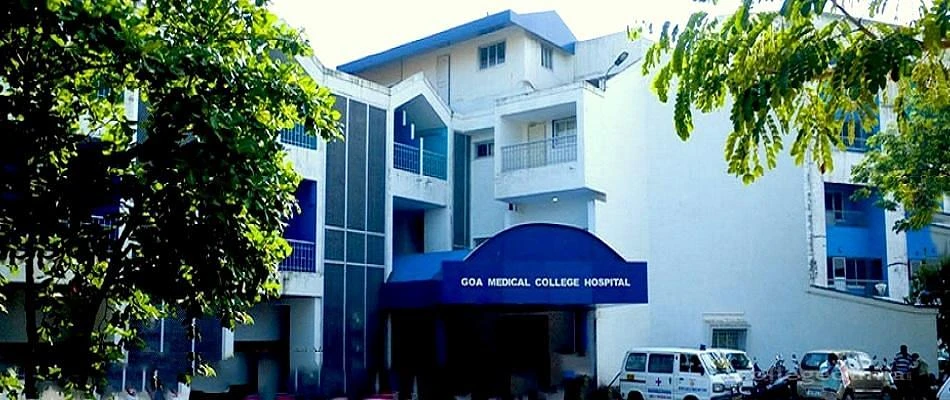
In this preview: 1 photo · 0 videos
Yes, Goa Medical College and Hospital is highly regarded for its academics and clinical exposure. While there are minor reports of cultural friction, most non-Goan students, including those from North India, adapt well to the environment.
The MBBS fee at Goa Medical College and Hospital is approximately ₹1.56 Lakhs per year for the 2024–25 academic batch.
For admission under the All India Quota (General category), aim for a NEET rank under 15,000, which typically corresponds to a score of 650 or above. For the State Quota, the cutoff marks are significantly lower, generally ranging between 580 to 610.
The hostel facilities at Goa Medical College and Hospital are functional but aging. The girls' hostels are generally reported to be better maintained than the boys' hostels.
Yes, Goa Medical College and Hospital has a mandatory 1-year service bond requiring graduates to serve the Government of Goa. The penalty for defaulting on this bond is significant, often around ₹50 Lakhs for postgraduate studies.
Share what future students should know about Goa Medical College and Hospital.
Student voices are not rewritten by colleges. We remove spam and abuse.
Wider admission question? Community PulseWhat should future students know?
Tell us which course you're considering. We'll help you work out the next step.
Get instant Partner access after mobile verification. Your public edits are reviewed before they go live.
Claim this college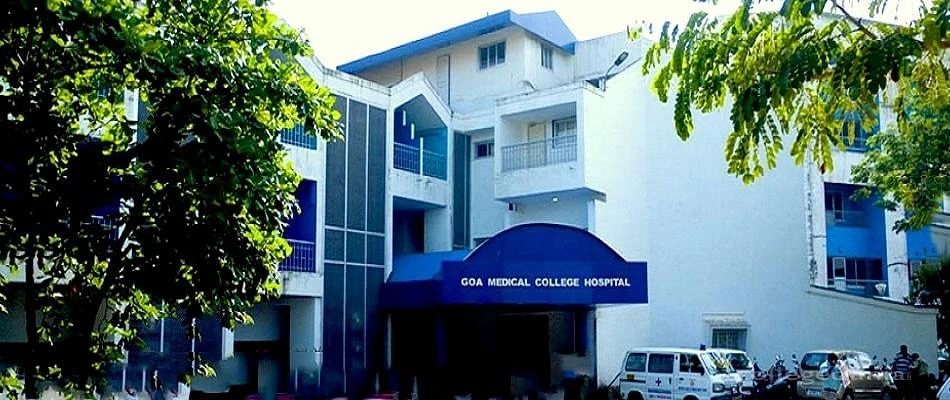
 Auditorium
 Cafeteria
 Computer Labs
 Gym
Gym Hostel
 Medical
 Science Labs
 Smart Classrooms
 Sports Complex
 Study Library