Loading Admission Guardian content
Loading Admission Guardian content
Provisional score based on available data. It may change as more information is verified.
Find a program, read its fee details and explore the admission requirements.
Summary of the programs shown below. First-year fee. Check the note beside each amount for inclusions and exclusions.
| Course | Stream | Fees |
|---|---|---|
| Diploma in Engineering (Polytechnic) | Engineering | 25000 |
| Master of Business Administration [MBA] | Management | 27000 |
| Bachelor of Technology [B.Tech] | Engineering | 35000 |
| Master of Technology [M.Tech] | Engineering | 57000 |
| Master of Computer Applications [M.C.A] | Computer Applications |
Specializations
All accepted exams
Specializations
All accepted exams
Eligibility: Graduation with 50% + APICET
Specializations
All accepted exams
Eligibility: 10+2 with 45% + AP EAMCET
Specializations
All accepted exams
Eligibility: Pass in Graduation + GATE
All accepted exams
Eligibility: Graduation with 50% + APICET
3 exams with cutoff data available - showing recent entries
Gokula Krishna College of Engineering Sullurpet (GKCE) is a private engineering college that’s been around since 2001, and its story is largely defined by its location. Sitting on a sprawling 19.2-acre campus just off NH-16, it’s about 80 km from both Chennai and Nellore. That puts it in a unique spot—close enough to the urban sprawl for some opportunities, but far enough out to feel isolated. Its biggest selling point is proximity to major industrial zones: Sri City, Tada, and, most notably, India’s spaceport at SDSC SHAR, Sriharikota. The college leans heavily on this for its industry-academia narrative, promising visits from scientists and real-world exposure. It’s affiliated with JNTUA, Anantapur, and secured NAAC accreditation in 2023. For students with mid-range AP EAPCET ranks looking for an affordable, no-frills B.Tech option near industrial hubs, GKCE presents a practical, if unspectacular, choice.
GKCE runs a standard set of programs you’d expect from a mid-sized private engineering college in Andhra Pradesh. The undergraduate B.Tech offerings are comprehensive: Civil, Mechanical (ME), Electrical & Electronics (EEE), Electronics & Communication (ECE), Computer Science (CSE), and Information Technology (IT). The intake numbers tell a clear story about demand. For the 2022-23 session, CSE had 120 seats, followed by ECE and ME at 60 each. Civil and EEE had 30 seats apiece. That’s a total UG intake of 912, which is decently sized.
Postgraduate options include M.Tech specializations like Computer Science, Digital Electronics, and Power Systems, each with an intake of 18. There’s also an MBA program (120 seats) and an MCA. For those looking at a more hands-on route, the polytechnic wing offers Diplomas in fields like Computer Engineering and the newer Artificial Intelligence & Machine Learning.
Academically, it’s a JNTUA-affiliated college, so the curriculum and semester pattern follow the university’s mandate. The faculty strength is listed as over 90, with some holding PhDs. The college’s location is its primary academic feature. Being near SDSC SHAR and the Sri City industrial corridor is leveraged for expert lectures and, in theory, better industry interaction. You won’t find groundbreaking pedagogy here, but for a student who’s pragmatic, the syllabus gets covered. The library offers digital access through platforms like Knimbus and the National Digital Library of India, which is a solid resource.
This is where the data gets fuzzy, and you have to read between the lines. The college does not publish official figures for highest, average, or median packages. That’s a red flag for anyone expecting transparency. Instead, they provide a list of top recruiters and the number of students hired, which is an interesting, if incomplete, dataset.
For a recent placement cycle, the top hirers were TATA AIG (91 students), Google (41), Reliance (25), and companies like Xilinks, Kelite, and Master Matrix (7 each). Infosys is listed but with just 1 student. The sheer volume for TATA AIG and Google suggests these might be for bulk, entry-level roles in sales support or IT services, not necessarily core development jobs from Google’s main hiring channels. Still, getting your foot in the door with these names on your resume isn’t nothing.
The placement cell is described as active in helping with internships and jobs. The official claim is that "most of the students are selected for placements from each branch," but without a percentage, that’s hard to quantify. The reality for colleges in this tier is that placement is often branch-dependent. CSE and IT students will have more opportunities, likely in the IT services sector, while core branches like Civil or Mechanical might have to hustle more, possibly leveraging that proximity to Sri City for internships.
If you’re a CSE student here, you can reasonably hope for an interview with a recognizable name. But set your salary expectations accordingly—think of it as a starting point for your career, not a dream package.
Affordability is GKCE’s strongest card. The tuition fees are notably low for a private engineering college. For the 2025-26 session, B.Tech tuition ranges from ₹43,000 per year for Civil, EEE, and Mechanical to ₹60,000 for ECE and ₹80,000 for the in-demand CSE. The total course fee for four years is a flat ₹1.6 Lakhs for all B.Tech streams, which suggests the fee might be front-loaded or there are other annual charges.
But tuition is just one part. Hostel fees are a significant add-on, ranging from ₹50,000 to ₹70,000 per year, excluding mess charges. Add in exam fees, transportation, and other development charges, and the total annual cost for an out-of-town student can easily approach ₹1.5 Lakhs or more.
The college offers several scholarships to ease the burden. There are merit-based waivers: a 20% tuition discount for 85-89% in Class 12, and a 40% discount for 90% and above. Government scholarships for SC/ST/OBC students admitted through counseling are applicable. They also mention specific scholarships to empower women in STEM fields. It’s worth contacting the administration directly for the latest forms and deadlines for these.
Admissions are routed almost entirely through the state’s common entrance tests. For B.Tech, you need to appear for AP EAPCET. For lateral entry into the second year, it’s AP ECET. M.Tech requires GATE or AP PGECET scores, while MBA/MCA admissions are based on AP ICET. Diploma hopefuls take the AP POLYCET.
The cutoffs are accessible, which aligns with the college’s positioning. For B.Tech CSE in the 2025 AP EAPCET, the closing rank for the General category was 139,191. For other branches in 2024, ranks went even higher: Mechanical (~157k), EEE (~160k), Civil (~177k), and ECE (~177k). These are not ranks for top-tier colleges, and that’s the point. GKCE is a realistic target for students with moderate scores.
The selection process follows the standard 70:30 split. Seventy percent of seats (Category-A) are filled through state counseling based on entrance rank. The remaining 30% (Category-B) are management/NRI quota seats, where the college has discretion, though they still require minimum eligibility. After these rounds, spot admissions might be available for leftover seats. The application fee for the management quota is ₹700 via demand draft. Keep an eye on the official APSCHE website for counseling schedules and the college website for application forms.
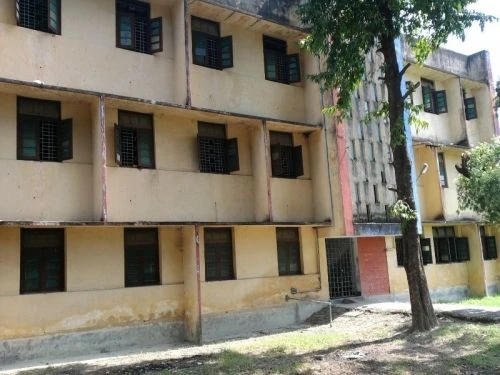
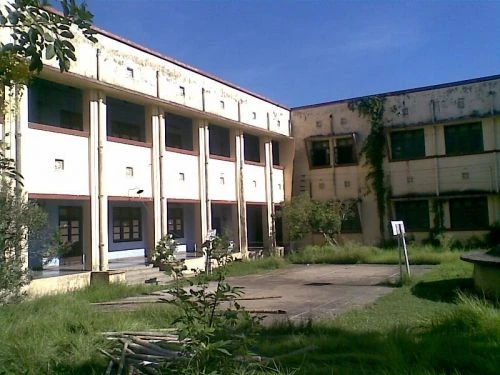
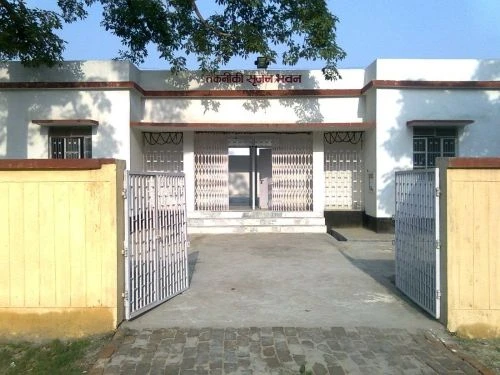
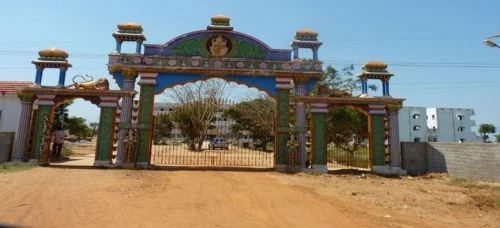
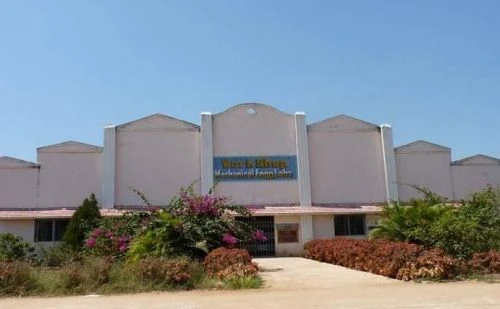
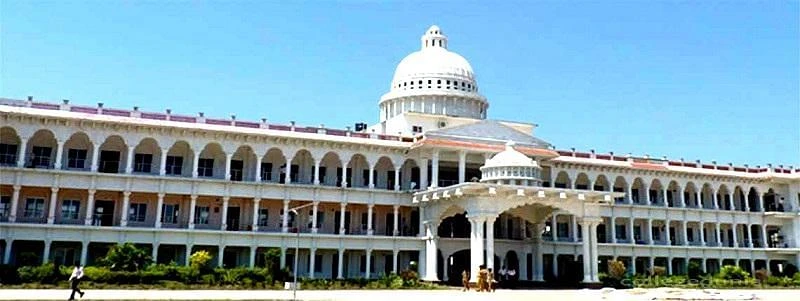
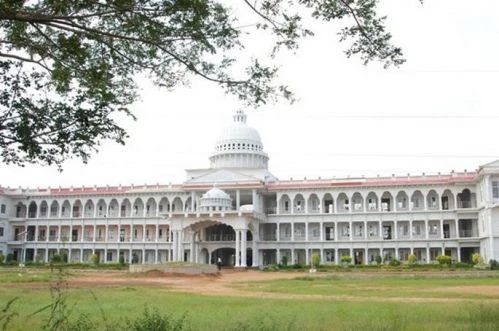
The campus is spacious, and infrastructure is consistently noted as a positive. Academic blocks are well-equipped, and departments have their own dedicated labs. The mechanical workshop, at over 21,000 sq. ft., is specifically mentioned. There’s a central library, an auditorium, and seminar halls.
Hostel life is a mixed bag. There are separate blocks for boys (capacity >800) and girls (capacity >300). Rooms come with basic furniture—a bed, study table, almirah—and attached bathrooms. Hygiene is maintained with daily cleaning. The feedback on food is typical: "hostel food could be better," but the campus canteen provides alternatives. A big plus for hostel residents is free Wi-Fi access.
Where the location becomes a double-edged sword is in social life. Sullurpet town is 4 km away, but it’s not a major city. The college tries to compensate with an active sports club and facilities for various games. They also run a fleet of 15 buses covering routes to Sriharikota, Gudur, Tada, Sricity, and Nellore, which is essential for student mobility. There’s a medical facility on campus, but no on-site bank.
It’s a self-contained campus. If you’re looking for a vibrant, city-based college experience, you’ll be disappointed. If you prefer a more focused, perhaps quieter environment away from distractions, it might suit you.
Student sentiment paints a picture of a college that does the basics reliably but doesn’t exceed expectations. The most common praises are for two things: experienced, supportive faculty and good campus infrastructure. In a tier where faculty attrition can be high, having approachable teachers who know their subject is a significant advantage.
The negatives aren’t explicitly listed in the brief, but they can be inferred from the context. The remote location is often a gripe in student reviews for colleges like GKCE, leading to feelings of isolation and limited off-campus opportunities. While the placement list has big names, the absence of concrete salary data leads to skepticism about the quality of roles. Comments like "food could be better" are standard hostel complaints across India.
The consensus? It’s a no-nonsense institution. You likely won’t get the brand value of a top-tier college or the hectic social life of a city campus. But for a student who attends classes, utilizes the labs and library, and proactively engages with the placement cell, GKCE provides a stable platform to earn a degree and start a career without a massive financial burden.
GKCE is a very specific kind of value proposition. It’s worth serious consideration if you are a student with an AP EAPCET rank in the 140,000-180,000 range, are budget-conscious, and are targeting a stable engineering degree. Its low tuition fees are a major draw, and the proximity to industrial and space research hubs is a genuine, if not always fully utilized, advantage. The placement record, while lacking transparency on packages, shows recruitment by reputable companies.
However, you should probably look elsewhere if you prioritize a vibrant campus social scene, demand top-tier placement packages from day one, or want the brand recognition of a premier institute. The location demands a certain self-sufficiency. Ultimately, GKCE is a practical choice. It provides adequate infrastructure, decent teaching, and a pathway to entry-level jobs. It won’t hand you a dream career on a platter, but it gives you a affordable launchpad if you’re willing to put in the work yourself. For many students in Andhra Pradesh, that’s exactly what they need.
In this preview: 5 photos · 0 videos
The AP EAPCET 2025 closing rank for B.Tech Computer Science and Engineering (CSE) at GKCE Sullurpet was 139,191 for the General category. For reserved categories, the cutoffs were 178,825 for SC and 166,014 for ST.
The annual tuition fee for B.Tech at GKCE for the 2025-26 academic year varies by branch: ₹43,000 for Civil, EEE, and Mechanical Engineering; ₹60,000 for ECE; and ₹80,000 for CSE. The total course fee for four years is ₹1.6 Lakhs. Additional costs include hostel fees (₹50,000-70,000/year), mess charges, and other mandatory fees.
Top recruiters at Gokula Krishna College of Engineering include TATA AIG, Google, Reliance, Xilinks, Kelite, Master Matrix, Leads Technologies, and Infosys. Recent data shows significant hiring numbers, with TATA AIG recruiting 91 students and Google recruiting 41 students in a recent cycle.
Yes, Gokula Krishna College of Engineering is approved by the All India Council for Technical Education (AICTE) and is affiliated with JNTUA, Anantapur. The college also received NAAC accreditation in 2023 and is ISO 9001:2015 certified.
GKCE has separate on-campus hostels for boys (capacity >800) and girls (capacity >300) with furnished rooms and attached bathrooms. The campus spans 19.2 acres and features well-equipped labs, a central library with digital access, sports facilities, a cafeteria, medical facilities, and free Wi-Fi for hostel residents. The college also provides a transport service with 15 buses.
Share what future students should know about GKCE.
Student voices are not rewritten by colleges. We remove spam and abuse.
Wider admission question? Community PulseWhat should future students know?
Tell us which course you're considering. We'll help you work out the next step.
Get instant Partner access after mobile verification. Your public edits are reviewed before they go live.
Claim this college
 Auditorium
 Cafeteria
 Computer Labs
 Gym
Gym Hostel
 Medical
 Science Labs
 Sports Complex
 Study Library