Loading Admission Guardian content
Loading Admission Guardian content
Provisional score based on available data. It may change as more information is verified.
Selected ranking categories, with the recorded year beside each result. Open all records for the complete history.
6 published records · Lower numeric ranks are stronger
IIRF
Engineering · public
#1152024
IIRF
B.Tech · public
#1222023
Find a program, read its fee details and explore the admission requirements.
Summary of the programs shown below. First-year fee. Check the note beside each amount for inclusions and exclusions.
| Course | Stream | Fees |
|---|---|---|
| Bachelor of Technology [B.Tech] {Lateral} | Engineering | 17950 |
| Bachelor of Technology [B.Tech] | Engineering | 29950 |
| Master of Technology [M.Tech] | Engineering | 36000 |
| Ph.D | Engineering |
Specializations
All accepted exams
Eligibility: 10+3 with 45% + WBJEE
Specializations
All accepted exams
Eligibility: 10+2 with 45% + WBJEE
Specializations
All accepted exams
Eligibility: Pass in Graduation + GATE
Specializations
Eligibility: Post Graduation
3 exams with cutoff data available - showing recent entries
 Accenture
 Amazon
 Asian Paints
 Carborundum Universal Limited
 Cognizant
 Hindustan Copper Limited (HCL)
 IBM
IBM Infosys
 InfoTech
 Kajaria Tiles
 L&T Ltd.
 Mashreq Bank
 SAP
SAP Steel Authority of India Ltd.
 Syntel
 Tata Consultancy Services
 TCS
TCS Tech Mahindra
 Wipro
WiproIf you're looking for a government engineering college in Kolkata where the return on investment is almost impossible to beat, the Government College of Engineering and Ceramic Technology (GCECT) demands your attention. Established in 1941, this compact, urban campus offers a B.Tech degree for a total four-year cost that can be less than a single semester at many private institutes. Its singular claim to fame? It's the only full-fledged institute in India offering B.Tech, M.Tech, and Ph.D. programs specifically in Ceramic Technology, a niche where its placement record borders on perfection. For CSE and IT aspirants, it's a more complex calculus—low fees, a government tag, and Kolkata's city life, but with placements that require more hustle. This isn't a sprawling university; it's a focused, no-frills institution where the value proposition is starkly clear from day one.
GCECT runs a tight ship with just three B.Tech programs—Ceramic Technology (CT), Computer Science & Engineering (CSE), and Information Technology (IT)—each with an intake of about 40 students. That small batch size is a defining feature, creating a close-knit, almost familial academic environment. At the postgraduate level, M.Tech and Ph.D. programs are offered in Ceramic Technology and IT.
The academic heart of the institute is, without question, its Ceramic Technology department. It's not just a branch here; it's a legacy. The labs for Glass, Refractories, and Whiteware are specialized and high-end, supporting the college's unique position in the Indian education landscape. For CSE and IT, the curriculum follows the MAKAUT/autonomous syllabus, but the college bolsters it with an IBM Software Centre of Excellence, providing access to IBM technologies and training.
Faculty strength sits around 43 permanent staff, with roughly 35-40% holding PhDs. You'll find notable names like Prof. (Dr.) Rituparno Sen in Ceramics. The academic culture is described as rigorous, with a strict 75% attendance rule that students often mention as a point of contention. The grading follows a 10-point CGPA system. It's a place where you're expected to show up and put in the work.
This is where the story splits dramatically by branch. Let's be blunt: if you get into Ceramic Technology here, your career path is one of the most secure in Indian engineering. The college reports a consistent 95% to 100% placement rate for CT, with an average package between 5.0 and 6.5 LPA. Top core recruiters are household names in the materials industry: TRL Krosaki, Kajaria Ceramics, Saint-Gobain, IFGL, and Vesuvius. These are solid, stable careers in manufacturing and R&D. Mandatory internships at companies like Vedanta or SAIL add practical heft to the degree.
For CSE and IT, the picture is different. The official placement percentage is a wider range, 60% to 85%, heavily dependent on market conditions. The average package cited is 4.0 to 5.5 LPA. The highest packages (10-12 LPA) come from Amazon and other MNCs, but these are exceptional. The bulk of offers come from IT services giants: TCS, Infosys, Capgemini, Wipro, Cognizant, and Tech Mahindra.
There's a recurring sentiment in student reviews that the placement cell naturally prioritizes its flagship ceramic branch. CSE/IT students often feel they need to be self-starters, relying on off-campus opportunities, GATE preparation, or pool campus drives. The median package across all branches is estimated around 4.5 LPA. So, the reality check: Ceramic Tech offers near-guaranteed, well-paying core jobs. For CSE/IT, you're getting a low-cost ticket to the IT services sector, but you'll likely need to supplement the institute's efforts with your own.
The fee structure is GCECT's knockout argument. We're talking about one of the lowest-cost B.Tech degrees in the country. For the 2024-25 session, annual tuition is around ₹6,000 to ₹9,000 for the flagship Ceramic Technology branch and ₹12,000 to ₹18,000 for CSE and IT. Hostel fees, for the lucky few who get a seat, are a mere ₹1,000 to ₹2,000 per month including mess charges.
Add in one-time admission fees (~₹5,000) and semester exam fees, and the total estimated cost for a four-year B.Tech can be between ₹60,000 and ₹1,20,000. Let that sink in. That's less than a single year's fee at countless private colleges. This makes the ROI phenomenal. Financial aid is readily available through government schemes like the Swami Vivekananda Merit-cum-Means Scholarship (SVMCM) and Kanyashree, further reducing the burden for eligible students.
Admission to the B.Tech programs is strictly merit-based through state and national entrance exams. The primary gateway is the West Bengal Joint Entrance Examination (WBJEE). A limited number of seats are also available through JEE Main for the All India Quota. For lateral entry into the second year, the Joint Entrance for Lateral Entry (JELET) is the exam.
The cutoffs tell the story of demand. For the 2024 WBJEE Round 1 for General Home State candidates:
Selection is conducted via centralized counseling by the West Bengal Joint Entrance Examinations Board (WBJEEB). There is no management or NRI quota—it's a transparent, government-run process. For M.Tech, admissions are based on GATE or the state-level WB PGET scores.
Manage your expectations. The campus is urban and extremely compact at 2.5 acres. Students often say it feels more like a school campus than a sprawling college. The infrastructure is functional but shows its age in places; some labs are due for modernization.
The hostel situation is the biggest practical challenge. There's very limited capacity—only about 30-40 seats for boys. A dedicated girls' hostel has been under construction and, as of early 2025, was not yet operational, leaving female students to find paying guest accommodations in the Beliaghata or Phoolbagan areas. Those who do get a hostel spot say the facilities are basic but clean, and the community is tight-knit. The canteen is functional but gets criticized for a limited menu.
On the upside, the location is prime. It's in the heart of Kolkata, a short distance from Phoolbagan Metro Station and Sealdah Railway Station. You have the entire city at your doorstep. Social life happens more in the city than on campus. There's a small playground and indoor games facilities. The library is well-stocked with over 17,400 books and digital access. And a major positive students highlight: ragging is virtually non-existent due to a strict anti-ragging cell.
Synthesizing feedback from platforms like Quora, Reddit, and Shiksha reveals a clear consensus. The positives are powerful: Unbeatable ROI is the universal chorus. The "family-like" atmosphere due to small batches and strong senior-junior bonds is repeatedly praised. Ceramic Tech students feel they are in a unique and dominant niche with incredible job security. The Kolkata location is a big plus for city life.
But the negatives are consistent too. The tiny campus size is a frequent complaint. CSE/IT students express frustration over a perceived placement disparity, feeling the core branch gets more attention. The strict 75% attendance rule is often called out as restrictive. And the hostel capacity issue is a major logistical headache for out-of-town students.
One paraphrased Quora comment sums up the dual reality well: "GCECT is a hidden gem for Ceramic Engineering, but for CSE, you have to be a self-learner." Another from Shiksha advises: "Don't expect a 'Student of the Year' campus life; expect a rigorous, low-cost, high-value education."
The answer is a firm "yes," but with a critical branch-specific caveat. If your goal is a career in ceramic, glass, or refractory engineering, GCECT is arguably the best place in India to be. The near-100% placement into core industries, combined with virtually free education, makes it an absolute no-brainer. You are investing in a specific, high-demand skill set.
For Computer Science or Information Technology, the calculation shifts. You are primarily paying for an affordable, government-issued B.Tech degree in Kolkata. The placement cell will connect you with mass recruiters, but the onus will be on you to compete for the top-tier packages and often to seek off-campus opportunities. It's an excellent, low-risk option for students who are self-motivated and want to minimize educational debt. However, if a vibrant, residential campus life is a top priority, GCECT's compact, urban setting will feel limiting. This college is for the pragmatist, not the dreamer of a quintessential "campus experience."
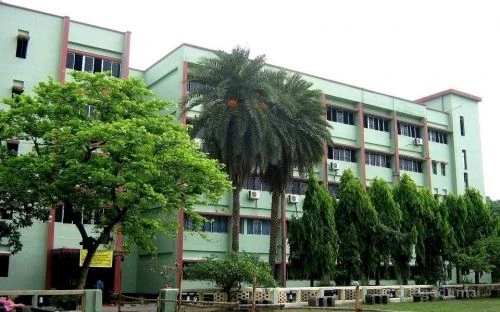
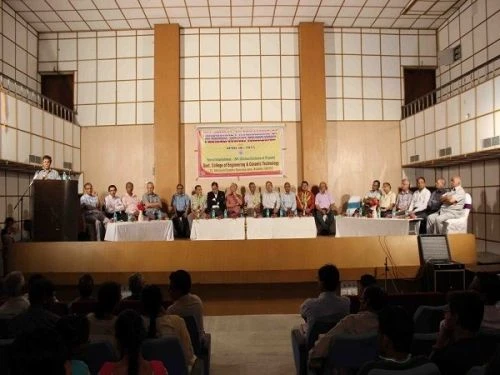
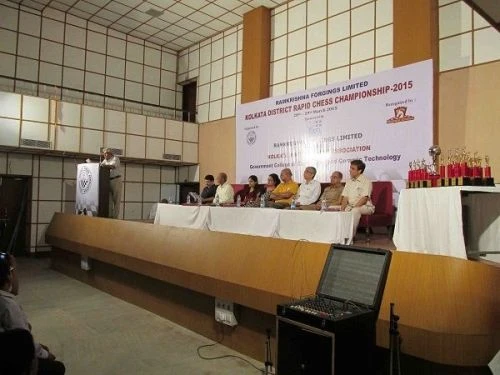
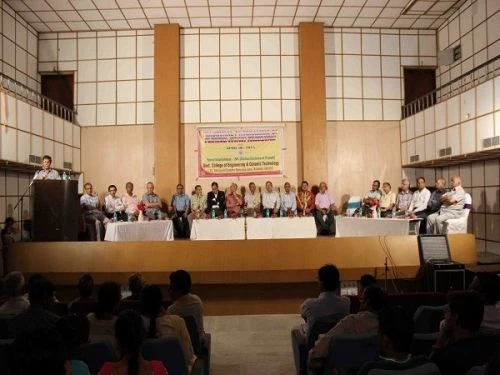
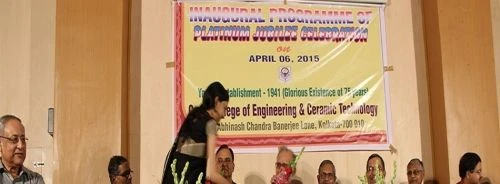
In this preview: 5 photos · 0 videos
Yes, GCECT is considered a good option for CSE, particularly for return on investment (ROI). Placements for CSE students often occur through pool campus drives or mass recruiters. It is generally regarded as better than most mid-tier private colleges but ranks below premier institutions like Jadavpur University (JU) or IIEST Shibpur.
Ceramic Technology (CT) is the flagship branch of GCECT, known for its 100% placement record and specialized laboratories. In contrast, branches like CSE and IT are standard technology streams with decent but more competitive placement scenarios.
As of 2025, a dedicated girls' hostel for GCECT is under construction. Currently, most female students opt for private paying guest (PG) accommodations in nearby areas such as Beliaghata and Phoolbagan.
GCECT holds an advantage in terms of lower fees and the prestige of a government college tag. However, private institutions like Heritage or IEM may have an edge in campus infrastructure and corporate-style placement training programs.
The average placement package for the Ceramic Technology branch ranges between 5.5 to 6.5 Lakhs Per Annum (LPA). Top core companies in the sector, such as TRL Krosaki, offer higher packages to students.
Share what future students should know about GCECT.
Student voices are not rewritten by colleges. We remove spam and abuse.
Wider admission question? Community PulseWhat should future students know?
Tell us which course you're considering. We'll help you work out the next step.
Get instant Partner access after mobile verification. Your public edits are reviewed before they go live.
Claim this college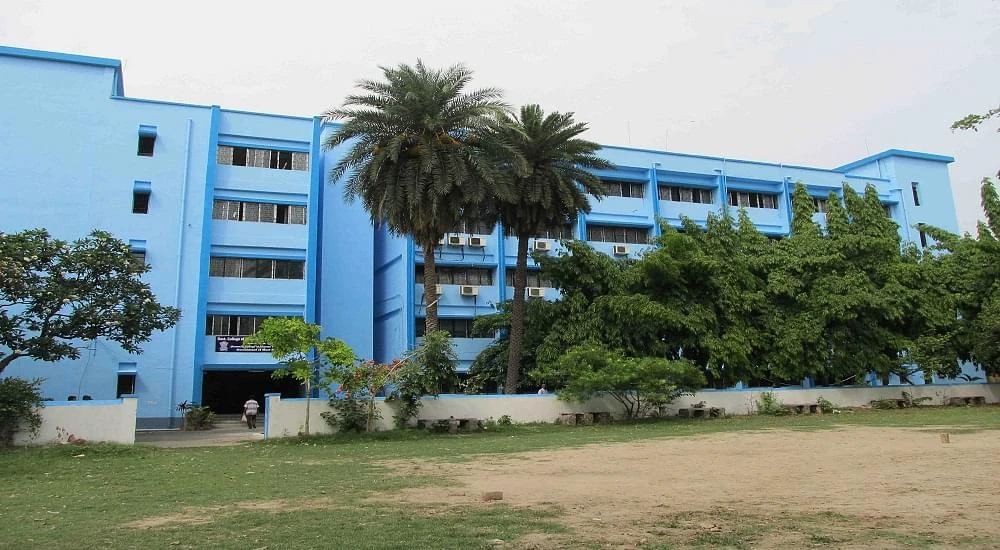
 Auditorium
 Cafeteria
 Computer Labs
 Gym
Gym Hostel
 Medical
 Science Labs
 Sports Complex
 Study Library