Loading Admission Guardian content
Loading Admission Guardian content

Provisional score based on available data. It may change as more information is verified.
Selected ranking categories, with the recorded year beside each result. Open all records for the complete history.
3 published records · Lower numeric ranks are stronger
NIRF
B.Tech
#1562021
Find a program, read its fee details and explore the admission requirements.
Summary of the programs shown below. First-year fee. Check the note beside each amount for inclusions and exclusions.
| Course | Stream | Fees |
|---|---|---|
| Master of Technology [M.Tech] | Engineering | 10970 |
| Master of Computer Applications [M.C.A] | Computer Applications | 15085 |
| Bachelor of Architecture [B.Arch] | Architecture | 22150 |
| Bachelor of Technology [B.Tech] | Engineering | 22150 |
| Bachelor of Technology [B.Tech] {Lateral} | Engineering | 22150 |
Specializations
All accepted exams
Eligibility: Pass in Graduation + GATE
Eligibility: Graduation
All accepted exams
Eligibility: 10+2 with 50% + NATA
Specializations
All accepted exams
Eligibility: 10+2 with 50% + KEAM
All accepted exams
Eligibility: 10+3 with 50% + KEAM
1 exam with cutoff data available
 Accenture
 Apollo Tyres
 Bharat Petroleum Corporation Limited (BPCL)
 Bosch Limited
 Byju's
 Cognizant
 Cypress
 Federal bank
 Huawei
 IBM
IBM Idea Cellular
 Infosys
 KalkiTech
 Kitco
Kitco L&T Ltd.
 Larsen & Toubro Ltd.
 MAHINDRA CIE LTD.
 MRF
MRF Mu Sigma
 OFSS
OFSS Oracle
 QBurst
 Quest
Quest Reliance
 Robert Bosch Engineering & Business Solutions Ltd
 SAP
SAP Sobha Developers Ltd.
 Suntech
 Synthite Industries Limited
 Tata Consultancy Services
 Tata Consulting Engineers Ltd.
 Tata Elxsi
 TVS Motors
 UST Global
 VKC
VKC Yahoo! India R & D
If you're looking for a government engineering college in Kerala that feels like a proper institution—not a corporate-run degree factory—Government Engineering College, Thrissur (GECT) is a name that keeps coming up. Established in 1957, it's one of the state's oldest, with a sprawling 75-acre campus and a foundation stone laid by Jawaharlal Nehru. It's affiliated with APJ Abdul Kalam Technological University (KTU) and holds NBA accreditation for all its UG programs. The vibe here is traditional, affordable, and grounded, with an alumni list that includes ISRO legends like K Radhakrishnan and Tessy Thomas. But the real question for a student today is: does that legacy translate into a good education and a decent job? The answer is a qualified yes, especially if you're in it for the value and the experience, not just the highest possible salary.
GECT runs on the KTU curriculum, with the academic year from June to May. It’s a comprehensive set-up. For undergraduates, there are eight B.Tech streams with healthy intakes of 120 students each for the major branches like Civil, Mechanical, ECE, EEE, and Chemical. Computer Science and the newer Cyber Physical Systems are also in the mix. The B.Arch program is COA-recognized. At the postgraduate level, the offering expands significantly with 20 M.Tech specializations, an MCA, and an M.Plan in Urban Planning. They also offer Ph.D. programs across core engineering departments and mathematics.
The faculty strength is around 240, and the general student sentiment is that they are qualified and helpful. You’ll find the usual variation in teaching quality from professor to professor, but the consensus is they’re knowledgeable and supportive. Where GECT has been making quiet strides is in academic collaborations. They’ve signed recent MoUs with some serious names: IIT Palakkad for joint research and supervision, the Digital University of Kerala for VLSI and embedded systems programs, C-MET, and even the Airport Authority of India for internships and research. These aren't just paper agreements; they signal an attempt to stay relevant, especially in electronics and computing fields.
This is where you need to read between the lines. The college's official placement claim is "near 100%." The NIRF report and student reviews paint a more nuanced picture. For the 2023-24 batch, the median package for UG students was ₹5.20 LPA. For PG students, it was ₹6.00 LPA. The average package cited officially hovers around ₹7 LPA. The highest package? Officially, it was ₹32 LPA in 2023, though you'll see unverified student claims of ₹40 or even ₹60 LPA—treat those as outliers.
The real story is in the placement percentage and sectoral spread. Student reviews consistently peg the actual on-campus placement rate between 60% and 80% for the college overall. For the 2023-24 postgraduates, the official placement rate was 64.02%. That translates to roughly 300 out of 540 final-year students getting placed through the campus process in a typical year. The top recruiters are a solid list of IT and consulting giants: TCS, Infosys, Wipro, Cognizant, Accenture, IBM, Oracle, and Bosch. You'll also see core companies like L&T, MRF, Ashok Leyland, and Saint-Gobain on the list.
But here’s the critical caveat: the vast majority of placements are in the IT/software sector. Core engineering placements—jobs in civil, chemical, or mechanical design—are notably fewer, estimated by students to be less than 10% of the total. This is a common issue across many engineering colleges, but it's pronounced here. If you're in Civil Engineering, you should be prepared to either pivot to IT, pursue higher studies, or network aggressively for core roles. The placement cell is active and has good connections, but the market dictates the opportunities.
This is GECT's undeniable strength. For a government college with its heritage and infrastructure, the fees are remarkably low. B.Tech tuition ranges from about ₹34,600 to ₹81,880 per year, depending on the branch. B.Arch is around ₹1.02 lakhs annually. Postgraduate courses are even more affordable, with M.Tech fees between ₹14,000 and ₹20,940 per year. Hostel and mess charges are approximately ₹3,000 per month, according to student reviews.
When you do the math, the total cost for a four-year B.Tech degree, including basic hostel stay, can be under ₹5 lakhs. That's a fraction of the cost of a private engineering college. To support students, the college facilitates the eGrantz Scholarship for eligible candidates from Kerala. It makes GECT one of the most cost-effective ways to get an accredited engineering degree in South India.
Admissions are strictly merit-based through state and national entrance exams. For B.Tech, you need a valid rank in KEAM (Kerala Engineering Entrance Examination) or JEE Main. For B.Arch, it's KEAM or NATA. The counseling is conducted by the Commissioner of Entrance Examinations (CEE), Kerala.
The cutoffs tell you about the demand. For KEAM 2025 (General Category), the closing ranks in the first round were highly competitive for top branches: Computer Science Engineering closed at rank 670, Electronics & Communication at 1420, and Electrical & Electronics at 2692. Mechanical Engineering closed at 4626. The newer Cyber Physical Systems branch had a cutoff of 7088, while Civil Engineering was at 8797. Production Engineering was the least competitive at 13007. For B.Arch, the Round 1 overall rank range was 91-833. These ranks shift through counseling rounds, but they give you a clear benchmark: CSE and ECE are the most sought-after.
For M.Tech, a valid GATE score is required, followed by counseling. Ph.D. admissions are based on UGC-CSIR NET or equivalent qualifications.
The 75-acre campus is a mix of historic and functional. The main building is a landmark. Infrastructure is generally good—well-equipped departmental labs, a central library with digital resources, and reliable Wi-Fi across campus and hostels. There's a bank with an ATM, a medical clinic, a post office, and a canteen. Sports facilities include grounds for football, basketball, and hockey, plus a gym.
Hostels are separate for boys and girls. Reviews describe them as "well-furnished and well-ventilated" with attached bathrooms and 24-hour hot water. The consensus is they're comfortable and safe, with wardens present, though some students feel the facilities are basic and could use an update. The food in the mess and canteen is repeatedly called "satisfactory for the cost." Don't expect gourmet meals, but you won't go hungry.
Where GECT really shines is campus life. It's frequently described as vibrant and, importantly, ragging-free. There's a healthy culture of student politics, clubs, and events. The annual tech fest Dyuthi is a major highlight. TEDx events have been hosted on campus. This active social and extracurricular scene creates a well-rounded college experience that many private colleges lack.
Synthesizing feedback from platforms like CollegeDunia and Shiksha, a clear consensus emerges.
The Good:
The Not-So-Good:
GECT is a classic, no-frills government engineering college that delivers exactly what it promises at its price point: a reputable, accredited degree in a vibrant campus environment. It's not going to compete with top-tier NITs or IITs on placement packages or global brand value. But for a student from Kerala or nearby states looking for a low-cost, high-value engineering education, it's an excellent choice. It's particularly strong for Mechanical, Electrical, and Civil engineering fundamentals.
You should choose GECT if your priorities are: minimizing educational debt, getting a solid foundational education, and enjoying an active campus life. You should look elsewhere if your sole focus is landing the highest possible IT salary directly from campus, or if you're set on a core industry job and aren't willing to supplement campus placements with your own hustle. For the vast middle ground of students—those seeking a good education that won't break the bank and a genuine college experience—GECT remains a compelling and wise option in the Kerala engineering landscape.
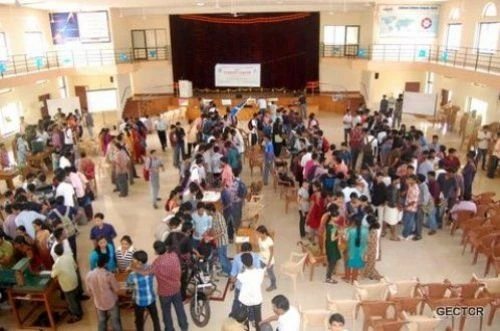
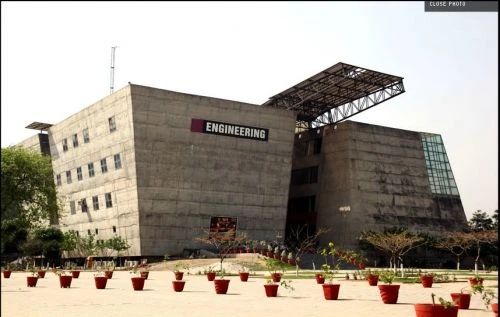

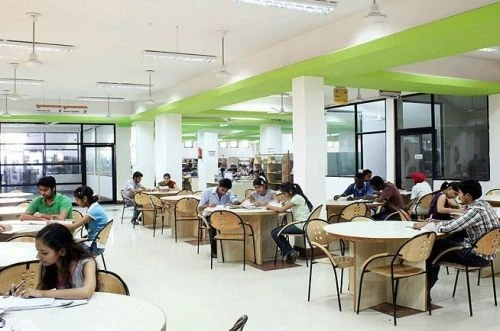

In this preview: 5 photos · 0 videos
The highest official package for 2023 was INR 32 LPA. The average package typically ranges between INR 7 LPA to INR 7.75 LPA. For the 2024 batch, the median package for undergraduate students was INR 5.20 LPA, and for postgraduate students, it was INR 6.00 LPA. It's important to note that student reviews often suggest a wider range for average packages and that placement percentages vary by branch.
For B.Tech programs, admissions are based on KEAM (Kerala Engineering Entrance Examination) or JEE Main ranks. For B.Arch, you need a valid KEAM or NATA score. In the KEAM 2025 counseling (General Category), the Round 1 closing rank for B.Tech in Computer Science Engineering was 670. For B.Arch, the overall rank range in Round 1 was 91-833.
Annual tuition fees are highly subsidized. For B.Tech, they range from approximately ₹32,900 to ₹81,880. M.Tech fees are between ₹14,000 and ₹20,940, and B.Arch is about ₹1.02 Lakhs per year. The college offers scholarships, primarily the state-government's eGrantz Scholarship, for eligible students.
The 75-acre campus features separate hostels for boys and girls, well-equipped departmental laboratories, a central library with digital resources, and extensive sports facilities including grounds and a gym. Campus-wide Wi-Fi, a cafeteria, an on-campus bank with ATM, a medical clinic, and college bus transport are also available.
Students consistently praise the vibrant, ragging-free campus life with active clubs and fests like Dyuthi. Faculty are generally regarded as helpful and qualified. On placements, while the college reports high figures, student reviews indicate a more varied reality, with placement rates often between 60-80% and a strong skew towards IT sector jobs over core engineering roles.
Share what future students should know about GECT.
Student voices are not rewritten by colleges. We remove spam and abuse.
Wider admission question? Community PulseWhat should future students know?
Tell us which course you're considering. We'll help you work out the next step.
Get instant Partner access after mobile verification. Your public edits are reviewed before they go live.
Claim this college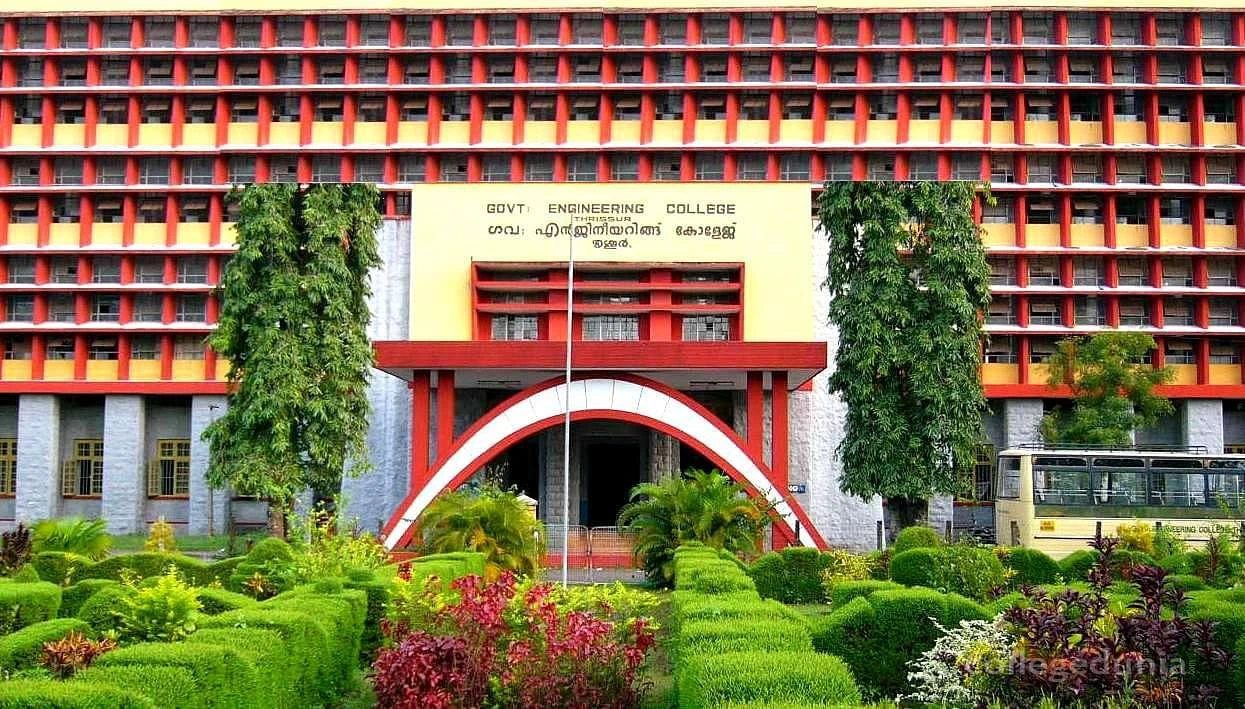

 Auditorium
 Cafeteria
 Computer Labs
 Gym
Gym Hostel
 Medical
 Science Labs
 Sports Complex
 Study Library