Loading Admission Guardian content
Loading Admission Guardian content
Selected ranking categories, with the recorded year beside each result. Open all records for the complete history.
20 published records · Lower numeric ranks are stronger
NIRF
Medical
#252020
Outlook
Medical · public
#92024
IIRF
Medical
#182023
Indiatoday
Medical
#142023
The Week
Medical
#142022
Find a program, read its fee details and explore the admission requirements.
Summary of the programs shown below. Fee periods can differ by program. Check the note beside each amount before comparing costs.
| Course | Stream | Fees |
|---|---|---|
| Bachelor of Science [B.Sc] | Paramedical | 9500 |
| M.B.B.S. | Medical | 24979 |
| Master of Philosophy [M.Phil] | Science | 26054 |
| General Nursing and Midwifery [GNM] | Paramedical | 40000 |
| Bachelor of Dental Surgery [BDS] | Dental | 184690 |
Specializations
Eligibility: 10+2
All accepted exams
Eligibility: 10+2 with 50% + NEET
Specializations
Eligibility: Post Graduation
3 exams with cutoff data available - showing recent entries
Government Medical College and Hospital in Chandigarh’s Sector 32 is a study in contrasts. It’s a relatively young institution, founded in 1991, that has muscled its way into the national conversation by leveraging its prime location and massive patient load. With an NIRF ranking that’s inching up—#34 in 2025 from #35 the year before—and an internship stipend that rivals AIIMS, it offers a compelling, high-pressure government medical education without the anchor of a mandatory rural bond. That last point is a big deal. You get the subsidized fees and rigorous training of a state college, but you’re not locked into a service commitment afterward. The trade-off? A schedule students describe as brutal, set against the backdrop of a campus where gleaming new trauma centers coexist with hostel blocks that feel like government offices from another era.
GMCH runs on the Panjab University academic calendar, and its heart is the MBBS program. The intake here was bumped up to 150 seats in 2019, which is a decent size. The program is split into professional years, not semesters, and the grading is strict—you need 50% in both theory and practicals to pass. It’s old-school that way.
Beyond MBBS, they offer a B.Sc. in Nursing (35 seats) and several paramedical courses like Medical Lab Technology and Optometry. The postgraduate side is where the real depth is, with about 155 MD/MS seats across specializations. Anaesthesiology has a hefty 20 seats, while Orthopaedics offers 9. The faculty roster, around 177 strong, is a point of pride. A high percentage hold MD/MS or PhDs from institutes like AIIMS and PGIMER. They’re not just teaching; the college is part of the Chandigarh Region Innovation and Knowledge Cluster (CRIKC), collaborating with IMTech and IISER, and holds an annual "Research Day" to spotlight high-impact publications. The academic culture, by all accounts, is intense and focused on volume—both of knowledge and patients.
Let’s be clear: medical colleges don’t have placements in the corporate sense. Success is measured differently—by the quality of your compulsory internship and, crucially, your conversion into a postgraduate seat or a senior residency.
On that front, GMCH posts strong numbers. The median package for its 3-year postgraduate programs, as reported to NIRF, rose from ₹14.50 LPA in 2023 to ₹15.60 LPA in 2024. That’s a solid, tangible figure for a government college. The internship stipend is a major highlight, sitting at ₹30,000-₹31,000 per month for 2024-25. That’s top-tier and a significant financial relief during that rotatory year.
The college claims a PG seat conversion rate of around 92% within a year or two of internship. That’s a promising statistic, though it encompasses seats secured anywhere in India, not just at GMCH. Where do graduates end up? A mix. Many take up senior residencies at GMCH itself or other government hospitals in Punjab, Haryana, and Chandigarh, where salaries can range from ₹1.1 to ₹1.5 lakh per month. Others join private hospital chains like Fortis, Max, and Apollo. The clinical exposure here is the real recruiter; it builds a resume that holds weight.
This is where the government-college advantage hits hardest. The annual tuition fee for the MBBS program is remarkably low, between ₹25,000 and ₹30,000. Over the entire 4.5-year course, you’re looking at a total tuition cost of roughly ₹1.2 to ₹1.5 lakhs. When you stack that against private medical colleges charging tens of lakhs per year, the value proposition is stark.
Hostel fees add another ₹15,000 to ₹20,000 annually, with mess charges running ₹2,500 to ₹3,500 per month. Throw in another ₹5,000-₹10,000 for library, exam, and development fees, and the total annual cost for a hostelite still remains astonishingly manageable. Scholarships are available for SC/ST/OBC and merit-cum-means categories, administered through the Chandigarh Administration and central government portals. The financial model here is built for accessibility.
Admission is a gateway guarded by national and state-level exams. For MBBS, it’s NEET UG, full stop. The cutoffs are competitive and tell the story of its rising stature. In the 2024 All India Quota (AIQ) Round 1, the closing rank for the General category was AIR 778. For OBC it was AIR 1754, EWS was AIR 1770, and for SC it was AIR 10357.
The selection process has a key twist. Only 15% of seats are filled through the AIQ counseling conducted by the Medical Counseling Committee (MCC). A dominant 85% are reserved for the UT Chandigarh Pool. This quota is strictly for students who completed their 10th, 11th, and 12th standard schooling from recognized institutions within the Union Territory of Chandigarh. These seats are filled through GMCH’s own counseling. There’s also an NRI quota of 9 seats for MBBS.
For MD/MS, the ticket is NEET PG. For B.Sc. Nursing and Paramedical courses, GMCH conducts its own entrance test, the GMCH Combined Entrance Test (GCET).
The 36-acre campus in Sector 32 is a microcosm of Chandigarh itself—planned, functional, and a bit uneven in its upkeep. The crown jewel is the attached 1,000+ bed tertiary care hospital, a beehive of activity that serves as the students’ primary classroom. A new 259-bed Trauma Center was added in August 2025, modernizing emergency care facilities.
The infrastructure for learning is robust. The library is a 24/7, air-conditioned sanctuary with over 21,000 books and a digital section. Labs for Anatomy, Pathology, and Microbiology are well-equipped with state-of-the-art gear. High-speed Wi-Fi covers the academic blocks and library, though it gets patchy in the older hostel wings.
Speaking of hostels, they’re separate for boys and girls. Reviews are mixed. The rooms are reportedly spacious, and seniors often get single-seaters, which is a luxury. But the buildings themselves are often described as old and institutional—"like government offices." The mess food gets an average to good rating (around 3.5/5), with a weekly menu that includes paneer, chicken, and fish.
Student life is disciplined and revolves around academics. There are sports facilities for cricket, football, basketball, and volleyball, plus a gymnasium. The social calendar peaks with fests like Euphoria (inter-college) and Plexus (intra-college), but students frequently wish these events were more frequent, especially compared to the buzzing fest culture at non-medical colleges in the city.
Scouring forums like Quora, CollegeDunia, and Shiksha paints a consistent picture of high-pressure, high-reward training.
The positives are powerful. The clinical exposure is unanimously praised. The patient load is massive and diverse. "You see cases here that you won't see in private colleges," is a common refrain. The location in Chandigarh is a huge perk—safe, clean, and with a great quality of life. The internship stipend is celebrated as one of the best in the country. And the senior-junior dynamic is largely described as supportive, especially when it comes to navigating PG preparation.
But the grind is real. The academic pressure is a constant theme. Schedules are packed with 9-to-5 classes followed by hospital postings. Internal exams are known to be deliberately tough. The administration can be slow and bureaucratic, making simple document processes a hassle. While the hospital is modern, parts of the hostel infrastructure feel dated and in need of a refresh. Social life exists, but for many, it feels secondary to the relentless pace of medical training.
GMCH Chandigarh is a strategic choice. It’s best for the student who prioritizes supreme clinical training and financial pragmatism over campus luxury or a relaxed college life. If you qualify for the UT Pool and want a top-tier government education in a premier city without a rural bond, it’s arguably one of the best options in North India. The high stipend, strong PG conversion rate, and Panjab University affiliation are significant assets.
But you have to want the grind. The workload is intense, the infrastructure is functional but not flashy, and the administration moves at a government pace. If you’re looking for a vibrant, holistic "campus experience" with endless fests, this isn’t it. Your life will be the hospital, the library, and your hostel room. For a driven student aiming for a solid postgraduate future without a mountain of debt, GMCH delivers exceptional value. For someone else, the trade-offs might be too steep. It’s a workhorse, not a showhorse, and it’s built for those who see the difference.
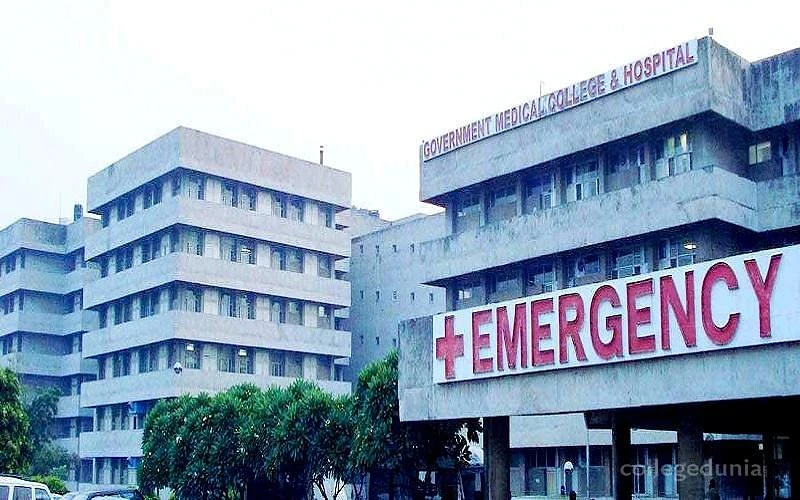
In this preview: 1 photo · 0 videos
GMCH Chandigarh is generally preferred by many students due to its location in the capital city, its higher NIRF ranking, and its proximity to PGIMER, which provides strong academic synergy and exposure.
The UT Pool is the 85% state quota reserved specifically for students who have completed their schooling (10th, 11th, and 12th grades) from recognized schools within the Union Territory of Chandigarh.
No, currently there is no mandatory rural service bond for MBBS graduates from GMCH Chandigarh, which is considered a significant advantage for students planning their careers.
Hostel life at GMCH 32 is known to be safe and disciplined. The rooms are decent, though the buildings are older. The 24/7 library serves as the central hub for student academic life.
As of the 2024-2025 period, the internship stipend at GMCH is approximately ₹30,000 to ₹31,000 per month, which ranks among the highest offered by government medical colleges in India.
Share what future students should know about GMCH.
Student voices are not rewritten by colleges. We remove spam and abuse.
Wider admission question? Community PulseWhat should future students know?
Tell us which course you're considering. We'll help you work out the next step.
Get instant Partner access after mobile verification. Your public edits are reviewed before they go live.
Claim this college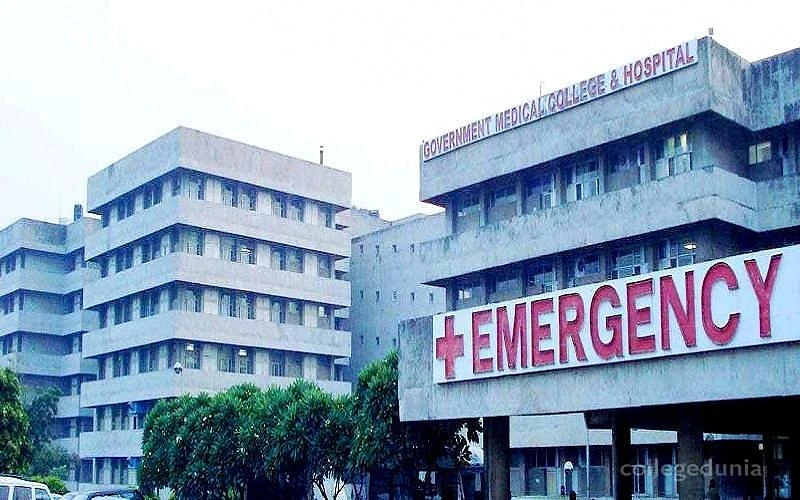
 Auditorium
 Cafeteria
 Hostel
 Medical
 Science Labs
 Sports Complex
 Study Library