Loading Admission Guardian content
Loading Admission Guardian content

Provisional score based on available data. It may change as more information is verified.
Find a program, read its fee details and explore the admission requirements.
Summary of the programs shown below. Programs record different fee periods. Compare the individual amounts and their notes below.
| Course | Stream | Fees |
|---|---|---|
| Bachelor of Science [B.Sc] (Nursing) | Paramedical | 3000 |
| M.B.B.S. | Medical | 18073 |
| Doctorate of Medicine [MD] | Medical | 90000 |
| Master of Chirurgiae [M.Ch] | Medical | 90000 |
| Diploma in Nursing | Medical |
Specializations
Eligibility: 10+2
All accepted exams
Eligibility: 10+2 with 50% + NEET
Specializations
All accepted exams
Eligibility: Graduation
Specializations
All accepted exams
Eligibility: Post Graduation
Specializations
Eligibility: 10+2
3 exams with cutoff data available - showing recent entries
If you're looking for a government medical college in Tamil Nadu where the fees are almost unbelievably low and the clinical exposure is vast, Govt Mohan Kumaramangalam Medical College (GMKMC) in Salem is a name that consistently comes up. Established in 1986 by upgrading an existing district hospital, its foundation is a century-old hospital, which means you're walking into a system with deep roots and a massive patient load. That's the real draw here. You're not paying much—the entire MBBS degree costs less than a single semester at many private colleges—but you're getting access to a 150-acre campus attached to a major government hospital serving Salem and neighboring districts. The trade-offs, as with any old government institution, are part of the package.
GMKMC runs the full spectrum of medical education, from diplomas to super-specialties. The MBBS program, with an intake of 100, is the cornerstone. The five-and-a-half-year course includes four university exams and a compulsory rotatory internship. But the college's strength is its postgraduate depth. They offer a wide array of MD and MS programs—from General Medicine and Pediatrics to Radiology and Psychiatry. Where it gets serious is at the super-specialty level with DM programs in Cardiology, Neurology, and Nephrology, and MCh in fields like Neurosurgery and Plastic Surgery. Most of these have just 2 seats, making them highly competitive. For nursing and allied health, there's BSc Nursing, Post Basic BSc, GNM, and BSc programs in Cardiac Tech, OT Technology, and others. The academic culture is described as rigorous. One review bluntly mentioned 18 students failing a final year exam, which tells you they don't just pass everyone through. The faculty count is 323, and with only 100 MBBS students per batch, the student-to-teacher ratio is favorable. Most faculty are practicing doctors in the attached hospital, which means lectures are often grounded in real, recent cases.
Let's be clear: you don't get "campus placements" here in the corporate sense. No one from Amazon is coming to recruit surgeons. Your "placement" is your own career path after graduation. The official NIRF data gives the clearest picture of outcomes. In 2023, the median package for MBBS graduates was ₹9.3 LPA. For postgraduate (MD/MS) graduates, it was ₹15.6 LPA. Out of 84 PG students, 78 were placed in further programs or positions. These numbers reflect what most graduates do: enter government medical service through state commissions, join private hospitals, or set up their own practice after the mandatory internship. The high PG placement percentage suggests that a significant number of their own graduates secure seats for further specialization, often within the same institute. The path is traditional and self-driven—you use the affordable degree and the heavy clinical workload as a launchpad. It's a system that rewards initiative.
This is where GMKMC stops the conversation for many budget-conscious families. The fees are a fraction of private college costs. For the 2025-2026 batch, the total tuition fee for the entire 5.5-year MBBS program is ₹30,000. Yes, for the whole degree. The first-year fee, including caution deposit and other charges, is about ₹18,073. That's less than many people's monthly rent. Postgraduate fees are higher but still modest: around ₹90,000 per year for MD/MS programs, totaling about ₹1.7-2.2 lakhs for three years. DM/MCh super-specialty programs also cost about ₹90,000 annually. Hostel fees are separate and quoted at around ₹36,000, with some mentions of monthly dues. Scholarships are available for meritorious students and for those whose family income is below ₹2.5 lakhs per annum, with about 10 students typically availing them. The financial accessibility is, without doubt, the college's most powerful feature.
Admission is strictly through entrance exams. For MBBS, it's NEET-UG. Seats are split: 85% are filled through Tamil Nadu's state quota counseling (Directorate of Medical Education), and 15% through the All India Quota (Medical Counselling Committee). The cutoffs give you a sense of the competition. For NEET-UG 2025 (All India Quota), the closing rank for the General category was around 25,884. For the 2024 cycle, Round 1 closed at rank 5,968 for General category candidates. OBC ranks have hovered around 7,749-17,778, and EWS around 20,029-28,224 in recent years. SC and ST category ranks go significantly higher. For MD/MS (NEET-PG), ranks vary wildly by specialty. For super-specialties (DM/MCh via NEET-SS), the 2025 Round 1 ranks for General category ranged from 47 to 4,149. For nursing programs, the Tamil Nadu Nursing CET is the gateway. The process is bureaucratic but transparent: clear the exam, register for the relevant counseling, get your documents verified, and secure your seat based on your rank.
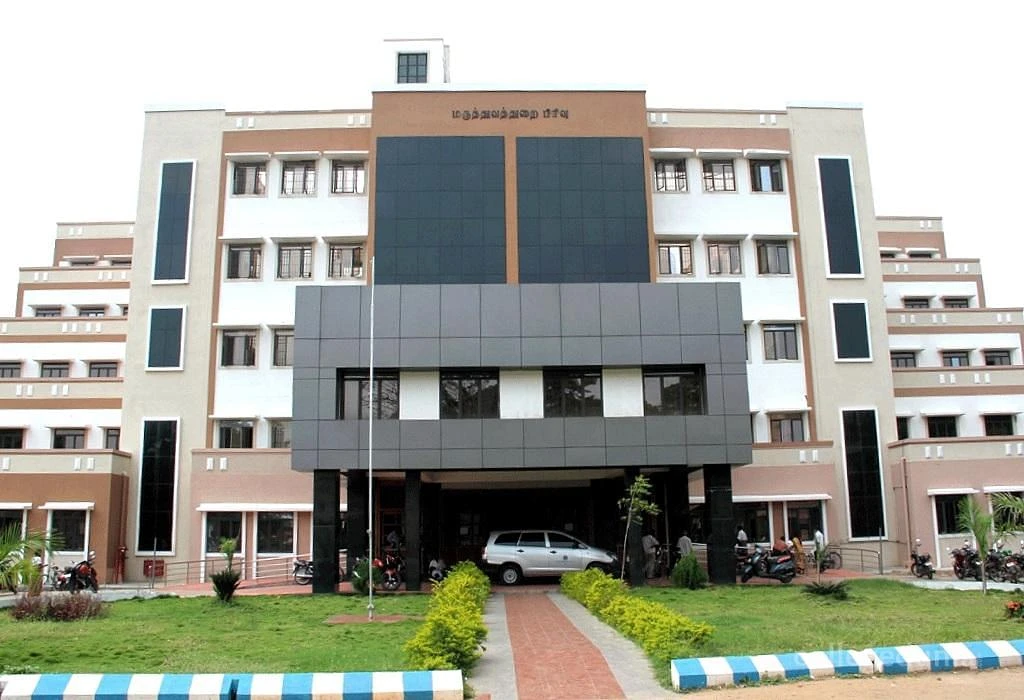
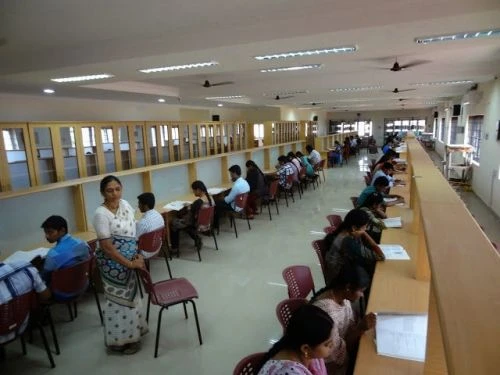
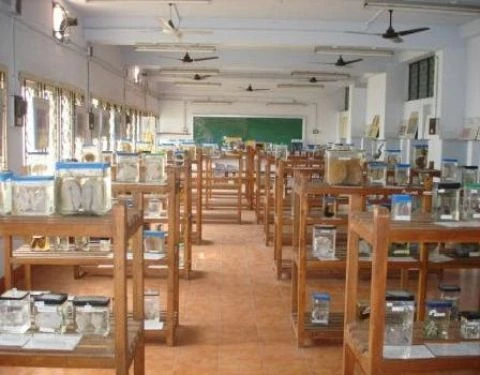
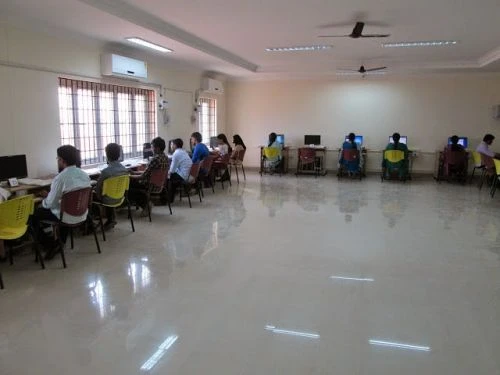
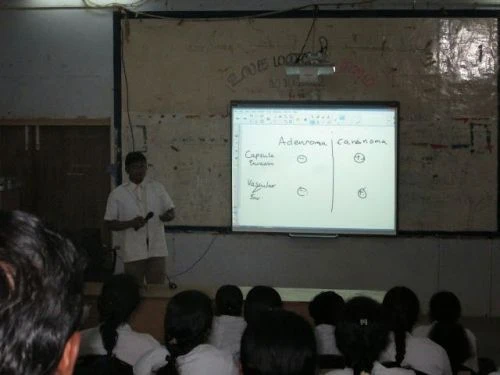
The campus is spread over a reported 150 acres, integrating the college with the Government Mohan Kumaramangalam Medical College Hospital. Infrastructure is a mix of old and new. The central library is a highlight—air-conditioned, with over 14,000 books, 37 journals, and digital access. A new library is under construction. There are separate hostels for men and women; the women's hostel has 79 rooms (158 capacity), and the men's has 106 rooms. Reviews call the hostel atmosphere peaceful and conducive to studying. Anti-ragging measures are in place. The cafeteria gets mixed mentions; one review said it's "mostly closed throughout the year," so students often rely on the hostel mess or outside options. An 'Amma Canteen' and a staff canteen also exist. Facilities include a gym, a 350-seat auditorium, modern lecture halls, and reliable power backup. College buses ferry students to hospital postings. It's a functional, no-frills government campus. Don't expect a vibrant social calendar with frequent fests; the focus here is overwhelmingly academic and clinical.
Talking to students and scanning reviews paints a consistent picture. The biggest praise is reserved for the faculty. They're described as highly qualified, approachable, and supportive, bringing real-world hospital experience into the classroom. The affordable fees are, of course, the universal applause point. The alumni network is also noted to be active and helpful. On the flip side, the academic pressure is real. The curriculum is tough, and failure rates in university exams are not trivial. Some students note that the faculty, being busy practicing doctors, can sometimes be stressed or stretched thin. The complaint about "no placements" appears in some reviews, but that's a misunderstanding of the medical education model—career progression here is self-directed, not company-recruited. Infrastructure is generally deemed good for a government college, though the comment about the cafeteria being frequently closed is a recurring practical grievance. It's a place for resilient, self-motivated students who value clinical learning and financial sense over luxury.
GMKMC Salem is an excellent, almost default choice for a Tamil Nadu student with a strong NEET rank and a limited budget. Its value proposition is unmatched: a reputable MBBS degree for a total tuition fee of ₹30,000, coupled with the immense clinical exposure of a busy government hospital. You're paying for education, not infrastructure glamour. It's best for students who are serious about medicine, can handle academic rigor, and are proactive in shaping their own career path after graduation. If you want a cushy campus life, extensive extracurriculars, and hand-held placement services, look elsewhere. But if you want to become a doctor with minimal financial debt and maximum practical experience, GMKMC delivers exactly that. Just be ready to work hard, and maybe pack your own lunch.
In this preview: 5 photos · 0 videos
Government Mohan Kumaramangalam Medical College (GMKMC) Salem offers undergraduate and postgraduate medical programs. The primary course is the MBBS program. The college also offers various MD and MS programs for postgraduate specialization.
Admission to the MBBS program at GMKMC Salem is based on national and state-level entrance examinations. Candidates must qualify through the NEET-UG exam and participate in the centralized counseling process conducted by the relevant authorities to secure a seat.
As a government medical college, GMKMC Salem offers the MBBS program at a subsidized fee structure. The exact fee is determined by the state government and is subject to change, but it is significantly lower than private medical college fees.
Yes, Government Mohan Kumaramangalam Medical College (GMKMC) Salem is a government medical college. It is owned and operated by the state government, which typically results in lower tuition fees and adherence to government-mandated admission processes.
Postgraduate (MD/MS) students from GMKMC Salem receive competitive salary packages during placements. The median package reflects the strong demand for specialized medical professionals, though specific figures can vary by specialization and recruiting institution.
Share what future students should know about GMKMC.
Student voices are not rewritten by colleges. We remove spam and abuse.
Wider admission question? Community PulseWhat should future students know?
Tell us which course you're considering. We'll help you work out the next step.
Get instant Partner access after mobile verification. Your public edits are reviewed before they go live.
Claim this college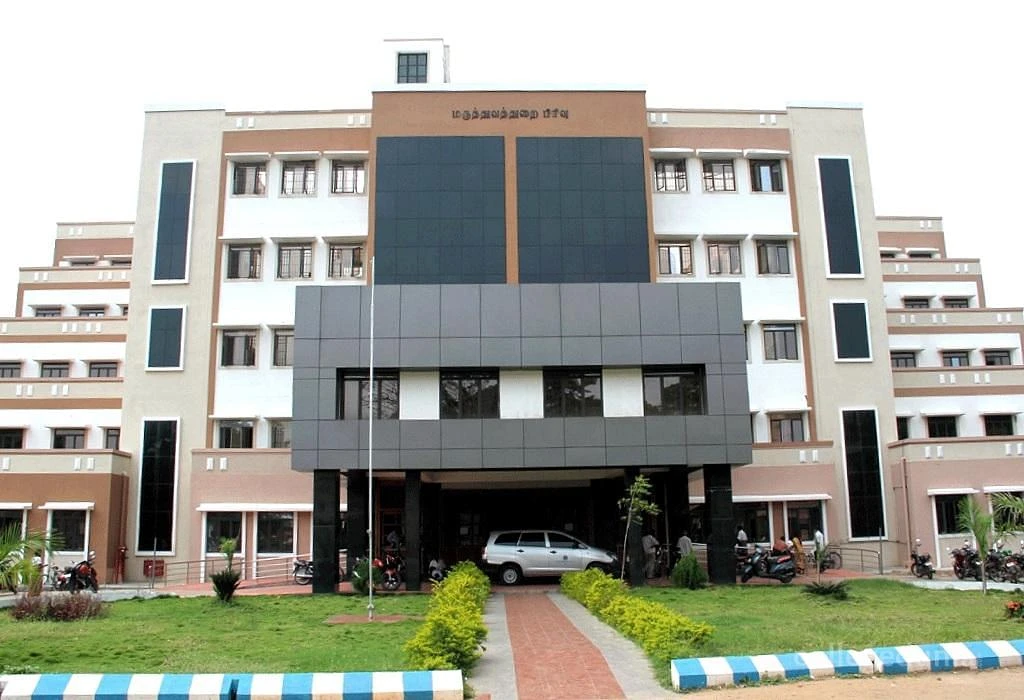
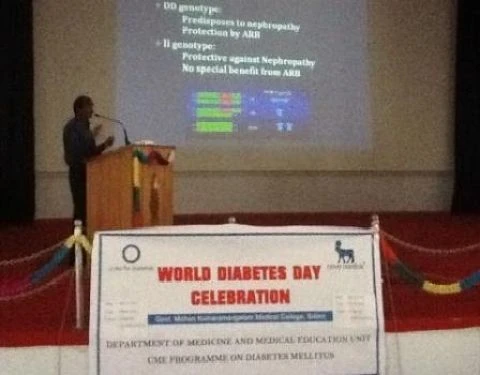
 Auditorium
 Cafeteria
 Hostel
 Medical
 Sports Complex
 Study Library