Loading Admission Guardian content
Loading Admission Guardian content

Provisional score based on available data. It may change as more information is verified.
Selected ranking categories, with the recorded year beside each result. Open all records for the complete history.
4 published records · Lower numeric ranks are stronger
Outlook
Engineering · private
#1242025
Find a program, read its fee details and explore the admission requirements.
Summary of the programs shown below. First-year fee. Check the note beside each amount for inclusions and exclusions.
| Course | Stream | Fees |
|---|---|---|
| Bachelor of Technology [B.Tech] | Engineering | 85000 |
| Bachelor of Technology [B.Tech] {Lateral} | Engineering | 85000 |
| Diploma in Engineering (Polytechnic) | Engineering |
Specializations
All accepted exams
Eligibility: 10+2 with 45% + WBJEE
Specializations
All accepted exams
Eligibility: 10+3 with 45% + WBJEE
Specializations
Eligibility: 10th with 35% + JEXPO
3 exams with cutoff data available
 63 Moons
 Axis Bank
 Ericsson India Pvt Ltd
 Genpact
 Hewlett-Packard (HP)
 Hexaware Technologies
 IBM India Pvt. Ltd.
 ICICI Prudential
 ITC INFOTECH
 Mphasis
 Persistent Systems Limited
 Phoenix Maritime Service Pvt. Ltd
 Pinnacle Infotech Solutions
 TCS
TCS Tech Mahindra
 Wipro Technologies
 Zensar
 Zycus
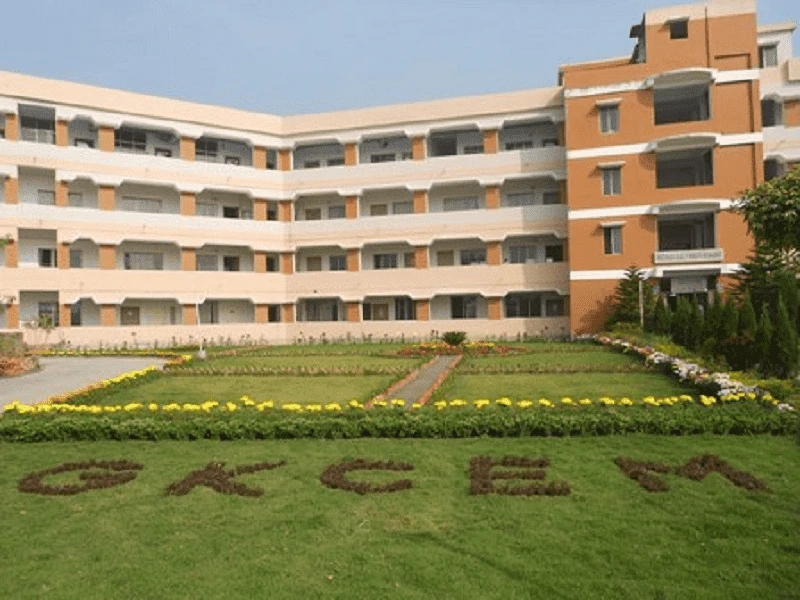
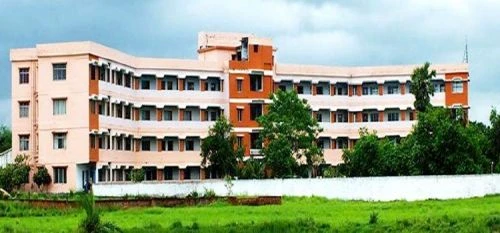
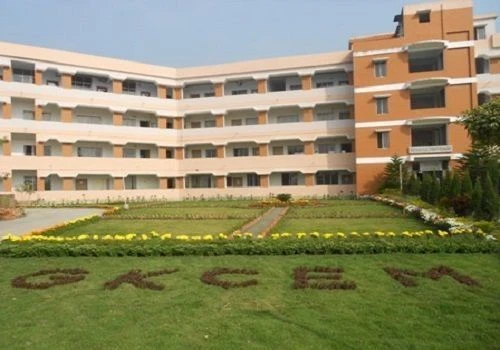
ZycusGreater Kolkata College of Engineering & Management sits on a 10.5-acre green campus in Baruipur, a solid 45-minute drive from central Kolkata. Established in 2008 under the expansive JIS Group umbrella, it’s a classic example of a private, tier-3 engineering college that leverages its parent organization's placement network to punch above its weight. For students with WBJEE ranks in the 90,000-110,000 range, GKCEM represents a pragmatic choice—a place where the promise of a JIS-backed job drive meets the reality of a remote location and functional, if unspectacular, infrastructure. It’s not a brand-name institute, but for many in West Bengal, it’s a viable pathway to a B.Tech degree.
GKCEM sticks to the basics, offering B.Tech programs in five conventional disciplines. The intake numbers tell you where the focus is: Computer Science & Engineering, Mechanical, and Electrical each take 90 students, while Civil takes 60 and Electronics & Communication Engineering (ECE) has a smaller batch of 30. They also run three-year Diploma programs in Mechanical, Electrical, Civil, and Computer Science & Technology, affiliated with the WBSCTVESD.
The academic rhythm follows the MAKAUT semester calendar. In terms of teaching, the college promotes a "Flipped Learning" model and uses digital classrooms. But the real academic character, according to student consensus, is defined by the faculty. Across reviews, the teaching staff is consistently described as approachable and supportive. Key department heads like Dr. Pijush Dutta (CSE) and Dr. Anubrata Mondal (EE) hold PhDs, which is a positive signal for a college at this level. It’s a teaching-focused environment where faculty are noted for helping with placement prep, not a research hub. The industry tie-ups and mandatory final-year internships are facilitated largely through the broader JIS Group network.
This is where the JIS Group advantage is most aggressively marketed—and it does have tangible benefits. GKCEM students get pooled into the group's centralized placement drives, which bring a roster of familiar IT service companies to campus. The official numbers for 2024 cite a highest package of ₹11.13 LPA (with some unverified student claims of ₹16 LPA) and an average of ₹4.82 LPA. The NIRF 2023 report shows a median package of ₹3.70 LPA, which often aligns closer to the typical student experience.
The recruiter list is standard for tier-3 colleges: TCS, Cognizant, Wipro, Infosys, IBM, Capgemini, and Tech Mahindra are the regulars. You’ll also see names like Amazon, Pinnacle Infotech, and Genpact.
Now, the reality check students provide is crucial. The official placement percentage is claimed to be between 82-90%, but alumni on review platforms suggest the on-ground figure is closer to 60-70% for core branches, with CSE naturally faring better. They also caution that while the highest package makes the brochure, a significant number of offers cluster in the ₹2.5 to ₹3.5 LPA range. Recent reviews note that the post-pandemic tech slowdown has impacted placement percentages. The takeaway? The JIS pipeline provides genuine opportunities, especially in mass recruiting, but managing expectations on salary and certainty of an offer is wise.
The fee structure is straightforward and positioned at the more affordable end of the private college spectrum. The total tuition for the four-year B.Tech program is approximately ₹4.02 lakhs. The first semester is higher (around ₹70,794) due to one-time admission and caution fees, with subsequent semesters costing between ₹44,000 to ₹48,000. Diploma total tuition is about ₹54,000.
On-campus hostel fees range from ₹30,000 to ₹50,000 per year, depending on whether you opt for a triple, double, or single occupancy room.
For financial aid, West Bengal state scholarships are actively supported. The Swami Vivekananda Merit-cum-Means Scholarship (SVMCM) can provide up to ₹60,000 per year for eligible students. The JIS Group also offers its own merit-based scholarships, and the college facilitates applications for the West Bengal Student Credit Card scheme. It’s worth checking the official GKCEM website for the latest scholarship notices.
Admission to the B.Tech programs is primarily through the West Bengal Joint Entrance Examination (WBJEE). JEE Main scores are also accepted. For lateral entry into the second year, the Joint Entrance for Lateral Entry (JELET) is the gateway. Diploma admissions happen via JEXPO.
The cutoffs give you a clear picture of the college's positioning. For the 2024 WBJEE Round 1 for the General category:
Selection is done through the centralized counseling conducted by the WBJEEB (West Bengal Joint Entrance Examinations Board). Like most private colleges, GKCEM also has a management quota for direct admission to fill vacant seats, subject to meeting the basic eligibility of 45% marks in PCM in Class 12.
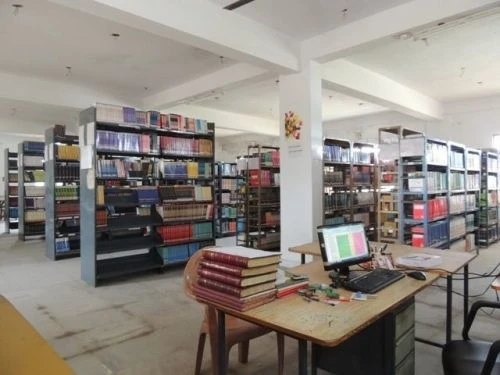
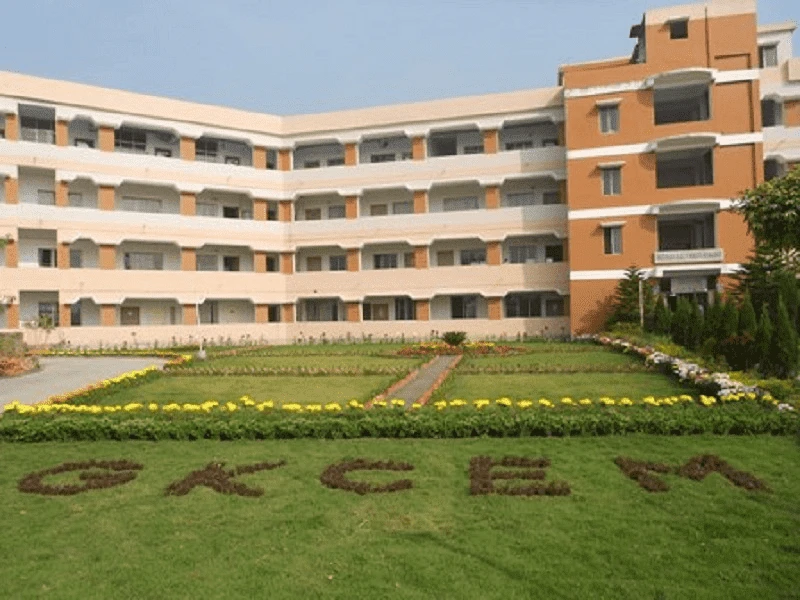
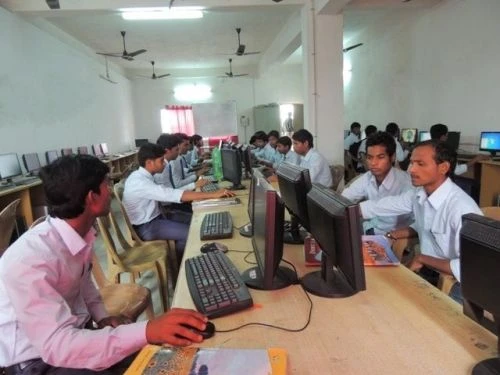
The campus is green and spacious, which students appreciate. The infrastructure is functional. There are over 20 technical labs, including specialized facilities like a CNC Lathe machine lab and a Microwave Antenna Lab. The library houses over 26,000 volumes, though students frequently note that many books are outdated—a common grievance in recent reviews. The campus is Wi-Fi enabled, with reports of "average" speeds. A significant point of discomfort highlighted by students is that most classrooms and computer labs lack air conditioning, which can be challenging in Kolkata's climate.
Hostel facilities are on-campus, separate for boys and girls, with a combined capacity for about 100 students. Reviews rate them around 3.5 out of 5—decent, not luxurious. The canteen provides four meals a day for hostellers, described as "normal" or "average." For sports, there's a large playground for football and cricket, plus an indoor games room.
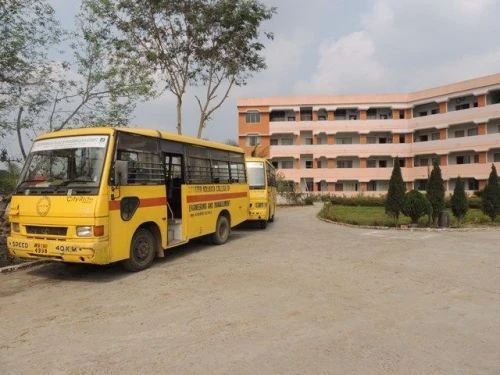
The location is GKCEM's most defining characteristic—and its biggest practical hurdle. Baruipur is remote. The nearest major hub is the Kavi Nazrul Metro station at Garia, from which you need a bus or auto. The college operates a shuttle service from Baruipur Railway Station (about 6 km away), which is essential. Students mention that if you miss the shuttle, it's an 8-10 minute walk to the main road, with very few shops or amenities nearby. Social life is largely campus-centric.
Synthesizing feedback from CollegeDunia, Shiksha, and other portals, a clear consensus emerges.
The positives are strong: Faculty support is the top praise. Teachers are repeatedly called friendly, helpful, and invested in student success. The JIS Group advantage provides a sense of security regarding placements that standalone colleges can't match. The green, peaceful campus is also a well-liked feature.
The negatives are practical and persistent. The library is criticized for outdated collections, with books often a decade old. The lack of air conditioning in learning spaces is a major pain point. The remote location is consistently cited as an inconvenience, making students reliant on college transport. Finally, there's a clear disconnect between marketed placement stats and ground reality; students advise peers to look past the highest package figures and prepare for a competitive drive where mid-range offers are more common.
GKCEM is a pragmatic choice with a specific audience. It's worth serious consideration if you have a WBJEE rank between 90,000 and 110,000 and are prioritizing the safety net of the JIS Group's placement network over location and premium infrastructure. The supportive faculty and peaceful campus are genuine benefits. It's a particularly viable option for CSE and ECE aspirants where placement activity is highest.
However, look elsewhere if you crave an urban campus life, rely on city amenities, or expect state-of-the-art facilities and libraries. The remote location demands adjustment. Ultimately, GKCEM delivers a standard B.Tech degree with a functional placement pathway, especially for IT services roles. It won't open doors to elite recruiters, but for a student with modest ranks and a focus on job readiness, it fulfills a clear need. Just go in with eyes open about the trade-offs.
In this preview: 5 photos · 0 videos
GKCEM is considered a decent tier-3 choice for CSE. The faculty is supportive, and the CSE department typically records the highest placement rate among the college's programs. However, students should not expect on-campus recruitment from major product-based companies offering top-tier salary packages.
GKCEM is generally more affordable than flagship JIS Group colleges like Narula Institute of Technology (NIT) or Guru Nanak Institute of Technology (GNIT). A key difference is its location, as GKCEM is situated further from the main city center of Kolkata.
Yes, the college operates a shuttle bus service for students. This service is considered essential and includes pick-up points from Baruipur railway station and other designated locations, helping to mitigate the challenges of its relatively remote location.
Students consistently report a ragging-free environment at GKCEM. The college maintains a strict anti-ragging cell to enforce this policy and ensure a safe and welcoming atmosphere for new students.
Yes, direct admission is possible through the Management Quota. To be eligible, candidates must meet the basic academic requirement of securing at least 45% in Physics, Chemistry, and Mathematics (PCM) in their Class 12 board examinations.
Share what future students should know about GKCEM.
Student voices are not rewritten by colleges. We remove spam and abuse.
Wider admission question? Community PulseWhat should future students know?
Tell us which course you're considering. We'll help you work out the next step.
Get instant Partner access after mobile verification. Your public edits are reviewed before they go live.
Claim this college
 Auditorium
 Cafeteria
 Computer Labs
 Hostel
 Medical
 Science Labs
 Sports Complex
 Study Library