Loading Admission Guardian content
Loading Admission Guardian content
Provisional score based on available data. It may change as more information is verified.
Selected ranking categories, with the recorded year beside each result. Open all records for the complete history.
4 published records · Lower numeric ranks are stronger
NIRF
Medical
#372022
Find a program, read its fee details and explore the admission requirements.
Summary of the programs shown below. First-year fee. Check the note beside each amount for inclusions and exclusions.
| Course | Stream | Fees |
|---|---|---|
| Post Graduate Diploma in Medical Laboratory Technology | Medical | 23500 |
| Master of Science [M.Sc] | Science | 27000 |
| Certificate Course in Essentials of Palliative Care | Medical | |
| DM [Medical Oncology] | Medical | |
| Doctorate of Medicine [MD] | Medical |
Specializations
Eligibility: Graduation with 50%
Specializations
Eligibility: Graduation with 60%
Specializations
Eligibility: 10+2
Specializations
Eligibility: Post Graduation
Specializations
Eligibility: Graduation
1 exam with cutoff data available
If you want to become an oncologist in India, you don't just study the disease. You live inside a hospital that treats it. That's the reality at the Gujarat Cancer and Research Institute (GCRI) in Ahmedabad. Established in 1972, this government-aided Regional Cancer Centre (RCC) isn't a typical medical college with sprawling lawns. It's a 650-bed (expanding to 1000) super-specialty hospital where postgraduate training is woven into the relentless, high-volume work of treating cancer. Ranked 44th among medical colleges in the NIRF 2025 rankings, GCRI’s reputation is built on one thing: turning residents into battle-hardened clinicians through sheer volume of hands-on experience. The trade-off is a workload that can break you, but for those who endure, the clinical confidence is unmatched.
Forget undergraduate MBBS. GCRI is a postgraduate and super-specialty fortress. Its academic structure is laser-focused on oncology, with programs affiliated through B.J. Medical College and Gujarat University. The MD programs—in Radiotherapy, Anaesthesiology, Pathology, Radiodiagnosis, and Palliative Medicine—are the foundational pillars. Intakes are small, often in single digits, which creates an intense, apprenticeship-style learning environment.
The real draw, however, are the super-specialty DM and M.Ch courses. With 10 seats for DM Medical Oncology and 14 for M.Ch Surgical Oncology, these are among the most competitive oncology seats in the country. The institute also runs niche programs like M.Sc in Cancer Biology (32 seats) and Medical Physics (10 seats), along with a large Post Graduate Diploma in Medical Laboratory Technology (PGDMLT) intake of 50. Faculty expertise is deep, with stalwarts like Dr. Pankaj M. Shah shaping the institute's legacy, though a reported exodus of over 40 senior faculty in recent years has increased pressure on remaining staff. Academically, the culture is heavily clinical and research-oriented, with active collaborations, including an MoU with the Jiv Daya Foundation for pediatric oncology.
In a super-specialty hospital, 'placement' means your career path post-residency. And by that metric, GCRI's outcomes are solid. Effectively 100% of its MD, DM, and M.Ch graduates are absorbed into the healthcare system. They become senior residents at GCRI itself, join other government medical colleges, or move to major corporate chains like HCG, Apollo, and Zydus Hospitals. The median salary for these postgraduates, as per NIRF 2025 data, is about ₹1.70 Lakhs per month (₹20.4 LPA). That's a strong starting point for a specialist.
But there's a gap between the medical and non-medical tracks. For M.Sc and PGDMLT graduates, campus placement is less assured, with only 30–40% securing roles directly through the institute. Most find their own way into diagnostic labs, research centers, or pharmaceutical companies. The compulsory internship for medical programs comes with a stipend following Gujarat Government norms. The one significant catch is the service bond. Following state policy, super-specialty graduates typically face a one-year bond or a hefty penalty—reported to be around ₹40 Lakhs—if they choose to leave.
This is where the government-aided nature of GCRI shines. Fees are heavily subsidized, making it a financially accessible route to top-tier oncology training. The entire 3-year MD program is estimated to cost around ₹2.06 Lakhs total—a fraction of private college fees. For other courses, M.Sc Cancer Biology runs about ₹48,600 to ₹54,000 per year, and the PGDMLT diploma is roughly ₹23,500 annually.
The major variable cost is accommodation. On-campus hostel rent has a wide range, from ₹80,000 to a steep ₹2,50,000 per year depending on room type and AC facilities. Many students, seeking better food and amenities, opt for private PGs nearby. Financial aid is available through state schemes accessible via the Digital Gujarat portal, including the Post-Matric scholarship for SC/ST/OBC students and the Mukhyamantri Yuva Swavalamban Yojana (MYSY).
Admission is strictly through national entrance exams. For MD programs, you need a qualifying rank in NEET PG. For the coveted DM and M.Ch super-specialties, it's all about NEET SS. The 2024 cutoffs give a sense of the competition: the MD Radiotherapy seat had an All India Rank around 18,135 in NEET PG, while DM Medical Oncology required a NEET SS score around 280 for the general category. Seats are split 50-50 between All India Quota and State Quota.
For the non-medical M.Sc and PGDMLT programs, admission is merit-based through Gujarat University, often followed by a personal interview. Application windows for these courses typically open around May-June. The entire process, while centralized, can feel slow due to the administrative layers of a government-autonomous body.
Don't expect a conventional campus life. GCRI is a working hospital first. The infrastructure is a tale of two realities. The new Phase II building is state-of-the-art, expanding capacity to 1000 beds. The specialized oncology library, with over 2,400 books and digital journal access, is a key resource. As a resident, you have 24/7 access to world-class medical facilities—a perk not to be underestimated.
The older parts of the complex, including some wards and the hostels, show their age. Student reviews consistently rate hostel quality a 3 out of 5: safe, on-campus, and functional, but often described as crowded and dilapidated. The food is standard institutional fare, which is why many residents and students move to private accommodations like Stanza Living after their first year. Social life is what you make of it between grueling shifts. There's no "campus" in the traditional sense—your life is the hospital.
The student consensus paints a clear, uncompromising picture. The positives are powerful. The clinical exposure is described as "unmatched." Residents handle a massive patient volume and get hands-on surgical responsibility early, often more so than at some bigger-name institutes. "You learn by doing, not watching," is a common refrain. The stipend, post the April 2024 revision, is a huge financial relief and among the best in India. Research and conference participation are actively encouraged.
But the negatives are equally intense. The workload is brutal, with 12-14 hour days being the standard. It's the definition of a high-pressure, high-stakes environment. The reported faculty shortage has increased the burden on junior residents, sometimes creating a tense hierarchy. Administrative processes, from stipend releases to paperwork, are famously slow, bogged down by red tape. You trade a balanced life for accelerated clinical growth.
GCRI isn't for everyone. It's for the relentlessly dedicated medical graduate who prioritizes hands-on, surgical, and clinical oncology experience above all else—including work-life balance. If your goal is to emerge from your residency or super-specialty training as a confident, procedure-ready oncologist who has seen and done it all, GCRI is arguably one of the best places in India to do that. The subsidized fees and high stipend make it a smart financial choice.
But you should look elsewhere if you crave a prestigious "brand name" with lighter workloads or more polished infrastructure. The grind here is real, and the administrative hassles are a known frustration. For M.Sc and diploma students, the value is more nuanced; you're paying for proximity to a premier cancer center, but must be proactive in securing your own career path. In short, GCRI is a forge. It's demanding, sometimes harsh, but it produces exceptionally skilled clinicians.
For the most official and current information, always refer to the institute's website at www.cancerindia.org.
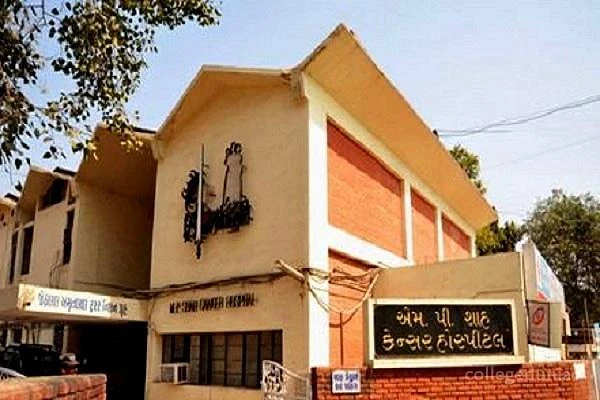
In this preview: 1 photo · 0 videos
While Tata Memorial Hospital (TMH) in Mumbai has a stronger brand name and research output, the Gujarat Cancer and Research Institute (GCRI) is noted for providing its M.Ch students with significantly more hands-on surgical experience during the course.
As of 2024, first-year MD residents at the Gujarat Cancer and Research Institute (GCRI) receive a stipend of approximately ₹1,00,800 per month.
Yes, GCRI enforces a service bond as per Gujarat Government policy. For super-specialty courses, this typically requires a one-year service commitment or payment of a significant penalty, which is currently around ₹40 Lakhs.
The on-campus hostel for girls at GCRI is considered safe, but the rooms are basic. Many students opt for private paying guest accommodations nearby, such as Stanza Living, which are preferred for better food options.
GCRI is a Government-aided autonomous institute, recognized as a Regional Cancer Centre. Consequently, its fee structure is subsidized and lower than that of private medical colleges.
Share what future students should know about GCRI.
Student voices are not rewritten by colleges. We remove spam and abuse.
Wider admission question? Community PulseWhat should future students know?
Tell us which course you're considering. We'll help you work out the next step.
Get instant Partner access after mobile verification. Your public edits are reviewed before they go live.
Claim this college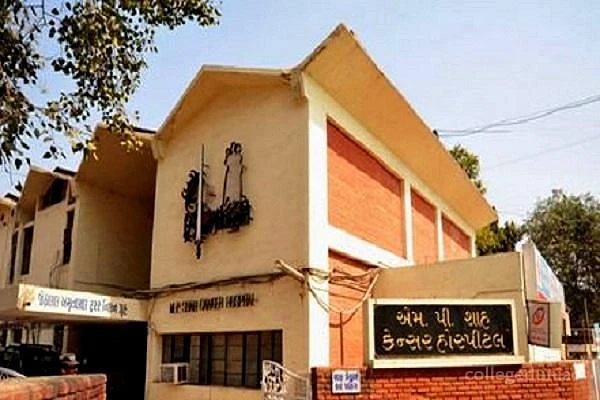
 Auditorium
 Cafeteria
 Computer Labs
 Gym
Gym Hostel
 Medical
 Science Labs
 Sports Complex
 Study Library