Loading Admission Guardian content
Loading Admission Guardian content

3 programmes · 1 institution. Check the admission year and requirements.
3 programmes · 1 institution. Check the admission year and requirements.
IMI Delhi is a management institute in New Delhi’s Qutab Institutional Area. Its official site describes a portfolio spanning two-year PGDM programmes, an 18-month executive-format PGDM and doctoral study. Applicants should compare the exact programme and current batch before using any admission, fee or accommodation figure: these details do not automatically carry across formats or years.
International Management Institute says it was founded in 1981 as India’s first corporate-sponsored business school, with its original campus in New Delhi. The institute’s current public pages also identify campuses in Kolkata and Bhubaneswar, so this guide concerns the Delhi campus and its programmes specifically. The Delhi address is B-10, Qutab Institutional Area, Tara Crescent, New Delhi 110016. About IMI · Contact details
That setting is an urban institute campus, not a multi-college residential university. For applicants, the practical questions are whether the programme fits their career direction, how the Delhi format and residential arrangements work for their batch, and whether the published fee schedule matches that exact programme.
IMI’s official programme pages list the two-year PGDM, PGDM in Human Resource Management, PGDM in Banking and Financial Services, an 18-month PGDM and the Fellow Programme in Management. Its About page also uses the labels PGDM (Executive) and Executive Fellow Programme in Management. The site therefore presents distinct programme routes, while the executive offering’s label varies between pages. Check the current admission notice for the exact name, format and eligibility attached to the application you are considering. Programme catalogue · About IMI
The general PGDM, HRM and B&FS routes are separate programmes, not a single credential with optional concentrations. Their admissions page describes the PGDM programmes as two years long. Do not assume that this duration, entry process or placement support applies unchanged to the 18-month executive programme or doctoral routes. PGDM admissions
For the PGDM programmes, IMI describes six trimesters, each lasting 11 to 12 weeks, with the academic calendar beginning in early July. A compulsory Summer Internship Programme follows the first year. That format means students should plan for a continuous, term-based academic schedule and an internship between the first and second years; the institute’s current cycle notice should be checked for the applicable dates. PGDM admissions
The same page states that the PGDM is approved by AICTE, accredited by the National Board of Accreditation, and accredited by the Association of MBAs. It also says the PGDM has MBA equivalence from the Association of Indian Universities. These statements are attached to the PGDM page and should not be read as blanket accreditation or equivalence claims for every programme offered at the institute. PGDM admissions
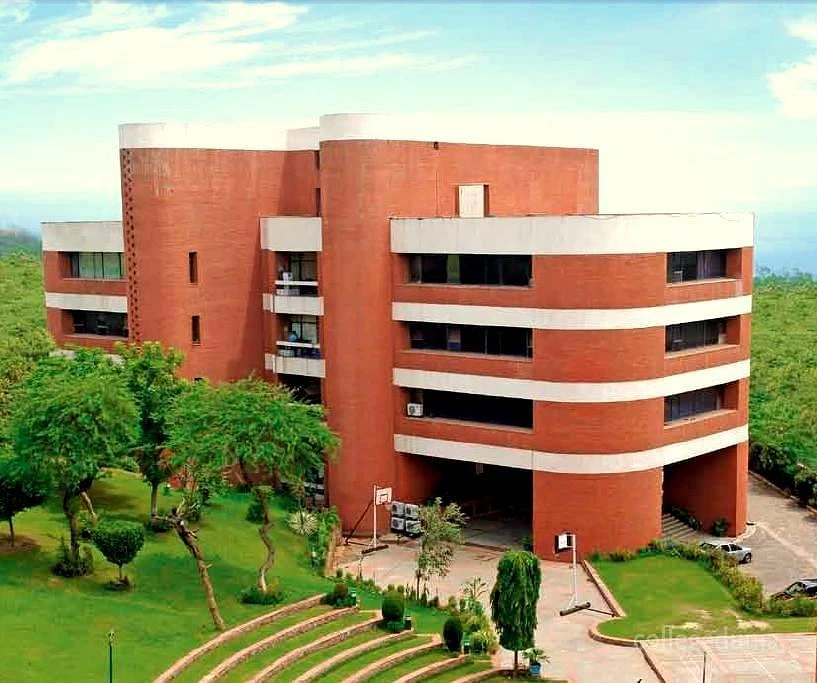
The Delhi campus is at Qutab Institutional Area in South Delhi. IMI’s infrastructure page describes a student residence with furnished single- and double-occupancy rooms, access to library and computing resources, internet and intranet in hostel rooms, mess facilities, recreational spaces and an air-conditioned gym. The page describes facilities but does not establish a room guarantee, current availability or the charge for a particular intake. Confirm those terms in the relevant batch’s official fee and housing information before budgeting. Campus infrastructure
The location and residential setup make the institute’s campus experience different from a large suburban university. Applicants who want an urban Delhi base may value the address; those comparing residential costs should separate tuition and academic charges from room, mess and personal expenses, and should not assume that a hostel place is included or guaranteed.
IMI Delhi’s official PGDM page currently labels its open intake 2027-29. The admissions portal lists the final application date as 19 December 2026, interviews in January 2027, decisions in February 2027 and the programme beginning in July 2027. The institute calls the assessment window tentative on its main page, so applicants should recheck the live portal before submitting or arranging travel. These are current cycle dates, not a permanent annual timetable. The page describes the two-year PGDM, PGDM (HRM) and PGDM (B&FS) as separate routes, with applications considered through the same published eligibility and selection framework.
The stated academic baseline is a bachelor’s degree with at least 50% aggregate marks or equivalent in any discipline, from a university recognised in India or abroad by the UGC or Association of Indian Universities. The degree must represent at least three years of study after higher secondary education under the 10+2 system or equivalent. Final-year students may apply if they prove they meet the minimum criteria by 30 September 2027. This lets candidates from varied undergraduate fields apply, but it does not mean the institute treats a 50% score as sufficient for shortlisting. IMI says a higher threshold may apply depending on applicant numbers; its portal FAQ says there is no fixed cutoff.
For this batch, the official page names CAT 2026 and XAT 2027. Its detailed GMAT subsection specifies foreign nationals, while the live admissions portal FAQ lists GMAT without that same category qualifier. An Indian applicant who intends to rely on GMAT should resolve that difference with admissions rather than treating the portal’s broad list as a guarantee. Shortlisting also considers academic records, and shortlisted applicants proceed to individual assessment. The portal describes video assessment and a personal interview; it does not publish a score-weight formula that would let a candidate calculate a likely offer from a test result alone. Work experience is not stated as a minimum eligibility requirement, though the institute says it may consider experience quality as part of evaluation.
The practical distinction is between minimum eligibility and selection. Check degree recognition and duration first, then match the test edition to the 2027-29 intake and confirm any applicant-specific rule. Keep the stated final-year proof date and current portal timeline on the same checklist. A past cutoff estimate, another campus’s fee or an older admission notice cannot replace the current Delhi notice. For exact application details, use the institute’s admission page and live admissions portal.
The current IMI Delhi admissions portal FAQ states a programme fee of ₹23.54 lakh. Its answer does not itemise the amount, identify which of the PGDM, HRM or B&FS programmes it covers, or explain whether it includes accommodation, mess, a refundable deposit or other charges. Treat it as the portal’s published figure, not a complete personal cost estimate or a verified tuition-only amount. The separate fee-structure page returned a 404 during this check on 5 November 2026, so an applicant should request the current itemised schedule for the exact programme and category before accepting an offer.
IMI’s admission page separately lists a non-refundable ₹2,500 application processing charge for the stated two-year programme application scope. This is a submission cost, not programme tuition. The page says the form is completed online, the payment goes through its designated gateway, and the payment receipt should not be sent directly to the admissions office. Its withdrawal section describes different outcomes before and after the course starts; read the policy attached to the actual offer and ask the institute how the refundable portion applies before paying an instalment.
Accommodation needs a separate line in the budget. IMI’s current infrastructure page describes furnished single- and double-occupancy rooms, library and computing access, internet and intranet, mess and recreation facilities. It does not promise a room or show a current hostel amount. A 2023 hostel policy described limited accommodation, first-come-first-served allotment at the institute’s discretion, and separate hostel and mess charges for students who receive a room. Because that policy is dated, use it as a warning to confirm the process, not as proof of present availability or price. Ask whether accommodation is available to your cohort, what room category is offered, and whether the quoted figure covers hostel, mess, utilities and any deposit.
The institute’s tuition-waiver page currently links to documents labelled through the 2025-27 batch; it does not establish an award amount or entitlement for the 2027-29 intake. Do not reduce the ₹23.54 lakh portal figure by a presumed waiver. Confirm whether a current scheme is open, its eligibility evidence, decision date, number of awards and which fee components it covers. For a usable budget, obtain the programme-wise charge sheet, installment dates, refund terms, residence quote and current waiver notice in writing. Until those details are confirmed, the portal’s headline amount is a comparison starting point rather than the final amount a particular student will pay.
IMI Delhi lists a two-year PGDM, PGDM (HRM) and PGDM (B&FS), alongside an 18-month PGDM and doctoral routes. Its page labels the two-year programme as six trimesters of 11-12 weeks and says students complete a compulsory summer internship after the first year. That structure matters for fit: the course is an intensive term-based commitment with an internship built into the calendar, not a flexible part-time programme. Compare the exact curriculum and elective choices for HRM or B&FS if those fields are your intended direction; do not infer that every programme has the same coursework simply because the admissions page groups their eligibility rules.
Placement assistance also depends on applicant status. The admissions page describes assistance for self-sponsored candidates on a best-effort basis. It says company-sponsored applicants must provide an employer letter and undertaking and are not eligible for placement assistance from the institute’s placement cell. Foreign nationals are also described as ineligible for that assistance. A candidate whose expected return depends on campus placement should clarify this distinction before choosing a sponsored or foreign-national route. It is not enough to compare the advertised programme fee with another school’s tuition: the applicant’s sponsorship arrangement can change which career services are available.
The official admissions portal displays placement statistics elsewhere on the site, but headline figures are useful only when their programme, cohort, reporting period and denominator match the route being considered. The About or admissions page does not establish one outcome for every PGDM variant or every applicant category. Review the current programme-specific placement report and check whether it describes final placements, summer internships or a combined campus figure. Do not use an institute-wide average as a guarantee for an individual student or as proof that the general PGDM, HRM and B&FS have identical outcomes.
IMI Delhi is worth comparing for an applicant seeking a New Delhi location, a two-year trimester schedule and distinct management routes in general management, human resources or banking and financial services. The residence description may matter to students who want to live on campus, but room availability and cost need confirmation. Applicants seeking a shorter executive route or doctoral research should use those programmes’ own admission and fee pages instead of carrying over the two-year PGDM assumptions. The useful comparison is therefore specific: programme duration and content, current admission route, itemised total cost, accommodation terms and placement support for your category.
Use IMI Delhi’s current admission page for the exact programme and applicant category. At the time of this check, the institute labels its intake 2027-29 and its portal lists an application deadline of 19 December 2026; the admissions page calls part of the assessment schedule tentative. Check the live portal for changes before you submit. Eligibility, test edition, document rules, application charge and any interview instructions are cycle-sensitive.
The current portal FAQ displays a ₹23.54 lakh programme fee, but its short answer does not identify the programme or fee components. Its linked itemised fee page returned 404 in this check. Request the written fee schedule for the programme and applicant category you selected, and confirm accommodation, mess, deposit and refund terms separately. This guide uses the portal figure only as a published reference point, not as a tuition-only value or an all-in cost. A prior-year schedule, even when useful historical context, does not confirm the price for the 2027-29 intake.
IMI Delhi is worth comparing for applicants seeking management study in New Delhi who want to choose among general management, HR, banking and financial services, executive and doctoral routes. The decision depends on the specific programme: compare its length, eligibility, admission cycle, fee basis and housing terms rather than relying on the institute’s overall name or on an average figure from another batch. The official pages are the source of truth for each current application route.
Loading programmes and admission routes.
Selected ranking categories, with the recorded year beside each result. Open all records for the complete history.
32 published records · Lower numeric ranks are stronger
IIRF
Management · private
#62025
IIRF
MBA · private
#82024
Indiatoday
MBA
#62021
Find a program, read its fee details and explore the admission requirements.
Summary of the programs shown below. See each program's fee period below.
Eligibility: Post Graduation with 60%
Listed entrance exams
Eligibility: Graduation
Specializations
Listed entrance exams
Eligibility: Graduation
1 exam with cutoff data available
 Aakash Institute
 Accenture
 Aditya Birla Capital
 ADP Private Limited
 Airtel
 American Express
 Arcesium
 Axis Bank
 Bank of America
 Birlasoft
 Blue Star
 Byju's
 Capgemini
 Car Dekho
 Cognizant
 Crisil
 Darashaw
 DCM Shriram Ltd.
 Dell
 Deloitte
 Dr Lal Path Labs
 E-Clerx
 eClerx Services
 Egon Zehnder
 Ernst & Young
 First Source
 Freshworks
 Genpact
 GEP
 GreatLearning
 HCL
 HDFC Bank
 HDFC Life
 Hexaware Technologies
 IBM
 ICICI Bank
 ICICI Prudential
 IndiaMart Company
 Infoedge
 Infosys
 JK Paper
 JK Tyre
 Kotak Mahindra Bank
 KPMG
 L&T Financial Services
 Mahindra Rise
 Mazars
 Moolchand Health Happiness Life
 Mu Sigma
 Nestle India
 Oppo
 Oyo Rooms
 RBL Bank
 Relaxo Ltd.
 Reliance Industries Limited [RIL]
 Royal Enfield
 Sales Force
 Shell
 Tata Advanced Systems
 Tata Capital
 Tata Metaliks
 Tech Mahindra
 Vedanta
 Viacom
 Zenoti

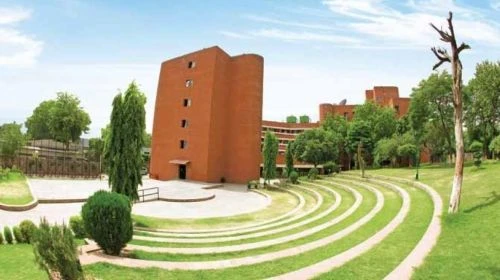
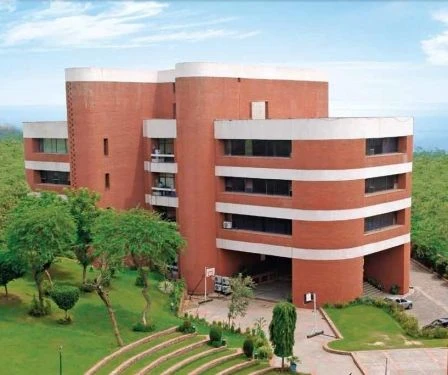

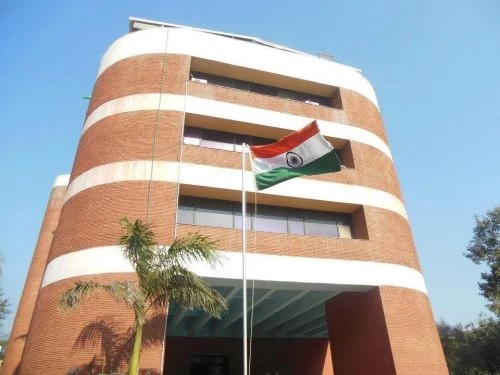
In this preview: 5 photos · 0 videos
The answer depends on your specialization. IMI Delhi is often preferred for Finance and HR specializations, while IMT Ghaziabad is generally considered superior for Marketing. Additionally, IMI Delhi has a smaller batch size, which some students prefer over the larger intake at IMT.
The return on investment for IMI Delhi's PGDM program depends on individual career goals and financial circumstances. The institute's brand holds high value for those targeting Consulting or BFSI (Banking, Financial Services, and Insurance) roles in the Delhi/NCR region. However, the total cost, which exceeds ₹30 lakhs, is a significant burden for students relying entirely on education loans.
No, IMI Delhi typically does not enforce a strict sectional cutoff for the CAT. The primary shortlisting criterion is the candidate's overall CAT percentile. However, the admissions panel does evaluate individual section scores during the subsequent interview and selection process.
The PGDM in Human Resource Management (HRM) at IMI Delhi is highly regarded. It is consistently ranked as one of the top HR programs in India, often placed just below prestigious institutions like XLRI and TISS.
IMI Delhi is the flagship and oldest campus, characterized by the highest admission cutoffs and the best placement records. The IMI campuses in Kolkata and Bhubaneswar are newer and are generally considered to be in the Tier-3 or lower Tier-2 category of business schools in India.
About IMI Delhi.
Colleges cannot rewrite published reviews. We remove spam and abuse.
Ask the communityWhat should future students know?
Tell us which course you're considering. We'll help you work out the next step.
Get instant Partner access after mobile verification. Your public edits are reviewed before they go live.
Claim this collegeProgramme information: Official source · Source as of: 2026-11-05
Each route applies only to this named programme and the stated year.
CAT: Common Admission Test · 2027-29
Admission-route evidence:
GMAT: Graduate Management Admission Test · 2027-29
Admission-route evidence: Official source · Source as of: 2026-11-05
XAT: Xavier Aptitude Test · 2027-29
Admission-route evidence: Official source · Source as of: 2026-11-05
Programme information: Official source · Source as of: 2026-11-05
Each route applies only to this named programme and the stated year.
CAT: Common Admission Test · 2027-29
Admission-route evidence: Official source · Source as of: 2026-11-05
GMAT: Graduate Management Admission Test · 2027-29
Admission-route evidence: Official source · Source as of: 2026-11-05
XAT: Xavier Aptitude Test · 2027-29
Admission-route evidence: Official source · Source as of: 2026-11-05
3 recorded programmes · 1 institution. Admission years and conditions apply to the named programme.
66 named recruiters in the recorded data. Company names are deduplicated.
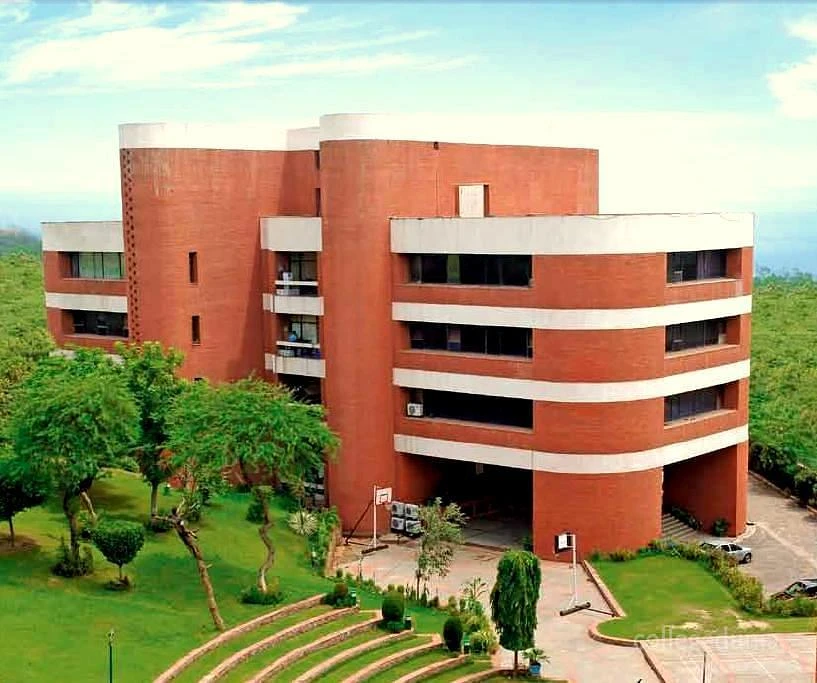
 Auditorium
 Cafeteria
 Campus Security
 Campus Shuttle
 Computer Labs
 Hostel
 Medical
 Smart Classrooms
 Sports Complex
 Study Library