Loading Admission Guardian content
Loading Admission Guardian content
Provisional score based on available data. It may change as more information is verified.
Selected ranking categories, with the recorded year beside each result. Open all records for the complete history.
32 published records · Lower numeric ranks are stronger
NIRF
Architecture
#62020
IIRF
Architecture · public
#52025
IIRF
Engineering · public
#272025
Find a program, read its fee details and explore the admission requirements.
Summary of the programs shown below. First-year fee. Check the note beside each amount for inclusions and exclusions.
| Course | Stream | Fees |
|---|---|---|
| Ph.D | Science | 28000 |
| Master of Science [M.Sc] | Science | 41500 |
| Master of Technology [M.Tech] | Engineering | 81500 |
| Bachelor of Architecture [B.Arch] | Architecture | 142000 |
| Bachelor of Technology [B.Tech] | Engineering | 142000 |
Specializations
Eligibility: Post Graduation
Specializations
All accepted exams
Eligibility: Graduation with 60% + IIT JAM
Specializations
All accepted exams
Eligibility: Graduation with 60% + GATE
All accepted exams
Eligibility: 10+2 with 45% + JEE Main
Specializations
All accepted exams
Eligibility: 10+2
4 exams with cutoff data available - showing recent entries
 Accenture
 Adobe
Adobe Akash Institute
 Capgemini
 CESC Limited
 CGI
CGI Coal India Ltd.
 Cognizant
 Cummins India Ltd
 Daikin AirConditioning India Pvt Ltd
 Directi
 Ericsson India Pvt Ltd
 GE Digital
 Haldia Petrochemicals Ltd
 HSBC
HSBC Hsbc Technology Services
 IBM
IBM IBS
IBS Indian Oil Corporation Ltd (IOCL)
 Infosys
 ITC
ITC L&T(ECC)
 Larsen & Toubro Limited
 Maruti
 Mentor Graphics
 Microsoft
 MJunction
 Morgan Stanley
 MuSigma Business Solutions Ltd.
 PWC
PWC Reliance Industries Ltd.
 Simplex Infrastructures Limited
 Smartprix
 Synopsys
 Tata Project Limited
 TCS
TCS Techno Electric Ltd.
 Vedanta
 Wacker Metroark Chemicals Pvt.Ltd.
 Wipro
Wipro ZS Associates
Walking through the gates of the Indian Institute of Engineering Science and Technology (IIEST) Shibpur is a step into history. Founded in 1856, it’s the fourth oldest engineering school in the country, and that legacy isn’t just a plaque on a wall. It’s in the sprawling 123-acre campus dotted with heritage buildings, the formidable alumni network, and an academic culture that’s both demanding and deeply respected. But this isn’t a museum piece. As a centrally funded Institute of National Importance (INI), it competes directly with the NITs, offering a unique blend of colonial-era prestige and modern technical education, all while sitting on the banks of the Hooghly, a stone’s throw from Kolkata’s chaos. The reality, as students will tell you, is a mix of incredible opportunity and institutional inertia.
The academic offering is classic and deep. For undergraduates, it’s all about the nine B.Tech streams and the B.Arch program, with a total intake of around 740 seats. The branch-wise allocation tells its own story: Computer Science and Technology (CST) and IT get the most seats (98 and 93 respectively), reflecting demand, but the institute’s soul might be in its strong core branches like Civil (103 seats), Electrical (91), and its niche, high-reputation programs in Mining (37) and Aerospace (24-28). That’s a decent spread for a heritage institute.
Academically, it’s rigorous. They use a 10-point absolute grading system, where your percentage is calculated as (CGPA - 0.5) * 10. Students on forums often note this is tougher than the relative grading in many NITs—maintaining a high CGPA here requires consistent work. Attendance rules are strict, with the 75% rule generally enforced. For high performers, there’s a dual degree (B.Tech + M.Tech) option after the 6th semester, requiring a CGPA above 7.0 and no backlogs. The faculty roster is strong, with over 90% holding PhDs from premier institutes. Names like Prof. Sujoy Kumar Saha (Mechanical) and Dr. Ananya Barui, a SERB Women Excellence Grant recipient, lend credibility to the research environment, which got a boost with the new Chirasree Centre for Sustainable Infrastructure Development (CCSID) in 2024.
This is where the data requires a careful read. The official numbers for the 2024 season (ongoing as of mid-year) show a highest package of 56 LPA (from Microsoft/Atlassian), an average of ~13.5 LPA for B.Tech, and a median of 8.5 LPA. The top recruiters list is impressive: Google, Microsoft, Goldman Sachs, JPMorgan, Tata Steel, L&T. But the critical number is the placement percentage: 67% for UG overall in the 2024 cycle. Compare that to the official 2024 figure of 85.9% for B.Tech, and you see the impact of the broader IT hiring slowdown.
The story splits by branch. IT/Software still pulls the highest packages, but volume is down. Core engineering—Electrical, Mechanical, and especially Mining—shows resilience, with strong recruitment from PSUs and heavy industries like Vedanta and JSW. The finance sector is a growing presence too. The student sentiment, however, often critiques the placement cell as being somewhat passive, relying heavily on the institute’s legacy reputation rather than aggressive corporate outreach. So, while the peak opportunities are stellar and the core placement is robust, the overall probability of landing an on-campus role has tightened recently. That’s a crucial reality check.
As a central institute, the fee structure is relatively affordable. Per semester, a general category B.Tech student pays ₹62,500 in tuition. There’s a full waiver for SC/ST/PwD students—tuition is nil. Add in other charges (exam, library, etc.) of ~₹11,500 and a one-time admission fee of ~₹6,000, and the academic cost per semester is around ₹80,000.
Hostel life adds to the bill. Seat rent is ₹10,000 per semester, with mess dues advance at ₹17,500 (adjusted against actual meals), and maintenance charges of ~₹4,000. All tallied, a hosteller’s semester cost lands between ₹1.15 lakh to ₹1.25 lakh. Annually, you’re looking at roughly ₹2.3 to ₹2.5 lakhs for everything. It’s not the cheapest, but for a CFTI with its profile, it’s in the expected ballpark. Specific scholarship details beyond the fee waiver aren’t prominently detailed in student discussions, which suggests most aid is through standard government schemes.
For B.Tech and B.Arch, the only gate is JEE Main. Admissions are conducted through the national JoSAA and CSAB counseling processes. A key feature is the 50% Home State quota for West Bengal candidates, with the other 50% open to All India candidates. This significantly influences cutoff ranks.
Looking at the 2024 Round 5 closing ranks for the General Other State category paints a clear picture of demand:
The gap between CST and Mining is vast, but it’s worth noting that even the "lower" cutoff branches like Mining offer exceptional industry-specific opportunities thanks to IIEST’s unique standing. For postgrad, M.Tech requires GATE (CCMT counseling), M.Sc requires IIT-JAM (CCMN), and the MBA program at the School of Management Sciences accepts CAT/MAT/XAT/CMAT/GMAT scores followed by GD and PI.
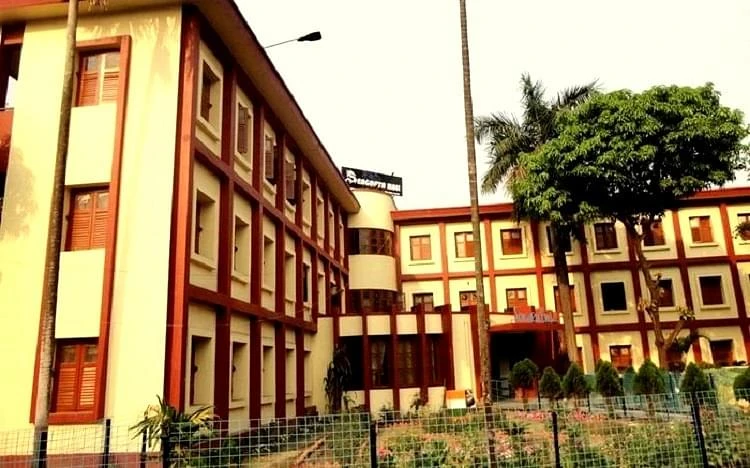
The campus is breathtakingly beautiful—a 123-acre green oasis with heritage architecture, the iconic Clock Tower, and the adjacent Botanic Garden. It’s a major selling point. Infrastructure is a tale of two cities, though. The Ramanujan Central Library is a massive resource with over 1.5 lakh books. But student reviews consistently point to maintenance issues. Many hostels, especially for seniors, are described as old and "decaying." Wi-Fi exists but is reported as inconsistent (10-50 Mbps). There are 18 hostels in total; freshers often get Hostel 9 or 11, and there are three dedicated girls' hostels.
And that leads to a major pain point in student life: hostel restrictions. Female students on platforms like Quora frequently describe strict curfews (9-10 PM) as "sexist" and overly restrictive. The administration is often labeled bureaucratic and slow. On the flip side, the senior-junior culture is praised as supportive, with ragging largely replaced by mentorship. Social life peaks with the fests—Instruo (tech) and Rebecca (cultural)—which are huge, well-organized events. The proximity to Kolkata means easy access to city life, coaching centers, and internships.
Synthesizing the chatter from CollegeDunia, Shiksha, Reddit, and Quora reveals a clear consensus. The alumni network is universally hailed as the institute's superpower. "The BE-ite/IIESTian tag" carries serious weight, especially in core engineering sectors globally. The campus beauty and location are huge positives.
The negatives are just as consistent. Infrastructure maintenance is the biggest gripe—"feels like a 19th-century museum sometimes." The administrative bureaucracy frustrates students, with complaints about red tape in the academic section. The placement cell is seen by some as reactive rather than proactive. And the hostel curfews for women remain a deeply unpopular policy. Academically, the absolute grading system is considered a tough grind.
IIEST Shibpur is an institution of contrasts. Its unparalleled heritage, stunning campus, and powerful alumni network provide a foundation that few newer colleges can match. For students in core engineering branches—particularly Mining, Metallurgy, Civil, and Mechanical—it’s arguably one of the best choices outside the top IITs, thanks to its industry reputation. The 50% West Bengal quota also makes it a premier destination for home-state aspirants. However, you have to want what it offers. If you’re seeking pristine, modern hostels and a frictionless administrative experience, you’ll be disappointed. The placement scene, while strong in core and with stellar top offers, has shown vulnerability to market dips in the IT sector. It’s best for the student who values legacy and deep engineering roots over polish, who is self-motivated to leverage the alumni network and Kolkata’s opportunities, and who isn’t fazed by navigating some institutional old-school charm (and chaos). For that student, IIEST is a unique and valuable proposition.
In this preview: 1 photo · 0 videos
While both are premier engineering institutes, they have different strengths. IIEST Shibpur is recognized for its superior heritage and a strong, established alumni network. In recent years, NIT Durgapur has often reported slightly better modern infrastructure and higher placement percentages.
Yes, IIEST Shibpur does have a home state quota. Specifically, 50% of the total seats are reserved for candidates who are domiciled in the state of West Bengal.
Placements for core engineering branches, particularly Mining and Metallurgy, are considered excellent at IIEST Shibpur. The institute is one of the few top-tier institutions in India with a dedicated and highly reputed Department of Mining Engineering.
The hostel facilities at IIEST Shibpur are generally considered average. Hostels for first-year students are decent, but hostels for senior students are older and require maintenance. The food provided in hostels is typically described as edible but can be repetitive.
The key difference is their status and scope. BESU (Bengal Engineering and Science University) was a state university. IIEST (Indian Institute of Engineering Science and Technology) Shibpur is a Central Government Institute of National Importance (INI), which brings higher funding and conducts admissions on a national level through the JEE Main examination.
Share what future students should know about IIEST Shibpur.
Student voices are not rewritten by colleges. We remove spam and abuse.
Wider admission question? Community PulseWhat should future students know?
Tell us which course you're considering. We'll help you work out the next step.
Get instant Partner access after mobile verification. Your public edits are reviewed before they go live.
Claim this college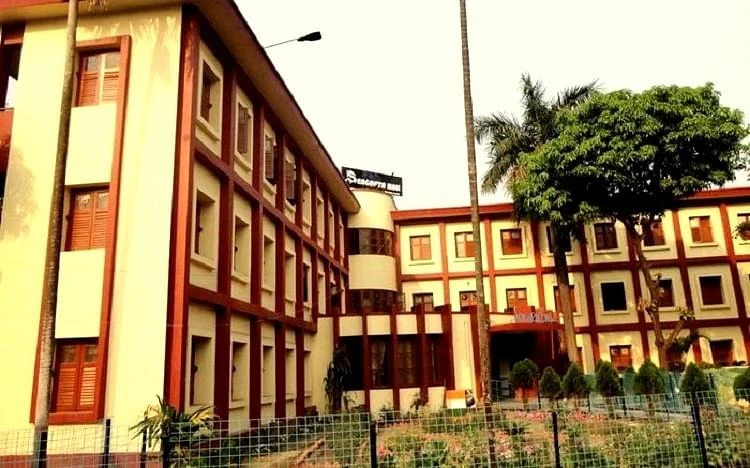
 Auditorium
 Cafeteria
 Campus Wi-Fi
 Computer Labs
 Gym
Gym Hostel
 Medical
 Science Labs
 Sports Complex
 Study Library