Loading Admission Guardian content
Loading Admission Guardian content

Provisional score based on available data. It may change as more information is verified.
Find a program, read its fee details and explore the admission requirements.
Summary of the programs shown below. Total course fee. Check the note beside each amount for inclusions and exclusions.
| Course | Stream | Fees |
|---|---|---|
| Doctorate of Medicine [MD] (Psychiatry) | Medical | 46800 |
| DM [Neurology] | Medical | 76800 |
| Diplomate National Board [DNB] (Neurology) | Medical | |
| M.Phil. (Clinical Psychology) | Science |
Specializations
All accepted exams
Eligibility: Graduation
Specializations
All accepted exams
Eligibility: Post Graduation
Specializations
All accepted exams
Eligibility: Graduation
Specializations
Eligibility: Post Graduation
2 exams with cutoff data available
If you want to learn psychiatry or clinical psychology by doing, not just reading, the Institute of Human Behaviour & Allied Sciences (IHBAS) in Delhi is a singular experience. It’s a working, 346-bed super-specialty hospital first, and an academic institute second. That means your classroom is the OPD, your textbooks are real patient files, and the learning curve is famously steep. Backed by the Delhi Government and affiliated with the University of Delhi, IHBAS offers a brutally practical education in mental health, wrapped in the security of a government stipend that often makes the net cost of studying here effectively zero. It’s not a cushy campus life, but for those who can handle the intensity, the clinical confidence you gain is, by most accounts, unmatched in North India.
Forget the typical college model. IHBAS runs postgraduate and doctoral programs where theory takes a backseat to practice. The academic calendar follows Delhi University's Faculty of Medical Sciences, but your schedule is dictated by hospital rounds. The flagship offerings are the MD in Psychiatry (11-12 seats via NEET PG) and the M.Phil in Clinical Psychology (11 seats via an institutional entrance exam). There's also a DM in Neurology (4 seats via NEET SS) and research-focused Ph.D. programs.
The pedagogy is best described as immersive. Students report spending 80% of their time in clinical settings—outpatient departments, wards, and emergency services. It’s a sink-or-swim approach. Faculty, which saw a significant infusion with 42 new regular positions in late 2024, expect proactive engagement. You won’t get spoon-fed. The grading blends DU’s 10-point CGPA system with continuous clinical assessments. The institute’s role as a tertiary care hub and its partnerships, like the one with the Ananya Birla Foundation for youth mental health, mean you’re exposed to complex cases and public health initiatives from day one. It’s intense, but it forges capable clinicians quickly.
You won’t find a placement cell here, and that’s by design. IHBAS is a feeder into the healthcare system. Career progression is through residency posts and government service. The outcome is near-certain employment, but in the medical field, not the corporate sector.
After completing an MD or DM, most graduates seamlessly transition into Senior Resident positions at prestigious government hospitals like AIIMS or VMMC, or join top private chains like Max or Fortis Healthcare. The financial upside is clear: those Senior Resident roles often start at or above the reported highest package of INR 13.2 LPA. For M.Phil in Clinical Psychology graduates, the key is the RCI license, which makes them highly sought-after for clinical psychologist roles in hospitals, rehabilitation centers, and state health authorities. The reported median of INR 4.8 LPA for junior roles seems a realistic starting point.
The institute’s reputation opens doors. Top recruiters consistently include AIIMS, NIMHANS, VIMHANS, and major private hospital groups. So, while there’s no “placement percentage” to tout, the pathway is well-established and respected. Your network is built through daily work with practicing specialists, which is arguably more valuable than any campus recruitment drive.
This is where IHBAS stands apart from almost any other postgraduate institute. The fee structure is heavily subsidized by the Delhi Government, but the real story is the stipend. For many students, the institute pays you to study.
When you do the math, the total out-of-pocket cost for a two-year M.Phil can be less than INR 20,000, effectively making it a net-positive financial endeavor. There are no additional scholarships to apply for; the stipend is uniform for all admitted students. It’s a compelling financial model that removes a major barrier to advanced medical training.
Admission is fiercely competitive and centrally controlled. For clinical programs, it’s all about national entrance ranks.
Don’t expect a sprawling, leafy campus with endless facilities. IHBAS is a compact, urban hospital complex on about 10-12 acres. The infrastructure is functional and focused on clinical work.
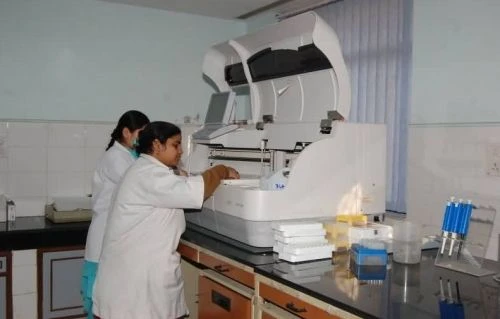
The hostels are basic but clean. They’re described as “functional” by residents—a place to sleep between long shifts. The major advantage is proximity: you’re steps away from the hospital, which is crucial for residents on 24-hour duty. The mess provides hygienic, if repetitive, food. The real infrastructure highlights are academic and medical: an excellent library with digital journal access (Lancet, JAMA Psychiatry), and advanced treatment labs featuring rTMS (Repetitive Transcranial Magnetic Stimulation) and modern ECT facilities. As a patient, you’d be in a NABH-accredited, Kayakalp award-winning hospital for cleanliness. As a student, you’re in the heart of it. Social life is what you make it; Delhi is outside the gate, with the Mansarovar Park Metro Station (Red Line) a 10-minute walk away.
The consensus from forums like Reddit (r/Psychology_India) and Quora is clear, if nuanced. The overwhelming positive is the clinical exposure. Students call it “insane,” “unmatched,” and a “10/10” experience that builds confidence faster than anywhere else. The stipend is universally praised as the best in the country for these programs.
But there’s no sugar-coating the challenges. The workload is “extreme,” leading to frequent mentions of mental burnout. The administrative side is described as “bureaucratic” and “slow,” with stipend delays and paperwork cited as common frustrations. Some older threads mention a “toxic” hierarchical culture, though more recent reviews from MD residents often counter that, calling the environment “strict but non-threatening.” The teaching style is agreed upon: it’s self-directed. You have to be proactive. They won’t hold your hand.
In short, students say IHBAS isn’t easy or comfortable. But for those who endure it, the professional payoff in skills and readiness is considered immense. It’s a trade-off most who choose it are willing to make.
IHBAS isn’t for everyone. If you’re looking for a balanced postgraduate life with a vibrant campus, look elsewhere. This is a working hospital that demands your time and resilience. The environment is intense, the bureaucracy can be frustrating, and the pressure is real.
But if your primary goal is to become a supremely confident, clinically adept psychiatrist or psychologist, IHBAS is arguably one of the best places in India to do it. The volume and variety of cases are unparalleled in the region. Combine that with a financial model that actually pays you a solid stipend to learn, and the value proposition becomes incredibly strong for the right candidate. It’s best for gritty, self-motivated students who learn by doing and who see the grueling hours as an investment rather than a burden. For them, IHBAS isn’t just worth it—it’s a career-defining opportunity.



In this preview: 5 photos · 0 videos
While NIMHANS is considered the gold standard for research, IHBAS is often viewed as equal or better for "raw clinical volume" and hands-on exposure, particularly for those seeking training and practice in North India.
MD Psychiatry residents at IHBAS receive a stipend as per the 7th Central Pay Commission pay matrix, which amounts to roughly INR 1.1 Lakh per month, plus House Rent Allowance (HRA).
For the 2024/25 academic session, admission to the M.Phil in Clinical Psychology program is based solely on the candidate's score in the written entrance exam, a process implemented to ensure transparency.
Admission to MD Psychiatry at IHBAS is highly competitive. The seat typically closes within the top 4,000 to 5,000 ranks for candidates in the General category, making a low NEET PG rank insufficient for selection.
Hostel accommodation at IHBAS is not guaranteed for all students. Priority is given to outstation students and MD/DM residents. While M.Phil students usually receive accommodation, it is ultimately subject to availability.
Share what future students should know about IHBAS.
Student voices are not rewritten by colleges. We remove spam and abuse.
Wider admission question? Community PulseWhat should future students know?
Tell us which course you're considering. We'll help you work out the next step.
Get instant Partner access after mobile verification. Your public edits are reviewed before they go live.
Claim this college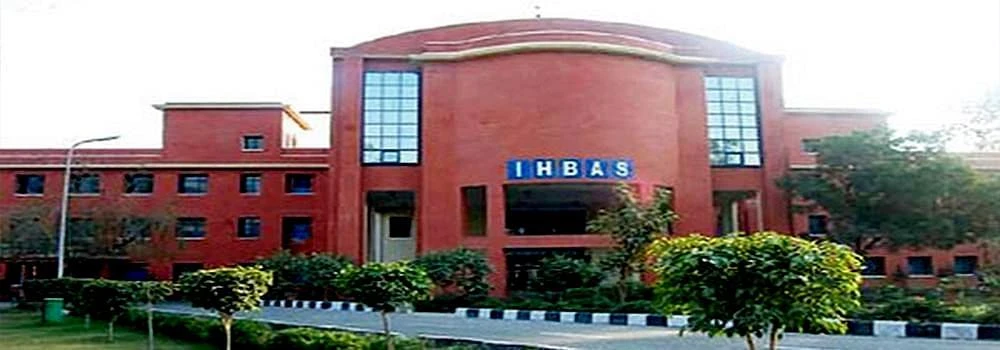

 Auditorium
 Cafeteria
 Campus Security
 Medical
 Science Labs
 Sports Complex
 Study Library