Loading Admission Guardian content
Loading Admission Guardian content

Selected ranking categories, with the recorded year beside each result. Open all records for the complete history.
9 published records · Lower numeric ranks are stronger
NIRF
Medical
#92019
IIRF
Medical
#292023
Find a program, read its fee details and explore the admission requirements.
Summary of the programs shown below. Fee periods can differ by program. Check the note beside each amount before comparing costs.
| Course | Stream | Fees |
|---|---|---|
| Certification | Medical | 38000 |
| Post Doctoral Certificate | Medical | 80000 |
| DM | Medical | 115000 |
| Diplomate National Board [DNB] (Nephrology) | Medical | |
| Master of Chirurgiae [M.Ch] (Hepato-Pancreato-Biliary Surgery) | Medical |
Specializations
Eligibility: MBBS
Specializations
Eligibility: Post Graduation
Specializations
Eligibility: MD
Specializations
All accepted exams
Eligibility: Graduation
Specializations
Eligibility: Post Graduation
1 exam with cutoff data available
If you're aiming to become a top-tier liver specialist in India, there's one name that comes up every single time: the Institute of Liver and Biliary Sciences (ILBS) in Delhi. It's not a typical medical college. Think of it as the IIT for hepatology—a hyper-specialized, government-run powerhouse where you'll treat the rarest liver cases in the country. Founded in 2009 and granted deemed university status, ILBS has carved out a reputation that makes its DM and M.Ch programs some of the most coveted seats in super-specialty medicine. The learning is intense, the hours are long, but the career payoff is substantial. And with fees that are a fraction of what private institutes charge, the return on investment is arguably the best in its field.
Let's be clear: ILBS does not offer an MBBS. It's a post-graduate and doctoral institute through and through, built for deep specialization. The academic structure is lean and focused entirely on hepatobiliary sciences and allied fields.
The crown jewels are the three-year super-specialty programs—DM and M.Ch. With just 10 seats for DM Hepatology and 6 for M.Ch HPB Surgery, competition is fierce. The pedagogy is almost entirely clinical, immersing you in a hospital that sees over 300,000 patients annually. You're learning from pioneers like Dr. Shiv Kumar Sarin, the founding director, and Dr. Viniyendra Pamecha in surgery. The institute also runs a suite of one-year Post Doctoral Certificate Courses (PDCC) in niches like Interventional Radiology and Hepatopathology—these are for doctors who want sub-super-specialty training.
For researchers, the PhD program is robust, with collaborations that matter. They have active MoUs with IIT Delhi for AI in diagnostics and with institutes in France, South Korea, and Israel. The M.Sc in Nursing program is the other major offering, specializing in areas critical to a liver hospital: Oncology, Nephrology, and Critical Care. The faculty-to-student ratio is excellent, given the small batch sizes, but you're expected to be self-driven. The academic calendar has two admission cycles (January and July), which is a bit unusual but allows for more flexible intake.
"Placement" here doesn't mean campus drives with PPTs. For DM and M.Ch graduates, it's about stepping into senior consultant roles at the country's top corporate hospital chains or prestigious government institutes. The placement rate is effectively 100% for these super-specialists. That's the biggest draw.
The package figures need careful parsing. Official reports and alumni networks suggest DM/M.Ch graduates command an average annual package of INR 25-30 LPA when joining private hospitals like Apollo, Max, Fortis, or Medanta. The highest offers can touch INR 40-50 LPA. Now, the NIRF 2024 report shows a median salary of INR 4.5 LPA—that's a misleading average because it folds in the stipends of M.Sc Nursing students and certificate course trainees. For the flagship super-specialty grads, the real median is much closer to that INR 30 LPA mark.
It's also crucial to understand the stipend structure during the course. As Senior Residents, DM/M.Ch students earn a monthly stipend of roughly INR 1 to 1.2 lakhs, as per 7th Pay Commission norms. That's not a salary, but it means you're earning while you learn, which completely offsets the minimal tuition fees. Top recruiters are a who's who of healthcare: AIIMS, Artemis, SRL Diagnostics, and various government medical colleges regularly pick up ILBS alumni for leadership positions.
This is where ILBS stands apart from private medical universities. The fee structure is heavily subsidized, making it an incredible value proposition. For the three-year DM or M.Ch program, the total tuition fee is only about INR 2.1 to 2.15 lakhs. That's for the entire degree. Compare that to private institutes where a single year can cost multiples of that.
Other programs are similarly affordable: a PhD costs about INR 65,000-70,000 in total, and the two-year M.Sc Nursing is around INR 70,000. The one-year PDCC/PGCC courses range from INR 45,000 to 80,000. The major living expense is the hostel, which is mandatory. With mess charges included, hostel fees run about INR 10,000 to 15,000 per month. Financial aid is primarily in the form of research fellowships for PhD scholars, like the TATA Fellowship, or national-level grants such as the Ramanujan Fellowship.
Admission is the gate. For the super-specialty DM/M.Ch and DNB SS programs, the only key is the NEET SS score. There's no management quota, no donation seats. You compete nationally through the MCC counseling process. The 2024 cutoffs give you a sense of the caliber: for M.Ch HPB Surgery, the closing rank for the General Category was 189. For DM Hepatology, it was 605. These are fiercely competitive ranks, reflecting the institute's stature.
For all other programs—PhD, PDCC, PGCC, and M.Sc Nursing—ILBS conducts its own entrance examination. This is followed by a departmental interview, especially for research programs. The application windows are typically October-November for the January session and April-May for the July session. Application fees are moderate: INR 1,000 for PhD, INR 5,000 for PDCC, and INR 2,500 for PGCC. The entire process is centralized and transparent, as you'd expect from a government institution.
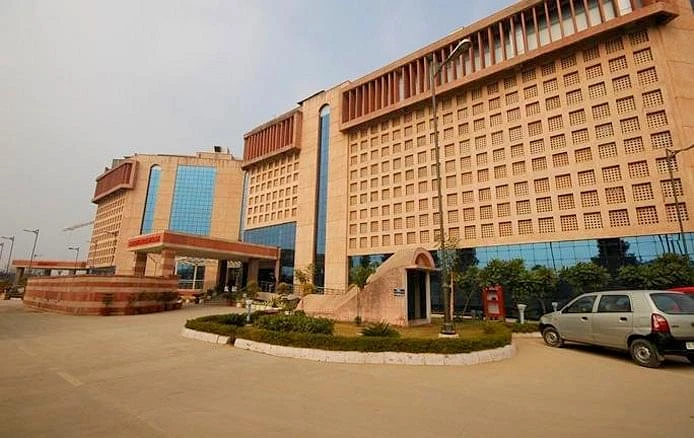
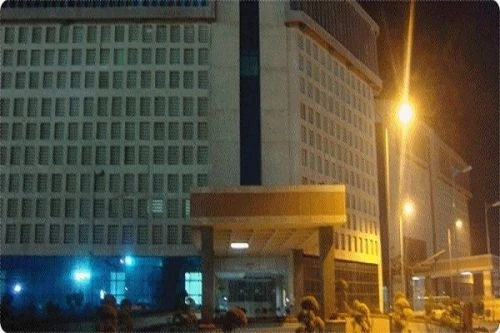
The campus is a compact, 7-acre, fully residential facility in the upscale Vasant Kunj area. It's a working hospital first, so the vibe is professional, not collegiate. The hostel is non-negotiable—all residents must live on campus. The two main blocks, Adhyayan and the new wing, offer spacious, well-furnished single-occupancy rooms. Reviews on the hostel are generally positive (around 4/5), with the common complaint being that the mess food, while hygienic and subsidized, gets repetitive. The canteen runs 24/7, a necessity for doctors on grueling shifts.
Infrastructure is clinical and research-focused. You have a 24/7 library with deep resources in hepatology, state-of-the-art labs including a Stem Cell Unit and a dedicated Stool Bank for Fecal Microbiota Transplant, and campus-wide high-speed Wi-Fi. The hospital itself is the primary learning lab, with 155+ beds, over 74 ICU beds, and four advanced operation theatres. There's no sprawling sports field or typical "campus life." Social life is what you make with your batchmates in the hostel common rooms. The student profile is mature—all post-graduates or professionals—so ragging is virtually non-existent.
Talking to former students and scouring forums reveals a consistent, dual-edged narrative. The positives are powerful. The academic rigor is almost universally praised. "The learning curve is vertical," as one alum put it. You get hands-on experience with complex cases that are textbooks elsewhere. Faculty access is good for a premier institute; the professors are giants in the field but remain approachable for clinical and research guidance. And everyone mentions the stellar ROI—tiny fees for a career that starts at a high salary plateau.
But they are equally candid about the downsides. Work-life balance is a myth. Residents routinely describe 14 to 16-hour workdays; the hospital is your life. The administrative machinery can be rigid and slow, a classic government institute trait. There have been historical friction points, like nursing staff strikes in 2017, hinting at internal management challenges. Finally, the pressure and competition are immense, stemming from the tiny batch sizes and the high-stakes environment. It's not for the faint-hearted.
For the right candidate, ILBS isn't just worth it—it's the ultimate destination. If you are a medical graduate dead-set on becoming a leading hepatologist, transplant surgeon, or liver researcher, this is the place. The clinical exposure is unparalleled in Asia, the fees are negligible, and the career launchpad is among the strongest in Indian medicine. You trade three years of your life to brutal hours for a consultant-level career most doctors work decades to achieve.
But it's a terrible fit if you're looking for a balanced post-grad life, a broad medical education, or a traditional campus experience. It's mono-specialty to the core. The intense pressure and workload filter out all but the most dedicated. So, is ILBS worth it? For a future liver specialist with the NEET SS rank to get in, the answer is an unequivocal yes. For everyone else, it probably doesn't even appear on the radar. That's its nature—an elite, focused institute that operates in a league of its own.
In this preview: 5 photos · 0 videos
The Institute of Liver and Biliary Sciences (ILBS) is a government-established autonomous institute, recognized as a Deemed University.
No, ILBS does not offer an MBBS program. It is a specialized post-doctoral and research institute focused on hepatology and related sciences.
Admission to the DM in Hepatology program at ILBS is conducted strictly through the NEET SS entrance examination, followed by centralized counseling managed by the Medical Counseling Committee (MCC).
Students enrolled in DM and M.Ch programs at ILBS receive a monthly stipend equivalent to that of Senior Residents in Central Government hospitals, typically ranging between INR 1,00,000 and INR 1,20,000.
Yes, the Institute of Liver and Biliary Sciences operates as a fully residential campus. Hostel accommodation is mandatory for all resident doctors and fellows.
Share what future students should know about ILBS.
Student voices are not rewritten by colleges. We remove spam and abuse.
Wider admission question? Community PulseWhat should future students know?
Tell us which course you're considering. We'll help you work out the next step.
Get instant Partner access after mobile verification. Your public edits are reviewed before they go live.
Claim this college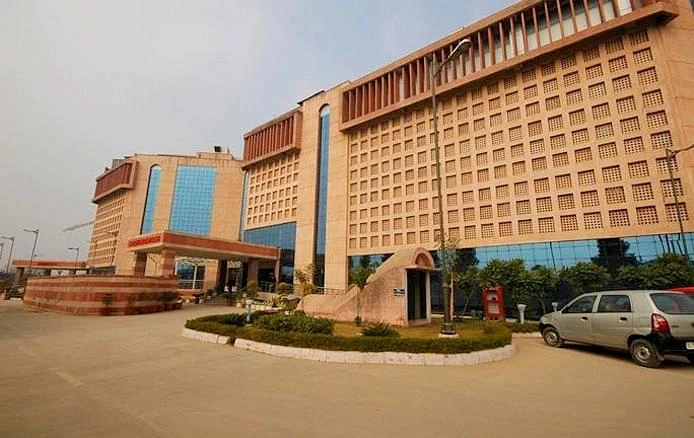
 Auditorium
 Cafeteria
 Computer Labs
 Hostel
 Medical
 Science Labs
 Smart Classrooms
 Sports Complex
 Study Library