Loading Admission Guardian content
Loading Admission Guardian content

2 programmes · 1 institution. Check the admission year and requirements.
2 programmes · 1 institution. Check the admission year and requirements.
IIIT Hyderabad can suit applicants who want a computing-centred education with access to research, and who are comfortable with a demanding residential campus and the institute’s own admission process. The main trade-offs are cost, the difference between four-year and research-oriented dual-degree paths, and the fact that the newest detailed fee and outcome figures reviewed here belong to earlier cycles. This is a 2027-28 profile; no complete 2027-28 application schedule, fee table or programme-specific cutoff was established in the sources checked on 6 November 2026. Confirm the next cycle on the institute’s own portals before applying or budgeting.
International Institute of Information Technology Hyderabad (IIIT-H) describes itself as an autonomous university founded in 1998 as a not-for-profit public-private partnership. Its July 2026 “At a Glance” page reports 2,605 students, 158 faculty members, 29 research centres and 30 programmes. These are institute-wide figures from that dated snapshot, not a current enrolment forecast or a count of seats available to an incoming class. The institute’s emphasis is on computing, applied research and interdisciplinary work; applicants should use the actual curriculum and research groups for a particular course to judge fit rather than treating the institutional description as a course guarantee.
The academic structure includes single-degree engineering, dual-degree programmes combining a B.Tech with an MS by Research, postgraduate taught programmes and research degrees. The usual dual-degree route is five years and includes a research thesis; it therefore represents a different time and academic commitment from a four-year B.Tech. The current undergraduate admissions landing page also separates channels by programme type, including routes for single-degree and dual-degree admissions. The institute’s academic-programmes page contains older programme listings, including options marked suspended, so check the admissions notice for the exact programme offered in the year you apply.
For applicants seeking a four-year engineering degree, the institute’s published undergraduate route structure centres on B.Tech programmes such as Computer Science and Engineering (CSE) and Electronics and Communication Engineering (ECE). The dual-degree format adds an MS by Research, with a thesis component. Other dual-degree streams pair computer science with areas such as computational linguistics, computational natural sciences or computing and human sciences. This breadth can be attractive to students who want to combine computing with another discipline, but the research component is a real part of the degree, not an optional label. A student who prefers a shorter, primarily taught path should compare the four-year and five-year curricula, thesis expectations and opportunity cost before accepting a dual-degree seat.
IIIT-H’s admissions portal uses several routes rather than a single common counselling channel. The institute’s landing page lists JEE (Main), UGEE, LEEE, SPEC, Olympiad, DASA and Board-based channels. Broadly, JEE (Main) is associated with single-degree programmes, UGEE and LEEE with dual-degree entry, and other channels have their own eligibility and programme scope. Those descriptions are route-level orientation only. The 2026-27 notices reviewed for the previous admission cycle had distinct tests, subject requirements, shortlisting or interview steps, applicant categories and programme lists. The exact 2027-28 rules are not established here, and a route name on a landing page does not prove that its application window is currently open.
The institute says applications are handled through its own portals and warns applicants against companies claiming to represent it. Use the admissions page to reach the current application portal, then verify the notice’s academic-year label, qualifying subjects, qualifying exam year, passing-year rules, programme list, required test or interview, preference process, seat-acceptance fee and withdrawal schedule. Do not rely on a coaching site’s summary when the institute’s route notice is available. The saved admission research for 2026-27 records multiple route changes and deadlines; those are helpful for understanding how the process works, but they have passed and do not predict 2027-28 dates.
The latest detailed domestic undergraduate fee figures captured in the admission research were for academic year 2026-27: ₹5,00,000 annual tuition for the single-degree B.Tech routes, with hostel and mess charges additional. The route notices described approximate hostel charges of ₹6,000 per month and mess charges of ₹5,000 per month, usually paid semester-wise. These values are not a 2027-28 quote. The institute’s main admissions landing page still displays a 2025-26 fee heading, while some linked fee pages were unavailable in direct retrieval during this review. Applicants should use the new route-specific fee notice when it appears and confirm the complete payable amount, including one-time charges and residential costs.
Financing should be treated separately from tuition. The institute describes a needs-based, pay-it-forward fund for successfully admitted students, subject to availability and stated criteria. Its assistance page says the income threshold group may be considered from the second semester; students above the threshold may also apply for committee consideration. The page does not promise an award amount or guaranteed selection. A separate SBI Scholar Loan is a repayable option, not a fee waiver. Applicants should check the current interest rate, repayment terms, co-borrower requirements and bank sanction directly. For full-time MS by Research and PhD students, the 2026-27 postgraduate fee table reports programme-specific stipends with continuation linked to academic and research performance. Those stipends do not apply universally to undergraduate or taught postgraduate students and should not be counted in a budget unless the current offer confirms eligibility.
IIIT-H’s stated academic model gives research a visible role alongside coursework. The institute lists centres and research groups across computing, communications, computational sciences, language technologies, robotics and related areas. For dual-degree students, the fifth-year thesis makes research a formal programme requirement. The 2026-27 postgraduate fee page also describes MS by Research and PhD stipends, while the Winter 2026 research admissions notice lists separate fellowship and teaching-assistantship routes. These are useful signals for applicants considering research, but research access depends on the degree, supervisor, group and current funding rules. Ask the programme whether undergraduate participation is structured, how thesis supervision is allocated and what funding conditions apply before assuming that institutional research centres guarantee an individual project.
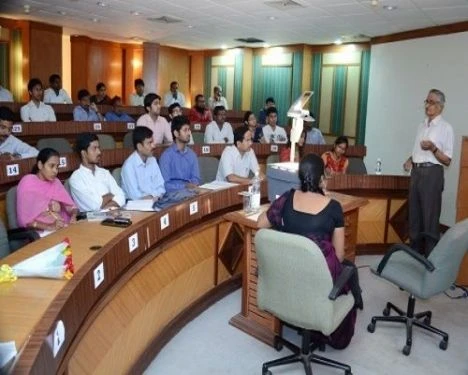
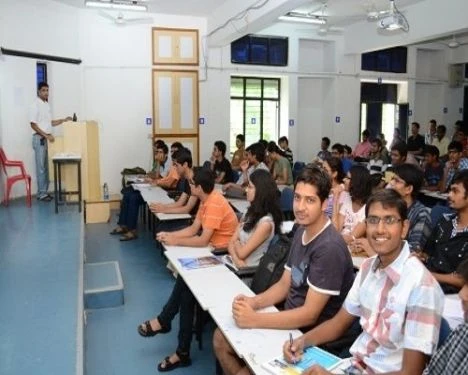
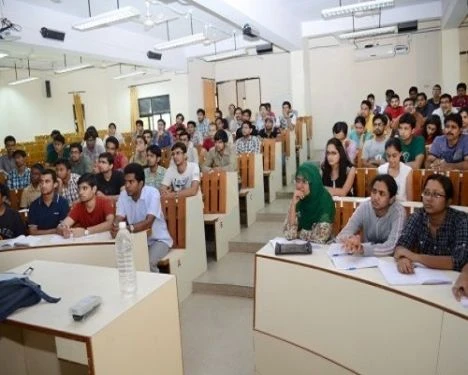
The campus infrastructure page lists batch-wise access to computer laboratories, research computing, student workspaces, teaching labs and specialist research equipment. A library with physical and digital material supports independent study. Those facilities fit a student who expects substantial computer-based coursework or research, but they are shared resources: the institute’s descriptions do not establish an individually assigned workstation, guaranteed access to every specialist lab or a particular computing allocation for each course. Check programme-specific access if hardware, specialist equipment or a particular research environment is central to your decision.
The Hyderabad campus is residential, and the institute states that students must stay on campus. Its infrastructure page lists five student hostels and describes room occupancy by year for some undergraduate and postgraduate groups. This makes daily campus access convenient for academic work, but it also means hostel rules, room assignment, food and campus routines are part of the student experience. Ask the hostel office about the arrangement that applies to your exact programme, current hostel and mess charges, room allocation, accessibility, visitor rules and any move-in requirements.
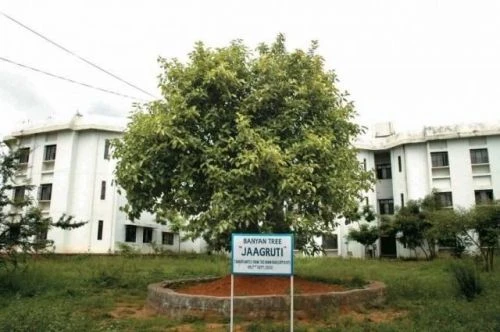
The institute describes its 66-acre campus on Gachibowli Road, also called the Old Bombay Highway. It lists an SBI branch and ATM, canteens, 24-hour security at named campus locations, sports facilities and an on-campus clinic. Its location page describes access toward HiTech City and Lingampally, but this is not a commute-time guarantee. Students who expect frequent off-campus travel should check public transport and actual routes at their usual travel times. The clinic provides primary care and an ambulance service as stated by the institute; it should not be treated as a substitute for full hospital care. Confirm health-service hours and escalation arrangements if ongoing treatment or emergency access is a major concern.
The latest final NIRF ranking edition verified in the saved research is India Rankings 2025. IIIT Hyderabad appears at rank 38 in Engineering, 55 in the University category and 89 Overall. These are three different categories, not three estimates of the same thing. Rank 38 is the relevant figure for an engineering-institution comparison; 55 and 89 answer different category questions. NIRF 2024 ranked the institute 47 in Engineering, so the ordinal position moved up nine places in the 2025 edition. That change is not a nine-point score gain and does not reveal which factor caused it. The NIRF report page links 2026 submitted-data PDFs, but a linked 2026 report was not readable in this review; no 2026 rank is claimed.
The official 2025 NIRF Engineering submission reports placement outcomes through academic year 2023-24, grouped by programme duration rather than branch. For UG four-year programmes, it records 177 placed among 188 graduates in minimum time, a median salary of ₹32.00 lakh per annum and 11 selected for higher studies. For UG five-year programmes, the corresponding values are 35 of 38, ₹30.00 lakh and three higher-study selections. For PG two-year programmes, the report records 136 of 145, ₹23.00 lakh and nine higher-study selections. These rows have different cohort sizes and denominators. They do not identify CSE, ECE or a named postgraduate course, and they do not establish results for the 2024-25 graduating cohort or a 2027-28 applicant.
The NIRF 2025 Engineering framework gives 30% weight each to Teaching, Learning and Resources and Research and Professional Practice, 20% to Graduation Outcomes, 10% to Outreach and Inclusivity and 10% to Perception. Placement and higher studies contribute 40% within Graduation Outcomes, or 8% of the total score by multiplication. This helps put placement evidence in proportion: it matters, but it is one component of a broader institutional measure. NIRF medians are not average or highest packages, and duration-group results cannot answer a branch-specific question. If recruiter mix, role quality or recent placements matter to you, request the newest annual placement report with its exact cohort, programme coverage and denominator.
IIIT Hyderabad is a stronger fit for applicants who want a computing-focused environment, are willing to study in a residential campus, and are interested in either a four-year engineering path or a research-integrated five-year degree. Students drawn to interdisciplinary computing may find the dual-degree structure relevant; applicants intending to specialise should inspect the actual programme and thesis expectations rather than relying on broad institute claims. Its computer labs, research centres, library and sports facilities support a campus-based academic routine, but they do not remove the need to compare course structure and personal costs.
It may be a poor fit if you need a low-cost non-residential option, want guaranteed financial assistance before enrolment, prefer a short applied course without a thesis, need a programme-specific placement guarantee, or cannot meet the institute’s admission route requirements. The available sources do not establish 2027-28 tuition, application dates, cutoffs, aid awards, current placement outcomes or hostel charges. Before choosing, confirm those items from the live 2027-28 programme notice, fee schedule, financial-assistance office and current annual report. Compare the full cost of the degree you plan to take, including the fifth year where applicable, and choose an admission preference only for a programme you are prepared to accept.
Programme information: Official source · Source as of: 2026-11-06
Each route applies only to this named programme and the stated year.
JEE-Main: Joint Entrance Exam Main · 2026-27
Admission-route evidence: Official source · Source as of: 2026-11-06
Programme information: Official source · Source as of: 2026-11-06
Each route applies only to this named programme and the stated year.
JEE-Main: Joint Entrance Exam Main · 2026-27
Admission-route evidence: Official source · Source as of: 2026-11-06
2 recorded programmes · 1 institution. Admission years and conditions apply to the named programme.
Selected ranking categories, with the recorded year beside each result. Open all records for the complete history.
46 published records · Lower numeric ranks are stronger
NIRF
Overall
#842023
NIRF
Overall · university
#532025
India Today
Engineering · private
#12022
Find a program, read its fee details and explore the admission requirements.
Showing 5 courses
Specializations
Listed entrance exams
Eligibility: Post Graduation + IIITH PGEE
Eligibility: Graduation
Specializations
Listed entrance exams
Eligibility: Graduation + IIITH PGEE
Specializations
Listed entrance exams
Eligibility: JEE Main is a direct institute admission mode for four-year B.Tech CSE and ECE. Check the current IIIT Hyderabad notice for Class 12 requirements and other admission modes.
Official IIIT Hyderabad admission modesSpecializations
Listed entrance exams
Eligibility: UGEE is an institute entrance route for the five-year B.Tech and M.S. by Research dual degrees. Check the current IIIT Hyderabad notice for eligibility, the interview and other admission modes.
Official IIIT Hyderabad admission modes2 exams with cutoff data available - showing recent entries
 Adobe
 AIR (FM)
 AlphaGrep
 Amazon
 Arcesium
 Arista Networks
 Bloomberg
 Codenation
 Cohesive Technologies
 Deloitte
 Facebook
 Goldman Sachs
 Google
 HSBC
 Huawei
 Indeed
 Intuit
 Mathworks
 Mentor Graphics
 Microsoft
 Nvidia
 Qualcomm India Pvt. Ltd.
 Reliance Jio
 Samsung
 Swiggy
 Synopsys
 TCS
 Teradata
 TESCO
 ThinCI
 Uber
 Walmart
In this preview: 5 photos · 0 videos
For pure Computer Science education and research, IIIT Hyderabad is often considered equal or superior to top IITs. However, the IITs have a stronger overall brand and offer a more traditional "college life" experience.
Yes, it is possible to gain admission to IIIT Hyderabad without JEE Main. Alternative pathways include the UGEE (for the Dual Degree program), SPEC, Olympiad mode, and the LEEE.
The consensus is yes, especially if you are interested in research. The 5-year Dual Degree program offers greater academic depth, and its placement packages are typically on par with or higher than those for the 4-year B.Tech program.
The attendance policy is very strict. The standard requirement is 85% attendance. Falling below this threshold can result in a grade drop or being barred from taking examinations.
No, IIIT Hyderabad does not have caste-based reservations. Admissions are strictly merit-based. However, the institute does have a Diversity Pool, which reserves 25% of seats specifically for female candidates to improve the gender ratio.
About IIIT Hyderabad.
Colleges cannot rewrite published reviews. We remove spam and abuse.
Ask the communityWhat should future students know?
Tell us which course you're considering. We'll help you work out the next step.
Get instant Partner access after mobile verification. Your public edits are reviewed before they go live.
Claim this college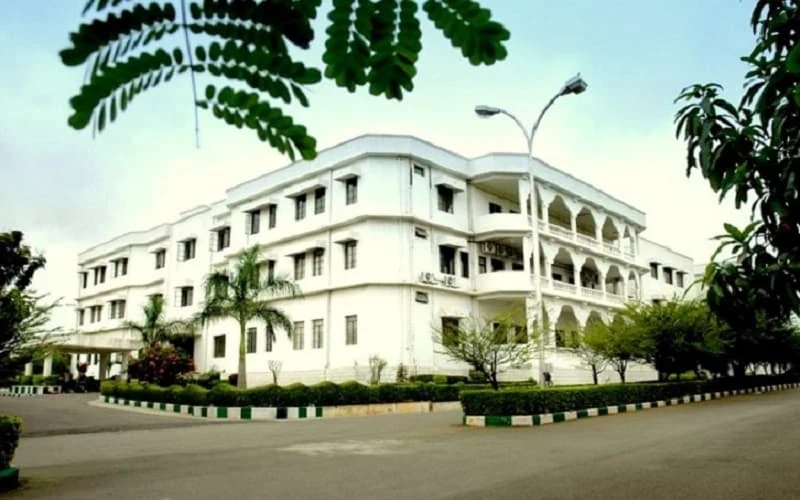
 Auditorium
 Bank & ATM
 Cafeteria
 Campus Security
 Campus Shuttle
 Campus Wi-Fi
 Communication Centre
 Computer Labs
 Gym
 Hostel
 Medical
 Science Labs
 Sports Complex
 Study Library