Loading Admission Guardian content
Loading Admission Guardian content

1 programme · 1 institution. Check the admission year and requirements.
1 programme · 1 institution. Check the admission year and requirements.
International School of Management Excellence (ISME) is a private management institute on Sarjapur Road in Bengaluru. Its current pages describe a two-year full-time PGDM, a three-year BBA with a business analytics and AI diploma, and a three-year B.Com pathway with ACCA and international-business components. The official programme pages and admissions process describe different awarding and fee structures, so applicants should compare the exact programme and batch rather than treating ISME as one undifferentiated degree option. This guide reflects official information checked on 6 November 2026. It separates the 2027-29 PGDM batch from the undergraduate 2027-30 batches and does not treat older placement or admission data as a promise for a future cohort.
The most useful decision is whether the course, total cost and residential requirements match your plans. The PGDM page reports a minimum 60% in graduation and a multi-stage selection process, but does not publish a reliable numeric test cutoff. ISME’s current fee schedule lists ₹8 lakh tuition for PGDM 2027-29 and separate additional charges. For the BBA and B.Com + ACCA, the schedule states that on-campus hostel stay is mandatory throughout the programme. Get the written offer and fee breakdown for the exact course before paying a registration amount. The current fee schedule is the source for the batch-specific prices below.
ISME’s current programme pages identify three principal routes relevant to applicants. The PGDM is a two-year full-time post-graduate management programme. ISME describes it as AICTE-approved, NBA-accredited and equivalent to an MBA degree of an Indian university through AIU. That description concerns the PGDM; applicants should verify the current approval and accreditation period in the official disclosure documents and their offer. Do not assume every short course or undergraduate pathway carries the same status.
The BBA route is presented as a three-year full-time BBA affiliated with Bangalore University, combined with a Diploma in Business Analytics & AI and an International Business Certification component associated with MDIS Singapore. The B.Com route is presented as a three-year full-time Bachelor of Commerce affiliated with Bangalore University, paired with ACCA, a PG Diploma in International Finance and an international-business certification. These are combined pathways, not identical course titles. Confirm in the admission letter which institution awards each credential, which parts are optional, and what examinations, external fees or completion conditions apply.
The current official admissions page also lists a BCA programme and an MCA programme in its navigation and programme catalogue, while the current fee page reviewed for this guide provides detailed 2027-30 schedules for BBA and B.Com + ACCA. The available material does not establish the same fee or admission terms for BCA and MCA in this specific cycle. Applicants considering those courses should ask for their current course-specific prospectus rather than extrapolating from the other undergraduate schedules.
For the PGDM, the page describes specialisations including Marketing, Finance, Human Resource Management and Data Analytics, with international-accounting content mentioned separately in the fee material. The pages use different labels for offerings and certificates, so applicants should ask which options are academic specialisations, which are value-added training and which lead to a separate external credential. A brochure mention alone does not establish that a credential is included in the tuition.
ISME’s PGDM page gives a minimum of 60% aggregate in a recognised bachelor’s or master’s degree and says final-year degree students may apply. It also says a good management aptitude test performance and work experience can be important considerations. The stated selection stages are an online application, statement of purpose, group discussion and personal interview, followed by review by the admission committee. The process page lists a set of test scores for the application checklist, including CAT, GMAT, CMAT, XAT and “Other MAT”; the PGDM FAQ separately lists CAT, XAT, NMAT, CMAT, ATMA and GMAT and says the CAT score is submitted at joining. Because these lists differ, applicants using a test other than CAT should ask in writing whether CAT is also required and which result date is accepted for the exact intake.
ISME’s homepage displayed an Early Action notice with a deadline of 3 November 2026. That date had passed when this guide was checked on 6 November. The process page describes rolling review, generally in the order applications are completed, but the sources do not give a later final deadline or confirm whether the regular PGDM round is still open. Do not treat the passed Early Action date as the final deadline, or assume the application is still open. Ask admissions for the active round, last date, application fee and refund conditions before submitting payment. Check the PGDM eligibility and selection page alongside the admissions process page, because the published test lists do not fully align.
For undergraduate admission, the official process page says applicants must have completed a two-year pre-university course or equivalent with at least 60% and be proficient in written and spoken English. The page provides a general eligibility statement, while individual course pages describe the BBA and B.Com offerings. It does not give a 2027-30 selection formula or published closing marks. Ask whether the selected programme uses an interview or another course-specific assessment and what documents are needed from a candidate awaiting Class 12 results.
The process page lists academic transcripts, a statement of purpose and test score among PGDM application documents, and school transcripts for undergraduate applicants. It gives an application fee of ₹1,200, but does not tie that value to the 2027-29 or 2027-30 batches. Verify the amount displayed in the active online form, the fee’s refundability and whether any external test result must be submitted before the application is considered complete.
For the PGDM 2027-29 batch, ISME lists tuition of ₹8,00,000, including the ₹50,000 non-refundable registration fee, and a separate ₹3,95,000 co-curricular and extracurricular charge. The two published line items total ₹11.95 lakh before annual books and administrative costs, hostel, security deposit and optional choices. The fee page also lists books and administrative expenses at ₹15,000 per year and a one-time ₹20,000 security deposit; it says ₹5,000 is transferred to the Alumni Association and the remaining balance is refunded after convocation. The PGDM hostel table is labelled 2027-28 although the tuition batch is 2027-29, so ask for the second-year residential cost and the applicable year before treating a projection as a final invoice.
For BBA + Diploma in Business Analytics & AI and B.Com + ACCA, the fee schedule is for 2027-30. Tuition is ₹5,50,000 for Indian BBA students and ₹6,75,000 for NRI students; for B.Com + ACCA the corresponding tuition is ₹5,00,000 and ₹6,00,000. Both UG routes list a separate ₹1,95,000 industry-certification and co-curricular fee across three years. Books and digital resources are ₹10,000 per year, while Bangalore University and administrative expenses are listed at ₹10,000 per year for Indian students and ₹20,000 for NRI students. The published first-year hostel price is ₹1,75,000 for 11½ months, with ₹10,000 registration and a stated 5% annual increase. The schedule does not state every future year’s exact amount; hostel stay is stated as mandatory for the complete UG programme.
B.Com + ACCA also has a direct-to-ACCA subscription and examination row showing ₹50,000 over years one and two, then says the third-year fee is paid online by the student without giving its amount in that row. Some ACCA training or examination components are described as included through an agreement, but this does not establish the full amount payable for every student or exam attempt. Ask for the current third-year charge, exemptions and included papers in writing. Do not treat ₹50,000 as a fully priced three-year ACCA bill.
Scholarship terms also differ by course. For PGDM, the fee page lists tuition reductions of 50%, 25%, 15% and 10% at CAT percentiles of at least 85, 80, 75 and 70, respectively, with above 70% or CGPA above 8 in both Class 10 and 12. It separately lists a 10% tuition award for applicants with two or more years of MNC work experience, with the same school-mark condition. The page says only one award in the stated B-to-E categories, whichever is higher, applies after verification. For BBA and B.Com + ACCA, it lists ₹1,00,000, ₹50,000 and ₹25,000 merit awards at specified Class 10 and 12 thresholds, plus fixed defence, sibling, SC/ST and Bengaluru-hostel awards. Only one award in categories B to F applies after verification. The schedule does not explain how overlapping PGDM CAT and work-experience eligibility is resolved. Ask which award is approved, which fee line it reduces and when it is applied before lowering your budget.
The latest NIRF Management submission opened for this review is the institution’s 2026 report, which contains outcomes for three earlier two-year PG cohorts. Its most recent cohort row is entry 2023-24 and exit 2024-25: 180 students admitted, 180 graduating in the minimum stipulated time, 170 placed, median salary ₹7,38,852 and zero selected for higher studies. The report labels the programme group as PG [2 Years Program(s)] and identifies ISME by institute code IR-M-S-17777. The placed-to-graduated ratio is 170 divided by 180, or 94.4%; that is a calculation from the reported counts, not a rate printed by the report. It is not a breakdown by specialisation or a promise for the incoming batch.
The NIRF submission also reports earlier cohorts: entry 2022-23 and exit 2023-24 with 159 graduates, 63 placed and a ₹5 lakh median; and entry 2021-22 and exit 2022-23 with 112 graduates, 55 placed and a ₹5.4 lakh median. The rows should remain separate by reporting year and cohort. The NIRF 2026 submission is institution-submitted data rendered from the report, not a placement forecast. A median among placed graduates is not an average salary, highest offer or total-cost return calculation. The source does not provide role-level salary distributions or explain how the “higher studies” count relates to placement categories.
ISME’s own placement page separately labels headline figures for PGDM 2024-26. It reports 100% placement before graduation, a highest CTC range of ₹14.5-18 lakh, an average CTC range of ₹8-9 lakh, 260+ recruiters and 48% of the batch placed in repeat recruiting organisations. It also reports a 30% Phase 1 placement measure, defined on the page as within two months after completing the first year. These are institutional claims for a different, later-labelled batch than the NIRF cohort. The page does not give the denominator or salary calculation method behind the headline claims. Recruiter visits are not job offers, and the reported Phase 1 measure is not the same as final placement.
The same page describes internship and training results separately: 100% summer internship placement, 97% receiving paid internships, highest stipend ₹45,000 per month, average stipend range ₹15,000-20,000 per month, and a 95% pre-placement-offer conversion rate for a four-to-six-month Industry Trajectory Program. The page does not define the denominator for the conversion figure. These are not final salary outcomes. Before comparing ISME with another institute, ask for the number of students seeking jobs, eligible students, offers accepted, salary distribution and programme-specific placement results for the exact batch.
The undergraduate placement page groups BBA, B.Com and BCA in an undated summary. It reports that 57% pursue higher education, 13% choose entrepreneurship and 30% opt for campus placements, alongside 100% placement success for students who opted in and highest/average CTC of ₹9 lakh/₹5.2 lakh. The summary does not identify the graduating year, group size or separate course-level denominator. The 100% statement is conditional on students who opted for placements and cannot be treated as the outcome for all UG students. Ask ISME for a dated course-level report before using the summary to forecast outcomes.
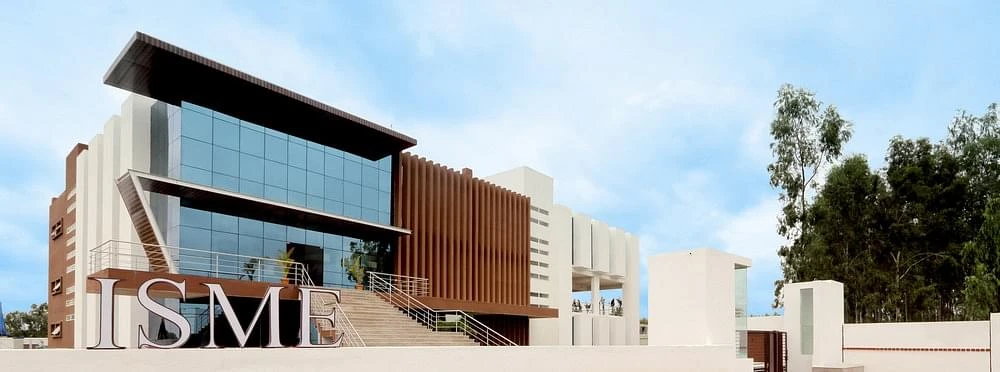
ISME’s current infrastructure page lists more than 25 smart classrooms, more than 10 advanced computing labs, two hostel blocks, a 400-seat auditorium, a campus canteen and rooftop cafeteria, sports spaces and a Knowledge Resource Centre. It names digital-library resources including EBSCO, ProQuest, JSTOR, INFLIBNET, the British Council Digital Library and IIM Bangalore Library resources. These are institutional descriptions, not an independent facilities audit. The page does not provide access hours, software specifications, room occupancy or student-to-computer ratios. Students interested in analytics or research should ask which software and databases are available to their course and whether they can access labs outside class hours.
The hostel and infrastructure pages describe on-campus residence, Wi-Fi, round-the-clock security, CCTV, drinking water, housekeeping and recreational spaces. The infrastructure page also mentions an on-call ambulance, a hospital tie-up on Sarjapur Road, counselling support and annual health-insurance cover up to ₹50,000 for hostel residents. The sources do not specify room allocation, accessibility, emergency response times, insurance exclusions or counselling appointment access. Request the current hostel rules, room type, meal plan, emergency contact procedure and written charge schedule. The UG fee schedule makes hostel stay compulsory; the PGDM hostel price should be confirmed separately and must not be confused with a compulsory-residence rule.
The admissions page lists the campus address as Sy. No. 88, Chembanahalli, near Dommasandra Circle, Sarjapur Road, Bengaluru 562125, Karnataka. Before joining, check the travel route at the time you expect to commute and confirm transport options directly with the institute. The official sources reviewed here establish the address but do not provide a verified daily shuttle timetable or commute duration.
ISME may suit applicants who want a focused management programme in Bengaluru and are comfortable with a structured, career-oriented environment. A PGDM applicant should compare the actual selection stages, specialisation options, full cost and placement reporting basis with other programmes that publish comparable cohort-level data. A BBA or B.Com + ACCA applicant should weigh the Bangalore University degree against the additional diploma, professional qualification or certification components and the separate external fee obligations. The current sources do not support a blanket claim that one route is best for every student.
Before paying, get written answers to the details that remain uncertain: whether the 2027-29 PGDM application round is open and its deadline; whether CAT is required when another test is submitted; how the scholarship award is determined if multiple criteria apply; which ACCA fees remain in year three; the full residential cost by year; and which placement denominator and salary method ISME uses for the batch. For a campus visit, check the rooms and facilities you expect to use rather than relying only on headline counts or photographs.
Keep the official programme page, active application form, fee schedule and offer letter together. The school’s public pages provide a useful starting point, but several current-cycle details are either stated on separate pages or left unresolved. A written course-specific answer is the safest basis for comparing the total investment, admission path and likely student experience.
Programme information: Official source · Source as of: 2026-11-06
1 recorded programme · 1 institution. Admission years and conditions apply to the named programme.
Selected ranking categories, with the recorded year beside each result. Open all records for the complete history.
23 published records · Lower numeric ranks are stronger
IIRF
Management · private
#912024
IIRF
MBA · private
#942024
TOI
MBA
#342021
Indiatoday
MBA
#842023
Find a program, read its fee details and explore the admission requirements.
Summary of the programs shown below. Total course fee
Showing 5 courses
Eligibility: Graduation with 50%
Specializations
Eligibility: 10+2 with 60%
Specializations
Eligibility: 10+2
Specializations
Eligibility: 10+2
Specializations
Listed entrance exams
Eligibility: Graduation with 60%
3 exams with cutoff data available - showing recent entries
 Accenture
 Amazon.com
 Anarock Property Consultants Private Limited
 Aon Hewitt
 Axis Bank
 Bata
 BOC India Ltd
 Bosch Limited
 Career Net
 Cognizant
 Croma
 Decathlon
 Exide Industries
 EY Consulting
 Federal bank
 Feedback Company
 Flipkart
 GODREJ Pvt. Ltd
 Grant Thornton India Private Limited
 HCL
 HDFC Bank
 HGS
 HSBC Bank
 IBM
 IDC Technologies Solutions
 Insofe Education Pvt. Ltd
 Kotak Mahindra Bank
 KPMG
 Marico Industries Ltd.
 Mu Sigma
 MuSigma Business Solutions Ltd.
 Naukri.com
 Ninjacart
 Nobroker.com
 Northern Trust
 NxtGen
 Objectwin
 Ocwen Financial Services
 Oyo Rooms
 PWC
 Quess
 S&P Global
 Saint Gobain Glass
 State Street
 TESCO
 The Nielsen Company
 Thomson Reuters
 Times of India
 Vedantu Innovations
 VIP
 Walmart
 WELLS FARGO
 WNS Global
 Yes Bank
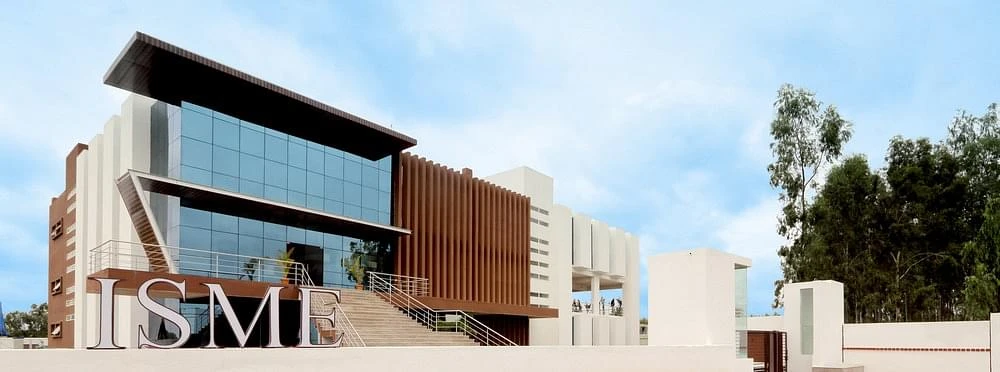
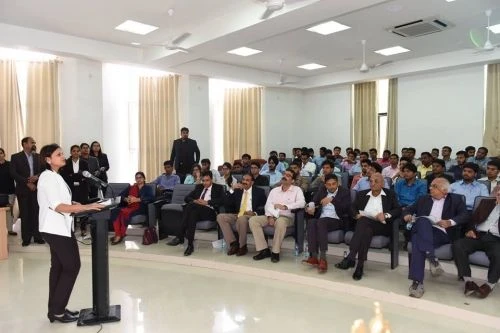
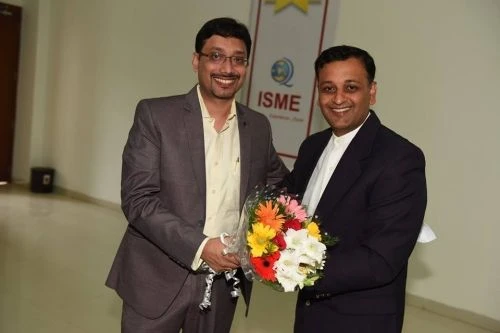

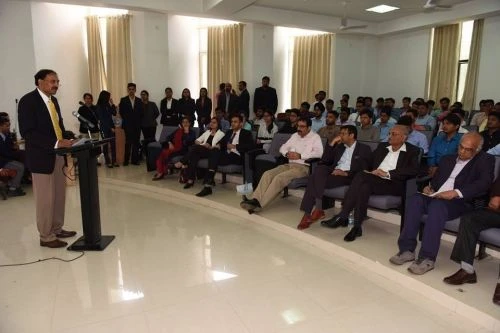
In this preview: 5 photos · 0 videos
Yes, the International School of Management Excellence (ISME) is considered good for its PGDM program, particularly for specializations in Finance and Analytics. This is due to its industry-aligned curriculum and strong placement records with firms like the Big 4.
The median or average placement package at ISME consistently ranges between 7 and 8 Lakhs Per Annum (LPA), while the highest package varies by year and student profile.
No, hostel accommodation is not mandatory at ISME. However, it is highly recommended for PGDM students due to the program's hectic schedule and the frequency of late-night project work.
The attendance policy at ISME is very strict. Students are typically required to maintain at least 80% attendance; falling below this threshold usually results in being debarred from examinations or having to pay heavy fines.
ISME offers a Post Graduate Diploma in Management (PGDM). This PGDM is recognized by the Association of Indian Universities (AIU) as equivalent to an MBA for purposes such as government jobs and pursuing higher studies like a PhD.
About ISME.
Colleges cannot rewrite published reviews. We remove spam and abuse.
Ask the communityWhat should future students know?
Tell us which course you're considering. We'll help you work out the next step.
Get instant Partner access after mobile verification. Your public edits are reviewed before they go live.
Claim this college
 Auditorium
 Cafeteria
 Campus Security
 Campus Shuttle
 Campus Wi-Fi
 Computer Labs
 Hostel
 Medical
 Smart Classrooms
 Sports Complex
 Study Library