Loading Admission Guardian content
Loading Admission Guardian content

Explore the available options or ask for admission guidance.
Explore the available options or ask for admission guidance.
Jagannath International Management School (JIMS) Kalkaji is a management institute at MOR Pocket 105, Kalkaji, New Delhi. Its current campaign advertises two full-time, two-year programmes for the 2027-29 batch: Post Graduate Diploma in Management (PGDM) and PGDM-International Business (PGDM-IB). The campaign lists 120 PGDM seats and 60 PGDM-IB seats. These are the institute’s stated programme and intake details; they should not be read as a promise of a seat, scholarship or placement outcome.
The two programmes are distinct choices. PGDM is the general management programme, while PGDM-IB is presented as the International Business programme. JIMS also publishes programme-level pages and application information; compare the current curriculum, specialisations, admission terms and fee schedule for the exact programme you intend to select. This profile is assigned to the 2027-28 publication edition, while the application and fee terms discussed below are explicitly for the 2027-29 intake. A source mentioning one edition should not silently be treated as another.
The Eligibility Criteria page describes each programme as equivalent to an MBA by the Association of Indian Universities (AIU) and accredited by the National Board of Accreditation (NBA). The JIMS Awards page separately lists SAQS quality accreditation and NBA accreditation for PGDM and PGDM-IB. These are institute-published status statements, not a substitute for checking the validity period, accrediting-body record and programme scope that apply to your intended intake. The course is titled a PGDM, not an MBA degree; check the exact credential and recognition language before comparing it with a university MBA.
JIMS operates in South Delhi rather than advertising a residential university campus. The current site gives its address as MOR Pocket 105, Kalkaji, New Delhi 110019. If daily travel, accessible routes, hostel availability or proximity to a particular workplace matters to you, check the route and accommodation arrangement yourself. The official pages reviewed describe facilities and a female hostel, but do not give a current student travel plan, hostel rate or vacancy position.
JIMS’s current Eligibility Criteria page says applicants to PGDM and PGDM-IB need at least 50% marks in a bachelor’s degree in any discipline. It also allows final-year students to apply and currently says they must submit final-year results by October 2027. That page’s result deadline is not clearly labelled as belonging to the 2027-29 intake, so final-year applicants should ask JIMS to confirm in writing that the date applies to their offer and which documents are due.
The eligibility page lists valid CAT, XAT, MAT, CMAT or ATMA scores. It also gives a “500 Composite Score or equivalent” line for CAT, MAT, ATMA and XAT, but does not include CMAT in that line or define the composite-score scale. Do not interpret 500 as a CAT percentile, extend it to CMAT, or assume that the page specifies accepted test years. Ask the admissions office which exam editions are accepted for 2027-29, how the score is converted and whether any section-level condition applies. A score condition on an eligibility page is not a guarantee of shortlisting or an offer.
The institute’s Admission Procedure page is headed for the 2027-29 session and lists an aptitude test, written test, group discussion and personal interview. The Eligibility Criteria page describes shortlisted applicants attending a Written Assessment Test (WAT) and Personal Interview (PI), and says final selection also considers previous academic records. Those descriptions do not fully match. The public pages do not give a current 2027-29 weighting table that reconciles them. Before applying, ask whether the PGDM and PGDM-IB process includes both WAT and group discussion, what each stage evaluates and how it contributes to final selection.
The application page currently lists an application fee of ₹1,200 and says completed forms are to be submitted with attested documents and photographs within 10 days. Confirm that this instruction and fee still appear in the form you use, and save the form, payment receipt and written communication. The live form controls the actual closing date and required document list; the public page does not establish all applicant-specific exceptions.
The Admission Procedure page lists a total fee of ₹10.75 lakh for each programme for the 2027-29 session, plus a separate ₹10,000 refundable security amount. It says the fee is payable in four instalments but does not publish their amounts or due dates. The gross figure is not a personalised net fee: the page does not explain every charge included, the security return timeline or how a scholarship is applied to the instalment schedule. Request a dated fee letter for PGDM or PGDM-IB before paying, with tuition, security, any additional charges, each due date and the refund conditions shown separately.
The same page lists 2027-29 scholarship categories of 10%, 20%, 25% and 50% tied to academic marks, entrance scores and, for several categories, a GD/PI score. The 20% category lists 80 percentile CAT or 90 percentile CMAT with 65% in Classes X, XII and graduation and a GD/PI score of 70. The 25% category lists 85 percentile CAT, the same 65% academic condition and GD/PI score of 75; the 50% category lists 90 percentile CAT with those same academic and GD/PI conditions. The 10% table row is more compressed: its header and values show 60% academics, MAT/CAT/CMAT thresholds of 700/75 percentile/80 percentile, GD/PI score 65 and 15 seats. Confirm the test-to-threshold mapping and whether each academic level must meet 60% before relying on it.
JIMS also lists separate benefits for specified groups: a ₹1 lakh waiver for eligible JIMS students with a valid CAT, XAT, CMAT, MAT or ATMA score; a separate ₹1.5 lakh waiver associated with MAT 700 and 65% academic marks; ₹50,000 per year for wards of martyrs; and a 10% sibling scholarship with proof. The page does not say whether these can be combined with one another or with the percentage awards, what the percentage is applied to, or whether the amount renews in later instalments. Ask for a written award calculation that names your programme, intake, exam year, eligibility documents, fee basis and renewal conditions. A listed eligibility category is not an award already credited to your account.
The page’s refund section also needs careful reading. Although the same procedure page is headed for 2027-29, its no-refund sentence refers to foundation classes beginning on 15 June 2026, a past date. Do not use that as the 2027-29 cancellation deadline. Request the current refund policy and payment schedule in writing, and keep tuition, refundable security, application charge and any confirmed scholarship on separate lines when comparing costs.
JIMS’s official Placement Report and 2027-29 campaign both report a 97% placement rate, ₹10.5 lakh average salary and ₹25 lakh highest salary for the 2024-26 batch. These are institute-reported outcomes for a prior cohort, not a forecast for students entering in 2027-29. The report and campaign do not split the headline between PGDM and PGDM-IB, specialisations, roles or student groups. The pages also do not define the denominator behind 97% or explain whether the salary measure is fixed pay, total cost to company (CTC), or includes variable components and one-time bonuses.
The NIRF 2026 Management submission published by JIMS provides a different, cohort-specific view. Its placement table reports graduating-year rows for 2022-23 (104 graduates, 102 placed, median salary ₹7.8 lakh), 2023-24 (123, 115, ₹8.7 lakh) and 2024-25 (175, 175, ₹9.5 lakh), with zero students selected for higher studies in each displayed row. These are the figures in an institute-submitted NIRF form; they are not the same measure or cohort as the 2024-26 campaign’s average and highest-package headline. Do not combine them into a single trend or assume the two report lines use the same definitions.
Before comparing placement claims, ask for the report’s eligible and participating student counts, the definition of the 97% rate, the median and salary-band distribution, and separate results for each programme. Also ask how the institute treats off-campus offers, multiple offers, internships, students pursuing further study and salary components. The current headline is useful context, but it does not reveal what a typical graduate will earn or guarantee that a new student will be placed.
On its Awards and Achievements page, JIMS lists a Times of India B-School result dated 29 January 2025: 15th among the Top 100 B-Schools, 10th among the Top Private 50 B-Schools and 5th in the North Zone. It also lists separate Business World, The Week and Business Today survey positions from October and November 2024, with overall, private, regional and dimension-specific categories. These are not interchangeable “national ranks.” The JIMS page reports the results but does not provide each publisher’s methodology beside the entries. Compare schools only within the same publisher, edition and category, and check the original survey before treating a difference as meaningful.
JIMS links an NIRF 2026 document from its NIRF page. The linked PDF is headed “Submitted Institute Data for NIRF 2026” and names Jagannath International Management School, Kalkaji, under identifier IR-M-S-74. It contains institutional intake, student, placement and accessibility data, but it is a data submission rather than a published rank result. The separate NIRF 2025 management form names the Kalkaji school under identifier IR-M-C-32926. The displayed identifiers differ; do not infer a ranking trend from the forms or merge them without a confirmed identity crosswalk.
The JIMS Awards page describes the school as among the NIRF top 100 institutions in India in the 2021 ranking. This is a historical statement reported by JIMS, not a current position. Likewise, an accreditation statement is not a survey rank, and neither one establishes placement outcomes, admission selectivity or the experience of an individual student. Verify the exact programme scope and current validity if accreditation matters to your decision.
JIMS’s current Infrastructure page lists a library, computer labs, language lab, lecture rooms, auditorium, conference hall, GD/PI room, gym and cafeteria. It describes classrooms as air-conditioned with Smart Boards, projectors, Wi-Fi and high-speed internet; its listed room capacities are 130 for the auditorium, 30 for the conference room and a 20-student group in the GD/PI room. The institution also lists computer equipment, network printers, campus Wi-Fi and NSmart simulation software. These are the school’s published descriptions, not an independent equipment audit. Ask which facilities PGDM students can use outside scheduled classes, what software licences are included and whether any amenities have fees or restricted hours.
The E-Library page lists printed and electronic resources and services such as DELNET, J-Gate, e-Research, Prowess, Web of Science, Scopus, NPTEL, the National Digital Library and NLIST. It says e-library resources are accessible across the campus network 24 hours a day. It does not establish off-campus access or licence rules for each database, so ask how students log in and whether a personal device is required.
The Student Information Handbook 2025 describes a female-only hostel at walking distance from the institute, with air-cooled or air-conditioned rooms, a common room with dining area, Wi-Fi, home-cooked meals and a kitchenette on each floor. That handbook is dated and provides no current fee, vacancy, booking terms, room occupancy or policy for male students. Contact JIMS for current availability, charges, deposits, meal terms and rules before assuming accommodation is included or reserving a place elsewhere.
In its NIRF 2026 submission, JIMS reports that more than 80% of buildings have lifts or ramps, that walking aids including wheelchairs and transport between buildings are provided, and that more than 80% of buildings have specially designed toilets. These are self-reported institute responses, not an independent access audit or a list of which routes are accessible. If you need a particular step-free route, accessible washroom or accommodation, contact the institute with the exact route and ask for current on-site confirmation.
JIMS Kalkaji may suit applicants seeking a full-time management diploma in Delhi and comparing the institute’s published 2027-29 intake, fees, selection rules and reported placements. The choice depends on how the two programmes fit your goals, whether the total cost works without assuming a scholarship, and whether the institute can answer your questions about test validity, selection stages, fee refunds and placement methodology. The available evidence supports those concrete comparisons; it does not justify a guarantee that JIMS is “best,” a particular salary return or a universal fit for every applicant.
Before submitting an application, identify the programme and 2027-29 batch in your notes. Ask which test years are accepted, what the 500 composite-score line means for your exam, whether the current final-year result date applies to you, and whether selection uses WAT, group discussion, PI or all three. Request the application closing date, a complete fee circular, the correct refund deadline and scholarship terms that state the amount, basis and renewal. Save each answer with the official form and payment receipt.
If placements drive your decision, request the underlying 2024-26 report, a definition and denominator for the 97% rate, a median and salary distribution, and programme-specific outcomes. If campus services matter, visit the library and labs, ask about software and database access, and verify hostel terms and accessible routes. Compare JIMS’s rank claims only with the same survey edition and category at another school. These checks will help you judge the exact programme and conditions you are considering, rather than relying on a single headline from a different year or measure.
Selected ranking categories, with the recorded year beside each result. Open all records for the complete history.
58 published records · Lower numeric ranks are stronger
TOI
MBA
#172023
Indiatoday
Commerce
#632021
Indiatoday
MBA
#762021
Outlook
BBA/BBM
#232022
Find a program, read its fee details and explore the admission requirements.
Summary of the programs shown below. First-year fee
Specializations
Listed entrance exams
Eligibility: Graduation with 50%
5 exams with cutoff data available
 Accenture
 Acuity Knowledge Partners
 Aditya Birla Capital
 Airtel
 Amazon
 American Express
 Amul
 Archer & Bull
 Asian Paints
 Axiom Landbase
 Bajaj Allianz
 Berger
 Bridge Group Solutions
 Cafe Coffee Day
 CBRE
 Cvent India Pvt. Ltd
 Decathlon
 Deloitte
 Ernst & Young
 Extramarks Education India Pvt. Ltd.
 FinEdge
 Glenmark Pharmaceuticals Ltd
 Godrej & Boyce
 HCL
 HDFC Bank
 Hettich
 ICICI Bank
 ICICI Prudential
 ICICI Securities
 ITC
 JK Tyre
 Kent
 Khimji Ramdas
 Kotak Life Insurance
 Lenskart
 LG Electronics
 Magic Bricks
 MRF
 Nestle India
 Prism Cement Ltd.
 Protiviti Consulting Pvt. Ltd.
 S&P Capital IQ
 Samsung
 Tata
 TCS
 Team Computers
 Vivo
 Wipro
JIMS Rohini is often considered the flagship for MCA and technical courses, while JIMS Kalkaji is preferred for PGDM and BBA due to its South Delhi location and corporate exposure.
Yes, the PGDM at JIMS Kalkaji is AIU-recognized, meaning it is treated as equivalent to an MBA for government jobs and higher studies such as a PhD.
No, JIMS Kalkaji does not have an on-campus hostel. The hostel facility is off-campus but within walking distance and is primarily for girls. Accommodation for boys is managed through tie-ups with nearby paying guest (PG) facilities.
The official CAT cutoff for JIMS Kalkaji's PGDM program is 60 percentile. However, students with scores between 50-55 percentile are sometimes considered if they have a strong academic background or relevant work experience.
Yes, JIMS Kalkaji is considered very good for BBA. It is consistently ranked among the top 3-5 GGSIPU colleges for BBA and has strong placements for undergraduate students, with companies like Amazon and Deloitte recruiting from the campus.
About JIMS Kalkaji.
Colleges cannot rewrite published reviews. We remove spam and abuse.
Ask the communityWhat should future students know?
Tell us which course you're considering. We'll help you work out the next step.
Get instant Partner access after mobile verification. Your public edits are reviewed before they go live.
Claim this college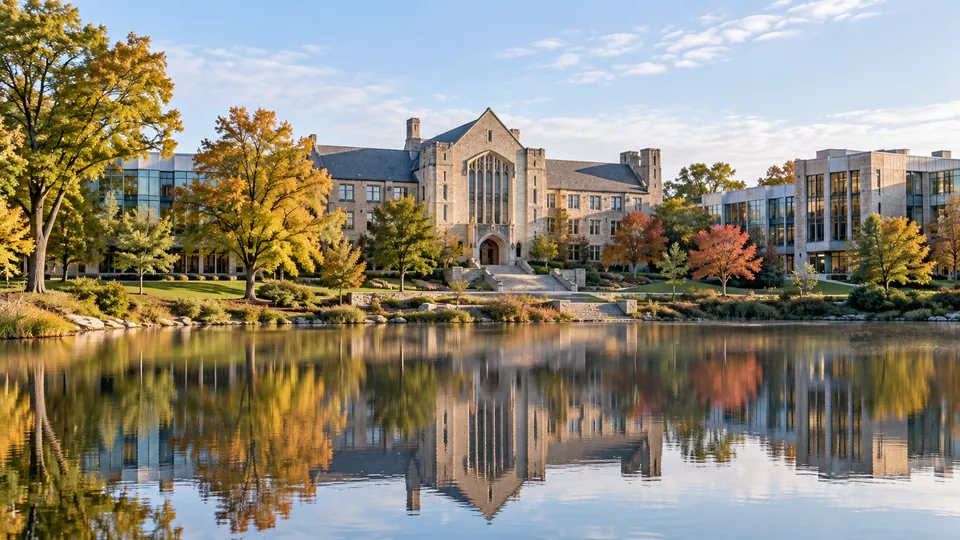
 Auditorium
 Cafeteria
 Campus Security
 Campus Shuttle
 Computer Labs
 Hostel
 Medical
 Sports Complex
 Study Library