
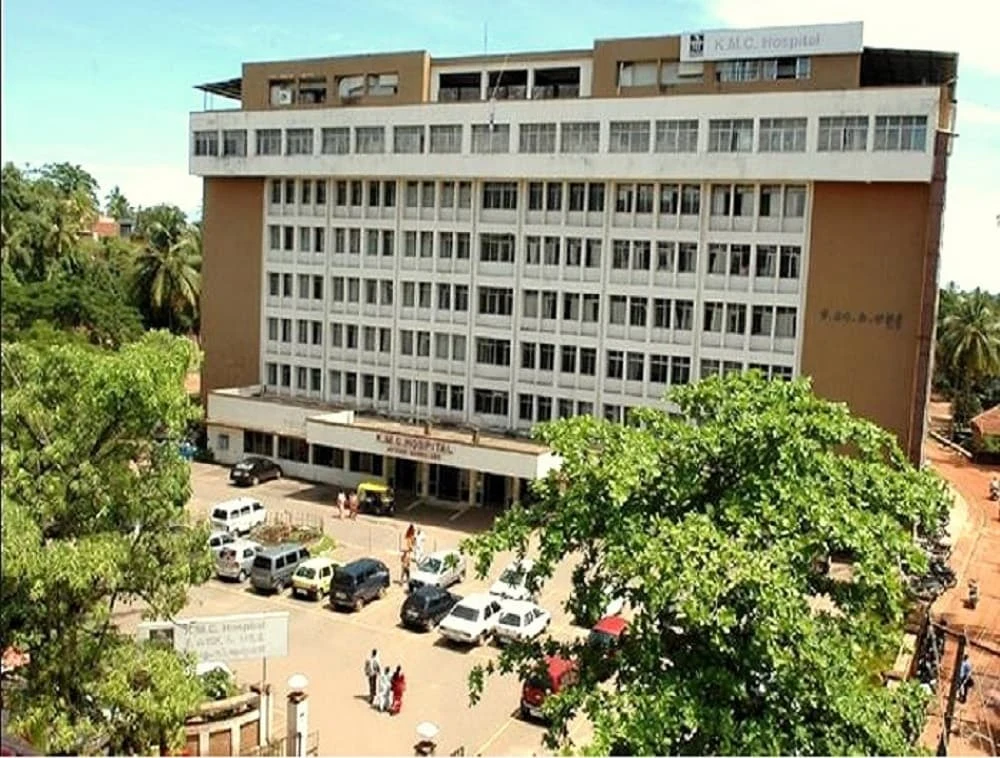

KMC Mangalore Placements: NIRF Cohort Data and Its Limits
Read the figures as reported outcomes
The latest direct placement table located for this campus is the institution-submitted dataset in the Ministry of Education’s National Institutional Ranking Framework (NIRF) India Rankings 2025 profile for Kasturba Medical College, Mangalore, institute code IR-D-C-7251. It reports placement and higher-studies data for three undergraduate cohorts and three postgraduate cohorts, with the graduating years running from 2020-21 through 2023-24. These are historical cohort outcomes published in the 2025 submission, not a 2025 graduate salary survey and not a projection for the 2027-28 intake. NIRF 2025 data submitted by KMC Mangalore
NIRF reports placed students, graduates in the minimum stipulated time, median salary among placed graduates and students selected for higher studies. Those are separate measures. The percentages below are Admission Guardian calculations of placed graduates divided by graduates in minimum stipulated time; the source does not label that percentage as its own placement rate. The table preserves both the first-year intake cohort and the year in which the reported students graduated, so readers can see which group each outcome describes.
Undergraduate outcomes in the NIRF table
NIRF labels the undergraduate group “UG [5 Years Program(s)]”. Its three records show the following: the 2016-17 intake cohort had 247 students graduate in the minimum stipulated time in 2020-21, of whom 225 were reported placed, with a ₹8,88,000 median salary among those placed and 22 selected for higher studies. For the 2017-18 intake cohort, 234 graduated in 2021-22, 187 were placed, the placed-graduate median was ₹9,20,000 and 47 were selected for higher studies. The 2018-19 intake cohort had 235 graduate in 2022-23, 217 reported placed, a ₹9,50,000 median and 18 selected for higher studies. NIRF 2025 submitted data, UG outcomes
The percentage column is calculated as reported placed students ÷ graduates in minimum stipulated time, rounded to one decimal place. It is not a percentage of the original intake. For example, 225 ÷ 247 is about 91.1%. In all three undergraduate rows, the placed and higher-studies counts add up to the number of students reported as graduating in minimum time. That is a description of these submitted rows only; it does not establish that every graduate took one of those paths or explain other career choices.
Postgraduate outcomes are a separate group
NIRF’s “PG [3 Years Program(s)]” table reports a different set of cohorts. The 2019-20 first-year intake cohort had 87 students graduate in the minimum stipulated time in 2021-22; 71 were reported placed, the median salary among placed graduates was ₹12,36,684 per annum, and 10 were selected for higher studies. For the 2020-21 intake cohort, the corresponding 2022-23 figures were 99 graduates, 74 placed, a ₹13,20,000 median and 18 selected for higher studies. The 2021-22 intake cohort reported 117 graduating in 2023-24, 97 placed, a ₹9,12,000 median and zero selected for higher studies. NIRF 2025 submitted data, PG outcomes
These PG figures should not be combined with the undergraduate series. The PG category covers three-year programmes in NIRF’s submission; the PDF does not break placements or salary down by individual speciality. The placed-to-graduate percentages use the same calculation as the UG table and are not counts divided by sanctioned intake. Unlike the UG rows, the placed and higher-studies counts do not account for every PG graduate in these records. The source does not classify the remaining students, so the difference should not be labelled unemployment or non-placement.
What the report does not tell applicants
The NIRF table does not name employers, job titles, speciality-level results, individual offers, location or the proportion of salaries above or below the median. A median is the middle reported salary among the placed graduates in that group, not an average and not a guaranteed starting salary for an incoming student. The table also does not say whether the reported placed status includes public-sector recruitment, further training arrangements or other paths; use its wording as submitted rather than assuming a recruiter mix.
For MBBS students, placement figures should be read alongside the course’s professional structure. MAHE describes the Mangalore MBBS programme as four and a half academic years followed by a compulsory one-year rotating internship, for 5.5 years in total. Internship is a required clinical-training component, not by itself evidence of a salary-based placement. The NIRF table does not provide an internship stipend or itemised employment outcomes. Students comparing medical colleges should look at the specific clinical postings, internship terms and postgraduate pathways as well as the NIRF counts, and should request current documents for any claimed recruiter or salary detail. MAHE MBBS programme page
How to use these figures for a 2027-28 decision
Use the NIRF table as a historical reference for KMC Mangalore, not as a promise of an individual outcome. The undergraduate series shows that reported placed counts and medians vary by cohort; the postgraduate series also varies across graduating years. Neither table can estimate what one student will earn, how quickly they will find a role or which speciality they will enter. The report’s institution and campus identifier is explicit, which matters here because KMC Mangalore and KMC Manipal are separately listed medical institutions in NIRF. Do not blend their rows.
When asking KMC for newer placement information, request the graduating year, programme or speciality, graduates included in the denominator, number placed, higher-studies count, median calculation and whether internship is included. Ask whether the institution has a newer campus-specific report than the 2025 submission. Compare only the same programme group and reporting basis. A headline salary without those details is not directly comparable with the NIRF medians above.
Are these salaries for the 2027-28 batch?
No. The latest direct source located here is the NIRF 2025 data submission, which reports graduating cohorts through 2023-24. It does not forecast salaries or placements for students entering in 2027-28.
Does NIRF provide separate placement data for each PG speciality?
No speciality-level split appears in this submitted table. It reports an aggregate three-year postgraduate category; ask the college for a current, programme-specific breakdown if one is available.