Loading Admission Guardian content
Loading Admission Guardian content

8 programmes · 1 institution. Check the admission year and requirements.
8 programmes · 1 institution. Check the admission year and requirements.
Motilal Nehru National Institute of Technology Allahabad (MNNIT) is a public technical institution in Prayagraj, Uttar Pradesh. It began in 1961 as Motilal Nehru Regional Engineering College, became a National Institute of Technology in 2002, and is covered by the National Institutes of Technology Act as an Institution of National Importance. That history explains its present status, but applicants should make decisions from the programme-specific notices, fee schedules and outcome reports for the relevant year. Several older claims about rank, packages, branch-wise placements and campus rules in the previous profile were not supported by current primary records and have been removed.
MNNIT’s current About Us page describes an academic portfolio wider than undergraduate engineering: nine B.Tech programmes, 19 M.Tech programmes including part-time options, MCA, MBA, M.Sc. in Mathematics and Scientific Computing, MSW and Ph.D. study. The institute’s own page says its first postgraduate programme began in 1966 and records the establishment of the School of Management Studies in 1996. These are institution-reported programme counts and can change as departments revise their offerings; use the academic portal and the relevant department page to confirm that a named specialisation is accepting students in the cycle you are considering.
The practical implication is that MNNIT is not a single-route or single-discipline choice. Undergraduate engineering applicants follow a different process from candidates for M.Tech, MCA, MBA, M.Sc., MSW or doctoral study. The institute’s Admission page, last updated 27 October 2026, lists distinct examination and counselling links, including JEE Main and JoSAA/CSAB for undergraduate entry, GATE for regular M.Tech, JAM for M.Sc., NIMCET for MCA, and several accepted test routes followed by group discussion and interview for regular MBA. These are route indicators from the page, not a substitute for the eligibility rules, accepted score year, dates or selection weights in the current notice. See the separate MNNIT admission guide and verify each linked authority before applying.
The same care applies to academic rules. A broad institutional overview cannot establish a current attendance threshold, branch-change policy, grading rule, intake count or department-specific curriculum. Consult the applicable ordinance, curriculum and department notice rather than relying on an older student account or a general claim about “NIT rules.” The public academic portal also separates fee structures by admission year, which is a useful reminder that a programme’s cost depends on cohort and fee schedule, not just its name.
MNNIT’s revised Institute Fee Structure is labelled for AY 2026-27 and “subsequent sessions.” It contains separate tables for B.Tech, regular and part-time M.Tech and MBA, MCA, M.Sc., MSW and Ph.D. It distinguishes tuition from institute, user, hostel and other charges, and the B.Tech schedules vary by family-income and candidate category. The schedule’s forward-looking phrase should be read as the label on that document: it is not a separately issued 2027-28 notice. Before budgeting, open the row for the exact programme, entry route and category, then check the newest institute instructions for hostel, mess, deposits and payment timing. A tuition figure alone is not the semester invoice or the cost of residence.
For the component-level schedule and dated scope, use the MNNIT courses and fees guide alongside the official Dean Academic portal. The portal publishes fee documents by academic year and links payment and student-registration instructions. Do not multiply one semester’s amount into a programme total unless all semesters, category assumptions and one-time items are accounted for. If you qualify for a waiver or scholarship, confirm the process and documents with the current institute notice; the existence of a fee concession in a table does not by itself confirm your eligibility or award.
The academic portal describes MNNIT’s campus as 222 acres. The institute is in Prayagraj, historically also called Allahabad in its name and institutional records. Campus size alone says little about a student’s day-to-day experience, but it gives useful context for questions about residence, travel between academic buildings and activity spaces. Applicants who expect to live on campus should verify their own allotment conditions, room charges, mess arrangements and reporting dates instead of assuming that every admitted student receives the same accommodation.
The official hostel-structure page lists eight boys’ hostels and five girls’ hostels and provides hostel-wise room and capacity tables for 2025-26. This establishes the published residential structure and a dated capacity snapshot; it does not guarantee a room for a particular student, show current occupancy, or compare hostel quality. Ask the Chief Warden or Student Welfare Office about the current allotment notice, eligibility, room-sharing, accessibility needs and move-in process. Treat older claims about a specific hostel being “best,” room conditions or universal campus rules as unverified unless a current official notice or direct inspection supports them.
MNNIT’s Student Activity Centre describes student-run activities under faculty in-charges and committees, covering technical, sports, cultural and community interests. Its current site lists clubs such as computer coding, robotics, aeroclub and astronomy, alongside cricket, chess, table tennis, football, literary, dramatics and community initiatives. The Centre also hosts official activity notices and a calendar, but at the time reviewed it showed no upcoming events or current announcements. A club list indicates opportunities, not a promise that every club is recruiting or active at a particular time. Check its notices and contact the coordinator before planning around an event or selection.
The Student Welfare Office says it handles student scholarships and fellowships, counselling, character certificates and student mediclaim, and describes the Student Activity Centre as a channel for sports and cultural activities. Its website also refers to a campus health-care centre and insurance arrangements. Because the page’s copyright footer dates to 2019, use it as an office-scope description and verify current contacts, benefits, providers and procedures directly. Students should ask what is covered, how to access care, and what documentation is required rather than treating an old page as a current policy document.
These offices matter for different decisions. The academic portal is the place to verify registration and fee instructions; Student Welfare is the contact for support services and scholarship processing; SAC is where students can check clubs and activities. Keep dated notices and office replies, especially when a benefit, accommodation request or deadline affects enrolment.
The previous overview quoted a placement rate, salary figures, recruiter names and a branch comparison without a preserved report showing the year, cohort, denominator or metric definitions. Those claims are removed rather than carried forward as current outcomes. MNNIT’s Training and Placement Office publishes placement information; applicants should compare the report for their programme and graduating cohort, distinguish median from average and highest offers, and check how “eligible,” “registered,” “participating” and “placed” students are counted. A headline package or one branch’s result does not describe every programme.
Rankings also require a dated publisher and category. The prior overview’s 2024 rank is not evidence of the institute’s current standing. Check the ranking page for the edition and category you care about, and keep accreditation or legal status separate from a ranking position. This profile does not infer quality from a single rank or promotional placement claim. Separate pages should be read with the report or ranking publisher’s own scope and year visible.
MNNIT is worth considering if its specific programme, admission route and campus setting match your plans. Start with the department’s current curriculum and intake notice, then compare the exact fee schedule and counselling rules for your category. For postgraduate study, confirm the examination and selection path for that programme; for undergraduate study, follow the current JoSAA/CSAB and institute instructions. Review placement and ranking evidence only at the level the source actually reports.
Before committing, ask the institute about the details that affect your case: whether the intended programme is offered in the current cycle, what the full semester and residence costs include, how hostel allocation works, and which student-support or scholarship processes apply. The official pages linked above answer different parts of that checklist. Together they provide a more dependable basis for comparison than an unsourced package headline or a general description of campus culture.
MNNIT’s official history says it began in 1961 as one of the Regional Engineering Colleges, jointly established by the Government of India and Uttar Pradesh. It became a National Institute of Technology and deemed university on 26 June 2002. The institute says the NIT Act 2007 made it an Institution of National Importance with effect from 15 August 2007. Its account traces early teaching to Civil, Electrical and Mechanical Engineering and records the first postgraduate programme in 1966. These milestones explain how the institution developed; they do not establish the current accreditation or quality of an individual programme. For that, check the relevant department, current curriculum and regulator or institute notice.
The programme count is an index, not a complete course catalogue. It does not show whether a specialisation is accepting a new batch, which electives will run, or the intake for each programme. Look for a department page, curriculum or current admission notice that names the exact degree and batch. If two programmes have similar labels, compare the degree title, department, duration and entrance route before treating them as interchangeable. This is especially useful where a general institutional page groups full-time and part-time study under one M.Tech heading.
A useful budget worksheet keeps at least four amounts separate: tuition, recurring institute charges, residence or hostel charges, and one-time deposits or activity fees. Note whether each amount is assessed per semester, annually or only at admission. MNNIT’s 2026-27 revised schedule contains programme-specific tables and category-dependent B.Tech tuition, so one annual figure can hide material differences. The document states that it is effective for 2026-27 and subsequent sessions, but applicants should still check for a later revised circular and confirm the fee against their admission category before paying. Its listed charges do not settle personal mess consumption, travel or other living costs.
The admission decision also has separate stages. An examination score, counselling registration, seat allocation and institute reporting are not the same event. For any route, keep the current exam bulletin and counselling rules beside the institute notice. Confirm the accepted score year, programme eligibility, category documents, choice-filling steps and payment deadline. MNNIT’s route page was updated in October 2026 and contains several 2026 links; those links help identify the authority but do not establish the 2027-28 calendar. Avoid carrying a previous year’s deadline forward when the new notice has not been issued.
The official hostel page lists eight boys’ hostels and five girls’ hostels and publishes a capacity table for 2025-26. That is evidence of the residential structure and a dated snapshot, not an allotment promise or a measure of current occupancy. The distinction between legal status, campus size and student facilities matters: MNNIT’s NIT Act status is statutory, the 222-acre figure describes campus area, and neither answers whether a room will be available to a particular student. Ask about the current allotment rules, room-sharing, charges, accessibility needs and move-in date.
The Student Activity Centre lists technical, sports, cultural and community clubs, but its announcements and events calendar may be empty between registration periods. Check current notices for trials, sign-ups and schedules rather than assuming the directory means a club is recruiting. Similarly, Student Welfare pages describe support responsibilities but may not carry current service hours or eligibility. Students seeking counselling, health support or scholarship processing should contact the named office and keep a dated response where timing affects enrolment.
A good comparison should end with a short list of questions specific to the applicant: Is the exact programme open in this cycle? Which notice controls the route and score year? What does the official fee table include for this category, and what remains outside it? What are the current residence rules? Which report year and cohort support any placement comparison? The answers are more useful than a single rank or highest offer because they connect evidence to the student’s own programme, category and budget.
Loading programmes and admission routes.
Selected ranking categories, with the recorded year beside each result. Open all records for the complete history.
43 published records · Lower numeric ranks are stronger
NIRF
Engineering
#602024
IIRF
Engineering · public
#192022
Outlook
Engineering · public
#122022
Find a program, read its fee details and explore the admission requirements.
Summary of the programs shown below. First-year fee
| Course | Stream | Fees |
|---|---|---|
| Ph.D | Engineering | 82000 |
| Bachelor of Technology [B.Tech] | Engineering | 84666 |
| Master of Business Administration [MBA] | Management | 91000 |
| Master of Computer Applications [M.C.A] | Computer Applications | 113000 |
| Master of Technology [M.Tech] | Engineering | 118000 |
Specializations
Eligibility: Post Graduation
Specializations
All accepted exams
Eligibility: 10+2 with 75% + JEE Main
Specializations
All accepted exams
Eligibility: Graduation with 50% + CAT
All accepted exams
Eligibility: Graduation with 60% + NIMCET
Specializations
All accepted exams
Eligibility: Pass in Graduation + GATE
6 exams with cutoff data available - showing recent entries
 Aakash Educational Services Ltd.
 ABB Limited
 Accenture
 Accolite
 Adobe

MNNIT offers a broader campus life and legacy, while IIIT Allahabad is more specialized and research-focused. For Computer Science and Engineering (CSE), MNNIT's average placement package is comparable to IIIT-A's, but MNNIT provides a more traditional "college experience."
First-year students stay in the SVBH hostel, which is well-maintained. For safety and to prevent ragging, there is an 8:30 PM curfew for the initial few months, which students often find restrictive but secure.
For the General All India quota, a JEE Main rank of around 15,000 can typically secure a seat in branches like Electrical, Mechanical, or Civil Engineering. However, CSE and IT usually have closing ranks under 5,000 and 8,000, respectively.
No, the campus and all official messes are strictly vegetarian. Students typically visit off-campus eateries, commonly referred to as "Jhoops," located just outside the main gate for non-vegetarian food.
The Mega Hostel, officially SVP, is a massive, modern hostel complex with superior facilities like elevators and larger rooms. It is generally reserved for third and fourth-year undergraduate students.
About Motilal Nehru National Institute of Technology Allahabad.
Colleges cannot rewrite published reviews. We remove spam and abuse.
Ask the communityWhat should future students know?
Tell us which course you're considering. We'll help you work out the next step.
Get instant Partner access after mobile verification. Your public edits are reviewed before they go live.
Claim this college Agnity
 Airtel
 Amadeus
 Amazon
 Amdocs
 American Express
 AMW
 ANSYS Software
 Aricent Group
 Ashok Leyland
 Atkins
 Axis Bank
 Bajaj Auto
 Bank of Baroda
 Berger
 Bharat Heavy Electricals Ltd. (BHEL)
 Bharat Petroleum Corporation Limited (BPCL)
 BristleCone
 Britannia Industries
 CA Technologies
 Capgemini
 Cisco
 Citrix
 CSC
 Cummins India Ltd
 Dell
 Deloitte
 Dolcera
 DRDO
 DS Construction
 eBay
 Ericsson India Pvt Ltd
 Erudite Engineer Pvt. Ltd
 EXL Services
 Fibcom India
 Flipkart
 Freescale Semiconductor
 GAIL
 Gati Infrastructures
 GlaxoSmithKline(GSK)
 Global Logic
 Google
 Havells
 HCL Technologies
 Hero Honda Motors
 IBM
 Indian Navy
 Infosys
 Jindal Steel and Power (JSPL)
 JSW Steel Ltd
 Kronos
 Lenskart
 MAQ Software
 McAfee
 Motorola India Limited
 Mu Sigma
62 named recruiters in the recorded data. Company names are deduplicated.


In this preview: 5 photos · 0 videos
Programme information: Official source · Source as of: 2026-11-01
Each route applies only to this named programme and the stated year.
JEE-Main: Joint Entrance Exam Main · 2026-27
Admission-route evidence: Official source · Source as of: 2026-11-01
Programme information: Official source · Source as of: 2026-11-01
Each route applies only to this named programme and the stated year.
JEE-Main: Joint Entrance Exam Main · 2026-27
Admission-route evidence: Official source
Programme information: Official source · Source as of: 2026-11-01
Each route applies only to this named programme and the stated year.
JEE-Main: Joint Entrance Exam Main · 2026-27
Admission-route evidence: Official source
Programme information: Official source · Source as of: 2026-11-01
Each route applies only to this named programme and the stated year.
JEE-Main: Joint Entrance Exam Main · 2026-27
Admission-route evidence: Official source
Programme information: Official source · Source as of: 2026-11-01
Each route applies only to this named programme and the stated year.
JEE-Main: Joint Entrance Exam Main · 2026-27
Admission-route evidence:
Programme information: Official source · Source as of: 2026-11-01
Each route applies only to this named programme and the stated year.
JEE-Main: Joint Entrance Exam Main · 2026-27
Admission-route evidence: Official source
Programme information: Official source · Source as of: 2026-11-01
Each route applies only to this named programme and the stated year.
ATMA: AIMS Test for Management Admissions · Admission year not specified
Admission-route evidence: Official source
Programme information: Official source · Source as of: 2026-10-28
Each route applies only to this named programme and the stated year.
NIMCET: NIT MCA Common Entrance Test · 2026-27
Admission-route evidence: Official source
8 recorded programmes · 1 institution. Admission years and conditions apply to the named programme.
CAT: Common Admission Test · Admission year not specified
Admission-route evidence: Official source · Source as of: 2026-11-01
CMAT: Common Management Admission Test · Admission year not specified
Admission-route evidence: Official source · Source as of: 2026-11-01
GMAT: Graduate Management Admission Test · Admission year not specified
Admission-route evidence: Official source · Source as of: 2026-11-01
MAT: Management Aptitude Test · Admission year not specified
Admission-route evidence: Official source · Source as of: 2026-11-01
XAT: Xavier Aptitude Test · Admission year not specified
Admission-route evidence: Official source · Source as of: 2026-11-01
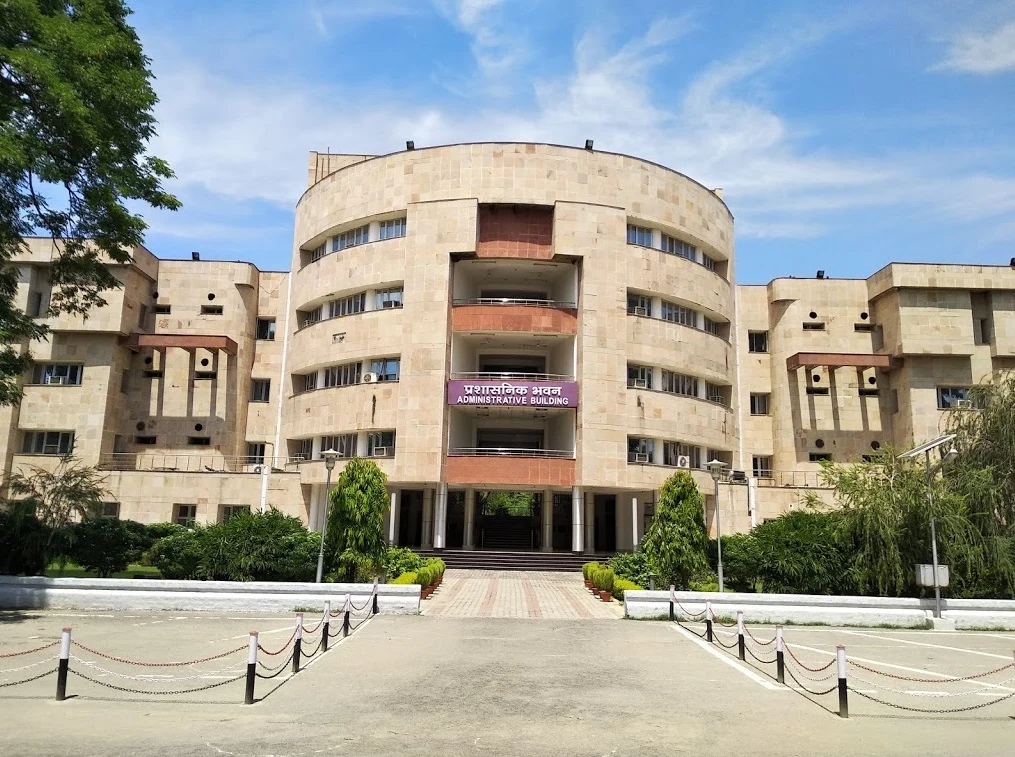
 Auditorium
 Bank & ATM
 Cafeteria
 Campus Security
 Campus Shuttle
 Campus Wi-Fi


 Computer Labs
 Gym
 Hostel
 Medical
 Science Labs
 Smart Classrooms
 Sports Complex
 Study Library