
NIFT Hyderabad’s 2027-28 intake follows the national NIFTEE 2027 process, while the campus-specific programme list and seat matrix determine which choices are actually available in Hyderabad. The current prospectus lists five B.Des disciplines, B.F.Tech Apparel Production and M.F.M at this campus. It does not list M.Des or M.F.Tech for Hyderabad in the 2027 regular seat table, even though those awards are offered at other NIFT campuses.
2027-28 application deadline
The NTA bulletin opens online registration on 16 October 2026. The last date to submit the application with the normal fee is 16 November 2026; a late application is listed through 21 November with an additional ₹5,000 late fee. The correction window is 22-25 November.
NIFTEE 2027 examination schedule
The bulletin lists 4 January 2027 for admit-card download and 10 January 2027 for the entrance examination. Results are scheduled for February or March, later stages for March or April, final results for the first week of May, and seat allocation for May-June 2027. NIFT and NTA describe parts of the calendar as tentative, so check the live NIFTEE portal before relying on later-stage dates. The maintained application deadline is 16 November 2026 for the standard domestic application; the late-fee date is a separate option, not a replacement for it.
NIFTEE 2027 application fee
Applications are submitted online through NTA’s NIFTEE portal. The application fee is ₹2,000 for one programme for Open, Open-EWS and OBC-NCL candidates, and ₹500 for SC, ST, PwD or PwBD candidates. Applying to two programmes in the pairings permitted by the bulletin costs ₹3,000 or ₹750 respectively. Payment-gateway charges may apply. This is the entrance application fee, not tuition or a campus fee. NRI, foreign-national, OCI, PIO and SAARC applicants use a separate route and fee schedule.
The 2027 prospectus lists these regular programmes at NIFT Hyderabad:
The regular seat matrix shows 38 seats in each listed programme, or 266 across the seven Hyderabad entries. The campus total is a sum across separate awards and programme preferences, not one common pool. The prospectus says regular and domicile seats include the listed reservation categories and that NIFT may increase or decrease course seats. It separately lists five supernumerary NRI seats per academic programme at Hyderabad. Those seats are outside the 266 regular-seat total and have separate eligibility and fee rules. The table does not list Fashion Interior, Leather Design, M.Des or M.F.Tech at Hyderabad for this intake. Do not treat a national course list as proof of a local seat.
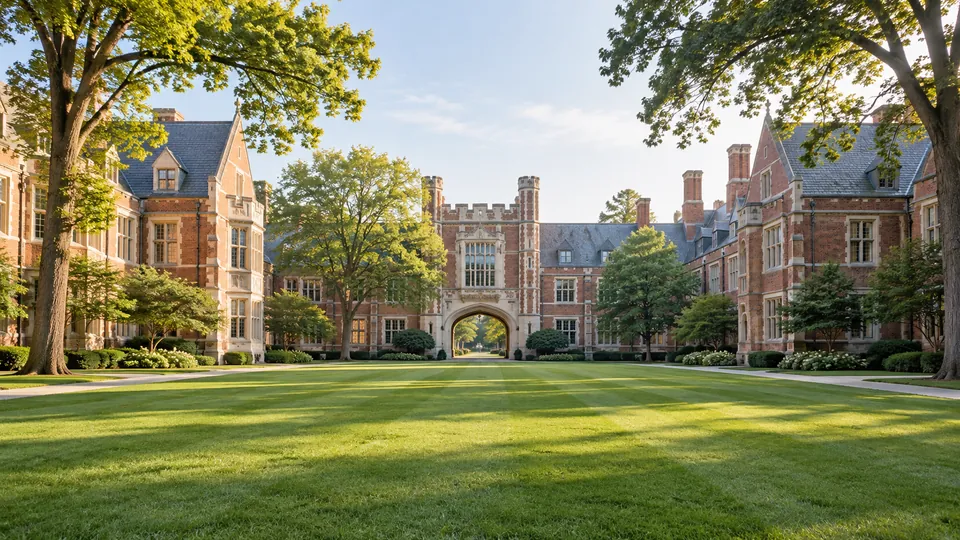
The campus page confirms the same five B.Des disciplines, Apparel Production B.F.Tech and M.F.M. It describes a Hyderabad campus established in 1995 and moved to its permanent site in 1999, near the city’s IT Hub and Shilparamam. It is an 8.25-acre campus with academic, administrative and hostel facilities. These details help identify the location but do not change the central NIFTEE selection process.
For regular B.Des, the 2027 prospectus accepts recognised 10+2 qualifications, a National Institute of Open Schooling senior-secondary pass with at least five subjects, specified three- or four-year diplomas after secondary school, and recognised equivalent qualifications. The general maximum age is below 24 on 1 August 2027, with a five-year relaxation for SC, ST and PwD candidates. B.Des applicants should focus on the creative and design stages as well as the common ability test.
B.F.Tech Apparel Production has a different academic prerequisite: the standard school route requires Mathematics in 10+2, or in the equivalent open-school or international qualification. A three- or four-year engineering diploma after secondary school is also listed. The same general bachelor-age rule applies. A candidate who lacks Mathematics should not assume that eligibility for a B.Des also makes them eligible for B.F.Tech.
For M.F.M, the prospectus accepts an undergraduate degree in any discipline from a legally recognised Indian institution, or an undergraduate diploma of at least three years from NIFT or NID. It sets no age limit for the master’s programmes. M.F.M is the only regular postgraduate programme shown in the Hyderabad 2027 seat column. Applicants awaiting their final qualifying result may be able to apply provisionally, but they must meet the programme’s qualification and document conditions by seat allocation or admission; read the prospectus before relying on provisional eligibility.
All three Hyderabad programme groups use NIFTEE, but the papers and later stages differ. B.Des candidates take the General Ability Test (GAT) and Creative Ability Test (CAT); shortlisted candidates then take a Situation Test. In the 2027 prospectus, the final B.Des weightage is 30% GAT, 50% CAT and 20% Situation Test. CAT is paper-based, while GAT is computer-based.
B.F.Tech candidates take GAT Sections A and B. The prospectus weights these sections at 30% and 70% respectively; the B.F.Tech route does not add the B.Des CAT or Situation Test. M.F.M candidates take GAT Sections A and B and, if shortlisted, a personal interview. The prospectus weights M.F.M selection at 70% GAT and 30% interview. These distinctions matter when choosing programmes on one application: applying for two awards can require an additional paper, and each programme receives a separate merit position.
After the examination stages, successful candidates take part in NIFT seat allocation. They enter campus and programme choices in order of preference and must follow the published allocation and payment schedule. Selection at the national level does not guarantee Hyderabad: an applicant needs a merit position and an available seat in the chosen programme and applicable category. Read each current notice for the exact choice-filling, document-verification and fee-payment steps.
Start with the work you want to learn. The B.Des options cover accessory, communication, apparel design, knitwear and textile disciplines; B.F.Tech is the technology and production award; M.F.M is a postgraduate management programme. The Hyderabad seat count is useful for understanding campus capacity, but it is not a cutoff or a prediction of the rank needed. The prospectus does not guarantee a closing rank, and the published number of seats can change before allocation.
Before submitting, compare your qualifying subjects with the exact programme rule, choose the correct award names, and check the NTA portal for updates. If you are considering both B.Des and B.F.Tech, note the extra test combination and Mathematics requirement. If applying for M.F.M, confirm your degree or NIFT/NID diploma meets the stated rule and prepare for the personal interview if shortlisted. For a campus decision, use the Hyderabad-specific seat row rather than national totals or another NIFT campus page. Keep the official prospectus, bulletin and later NIFT notices as the final references for any schedule or seat change.