
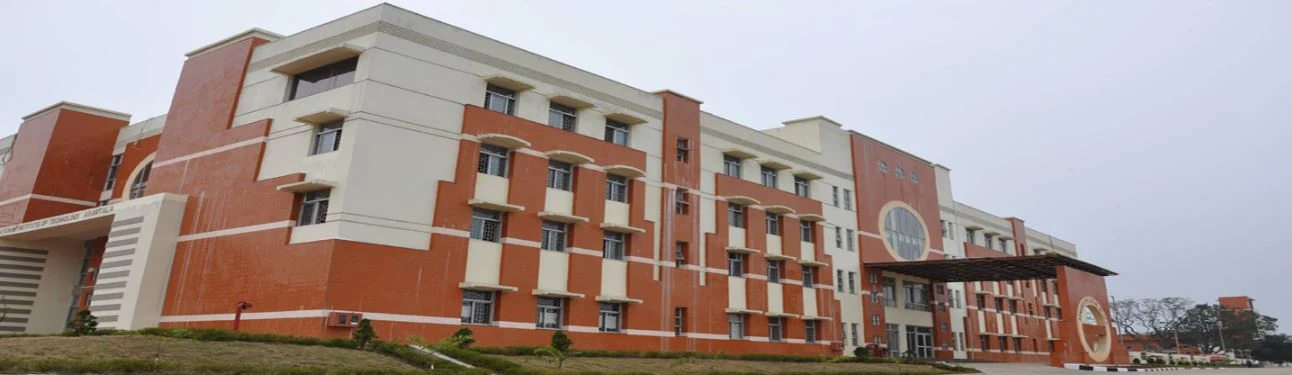

National Institute of Technology Agartala (NITA) is the institution identified by this page; “NIT” alone refers to a system of institutions, each with its own programmes and notices. For applicants considering the 2027 intake, the key point is that the institute has not published a general 2027-28 admission schedule as of 1 November 2026. The current official notices include the 2026-27 undergraduate intake through JoSAA/CSAB and a separate Ph.D. intake for January-June 2027. The latter is not a general 2027-28 undergraduate or postgraduate schedule. Check the NIT Agartala admission notices and the responsible examination or counselling authority for the next announcement.
Choose the route by programme
For first-year B.Tech and dual-degree engineering admission, the recent route is JEE (Main), followed by joint seat allocation through JoSAA. The 2026-27 JoSAA business rules say that NIT+ programme allocation is based on JEE (Main), require registration on the JoSAA portal for seat allocation, and make clear that qualifying for the exam alone does not guarantee admission. CSAB may conduct special vacant-seat rounds after the main allocation process. NIT Agartala's 2026-27 notice specifically covered B.Tech, BT-MT and BS-MS candidates admitted through JoSAA/CSAB. These are past-cycle references; the 2027-28 business rules and programme list control the next intake.
Other programmes use separate routes. NIT Agartala's 2026-27 notices show M.Tech admissions through CCMT, with institute notices for sponsored and vacant-seat cases; M.Sc through CCMN, with some separate vacant-seat notices; MCA through NIMCET; and MBA through an institute-level process that included an institute-level test and personal appearance. The institute also lists Ph.D. admissions and a four-year ITEP B.Sc-B.Ed programme. The existence of these routes does not mean every route will open in every cycle or that the same criteria will apply. Use the exact programme notice, including addenda and corrigenda, to establish the degree prerequisite, qualifying examination, selection stages and application window.
Undergraduate eligibility and allocation
For the 2026-27 JoSAA cycle, a candidate seeking an NIT+ B.E./B.Tech seat needed a rank in JEE (Main) Paper 1 and had to satisfy the Class XII or equivalent performance criteria in the JoSAA rules. Do not rely on a generalised 75% summary without checking the current annexure: the applicable subject combination and performance test must be read in the rule text for the relevant candidate and programme. JoSAA also states that an institute or academic programme may impose additional eligibility requirements, so examination qualification is not a substitute for checking NIT Agartala's programme eligibility.
Seat allocation is not determined by rank alone. The 2026-27 rules list candidate category, position in the relevant rank list, order of programme preferences, availability in seat categories or quotas for which the candidate is eligible, and other business rules as allocation factors. Candidates therefore need to order choices deliberately and verify that category and state-of-eligibility details are correct. For NIT+ allocation, the state code of eligibility is assigned under the rules, generally with reference to the state or union territory where the candidate first appeared for the Class XII qualifying examination, subject to specified cases. It is not simply a statement of permanent residence. Category, disability and state claims require documentation in the forms and manner specified by the current rules.
The 2026 rules and 2026 institute notices are useful for understanding the sequence, but they do not establish 2027-28 exam eligibility, choice-filling dates, seat matrix, category rules or reporting deadlines. Check the new-cycle rulebook before relying on an earlier threshold or document format.
What to do before applications open
- Identify the exact degree and entry year. A B.Tech applicant should follow JEE (Main) and JoSAA/CSAB notices; applicants to M.Tech, M.Sc, MCA or MBA should follow their separate examination or institute route.
- Confirm eligibility in the current rulebook and the programme notice. Check qualifying degree and subjects, exam paper, marks or rank requirements, category and state-of-eligibility provisions, and any programme-specific selection stage.
- Register on the correct official portal within its announced window. For JoSAA allocation, the 2026-27 rules required official portal registration; an entrance rank by itself did not place an applicant in the allocation process.
- Prepare supporting documents using the current format. In particular, verify category, disability and qualifying-examination documents against the current annexures and any institute checklist.
- If allocated a seat, complete the counselling portal's reporting and payment steps, then follow NIT Agartala's institute registration and physical-reporting instructions. In 2026, the institute issued separate pre-admission registration information, physical-reporting instructions and reporting schedules for UG and dual-degree entrants. The sequence illustrates the extra steps after allocation, but its dates must not be reused for the 2027 intake.
Deadlines and where to verify them
No 2027-28 undergraduate deadline or general postgraduate application deadline was announced in the NIT Agartala notices reviewed on 1 November 2026. The institute's latest first-year JoSAA/CSAB notice found was for 2026-27, posted on 11 August 2026. The homepage separately lists a Ph.D. notice for January-June 2027. These dates and periods describe different processes; neither supplies a 2027-28 deadline for B.Tech or other general admissions.
For the next application window, monitor the NIT Agartala admission notice board. For undergraduate seat allocation, check the official JoSAA business rules and portal and the relevant CSAB notice. For postgraduate programmes, follow the responsible portal named in the institute's notice, such as CCMT, CCMN or NIMCET, and check NIT Agartala's own amendments. When dates are announced, record the last date for the exam or institute application separately from counselling registration, choice filling, fee payment and physical reporting. Those are distinct milestones, and missing a later reporting step can affect an allocated seat even after the application itself is complete.