
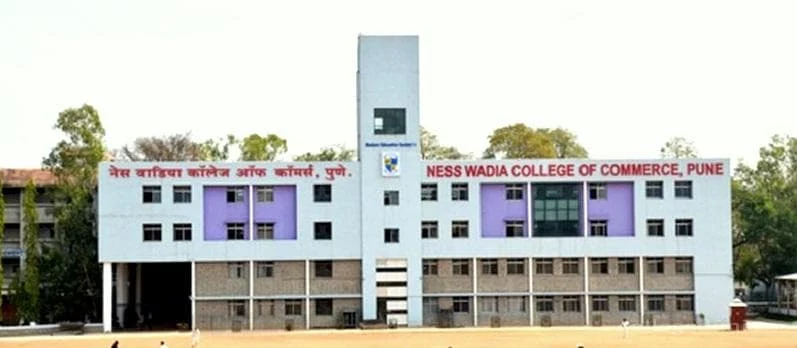



What the placement support covers
Ness Wadia College of Commerce describes its Placement and Career Guidance Cell as serving students from BBA, BBA-IB, BBA-CA, B.Com, M.Com, PG Diploma in Taxation Law, PG Diploma in Banking and Finance, and PG Diploma in International Business for campus placements and internships. The college says the cell arranges campus interviews for final-year students and supports internships, project work, industry interaction, alumni activities, job fairs, workshops, career counselling and industry visits. These are the services the institution says it offers; they are not a guarantee that a particular employer will visit, that every student will receive an offer, or that every programme has the same opportunity set.
The listed preparation activities include résumé-building sessions, mock group discussions and personal interviews, aptitude-test preparation, soft-skills training and technical training for BBA-CA students. The official page also says the cell supports recruitment through joining. For a student, this suggests that the service can extend beyond circulating job notices to preparation and process coordination. It does not disclose the frequency of each activity, participation rates, or which activities are available to each course and year. Ask the cell how final-year students register, whether opportunities are course-specific, how eligibility is determined, and whether students can pursue their own internships or placements alongside the college process.
Read the published outcome figures with their dates
The college's Placements page links a downloadable item labelled “Placements Report AY 2024-25”. The linked booklet itself contains annual placement statistics through 2022-23, with later pages showing a placement-cell team for 2023-24. Its newest visible statistics page is headed “Placement Statistics 2022-23”. This difference matters: the webpage's link label does not make the figures inside the booklet 2024-25 outcomes. The latest salary figures that can be read in that booklet are historical 2022-23 college-level figures, not a current or programme-specific prediction.
For 2022-23, the booklet reports the highest CTC offered as ₹7.6L/yr, average CTC offered as ₹4.28L/yr, and gross placement value as ₹1.67 crore. It does not, on that statistics page, give the number of students placed, eligible-student denominator, number of offers, salary distribution, or programme-wise breakup for those CTC measures. “Gross placement value” is a separate aggregate in the booklet; it should not be divided by the average or used to infer placed-student count without a published definition and matching denominator.
The immediately preceding 2021-22 panel lists highest CTC ₹9L/yr, average CTC ₹3.58L/yr and gross placement value ₹2.97 crore. Comparing the two panels shows a lower reported maximum and gross value in 2022-23 alongside a higher reported average. The booklet supplies no cohort sizes or calculation method on these panels, so this mixed direction cannot establish a trend in typical student outcomes or explain why the figures changed. It is safer to use each value only with its stated year and measure.
The booklet also labels internship statistics separately from placement statistics. For 2022-23, it shows internship counts of 63 for B.Com, 30 for BBA, 35 for BBA-IB, 1 for BCA, 1 for PG, 9 for M.Com and 2 for B.Voc. These are reported internship counts, not placement counts, unique students across the college, or a placement rate. The booklet does not define whether the counts mean students, internships or offers, and the “BCA” label is not expanded on that page; readers should not silently equate it with all BBA-CA enrolments. The report also lists 2021-22 internship counts separately, so do not combine years to create a current total.
What a recruiter and an applicant can verify
The placement page gives examples of cell activity including pre-placement talks, campus recruitment drives, an industry visit and workshops. It names some organisations connected to these activities, but a logo, recruiter name or single student's testimonial does not establish a current vacancy, hiring volume or typical outcome. A student deciding whether to rely on campus recruitment should ask which employers are scheduled for their course and year, whether the role and location are known, how many students may apply, and what the selection stages are. Where the cell publishes no denominator or programme table, request the cohort-level placement and internship information directly rather than treating a highest package as representative.
The booklet's historical highest and average CTC values are college-wide on the page and are not attributed to one degree. They therefore cannot support a claim that B.Com, BBA, BBA-IB or BBA-CA has a particular average salary. The page describes the cell as covering all of these programmes, but it does not publish separate placement outcomes for them in the visible report panel. If a course-specific outcome matters to your choice, ask for the same measures for the exact programme and graduating year, including students eligible, students who participated, placed students, offers, and whether figures refer to CTC or fixed pay. These denominators make a percentage or salary comparison meaningful.
A practical way to use campus support is to prepare before the final year: maintain a current résumé, practise aptitude tests and interviews, build course-relevant project evidence, and monitor official cell announcements. This is advice based on the activities the college lists, not a claim that participation guarantees an offer. For BBA-CA applicants, the college specifically mentions technical training, but does not describe its duration or tools on the placement page. Ask whether the training is scheduled for your cohort and how it relates to recruiters' role requirements.
Internship and placement are different decisions
Internships can provide workplace exposure or project experience while a student is still studying; placements concern employment offers. The college discusses both and reports internship counts separately. A student should check whether an internship is paid, its duration and schedule, whether it is part of the curriculum, and whether selection depends on grades or interviews. The pages reviewed do not state a general stipend, conversion rate to full-time work or programme-specific internship guarantee. Do not infer any of these from a placement CTC or a testimonial about an individual internship.
For current opportunities, use the official Placements page and contact the Placement and Career Guidance Cell about the current cohort's process. The page lists [email protected] and the college's Pune telephone numbers. Recheck the live site because employer schedules and roles change. The downloaded booklet is useful for understanding the cell's listed activities and its historical outcome reporting, but its 2022-23 figures should remain dated until the college publishes a newer, clearly scoped statistics table.