Loading Admission Guardian content
Loading Admission Guardian content

1 programme · 1 institution. Check the admission year and requirements.
1 programme · 1 institution. Check the admission year and requirements.
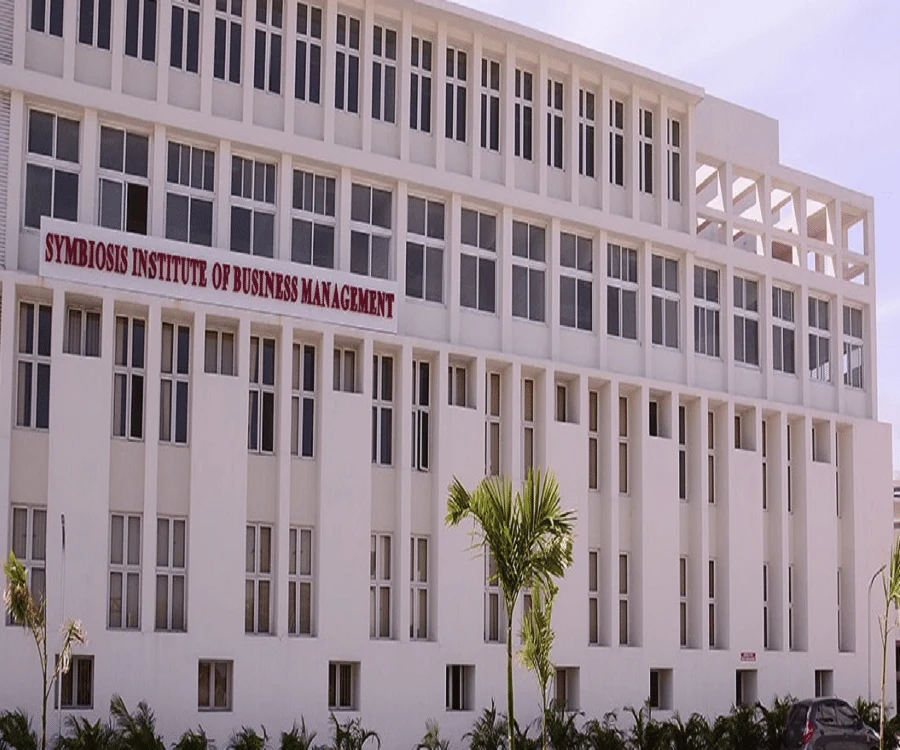
Symbiosis Institute of Business Management, Hyderabad is the Telangana campus represented by college record 19746. Its official contact information gives the location as Survey Number 292, off the Bangalore Highway, Modallaguda village, Nandigama mandal, Ranga Reddy district, Hyderabad, Telangana 509217. Use the institute’s official website for current notices and campus contact details; do not confuse this location with SIBM Pune or another similarly named Symbiosis institute.
The 2024-26 institute brochure says SIBM Hyderabad began in 2014 and describes it as a constituent of Symbiosis International (Deemed University). It also describes the campus as residential. Those are institute-published identity details, not a substitute for checking current programme or accommodation terms. Accreditation claims for the parent university should not be presented as a campus-specific grade unless the relevant regulator or campus record states that scope explicitly.
SIBM Hyderabad’s principal programme is a two-year, full-time, residential MBA organised on a semester pattern under the Choice Based Credit System. Its programme overview names Finance, Marketing, Human Resource, Operations and Business Analytics as specialisation areas. The institute describes a mix of classroom teaching, case work, simulations, seminars, workshops and extension activities. These are programme-level descriptions; students should check the current cohort curriculum for subjects, elective availability and credit requirements.
The public programme-structure page currently provides a 2026-28 MBA structure, while the current Indian-student fee schedule is for the 2027-29 batch. The older curriculum can help explain how SIBM Hyderabad has arranged common courses, specialisation cores and a summer internship, but it should not be treated as the guaranteed 2027-29 syllabus. For a complete course comparison, see the dedicated SIBM Hyderabad courses and fees guide and confirm the curriculum issued for your own admission year.
For the MBA, applicants follow the Symbiosis National Aptitude Test (SNAP) route and then SIBM Hyderabad’s institute registration and selection process. The institute’s selection material describes shortlisting followed by group exercise and personal interview stages, with the final selection score combining SNAP and later assessment components. Eligibility, deadlines, seat rules and stage weights belong to the relevant admission cycle, so a previous-year formula or date should not be carried into a new intake without checking the official notice.
SIBM Hyderabad’s current cycle materials identify the 2027 intake and SNAP 2026 examination cycle. Applicants should check SNAP registration and institute-specific registration requirements, then use the dedicated admission guide for researched cycle details. The admission guide also explains the institute’s treatment of category-wise cutoffs; no campus-specific numeric percentile is presented here as a guarantee or fixed threshold for a future shortlist.
The official Indian-student fee page lists academic fees of ₹8,76,000 per annum for the 2027-29 MBA batch in academic year 2027-28. Hostel and mess charges are separate, as are refundable institute and hostel deposits. The amount owed depends on accommodation category, and the institute says later-year residential charges will be communicated before that year begins. Taxes may also apply. Academic fee is not the full cost of attendance and a first-year component total is not a guaranteed two-year invoice.
For the 2027-28 schedule, known first-year components work out to ₹14,10,400 for single living, ₹13,62,400 for twin sharing and ₹12,66,500 for three sharing, including the two listed refundable deposits and before applicable taxes. These are arithmetic sums of the institute’s published academic, hostel and mess components, not an all-inclusive estimate. Review the full fee guide and official schedule for payment dates, category differences and what remains unannounced.
The latest final cohort table that could be read for this overview is in SIBM Hyderabad’s 2024-26 placement brochure, but that table is explicitly for the 2023-25 batch. It reports average CTC of ₹9.1 lakh per annum, median CTC of ₹8.2 lakh, top-quartile figure of ₹10 lakh, top-decile figure of ₹11.6 lakh and highest CTC of ₹31 lakh. The institute also reports 82 participating recruiters and 41 new associations for that cohort. These historical outcomes are not a placement guarantee, take-home salary estimate or forecast for students entering in 2027.
The average is ₹0.9 lakh above the median, and the maximum is about 3.8 times the median. That contrast makes the median a more cautious starting point than the highest offer, while still not describing an individual’s prospects. The summary table does not provide every denominator or a fixed-versus-variable salary breakdown. The institute’s placement reports page exposes a separate 2024-26 report route, but its detail endpoint could not be accessed in this research session; check the current report before comparing newer cohorts.
SIBM Hyderabad’s scholarship page lists SIU-wide merit awards for semester or annual toppers, a scheme for IIT graduates who join an SIU MBA through merit and a one-time Late Jayatee Deshmukh award. The topper scheme describes academic-fee concessions of 20%, 15%, 10% and 5% for the first four positions. The IIT graduate scheme provides five 20% academic-fee awards subject to selection and second-year conditions. These are competitive schemes with separate eligibility rules, not automatic tuition reductions for incoming students. Consult the scholarship guide and current SIU policy before budgeting for an award.
The institute describes a 40-acre residential campus with hostels, a cafeteria, health service, gym and indoor games. Its Learning Resource Centre lists management books, journals, e-books, online databases and business cases; a separate computer-lab page describes software and Wi-Fi-supported laptop use. These descriptions help frame the residential and academic environment, but public pages do not establish current operating hours, equipment inventories, room availability or the condition of each facility. See the campus and facilities guide and verify service details directly if they affect your choice.
SIBM Hyderabad is worth comparing for applicants seeking a residential, two-year MBA within the Symbiosis system and who are comfortable evaluating a campus outside central Hyderabad. Compare the institute’s selection route, curriculum applicable to your cohort, complete residential fee schedule, reported placement median and actual terms of any scholarship. Ask for current placement denominators and salary structure if employment outcomes are central to your return calculation.
No standalone ranking claim is made here. The institute’s rankings page could not be read during this research session, and the ranking page examined from an external publisher contained conflicting generic location text. A ranking should be used only after the exact Hyderabad identity, publisher, edition, category and position are all clear in the same source row.
This overview is a dated guide to SIBM Hyderabad, checked on 9 November 2026. For a new application, use the institute’s official notices for current cycle dates, updated curriculum and fees. The facts here distinguish the 2023-25 placement cohort, 2026-28 curriculum page and 2027-29 fee schedule rather than treating them as one academic year.
Before deciding whether SIBM Hyderabad fits, check the entry route and the steps that must be completed separately. The institute’s MBA programme page states a bachelor’s degree from a recognised university or an Institution of National Importance, with at least 50% marks or equivalent grade; it lists 45% for Scheduled Caste and Scheduled Tribe applicants. Final-year students may apply subject to meeting the applicable degree result requirement. A foreign university qualification requires an Association of Indian Universities equivalence certificate. These are the published conditions reviewed for the 2027 intake; candidates should confirm document requirements and eligibility against the current institute notice.
SNAP and SIBM Hyderabad registration are separate. The current selection page lists a SNAP test registration fee of ₹2,550 per test and an institute registration fee of ₹1,000. The 2027 schedule lists SNAP registration closing on 25 November 2026 and SIBM Hyderabad registration closing on 15 January 2027. The institute marks its dates tentative and subject to change, so recheck the current notice before paying or booking a slot. Keep receipts for each registration and confirm that both applications show the Hyderabad programme.
For shortlisting, SNAP is the mandatory common test. The published 2027 merit weighting allocates 50 of 100 points to SNAP after scaling a score from 60, 10 to Group Exercise, 30 to Personal Interaction and 10 to institute-specific parameters. This makes the entrance score important but not decisive by itself. The institute says category-wise merit and wait-list cutoffs are displayed on institute websites; it does not publish a guaranteed future percentile in the material reviewed for this guide. A shortlist, wait-list position or past cutoff should not be mistaken for admission certainty. See the dedicated admission page for cycle steps and verify any dates or score formula changes.
For the 2027-29 batch, SIBM Hyderabad’s Indian-student table lists academic fee of ₹8,76,000 for the year, a refundable institute deposit of ₹20,000, mess charges of ₹1,58,600, a refundable hostel deposit of ₹20,000, and annual hostel charges of ₹3,35,800 for single living, ₹2,87,800 for twin sharing or ₹1,91,900 for three sharing. The resulting known first-year component totals are ₹14,10,400, ₹13,62,400 and ₹12,66,500 respectively, before taxes. These sums include the two refundable deposits, so they are not the final non-refundable cost.
Academic fees are payable in four instalments of ₹4,38,000 across the two academic years; the published dates include the initial amount at admission, 26 November 2027, 25 June 2028 and 25 November 2028. The table says the next year’s hostel and mess fees will be communicated before that academic year begins and notes that hostel fees can rise by up to 15% annually. Therefore the first-year total cannot be doubled to estimate the full two-year residential budget. Single rooms are limited and subject to availability, and the schedule has separate fee categories for international and other applicant groups.
If you compare SIBM Hyderabad with a non-residential MBA, include both years of accommodation, meals, travel and loan interest, not just tuition. Keep deposits separate from consumed costs and ask when a deposit is returned. The dedicated fee guide reproduces the source components and payment schedule; use the institute’s current offer and portal to confirm the personal amount due.
Ask SIBM Hyderabad which curriculum document applies to your admission cohort. The current public programme structure reviewed for this guide is 2026-28, whereas the fee schedule is headed 2027-29. Use the curriculum page to understand the current academic design but ask whether any 2027-29 subject, elective or internship changes have been approved. The institute names five MBA specialisation areas, but a listed area does not establish that every elective runs every year or that each student can select every course.
For outcomes, request the final placement report for the most recent graduating cohort and the definitions behind its figures: eligible and placed student counts, denominator for mean and median, fixed-versus-variable pay, role and location split, and internship-versus-final-placement distinction. SIBM Hyderabad’s accessible final table describes the 2023-25 batch inside a 2024-26 brochure. Its reported ₹9.1 lakh average and ₹8.2 lakh median CTC are historical cohort measures. They cannot predict an individual result or the result of a future intake. The separate 2024-26 report link should be checked again because the detail route could not be read during this research session.
For scholarships, identify whether the award is SIU-wide or specific to the Hyderabad MBA, whether it is based on entrance merit or performance after enrolment, which fee component it covers, and whether renewal is conditional. For campus facilities, ask about current accommodation assignment, library/database access, computer software, health-service hours and facility access rules. Website descriptions do not establish present equipment, room availability or operating schedules. The separate pages on admission, fees, placements, scholarships and facilities provide the supporting detail; verify any decision-changing point directly with the institute before paying a non-refundable amount.
Loading programmes and admission routes.
Selected ranking categories, with the recorded year beside each result. Open all records for the complete history.
25 published records · Lower numeric ranks are stronger
IIRF
Management · private
#282023
IIRF
MBA · private
#292023
Indiatoday
MBA
#362021
The Week
Management · private
#492023
The Week
MBA
#672022
Find a program, read its fee details and explore the admission requirements.
Summary of the programs shown below. First-year fee
Specializations
Listed entrance exams
Eligibility: Graduation
1 exam with cutoff data available
 Aditya Birla Group
 Amazon
 Arvind Lifestyles
 Ashok Leyland
 Aurobindo Pharma
 Bajaj Finserv Ltd.
 Berger
 Birla Sun Life Insurance
 Bisleri
 Broadridge Financial Solutions
 Cafe Coffee Day
 Capital First Limited
 CARE Ratings
 CBRE
 Deloitte
 Factset
 HDFC Bank
 ICICI Prudential
 IDBI Bank
 IDBI Federal Life Insurance
 Idea Cellular
 IDFC
 Indian Oil Corporation Ltd (IOCL)
 IndusInd Bank
 Infiniti Research
 ITC Hotels
 ITW Signode
 Karvy Group
 Kotak Mahindra Finance
 KPMG India
 Larsen & Toubro Ltd.
 MAQ Software
 Moody's Analytics
 Oasisindia
 Odessa Technologies Inc.
 Oyo Rooms
 Reliance Securities
 SBI Life Insurance
 Spandana Sphoorthy Finance Ltd
 Tech Mahindra
 TVS Motors
 Verity knowledge Solutions Pvt ltd ( UBS affiliate)
 Vernalis
It depends on your alternatives. For a 60-percentile SNAP score, it offers a better brand and infrastructure than most Tier-3 colleges, but the ROI is slow, taking an estimated 3–4 years to recover costs.
There is a massive gap between the two. SIBM Pune is considered a Tier-1 institute with an average package of 28 LPA, while SIBM Hyderabad is Tier-2/3 with an average of 9 LPA. They share the Symbiosis brand name but have entirely different placement pools.
Yes, the campus is located in Mamidipally, which is about 1.5 hours away from the main city of Hyderabad. Due to this distance, most students reside on campus full-time.
For the General category, the SNAP 2024 cutoff for SIBM Hyderabad was approximately 58–60 percentile.
Yes, it is referred to as the "Discretionary Quota." Admission through this quota is based on profile and merit, but the academic fees are typically doubled compared to the regular admission process.
About SIBM Hyderabad.
Colleges cannot rewrite published reviews. We remove spam and abuse.
Ask the communityWhat should future students know?
Tell us which course you're considering. We'll help you work out the next step.
Get instant Partner access after mobile verification. Your public edits are reviewed before they go live.
Claim this collegeProgramme information: Official source · Source as of: 2026-11-09
Each route applies only to this named programme and the stated year.
SNAP: Symbiosis National Aptitude Test · 2027-29
Admission-route evidence: Official source · Source as of: 2026-11-09
1 recorded programme · 1 institution. Admission years and conditions apply to the named programme.
 Auditorium
 Bank & ATM
 Cafeteria
 Campus Wi-Fi
 Computer Labs
 Gym
 Hostel
 Medical
 Study Library