
Loading Admission Guardian content
Loading Admission Guardian content
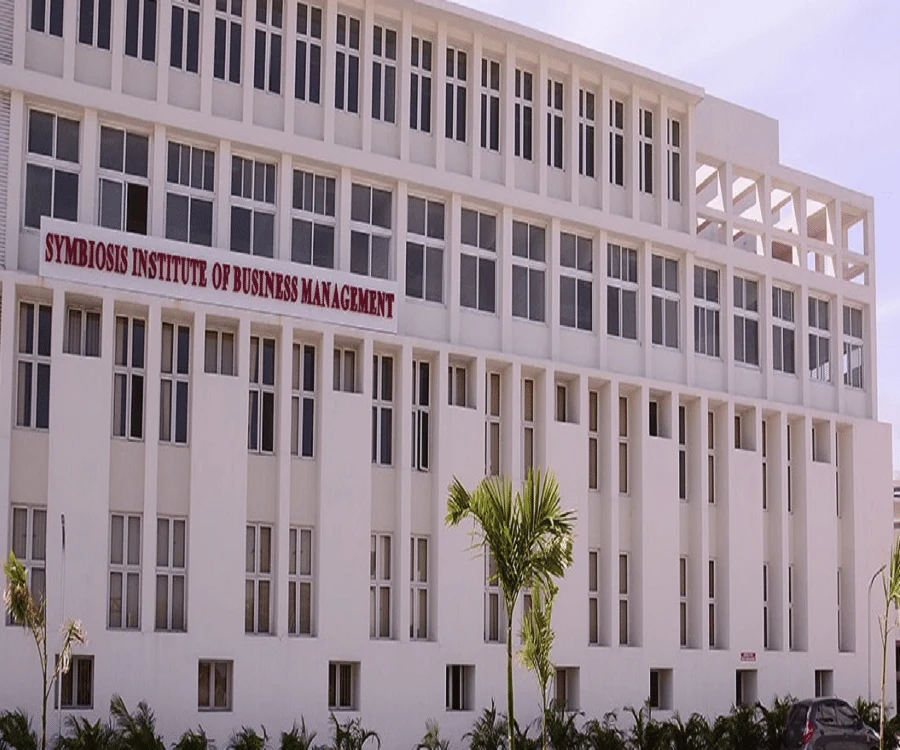

1 programme · 1 institution. Check the admission year and requirements.
1 programme · 1 institution. Check the admission year and requirements.
First-year fee
Specializations
Listed entrance exams
Eligibility: Graduation
See courses and fees at other colleges.
Explore Management collegesLoading programmes and admission routes.
SIBM Hyderabad’s Master of Business Administration is a two-year, full-time residential programme organised by semester. Its current programme overview says it follows the Choice Based Credit System (CBCS) and offers specialisations in Finance, Marketing, Human Resource, Operations and Business Analytics. The institute describes the programme as a combination of classroom learning, value-added courses, extension programmes and study tours. It also lists case studies, simulations, laboratory tutorials, seminars and workshops among the teaching formats. These are programme descriptions, not a promise that every student takes every activity in the same way.
Keep the Hyderabad institute distinct from SIBM Pune and other Symbiosis institutes when comparing courses or fees. The official fee page labels the Indian-student schedule as approved for SIBM Hyderabad’s 2027-29 MBA batch and the 2027-28 academic year. The programme structure page currently offers an MBA 2026-28 view and an older 2025-27 view. The 2026-28 structure is therefore useful for understanding the course architecture shown by the institute, but applicants should use any later 2027-29 curriculum notice if one is published.
The programme overview names five specialisation areas: Finance, Marketing, Human Resource, Operations and Business Analytics. The 2026-28 programme structure gives a more concrete view of how common management subjects and specialisation courses are arranged. In its first semester, the page lists Business Statistics, Financial Management, Human Resource Management, Marketing Management, Operations Management, Business Analytics, Financial Accounting, Entrepreneurship, Principles and Practices of Management, and Data Analytics using MS-Excel. That mix places quantitative, functional and organisational subjects beside each other rather than limiting the first term to one specialisation.
The displayed second-semester structure continues with common subjects such as Legal Aspects of Business, Operations Research, Economics for Managers, Management Accounting, Research Methodology and Organisational Behaviour. It then shows specialisation cores. Examples include Commercial Banking and Corporate Valuation for Finance; Talent Management and Learning and Development for Human Resource; Consumer Behaviour and Brand Management for Marketing; Supply Chain Management and Logistics Management for Operations; and Data Analysis Using Python and Machine Learning for Business Analytics. These examples come from the institute’s 2026-28 structure page; they should not be treated as a guaranteed 2027-29 subject list.
The same published structure includes a six-credit Summer Internship in semester three and lists a total of 25 credits for semester one. The programme overview describes an eight-week intensive summer internship. Together, the pages show that the programme combines taught terms with an internship, but students should check the current curriculum and academic calendar for the cohort they join before planning electives or internship timing.
SIBM Hyderabad’s approved fee structure for the 2027-29 batch lists first-year academic fees of ₹8,76,000 per annum for Indian students. It separately lists a refundable institute deposit of ₹20,000. This academic fee is the tuition component; it should not be confused with the cost of residential accommodation, mess, deposits, taxes or personal expenses. The official table sets out the academic fee in four instalments across the two academic years: ₹4,38,000 in each instalment. That schedule amounts to ₹17,52,000 in academic fees across the two years, provided the published batch schedule remains applicable.
The Hyderabad-campus hostel and mess table lists mess fees of ₹1,58,600 per annum for the first year and a refundable hostel deposit of ₹20,000. Hostel prices depend on sharing: the listed annual amounts are ₹3,35,800 for single living, ₹2,87,800 for twin sharing and ₹1,91,900 for three sharing. The page says single-living places are limited and subject to availability. The hostel and mess amounts are explicitly for the Hyderabad campus; they should not be transferred to another SIBM campus or another accommodation assignment.
For a first-year planning estimate, adding academic fees, institute deposit, mess, hostel deposit and hostel fee gives listed component totals of ₹14,10,400 for single living, ₹13,62,400 for twin sharing and ₹12,66,500 for three sharing. These arithmetic totals use the official 2027-28 Indian-student table, include the two refundable deposits and exclude any government taxes that may apply. They are not a guaranteed invoice or a complete two-year cost. Compare the underlying fee components as well as the total, because accommodation availability and later-year residential charges can change.
The approved Indian-student schedule lists an initial ₹4,58,000 payment at admission, comprising the first ₹4,38,000 academic-fee instalment and the ₹20,000 refundable institute deposit. The second first-year academic instalment of ₹4,38,000 is due by 26 November 2027. For the second year, the schedule lists ₹4,38,000 by 25 June 2028 and another ₹4,38,000 by 25 November 2028. Use the institute’s current admission communication and payment portal to confirm the amount due on your own offer; do not infer a personal invoice only from a public schedule.
The page says hostel and mess fees for the subsequent year will be communicated before that academic year begins. It also states hostel fees can rise by up to 15% each year, while government taxes are additional when applicable. Since the page does not set a second-year hostel or mess amount in the 2027-28 table, a reliable residential total for both years cannot be calculated from this schedule alone. Build a budget with the known academic instalments and first-year residential options, then leave the later-year hostel and mess amounts open until the institute issues them.
The fee page notes that a small number of seats are reserved as Discretionary Quota seats. It says those places are considered for candidates with good academic records and entrance-test scores, and that the academic fee is double the open-category academic fee approved by the Fee Structure Committee. This is a specifically named fee category in the official schedule; it should not be treated as a general route or as permission to pay an intermediary. The page also states that SIU does not charge donation or capitation fees. Applicants should confirm any category, eligibility and payment instructions directly with SIBM Hyderabad.
This page covers the fee schedule headed “Indian Students.” SIBM Hyderabad presents separate schedules for NRI/PIO/OCI and Foreign National categories, including different currency and fee components; those amounts are outside the Indian-student figures above. Before accepting an offer, match the schedule to your applicant category, verify the academic year and accommodation type, confirm which deposits are refundable, and check the official fee page for updates. The listed 2027-28 schedule is the relevant published source for the 2027-29 batch, while curriculum details shown here retain their explicit 2026-28 source label.
Programme information: Official source · Source as of: 2026-11-09
Each route applies only to this named programme and the stated year.
SNAP: Symbiosis National Aptitude Test · 2027-29
Admission-route evidence: Official source · Source as of: 2026-11-09
1 recorded programme · 1 institution. Admission years and conditions apply to the named programme.