
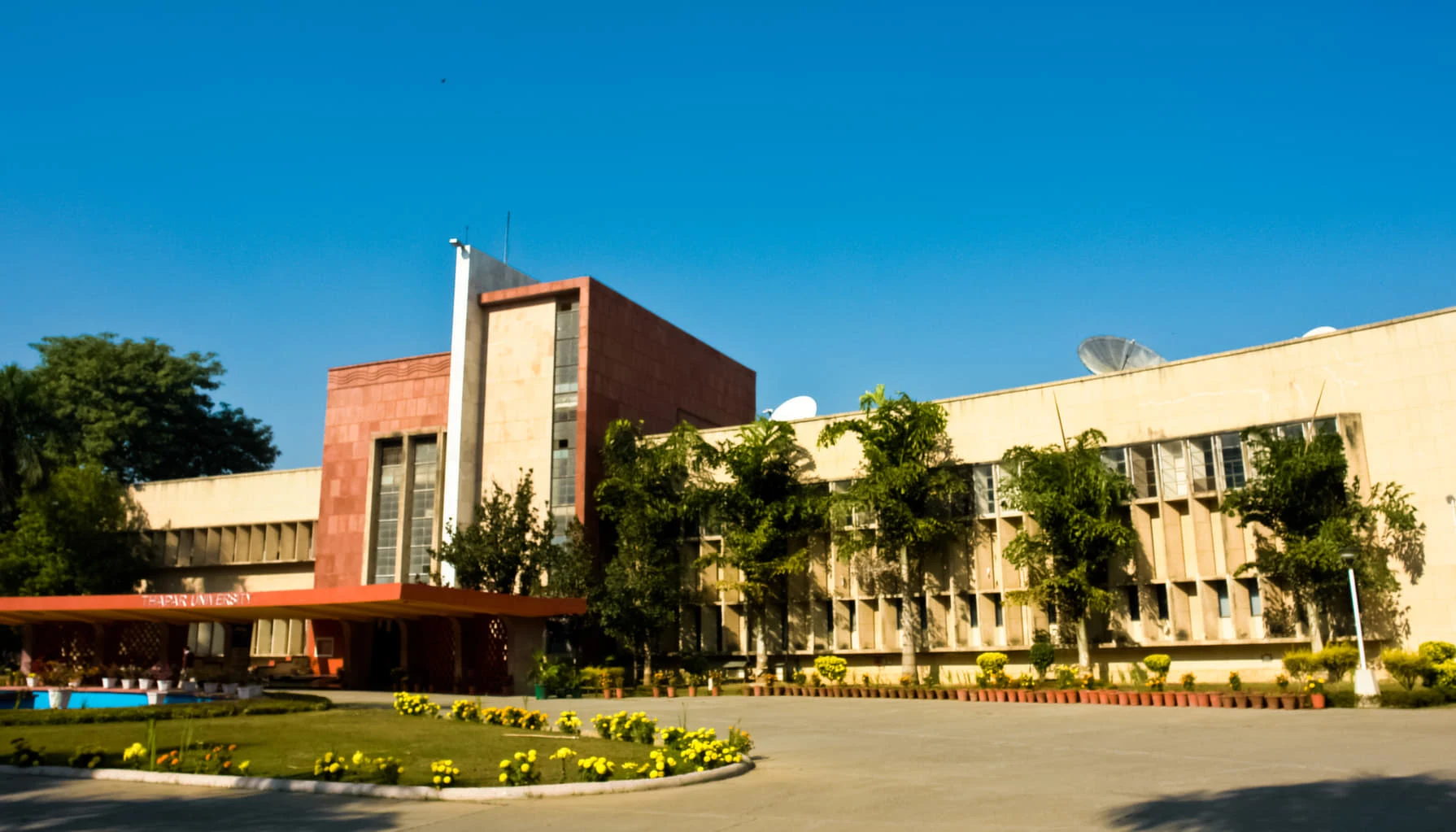

Start with the correct scholarship policy
Thapar’s published Scholarship Policy for the 2026-27 session separates undergraduate merit awards, merit-cum-means support, postgraduate scholarships and external schemes. The figures below describe that policy year only; they do not establish what will be offered to students entering in 2027-28. The institute’s scholarship page currently lists the 2026-27 policy and notices, alongside earlier years. Recheck it for the policy and application notice that match your joining year. 2026-27 Scholarship Policy · TIET scholarships and notices.
A useful first distinction is whether an award is a fee waiver, a monthly scholarship or a cash award. The BE/BTech tables state waivers of tuition fee (TF) and development fee (DF); they do not say that every hostel, mess, one-time or other charge is waived. Compare the exact benefit label with the fee schedule for your own programme and batch before calculating your net cost.
BE/BTech merit awards use both entry marks and JEE Main rank
For first-year BE/BTech students in 2026-27, Merit Scholarships I and II use JEE Main 2026 All India Rank, but also set minimum 10+2 aggregate thresholds. Scholarship I requires at least 95% and covers the first 50 students irrespective of branch, with tuition and development fee waived. Scholarship II requires at least 90% and covers the next 60 students, with tuition fee waived. These are limited ranked awards, not an automatic waiver for every applicant who reaches the school-mark threshold.
Merit Scholarship III sets an 85% 10+2 minimum and selects the first 10% of admitted students in each discipline based on JEE Main 2026 AIR; the policy lists an approximate 339 awards and a half-tuition-fee waiver. Its second-year-onward criteria shift to preceding-year AGPA, stream merit and no backlog, with an 8.00 AGPA threshold. Scholarships I and II use a minimum 8.50 CGPA in preceding semesters and no backlog for continuation; the policy says their subsequent awards depend on AGPA rather than repeating the entry 10+2 threshold. For Biotechnology and Biomedical Engineering, the policy specifies separate PCB-based award rules and counting conditions.
The policy defines how the 10+2 aggregate is calculated for these awards: Physics, Chemistry, Mathematics and English are considered, with specified substitute subjects; Biomedical and Biotechnology use their own listed subject combination. Do not calculate eligibility from an overall board percentage without checking which subjects TIET counts. See the BE/BTech merit criteria and continuation rules in the policy.
Merit-cum-means and lateral-entry support
The 2026-27 BE/BTech merit-cum-means normal category lists 20 awards and the special category lists up to five. Both provide a tuition-and-development-fee waiver; the normal first-year category uses gross family income of up to ₹10 lakh and ranks cases by ascending income. The policy gives preference to girl students from families with no male child in a tie and says a committee of Deans and the Registrar finalises cases. From second year onward, the normal award adds a 7.50 CGPA minimum, the income test and a no-backlog condition. The special category is for deserving undergraduate students not covered by the normal category; its continuation rules also refer to the income and academic criteria.
Lateral-entry students have a distinct MCM category: the policy lists up to two awards, a ₹10 lakh income limit, at least 70% diploma marks for entry and tuition-plus-development-fee waiver. It explicitly says lateral-entry students are not counted with normal second-year applicants in the normal or special MCM categories. From third year, they may apply with other students under the stated continuation criteria. A student admitted through lateral entry should use this route rather than applying the first-year JEE Main merit table to a different entry basis. Read the MCM and lateral-entry clauses.
Postgraduate awards vary by programme
The policy does not offer one common postgraduate scholarship rule. For ME/MTech, a valid GATE score may qualify a candidate for an AICTE-funded scholarship if the student is approved and funding is released for an AICTE-approved intake. TIET’s 2026-27 policy additionally lists ₹5,000 per month for candidates who receive such outside funding and ₹12,400 per month for valid-GATE candidates not receiving it. It also lists ₹10,000 per month for 10 months in an academic year for non-GATE candidates, subject to 70% marks in the qualifying degree (65% for SC/ST); continuation in year two requires 8.00 CGPA and no backlog. Verify the programme’s approved intake and the funding decision before including any amount in a budget.
For MA, the policy lists tuition-fee waivers of 50% at 75% or more in the qualifying degree and 30% for 65% to under 75%, with at least 8.50 CGPA and no backlog for continuation. It says an award is made only if at least five students are registered in the discipline. For MCA, it describes a scholarship for 10% of admitted strength, beginning in semester two based on first-semester CGPA; the listed benefit is ₹40,000 per year and the continuation rule requires AGPA of at least 8 with no backlog. These figures belong to the 2026-27 policy, not a promise of future funding.
Check the notice, documents and award year
TIET’s scholarship webpage separates institute merit scholarships from external merit schemes. It says students do not need to apply for institute merit awards, which are drawn from academic performance and published merit lists. External merit awards require the student to apply individually. For merit-cum-means awards, the institute posts notices and application details; the policy requires family-income information, and the page links the relevant forms and affidavit. Follow the actual notice for dates, document format and submission method rather than treating the policy table as an open application.
Before relying on an award in your admission budget, confirm five details: the policy year, your programme and entry route, the relevant merit or income test, the fee components covered, and whether the award is renewable under the continuation criteria. Ask the scholarship office about borderline cases or documents that do not match the listed format; the institute’s scholarship page gives the contact [email protected]. Keep the award notice and current fee statement together, since a waiver of tuition and development fees is not the same as a reduction in every cost of attendance. The reviewed official page currently exposes 2026-27 materials; no 2027-28 scholarship rule is asserted here.