Loading Admission Guardian content
Loading Admission Guardian content

Provisional score based on available data. It may change as more information is verified.
Selected ranking categories, with the recorded year beside each result. Open all records for the complete history.
13 published records · Lower numeric ranks are stronger
NIRF
B.Tech
#592019
The Week
B.Tech
#442019
Find a program, read its fee details and explore the admission requirements.
Summary of the programs shown below. Programs record different fee periods. Compare the individual amounts and their notes below.
| Course | Stream | Fees |
|---|---|---|
| Bachelor of Engineering [BE] | Engineering | 10000 |
| Master of Computer Applications [M.C.A] | Computer Applications | 125000 |
| Bachelor of Architecture [B.Arch] | Architecture | 223000 |
| Master of Technology [M.Tech] | Engineering | 300000 |
| Bachelor of Technology [B.Tech] | Engineering | 800000 |
Specializations
All accepted exams
Eligibility: 10+2 with 45% + AP EAMCET
All accepted exams
Eligibility: Graduation
All accepted exams
Eligibility: 10+2 with 50% + NATA
Specializations
All accepted exams
Eligibility: Pass in Graduation + AUCET
Specializations
All accepted exams
Eligibility: 10+2 with 45% + AP EAMCET
2 exams with cutoff data available
Andhra University College of Engineering (AUCE) in Visakhapatnam is a study in contrasts. It's an institution with an A++ NAAC grade and a 78-year legacy that produced a former Vice President and a pan-India movie star, yet students on Reddit will tell you half the lab equipment doesn't work. For the right student—someone self-driven, looking for immense brand value at a near-zero cost, and willing to navigate some administrative rust—it can be a golden ticket. For others, the dated infrastructure and hands-off teaching style might be a deal-breaker. Its 2024 NIRF ranking of 88th in engineering and a median UG package of ₹9.3 LPA tell a solid, if not spectacular, story for a public institution. But the real story is in the ROI: a four-year B.Tech degree, including hostel, can cost as little as ₹1.5 lakhs. That's a figure that makes every other metric worth a second look.
AUCE runs 12 engineering departments. The intake is modest by modern private college standards, which keeps batches relatively small. The flagship B.Tech programs in CSE and ECE take in just 55 students each under the regular quota. That's a decent size for a public college. You'll also find less common branches like Geo-Informatics (33 seats), Naval Architecture (33), and Metallurgical Engineering (33).
A key detail is the dual-track fee structure. Alongside the ultra-low-cost regular seats filled via AP EAPCET, there are Self-Finance seats filled via the university's own AUEET exam. These cost between ₹1 to ₹2 lakhs per year. Academically, the calendar is traditional—semesters from August to April with a long summer break. The faculty credentials are strong on paper; over 85% of permanent staff hold PhDs, many from IITs and NITs. But student sentiment consistently points to a heavy reliance on self-study. Professors are qualified, but lecture regularity isn't always guaranteed. It's an environment that rewards the independent learner.
The college has some notable international linkages, like an 18-year-old double-degree partnership with Sweden's Blekinge Institute of Technology. More recent MoUs with firms like Tech Mahindra and Information Data Systems aim to bring industry workshops on AI and blockchain to campus.
The official placement data for 2024-25 shows a robust picture. The college reports a 96.7% placement rate for B.Tech, with 496 of 513 eligible students placed. The NIRF 2024 report cites a median package of ₹9.3 LPA for UG programs, which is a credible and verifiable figure. The highest package touted is an eye-catching ₹84.5 LPA from the IT sector, but that's an unverified student claim. The verified high offers tend to cluster in the ₹16-18 LPA range, which is more in line with expectations for a top-tier state university.
Recruiters are a mix of classic IT service giants and solid core sector companies. The list includes Google, Amazon, Microsoft, TCS, Infosys, Wipro, Accenture, BEL, L&T, Tata Steel, and Deloitte. For a college in Vizag, the presence of core recruiters like HPCL and Vizag Steel (RINL) is a natural advantage.
But here's the reality check often cited by alumni: while the top performers and CSE/ECE students do get these opportunities, the placement percentage and average package can feel uneven across branches. The median of ₹9.3 LPA is a more reliable guide than any average. The mandatory internship program—an 8-week community service project plus an 8-week short-term stint—is a practical strength that helps students build resumes.
This is where AUCE becomes almost impossible to ignore for in-state students. The fee structure is a tale of two systems.
For students admitted under the regular government quota via AP EAPCET, the annual tuition is astonishingly low: between ₹10,000 and ₹30,000. Add hostel and mess fees (₹10,000 to ₹33,850 per year), and the total cost for a four-year B.Tech can be as little as ₹1.5 to ₹2 lakhs. That's total cost, not per year.
The Self-Finance seats, filled via AUEET, run from ₹1 lakh to ₹2 lakhs per year for tuition alone. The return on investment calculus changes dramatically for those seats.
For eligible students from Andhra Pradesh, the Jagananna Vidya Deevena (JVD) scholarship provides full fee reimbursement. This effectively makes the regular quota seats free for a significant portion of the student body. It's a financial model that completely alters the value proposition.
Admission to the coveted regular seats is strictly through state entrance exams. For B.Tech, it's the AP EAPCET (formerly EAMCET). For B.Arch, it's NATA. M.Tech admissions require a GATE or AP PGECET score, and MCA needs an AP ICET rank.
The 2024 cutoff ranks for the General (OC) category in Round 1 show the competitiveness. Computer Science and Engineering had a closing rank of 1,220. Electronics and Communication closed at 2,022. Mechanical Engineering had a wider range, with an opening rank of 3,837 and a closing rank of 11,866. Information Technology closed at 5,547.
A rank under 1,500 is generally needed for CSE. For ECE, aim under 2,500. These cutoffs are for the regular, low-fee quota. Admission to the Self-Finance seats via AUEET typically has significantly more relaxed rank requirements, but you pay a premium for it. The process is managed through the state's centralized counseling, so all official updates come through the AP EAPCET portal.
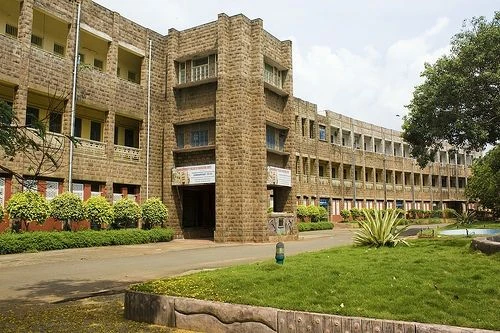
The 160-acre North Campus is famously "open," with public roads running through it. That means easy access to the city of Visakhapatnam, but it's also a perennial point of security concern for some students and parents. The location is prime—overlooking the Bay of Bengal and just 5 km from the main railway station.
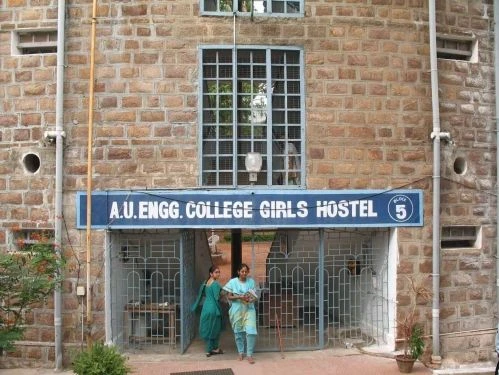
Infrastructure is the most common pain point in student reviews. The hostels—7 for boys (1300+ capacity), 6 for girls (1500+ capacity)—are often described as old and in need of repair. Leaking ceilings and unhygienic washrooms are frequent complaints. The mess food is consistently rated poorly, leading most students to opt for private messes or canteens outside campus.
On the plus side, students have access to the colossal Dr. V.S. Krishna Memorial Library on the South Campus, with over 400,000 books. Labs are specialized (Fluid Mechanics, High Voltage) but, as one Quora review bluntly put it, "the best in the city, but half the equipment doesn't work." Sports facilities are good, with sprawling grounds and an indoor gym.
The student life culture is famously "chill." There's a notable lack of the restrictive, school-like rules found in many private colleges. Attendance policies are generally relaxed (except in stricter departments like Chemical). The annual fest, Aurora, and various clubs provide a vibrant social outlet. It's a campus that offers freedom, but expects you to manage it responsibly.
Synthesizing feedback from platforms like CollegeDunia, Shiksha, Reddit, and Quora reveals a clear, consistent consensus.
The Positives:
The Negatives:
One recurring Reddit quote sums up the trade-off: "If you want placements, go to GVP or ANITS. If you want to learn life, join AU." It's a pithy way of saying AUCE offers a broader, more self-directed education rather than a narrowly focused placement factory.
The answer depends entirely on your priorities and which fee quota you fall into. For a student securing a regular seat through AP EAPCET, especially with JVD scholarship support, AUCE is an outstanding value proposition. You're getting a degree from a historically prestigious, A++ graded university for a total cost lower than a single year's fee at most private colleges. The median package of ₹9.3 LPA offers a fantastic return on that minimal investment. This path is ideal for the self-motivated learner aiming for government services, core sector jobs, or higher studies, where the AU brand shines.
For students considering the Self-Finance seats at ₹1-2 lakhs per year, the calculation shifts. At that price point, you're competing with newer private colleges that may offer better infrastructure, more structured teaching, and potentially stronger placement grooming for IT roles. You need to really want the AU legacy to justify the cost.
Be prepared for rustic hostel living, average food, and an administration that moves at its own pace. If you need hand-holding, modern amenities, and a tightly controlled academic schedule, look elsewhere. But if you can navigate those challenges, AUCE offers an unparalleled blend of legacy, freedom, and life education that few institutions can match at any price.
In this preview: 5 photos · 0 videos
AUCE is generally preferred for its brand legacy and research focus, while JNTU-K is often seen as having a more structured, though stricter, academic system.
Regular seats have very low annual fees (approximately ₹10,000 to ₹30,000) and are filled via the state EAPCET exam. Self-finance seats have significantly higher fees (around ₹1 lakh or more) and are filled via the AUEET exam or management quota.
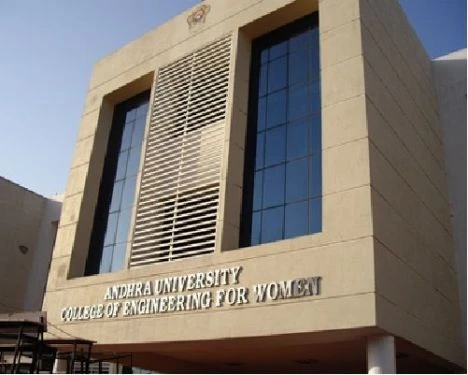
Yes, Andhra University operates a separate constituent college called the AU College of Engineering for Women (AUCEW). It is located nearby and shares placement resources with AUCE.
The quality of food in the hostels is generally reported to be poor. Most students recommend joining private messes outside the campus for better quality and variety.
It is unlikely for the General (OC) category in the regular fee quota, as the cutoff rank is usually under 1500. However, it may be possible in the Self-Finance category or for candidates under reserved categories.
Share what future students should know about AUCE.
Student voices are not rewritten by colleges. We remove spam and abuse.
Wider admission question? Community PulseWhat should future students know?
Tell us which course you're considering. We'll help you work out the next step.
Get instant Partner access after mobile verification. Your public edits are reviewed before they go live.
Claim this college
 Cafeteria
 Campus Security
 Computer Labs
 Medical
 Science Labs
 Sports Complex
 Study Library