Loading Admission Guardian content
Loading Admission Guardian content

Provisional score based on available data. It may change as more information is verified.
Find a program, read its fee details and explore the admission requirements.
Summary of the programs shown below. First-year fee. Check the note beside each amount for inclusions and exclusions.
| Course | Stream | Fees |
|---|---|---|
| Master of Computer Applications [M.C.A] | Computer Applications | 27000 |
| Master of Business Administration [MBA] | Management | 27000 |
| Bachelor of Technology [B.Tech] | Engineering | 42700 |
| Master of Technology [M.Tech] | Engineering | 75000 |
| Bachelor of Technology [B.Tech] {Lateral} | Engineering |
All accepted exams
Eligibility: Graduation
Specializations
All accepted exams
Eligibility: Graduation with 50% + CAT
Specializations
All accepted exams
Eligibility: 10+2 with 45% + AP EAMCET
Specializations
Eligibility: Graduation
Specializations
All accepted exams
Eligibility: 10+3 with 45% + AP ECET
3 exams with cutoff data available
Audisankara Institute of Technology Gudur (ASIT) is a solid, no-frills option for engineering aspirants in Andhra Pradesh's Nellore-Tirupati belt. Established in 2008 and affiliated to JNTUA, it operates on the same 25-acre campus as its more prestigious sibling, the autonomous Audisankara College of Engineering and Technology (ASCET). That shared ecosystem is its biggest strength and its most significant limitation. You get the infrastructure and placement cell of the larger group, but you're also the second priority. For students with AP EAPCET ranks that won't crack top-tier colleges but want a shot at IT placements from a disciplined campus, ASIT is a pragmatic, if sometimes frustrating, choice.
ASIT offers the standard JNTUA-affiliated B.Tech curriculum across six branches, with a heavy tilt towards IT. Computer Science and Engineering (CSE) is the flagship, with an intake of 180. Electronics and Communication (ECE) follows at 120. The intake numbers tell the story—this is an institute geared for the software services job market. Core branches like Civil and Mechanical have 60 seats each, and student sentiment confirms they receive far less attention.
They've added new-age specializations like CSE in AI & ML and Data Science, which is a decent move to stay relevant. On the postgraduate side, they offer MBA, MCA, and a few M.Tech programs. The academic rhythm is strictly governed by the JNTUA calendar. Faculty quality is a mixed bag. About 30-40% of senior faculty hold PhDs, and students often note that professors are approachable and helpful if you show initiative. But the teaching largely sticks to the syllabus. You won't find cutting-edge pedagogy here, but you will find a system that gets you through the university exams if you put in the work.
This is where you need to separate the brochure from the ground report. The official placement cell, shared with ASCET, brings in a consistent stream of IT mass recruiters. The top names are exactly who you'd expect: TCS, Infosys, Wipro, Accenture, Cognizant, and HCL. That's the platform the college provides.
Now, the numbers. The college claims an 80-90% placement rate. Talking to alumni and scanning reviews on Shiksha and CollegeDunia paints a different picture. For CSE and ECE, a 60-70% on-campus placement rate seems more accurate. For Civil or Mechanical? It drops off a cliff, likely below 30%. Core company visits are rare. The average package for the 2024-25 cycle was between ₹3.5 and ₹4.2 LPA, with a median around ₹3.66 LPA. That's a realistic benchmark. The highest package touted is 9.5 LPA officially, though some 2024 grads mention a 12 LPA outlier. Ignore any claim of a 25 LPA package—that's almost certainly an off-campus or group-wide anomaly used in marketing.
The verdict? If you're in CSE/ECE, prepare independently (LeetCode, projects), and ASIT can be a launchpad to a TCS or Infosys offer. If you're in a core branch, assume you'll be hunting off-campus or for higher studies. The placement support is there, but it's squarely focused on IT services.
One of ASIT's compelling arguments is its affordability. For a private engineering college, the fees are relatively modest. B.Tech tuition ranges from ₹40,000 to ₹56,500 per year, depending on the quota. Over four years, tuition will cost you about ₹1.6 to ₹2.3 lakhs.
The bigger expense is the hostel. Standard non-AC hostel fees run ₹40,000-₹45,000 annually, while premium rooms with attached baths can go up to ₹65,000. Add in exam and other miscellaneous fees, and the total cost for a B.Tech degree with hostel comes to roughly ₹4.5 to ₹5.5 lakhs. That's not cheap, but it's below the exorbitant rates of many private colleges.
Financial aid primarily comes from the Andhra Pradesh state government schemes. Eligible students can apply for the Jagananna Vidya Deevena (fee reimbursement) and Vasathi Deevena (hostel/maintenance allowance) schemes. It's worth checking the official AP student welfare portal for the latest eligibility criteria and application details.
Admission for the vast majority of B.Tech seats is through the state engineering entrance exam, AP EAPCET. The seat breakdown is 70% through the convener quota (state counseling) and 30% under management quota. For MBA and MCA, it's the AP ICET, and for M.Tech, it's AP PGECET or GATE.
The cutoffs are where ASIT's position in the pecking order becomes clear. They are consistently more relaxed than for the autonomous ASCET on the same campus. For the 2024 AP EAPCET Round 1, the closing rank for the General category in CSE was around 130,698. For ECE, it was near 174,853. You can find the official cutoff data on the APSCHE counseling website.
What does this mean? If your rank is between 100,000 and 180,000 for CSE/ECE, ASIT becomes a viable option in your counseling choices. The application window aligns with the state counseling schedule, typically from April to June. The process is straightforward if you're going through the convener quota—just list it in your options.
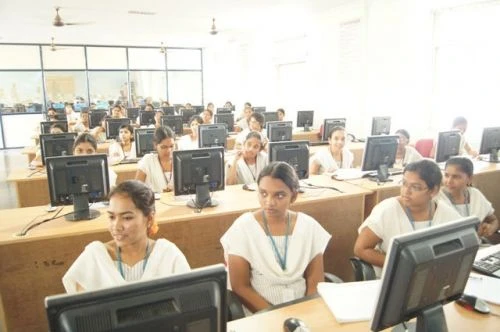
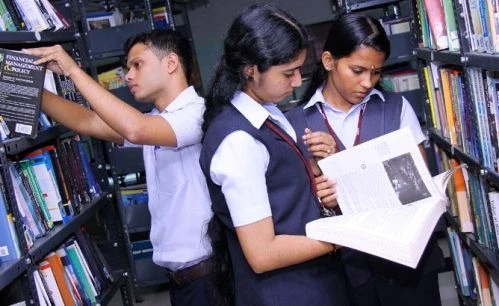
The 25-acre shared campus is green, spacious, and visually appealing. The three-storied library, with over 45,000 volumes, is a genuine asset for students who want to study. Labs for CSE and ECE are reported to be well-equipped with decent systems. Wi-Fi is available, though it's often restricted to labs and the library—don't expect seamless connectivity in hostels or open areas.
Now, the hostels. This is a major pain point in student reviews. The buildings are adequate, with 4-6 students per room, but maintenance is a recurring complaint. The most frequent grievance? Salt water in the washrooms. Ventilation in older blocks is also cited as poor. Many seniors opt for private PGs in Gudur town after their first year. The canteen food gets an average rating—edible but not great.
Student life is… disciplined. That's the polite term. The college enforces a strict 75% attendance rule. There's a dress code. And the most controversial rule: a strict "No Mobile Phones" policy in academic blocks. Phones can be confiscated if you're caught using them outside hostel rooms. For some parents, this is a feature. For many students, it feels like being back in school.
Scouring platforms like Quora, Reddit, and CollegeDunia reveals a clear, consistent consensus. ASIT is seen as a "safe middle-tier choice." No one raves about it as a dream college, but few call it a complete disaster. It's a transactional choice: you trade some freedom and luxury for stability and a chance at placements.
The positives students highlight are genuine: helpful faculty, a clean and green campus, and that crucial placement link to IT companies. The library gets special mention. The negatives are equally consistent and impactful: the oppressive mobile phone policy, mediocre hostel conditions, and a significant gap between placement promises for IT versus core branches.
One paraphrased quote from a review sums up the academic attitude: "Placements are good for those who learn coding on their own. The college provides the platform (TCS/Wipro), but the training is average." Another on campus life: "The college is like a school. You have to wear a uniform, and they are very strict about the 75% attendance rule." The management is often described as slow and bureaucratic when you need anything outside the ordinary.
ASIT is a college of clear compromises. It's worth serious consideration for a specific student profile: a candidate from the region with an AP EAPCET rank between 100,000 and 180,000, aiming for a career in IT services, who values a structured (some would say rigid) environment and has a budget of around ₹5 lakhs for the degree. For that student, ASIT delivers a cost-effective path to a recognizable degree and a probable campus job with a mass recruiter.
You should probably look elsewhere if you're passionate about core engineering branches like Mechanical or Civil, if you highly value campus freedom and a vibrant student social life, or if your rank can get you into the autonomous ASCET or a reputated university college. ASIT is a practical stepping stone, not a destination. Its value is functional, not inspirational. Manage your expectations, be prepared to supplement your studies with online resources, and you can make it work to your advantage.
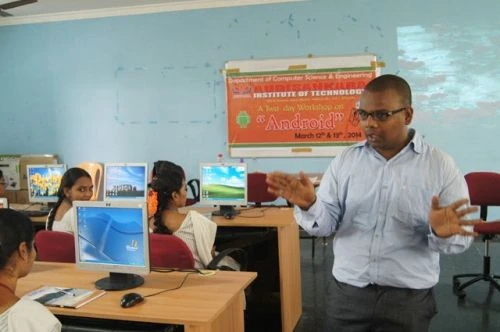
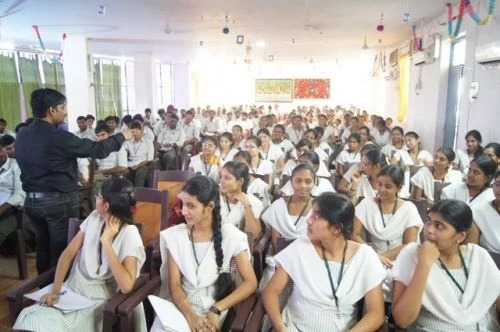
In this preview: 5 photos · 0 videos
No. ASCET is the autonomous and older institution with higher admission cutoffs and is generally perceived to have better placement priority. ASIT is considered the second-tier option within the same campus.
The official policy is a strict no. Mobile phones are generally prohibited in classrooms and corridors; their usage is typically restricted to hostel premises.
The realistic average placement package for Computer Science and Engineering (CSE) at ASIT is between ₹3.5 LPA and ₹4 LPA.
Student reviews on hostel food are mixed, with an average rating around 2.5 out of 5. Most students recommend using the college canteen over the mess for better food quality.
Yes, the college provides an extensive bus network covering Nellore city and surrounding rural areas. This service is available for a yearly fee, typically ranging between ₹15,000 and ₹20,000.
Share what future students should know about ASIT.
Student voices are not rewritten by colleges. We remove spam and abuse.
Wider admission question? Community PulseWhat should future students know?
Tell us which course you're considering. We'll help you work out the next step.
Get instant Partner access after mobile verification. Your public edits are reviewed before they go live.
Claim this college
 Auditorium
 Cafeteria
 Computer Labs
 Gym
Gym Hostel
 Medical
 Science Labs
 Sports Complex
 Study Library